Loading document...
To support a planning application for the conversion of the existing garage into a swimming pool pavilion
Figure 1.View of the proposed pool from the public footpath along the stream
RK/6296 Phase 12 ~ March 2025
Design and Access Statement For a New Indoor Swimming Pool and Alterations to an existing Modern Garage Kirk Michael, Isle of Man IM6 2EZ
Contents
– later trees – were planted to screen it. Maintenance of the tennis court did not continue after the closure of the theological college in 1943 and it was a remnant by 2001 when the circular garage was built and many trees removed. Nevertheless, even without the screen of greenery, the garage, while visible from the lawns in front of the house, does not dominate it. The character of the building does affect that of the registered buildings within the Bishopscourt group and from which it is indivisible. Protected by law, registered buildings naturally carry more weight than recent buildings within their curtilage. The 2001 garage was is by officials and those interested in Manx heritage to have had a moderately negative impact on the registered buildings adjacent to it, ameliorated by its being set apart from them. There is scope for this impact to be both softened and improved so that it might contribute something to the group.
Figure 2. The 1870 Ordnance Survey marking the location of the later tennis court and garage block: historically, this was an open arable field.
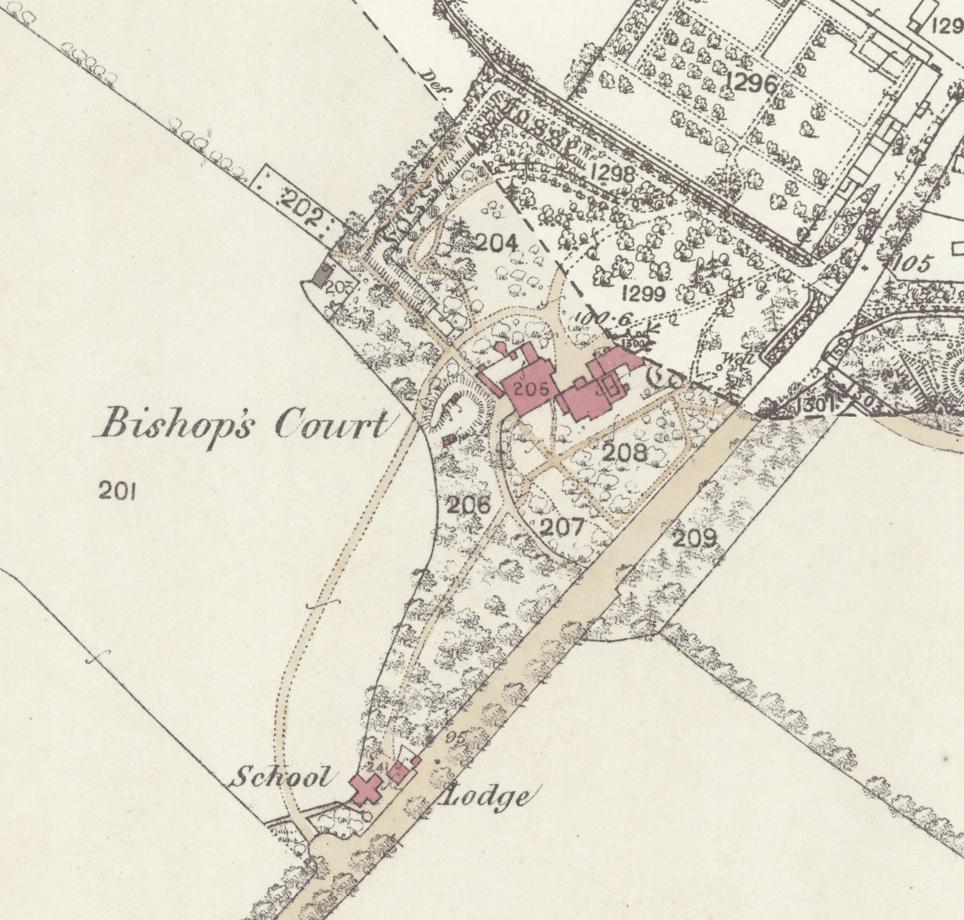
Figure 5. An ordinand on the lost tennis court at Bishopscourt. (Manx Archives.)
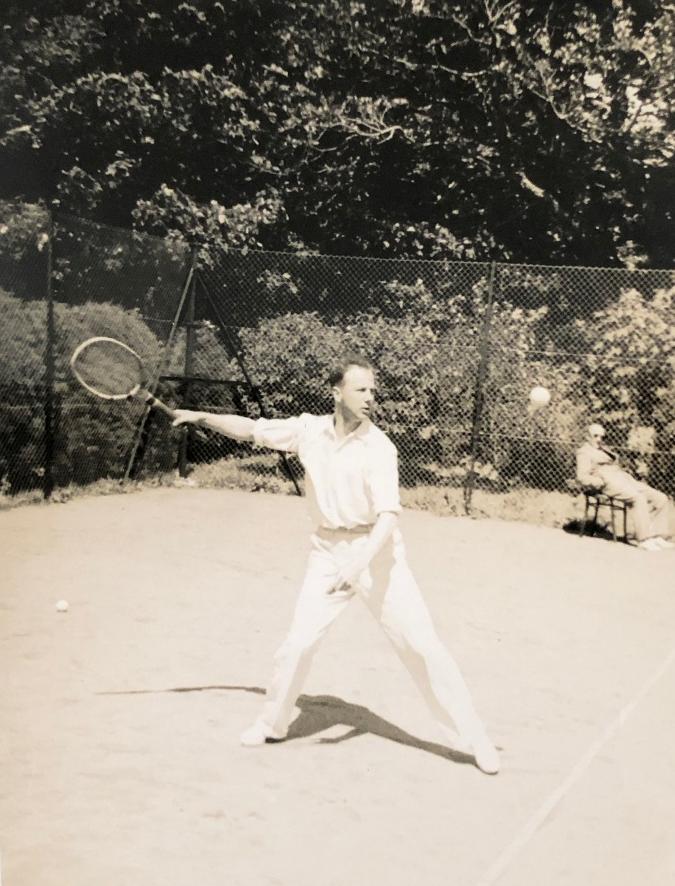
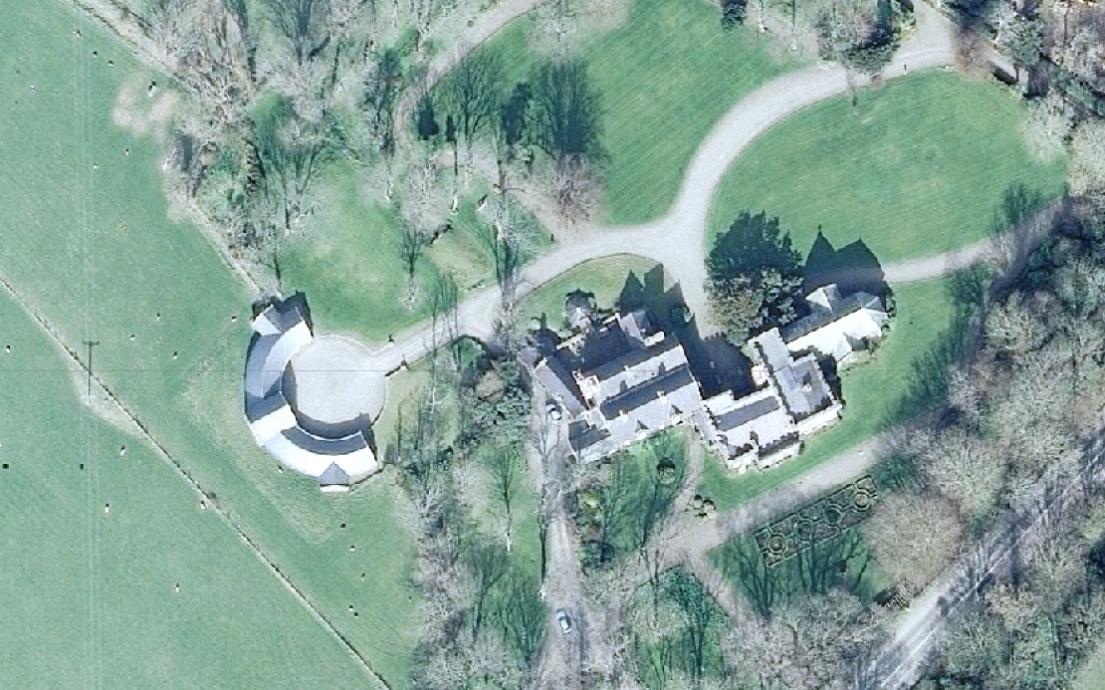
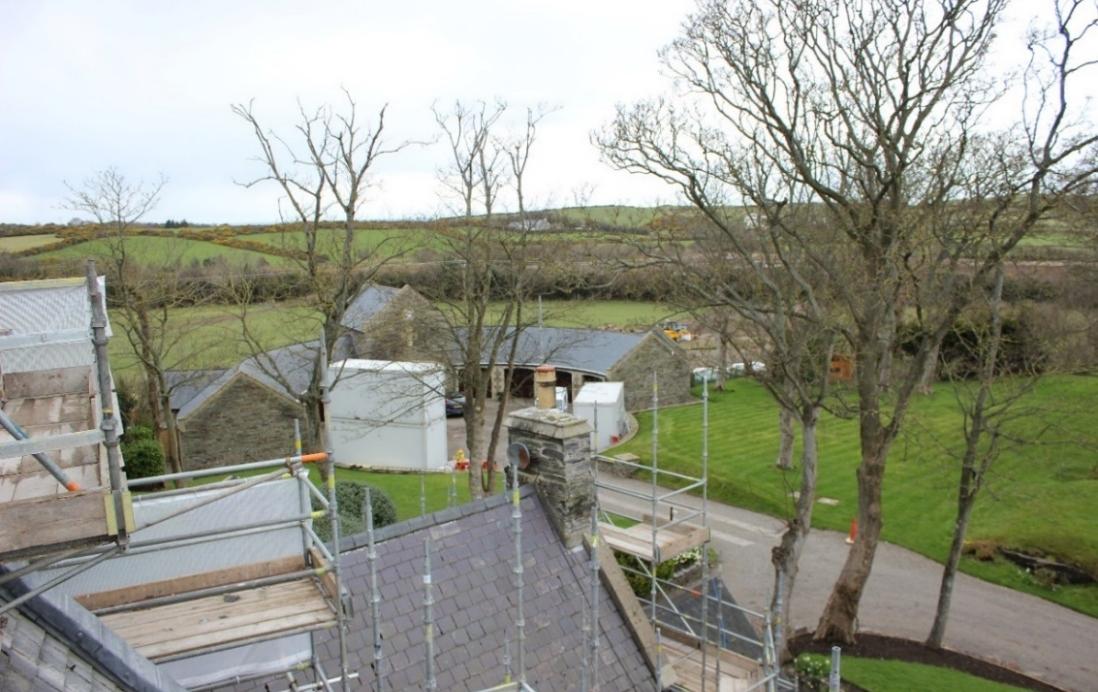
Figure 6. The Wash House roof and chimney (1857 and earlier); below it the roof of the Old Engine House (1925); in the background the Garage Block (2001)
Figure 7. The Garage Block built in 2001
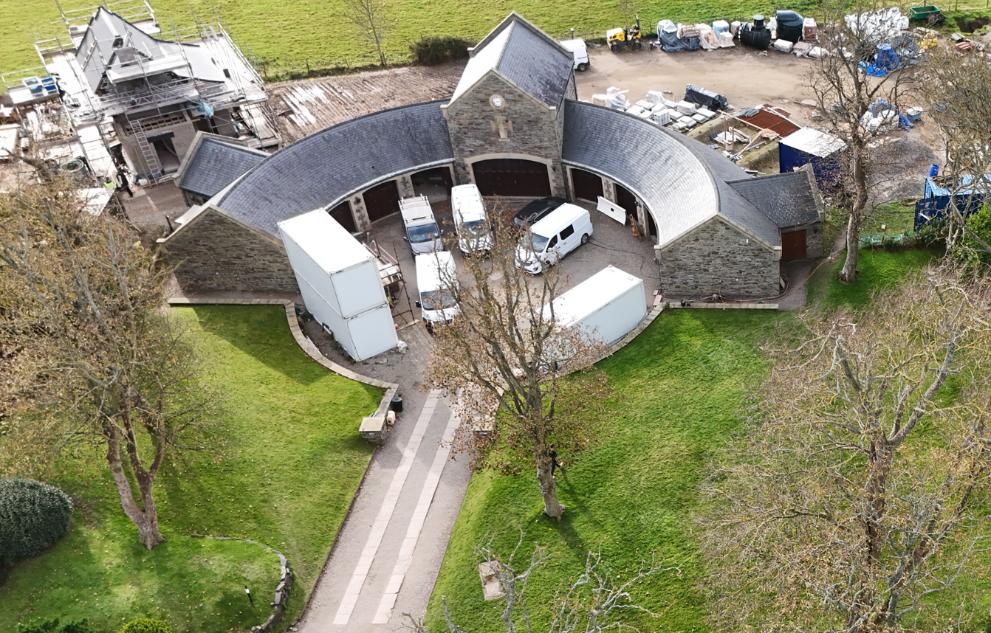
The existing garage, a modern intervention that diverges stylistically from the surrounding buildings, presents an opportunity for improvement.
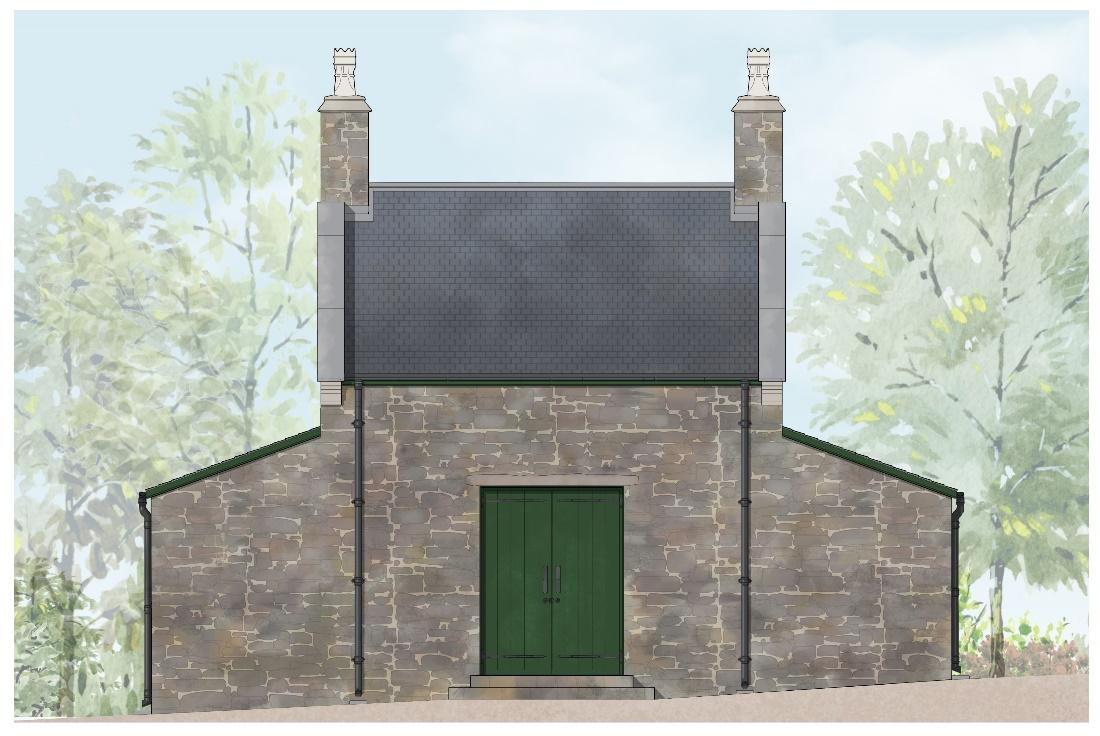
The garage block, built in 2001, attempts to imitate the architectural style of Bishopscourt’s 1850s West Wing. It employs synthetic slates, cast-stone elements, and plastic rainwater goods that are unsympathetic alongside traditional buildings. Moreover, the scale, mass and geometry of the building are a significant diversion from the scale and organic development of the episcopal palace and its surrounding buildings.
Concerns about the appearance of the existing garage block have over time been made by members of the community as well as by people involved with the preservation of historic buildings and landscapes. On the Isle of Man, mention has been made of a ‘monotonous’ and ‘bland elevation’ and concerns raised at the appropriateness of this structure adjacent to the rest of the buildings at Bishopscourt. In response to previous comments to the planning department, specific features which have been found to be objectionable are being removed.
Several possible approaches have been explored for an appropriate future for the garage block and the decision to retain the existing building has been taken based on fundamental considerations about sustainable development and the principle of retrofitting rather than demolishing and rebuilding. The swimming pool complex has been designed to fit within the geometry of the existing garage, while at the same time using the lexicon of Victorian elements of the episcopal palace.
The existing single-story circular garage block, clad in Manx stone to mimic the main house, will undergo a positive transformation. The proposed intervention involves the use of Manx stone for the rebuilt sections which will ensure seamless integration with the house and outbuildings nearby. Lime mortar bedding and stone sizes will be carefully matched to the main house to maintain visual harmony throughout this collection of buildings.
Figure 8. The gravel drive and forecourt of the Garage Block (2001)
The building’s proposed new use will maximise the internal space of the existing garage by accommodating gardening equipment, plant rooms for the swimming pool and its amenities, and a spa. New windows and doors to match Bishopscourt’s Wash House and West Wing will be introduced.
The proposed indoor pool fits within the circular form of the existing building. A cast iron and glass enclosure, inspired by Victorian glasshouse aesthetics, will establish a positive dialogue between the proposed pool enclosure and the main house, as well as other buildings on the property. It will bring this building into harmony with the character of the neighbouring historical buildings and landscape.
The new basement will be used as a plant room, accessible via both internal and external stairs. Ventilation ducts will be hidden throughout the existing building and cast-iron ventilation grills, sympathetically matching the style of those found on the Refectory and main house, will be discreetly located on exterior walls. This approach ensures the preservation of the overall architectural aesthetic. These grills, along with the emergency fire exit stairs, will be concealed from view by proposed hedging.
These alterations and additions will not only render the garage block more functional but also enhance its visual appeal and integration with the wider historic estate.
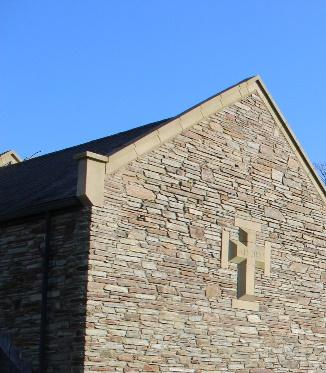
Figure 9. A looser interpretation of the prevailing architectural details at Bishopscourt can be seen in the 2001 Garage Block, which employs synthetic slates, cast-stone copings, kneelers, and window surrounds and plastic rainwater goods, all with forms and relationships not seen in historical vernacular architecture. These elements will be replaced with traditional materials and details.
Figure 10. View of the existing garage
The proposed pool pavilion has been carefully designed to minimize its visual impact from the public footpaths and the main road as well as from the registered buildings. To achieve this, we have conducted a thorough analysis of the site and created a detailed model of the pavilion in its proposed location. The attached photo-collages demonstrate that the pavilion's height, colour and proportions can hardly be seen from the public realm. This design approach ensures that the pavilion will blend seamlessly into the surrounding environment while providing a valuable addition to the property.
On the 1870s Ordnance Survey, the area on the front – garden side – of the garage block was wooded. This character of the landscape is slowly being re-instated with a proposed new tree alongside existing ones as shown in plan. The rear of the building – facing the public footpath which runs along the railway line – will be screened by native Manx shrubbery already approved in a previous application for the hiding of the plant farm equipment. The garage block can be glimpsed through the gardens from the public footpath along the stream: new shrubbery and a tree are planned as part of this application to screen the building from this vantage and from the house and its lawns more comprehensively.
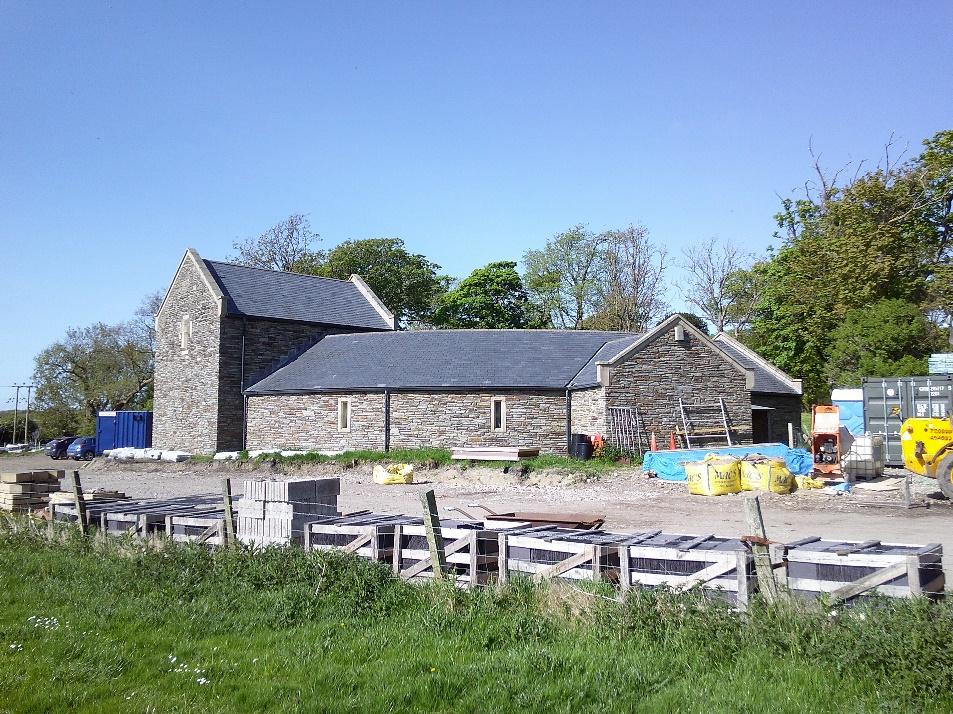
Figure 11. The Proposed Pool Pavilion at Bishopscourt as seen from the public footpath which follows the old railway line.
Figure 12. The Existing 2001 Garage as seen from the public footpath which follows the old railway line.
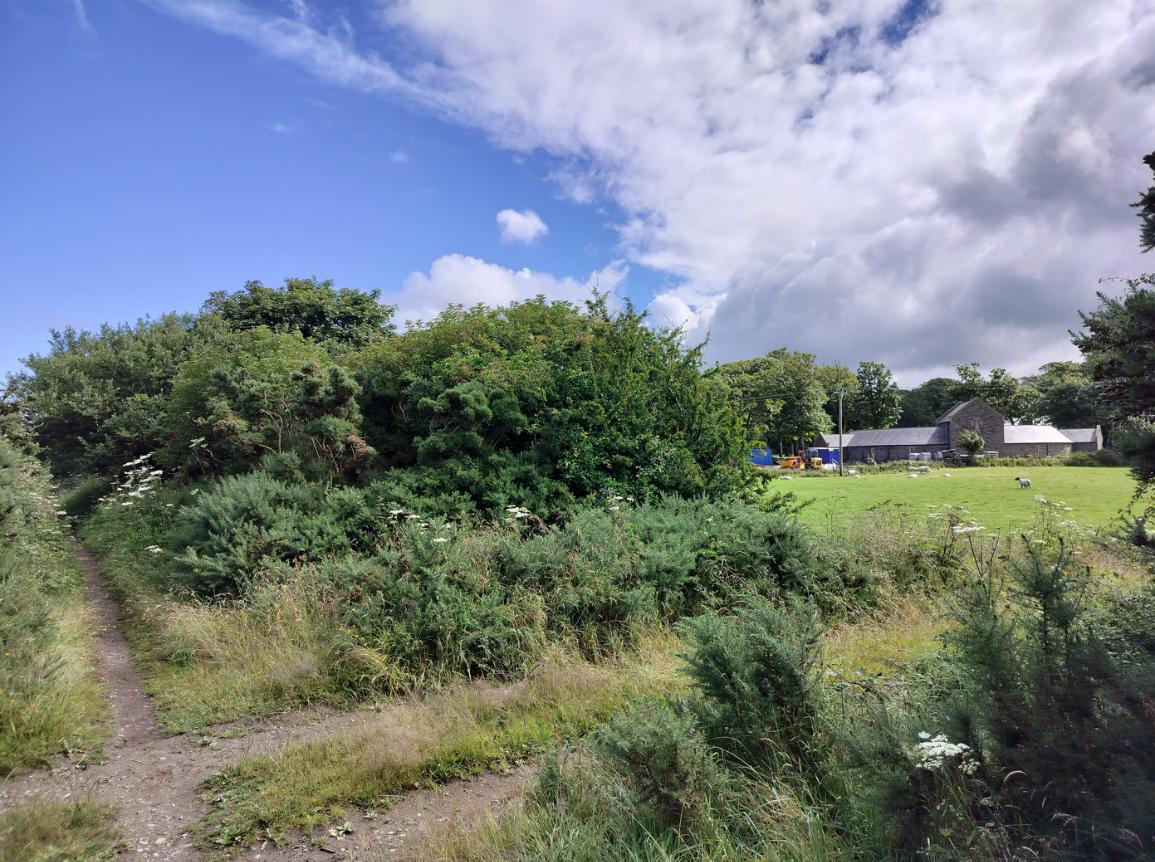
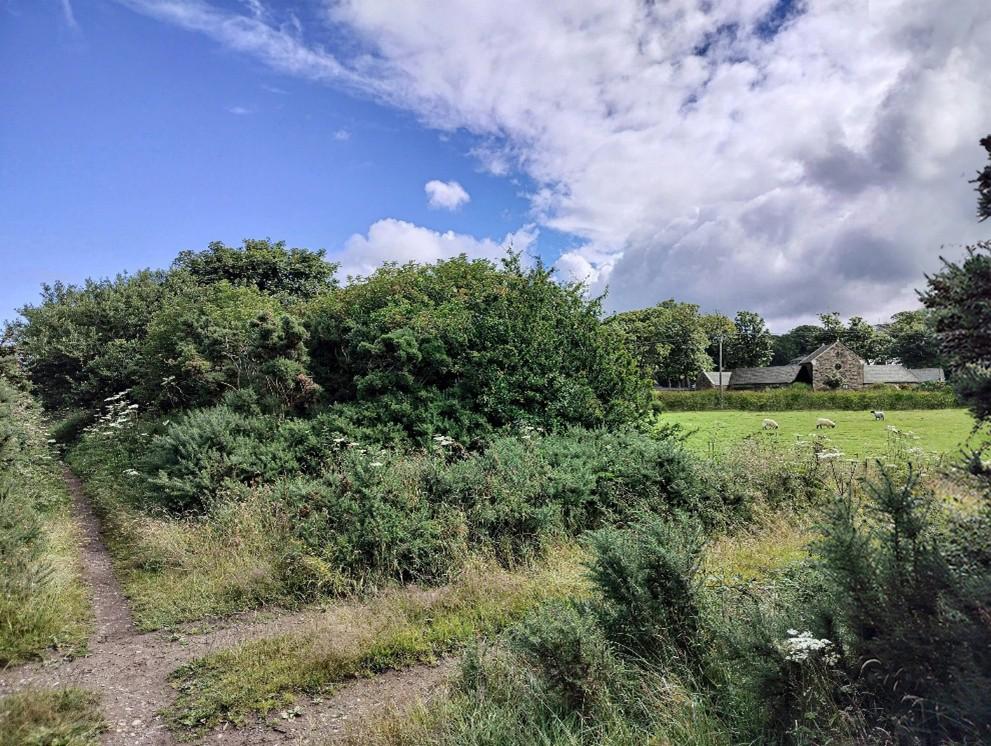
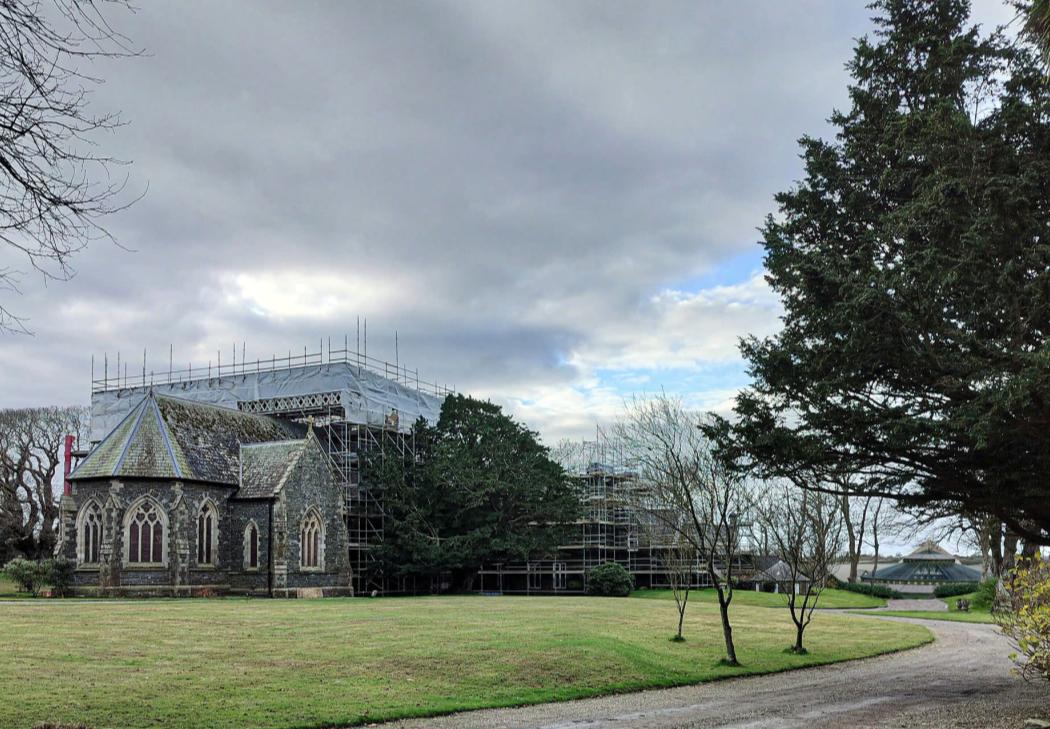
public footpath which follows the stream and from the South Lawn in front of the Chapel.
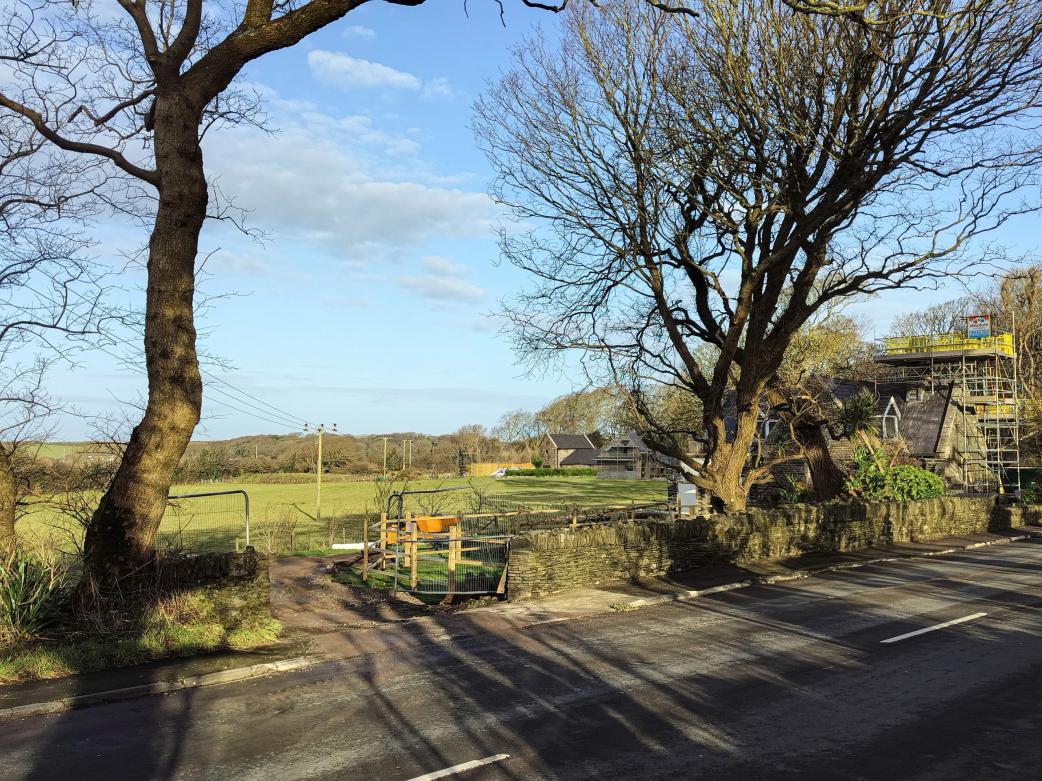
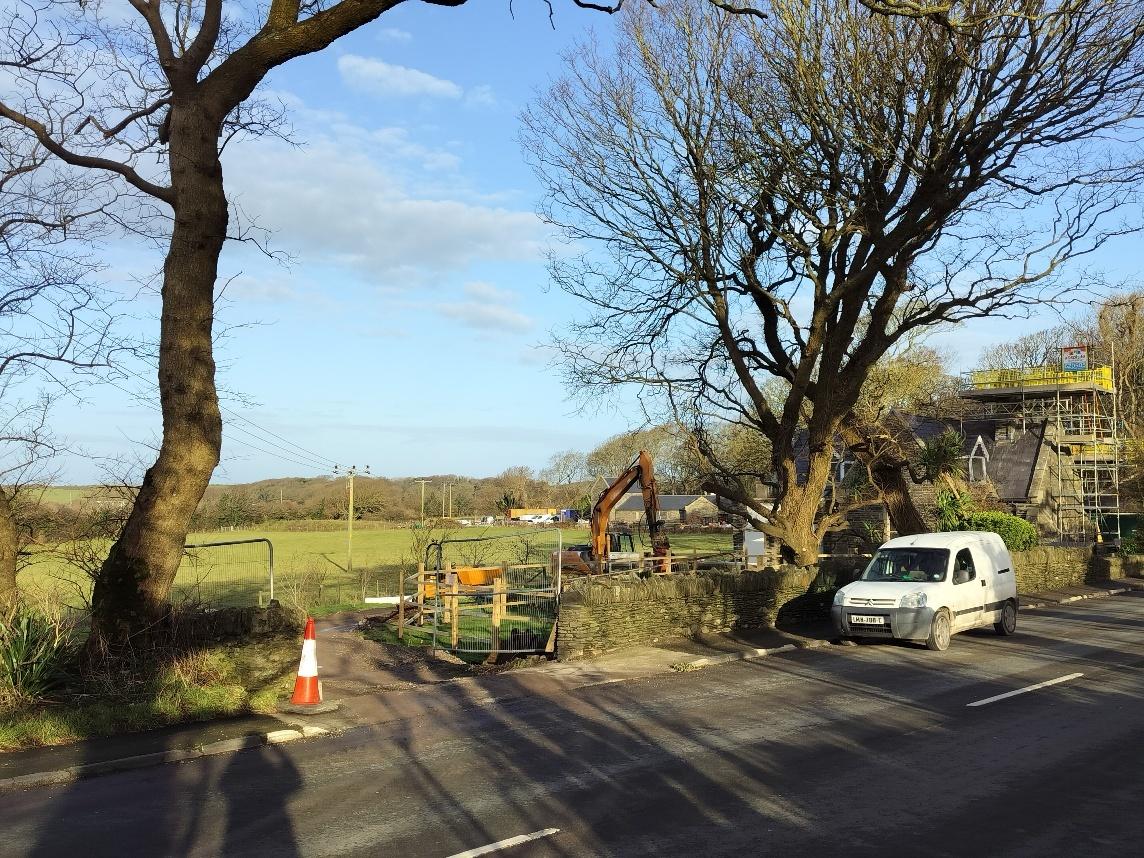
The addition of a swimming pool pavilion within the curtilage of a registered building on an historic property requires careful consideration if the historic character of the site is to be preserved. However, it is also of value to work to ensure that the property provides the comforts and amenities which might be obtained for a new era. The proposed swimming pool complex is designed to sit at a comfortable distance from the house so as not to overpower it. This approach allows the new addition to complement the historic building, while also providing a new purpose for an otherwise underutilized modern structure. The pavilion has been designed to sit below the roofline of the existing garage so that it will not be visible from any public path.
The proposed swimming pool will be carefully integrated into the existing landscape, minimizing its visual impact. Its design will complement the architectural style and materials of the registered building, ensuring that it harmonizes with the property's historic fabric. We believe this alteration will be beneficial to the adjacent group of registered buildings.
By prioritizing sustainability and energy efficiency, the pool's operation will be in keeping with modern environmental standards.
In conclusion, the addition of a swimming pool to this historic property will rectify long-standing concerns regarding the 2001 construction, will improve functionality as well as soften the impact of this building within the landscape.
Copyright in submitted documents remains with their authors. Request removal
