Loading document...
K
KINLEYS
CONSULTING ENGINEERS RECEIVED ON 27 NOV 2025 DEPT OF ENVIRONMENT PLANNING & BUILDING CONTROL RECEIVED ON 27 NOV 2325
The Kiosk and Public Conveniences on Peel Breakwater currently dispose of wastewater directly into the Irish sea through the back of the breakwater wall; the wastewater is untreated. A design is in place to install a private Sewage Treatment Works nearby that can treat the wastewater and discharge treated effluent into a soakaway within the breakwater.
Abstract
Mark Kinley BEng (Hons) CEng MIStructE [email protected] Kinleys Consulting Engineers Limited – Directors: Mr. Mark Kinley, Mrs. Melanie Kinley Registered in Isle of Man 138700C Registered Address: 16 Queen Margaret Road, Glen Vine, Isle of Man IM4 4ET
3.1 The Site ... 4 3.2 Existing Facilities ... 4 3.2.1 The Kiosk ... 4 3.2.2 Public Conveniences ... 6 3.3 Proposals ... 8 3.3.1 Kiosk ... 8 3.3.2 Public Conveniences ... 8 3.4 Existing Construction ... 8 3.4.1 Substructure ... 8 3.4.2 Superstructure ... 9 3.4.3 External Hardstanding ... 9
4.1 Site Establishment ... 10 4.1.1 Notification of Works ... 10 4.1.2 Public Conveniences ... 10 4.1.3 Security ... 10 4.1.4 Site Welfare Facilities ... 10 4.1.5 Compound ... 10 4.1.6 Contractor Parking ... 10 4.1.7 Breakwater Access ... 10 4.2 Preliminary Investigations ... 11 4.2.1 Survey Existing Drainage ... 11 4.2.2 Undertake Percolation Test ... 11 4.2.3 Waste Acceptance Criteria (WAC) ... 11 4.2.4 Incoming Services ... 11 4.3 Drainage Works ... 11 4.3.1 Install Inspection Chamber to Services Cupboard ... 12 4.3.2 Install New Gulley ... 12 4.3.3 Installation of Drainage Runs ... 12 4.3.4 Installation of Grease Separator ... 12 4.3.5 Installation of Package Treatment Plant ... 12 4.3.6 Install Klargester GRP Kiosk ... 12 4.3.7 Install Blower Housing ... 13 4.3.8 Install Sample Chamber ... 13
Page 1 | 16
Scope of Works 26th September 2025
4.3.9 Installation of Soakaway...13 4.3.10 Works to the Kiosk...13 4.3.11 Removal of Waste...13 4.3.12 Reinstate Hardstanding...13 4.3.13 Commissioning of Works...13
4.4 Infill Abandoned Drainage...13 4.4.1 Extent of works...14 5 Site Constraints...14
5.1.1 Fuel Delivery...14 5.1.2 Fuel Pipeline...14 5.1.3 Services Cupboard...14 5.1.4 Access Restrictions...14 5.1.5 RNLI Activities...14 5.1.6 Public Access...14 5.1.7 Fishing Activities...15 5.1.8 The Kiosk...15 5.1.9 Old Breakwater...15
6 Sequencing of Works...15 7 Appendices...16
Page 2 | 16
Scope of Works 26th September 2025
Photograph 1 - Aerial photograph of site ... 4 Photograph 2 - Kiosk wash hand basin to south wall ... 5 Photograph 3 - Double sink to north wall of kiosk (sealed manhole in the foreground) ... 5 Photograph 4 - Ladies conveniences between kiosk and services cupboard ... 6 Photograph 5 - Fully tiled surfaces within the Gents conveniences ... 6 Photograph 6 - Stub stacks to Ladies (Left) and to Gents (Centre & Right) within services cupboard ... 7 Photograph 7 - Manhole and access to sea outfall pipework to northwest of kiosk ... 7 Photograph 8 - Photo of original Abernethy Breakwater (c.1860 - imuseum) ... 8 Photograph 9 - Photo of handbasin within Ladies Convenience showing plinth ... 9 Photograph 10 - Incoming cabling to server cupboard ... 11
Page 3 | 16
Scope of Works 26th September 2025
The Kiosk and Public Conveniences on Peel Breakwater currently dispose of wastewater directly into the Irish sea through the back of the breakwater wall; the wastewater is untreated. The Department of Infrastructure (the Client) has commissioned a design to install a private Sewage Treatment Works nearby that can treat the wastewater and discharge treated effluent into a soakaway within the breakwater substructure.
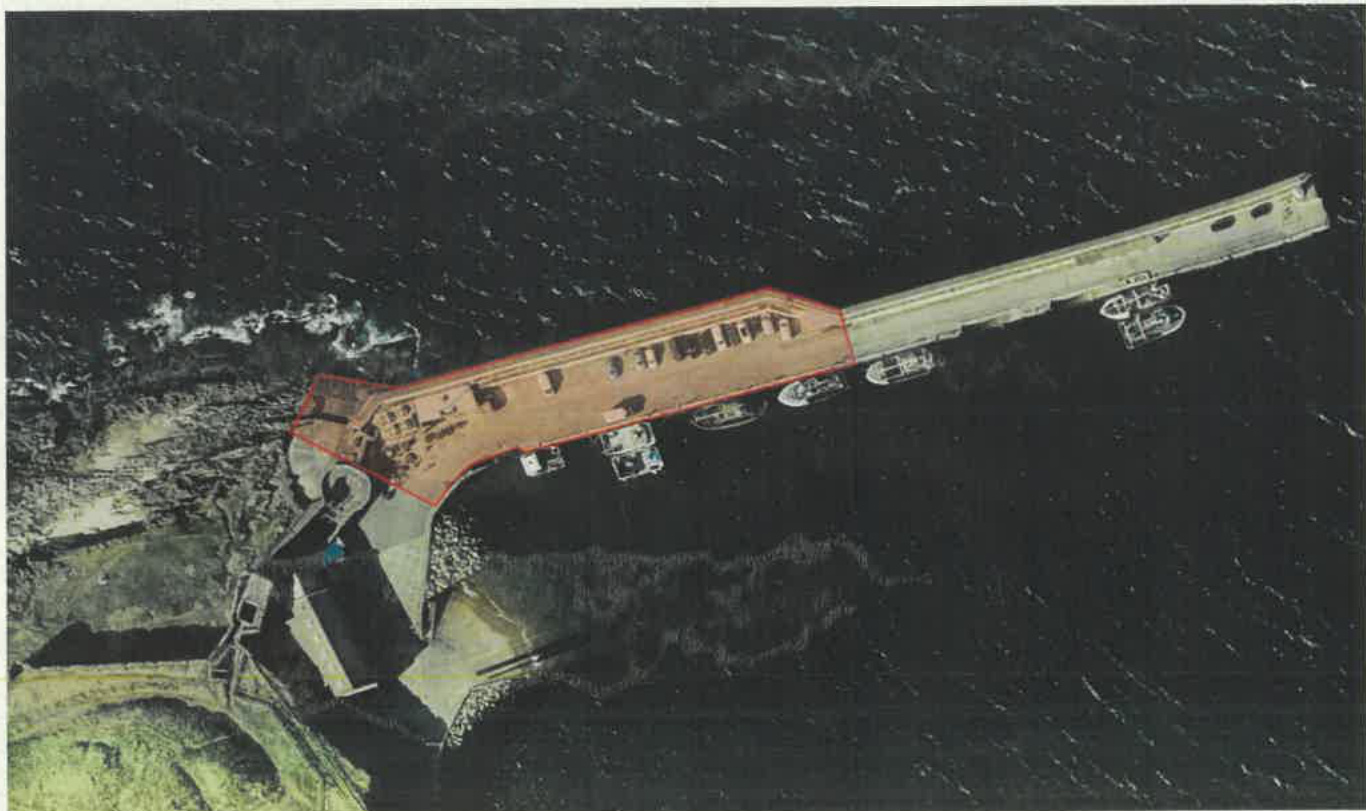
The site is situated on Peel Breakwater in the west of the Island, at grid reference SC 242 846 (what 3 words: topping.diagram.rope). At the western base of the breakwater is a single storey flat roofed building that houses a 'Kiosk' that serves takeaway food and drinks, and public conveniences.
Photograph 1 - Aerial photograph of site
Parking for the breakwater and associated facilities is adjacent the north wall of the breakwater heading east from the building. Whilst dedicated parking spaces are not provided, there are approximately 25 spaces available.
The breakwater is accessible to the public for recreation and is actively used by fishing vessels to dock and land fish. Fuel deliveries to the island are regularly offloaded at the breakwater with dedicated facilities. The RNLI lifeboat station and slip is immediately south of the site.
Refer to Kinleys Consulting Engineers drawing 25014-KCE-XX-ZZ-D-C-50001
The kiosk serves food and drink through a hatch, to be eaten on the external seating areas or to take away. Most meals and drinks are served in disposable containers and wraps. Usually run by two members of staff, this can raise to a maximum of four during busy periods.
Scope of Works 26th September 2025
The Kiosk is busy through the summer months, serving up to 1000 customers over the weekend and approximately 500 over the week. This would reduce to 25% of these numbers over winter months.
There are two sinks situated within the kiosk; one situated on the south wall used for washing hands, and one larger double sink to the northern wall for washing kitchenware and utensils.
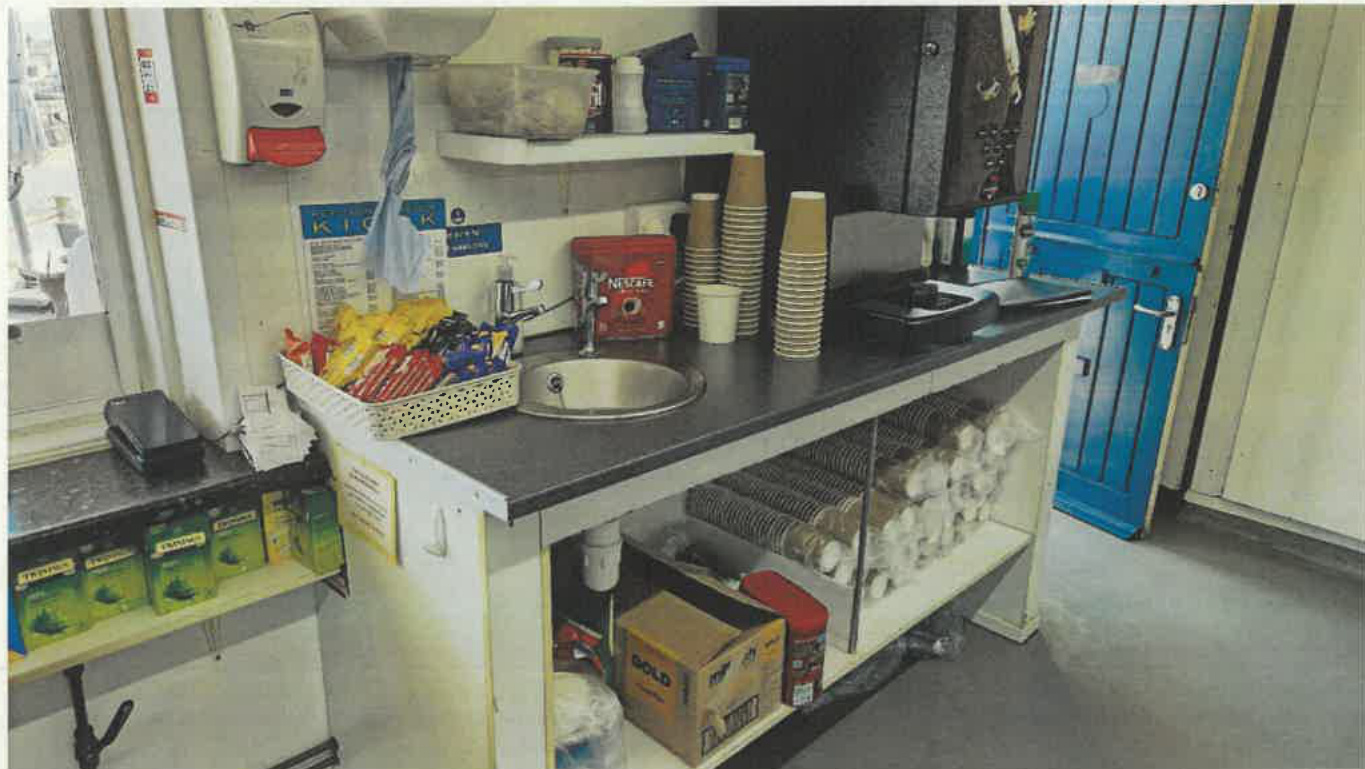
Photograph 2 - Kiosk wash hand basin to south wall
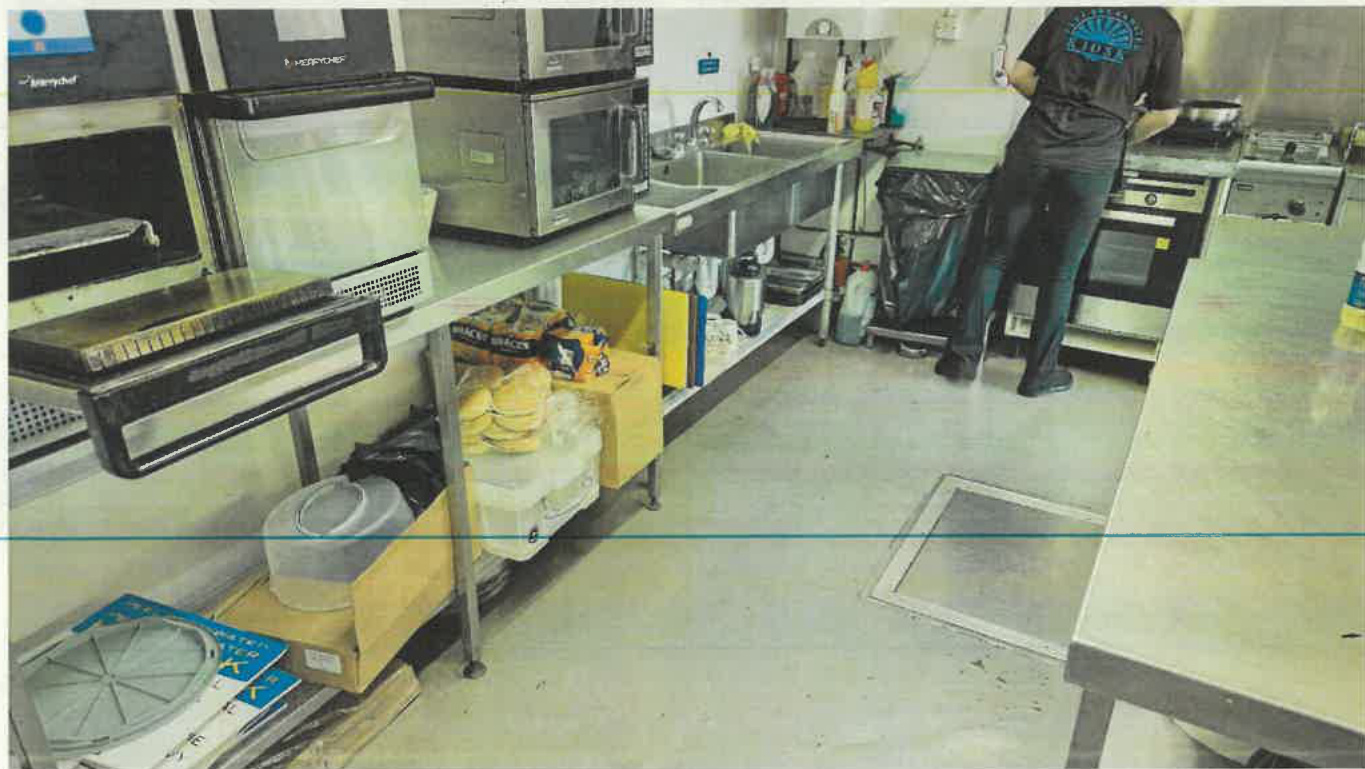
Photograph 3 - Double sink to north wall of kiosk (sealed manhole in the foreground)
Both sink wastes are drained directly into a sealed manhole within the kiosk floor.
Page 5 | 16
Scope of Works 26th September 2025
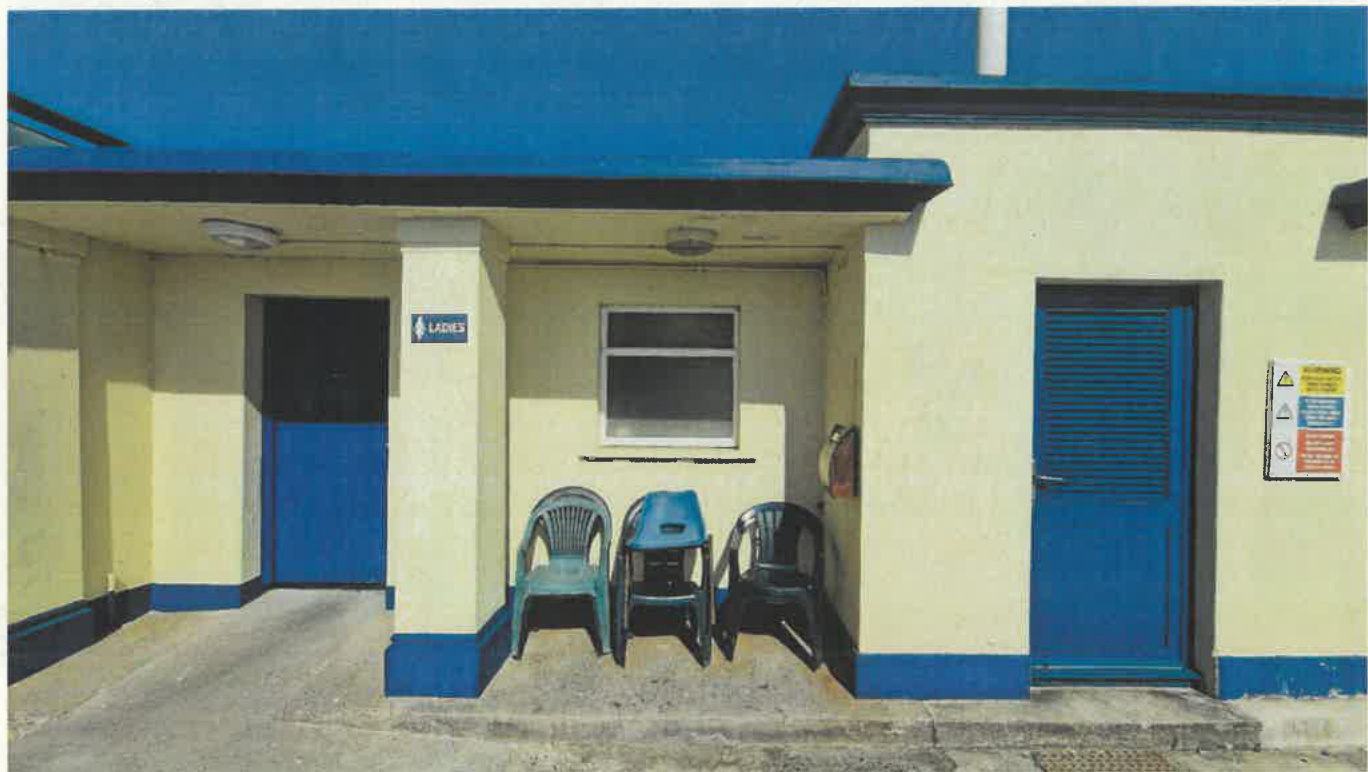
Immediately adjacent the kiosk are the Ladies conveniences; here there are two WC's and two wash hand basins. To the eastern most side of the building is the Gents conveniences; here there are two WC's, two wash hand basins, and two urinals. Waste from both conveniences drains into a central services cupboard.
Photograph 4 - Ladies conveniences between kiosk and services cupboard
Photograph 5 - Fully tiled surfaces within the Gents conveniences
Page 6 | 16
Scope of Works 26th September 2025
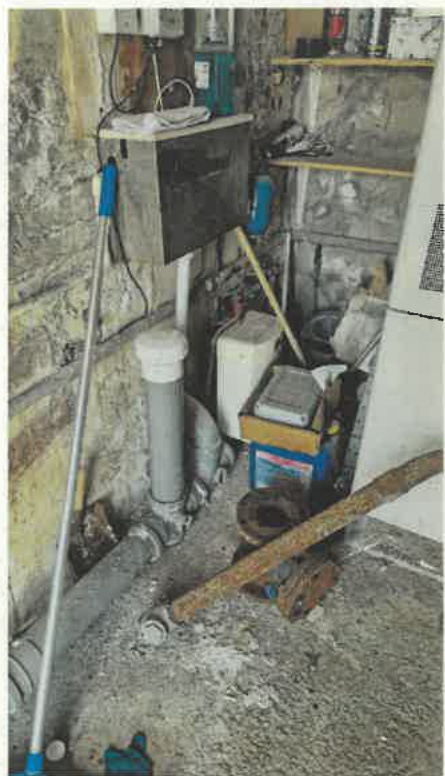
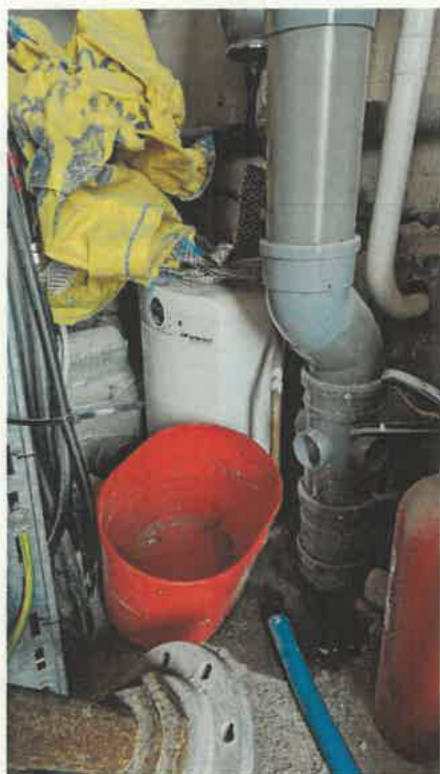
Wastes pipes from both sides enter stub stacks within the services cupboard, where cisterns are also located for each of the WC's.
Photograph 6 - Stub stacks to Ladies (Left) and to Gents (Centre & Right) within services cupboard
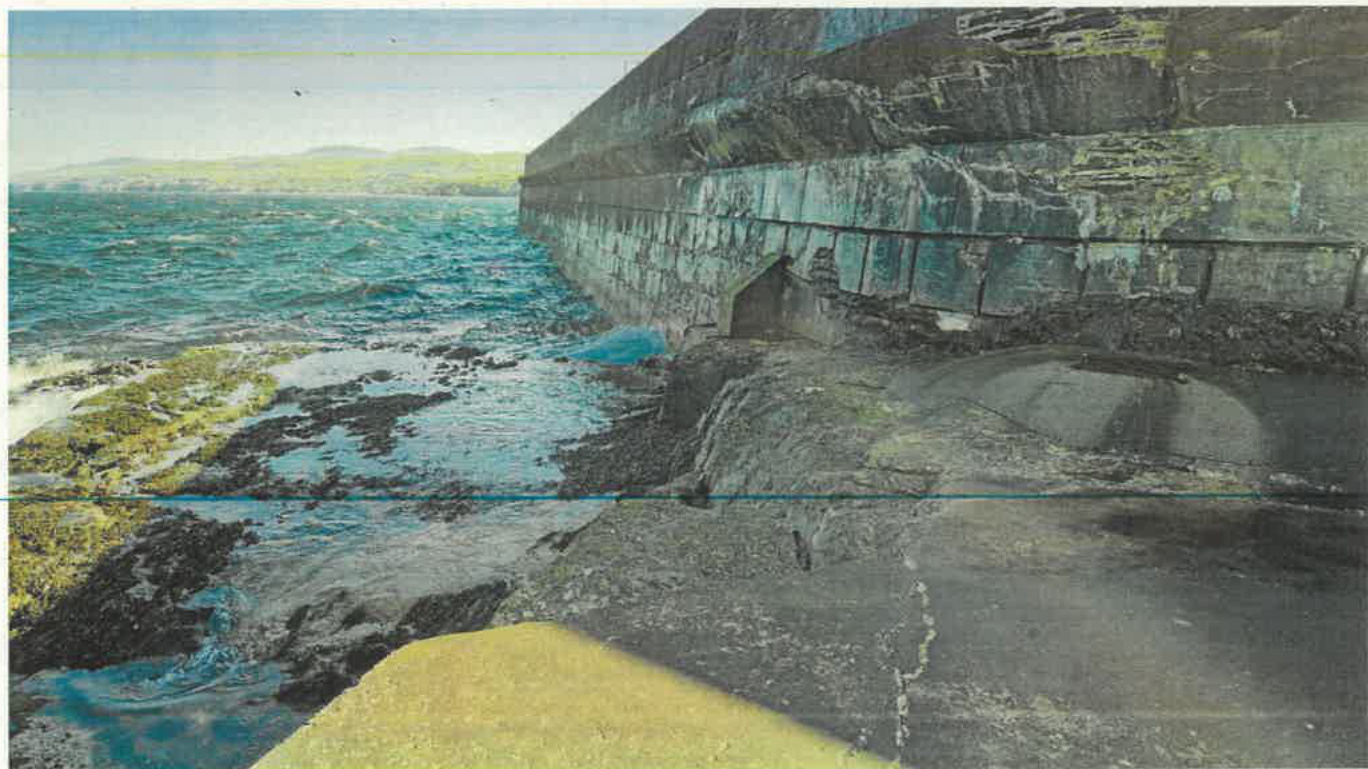
Exact drainage runs have not been fully established, but it is believed that the stub stacks collect waste from each of the conveniences and discharge through a sealed manhole within the kiosk directly west through the breakwater wall.
Photograph 7 - Manhole and access to sea outfall pipework to northwest of kiosk
Page 7 | 16
Scope of Works 26th September 2025
On the western side of the breakwater wall there is a concrete paved area accessible through the Peel Castle walls. From within the kiosk the drainage discharges into manholes at this location and from there it is discharged directly out to sea. The exact location of the outfall has not been plotted but is known to occur within the rock outcrop to the north of the kiosk.
The Client has advised that during peak summer times (including TT), each public convenience is visited approximately 1500 times per month (total for male and female 3000). The facilities are open 24 hours a day and 7 days a week, all year round.
Refer to Kinleys Consulting Engineers drawing 25014-KCE-XX-ZZ-D-C-50002
The sink wastes will be taken above slab to the south elevation and discharge through the external wall to a new gulley pot. The gulley pot will then drain through a grease separator and into the new foul water drainage system.
A new inspection chamber is to be installed within the service cupboard, collecting the waste from the Ladies and Gents conveniences. A new foul drainage system will pick up the outflow from the grease separator and discharge waste from the kiosk and the public conveniences into a package treatment plant. Effluent from the sewage treatment plant will discharge through a sampling chamber into a soakaway.
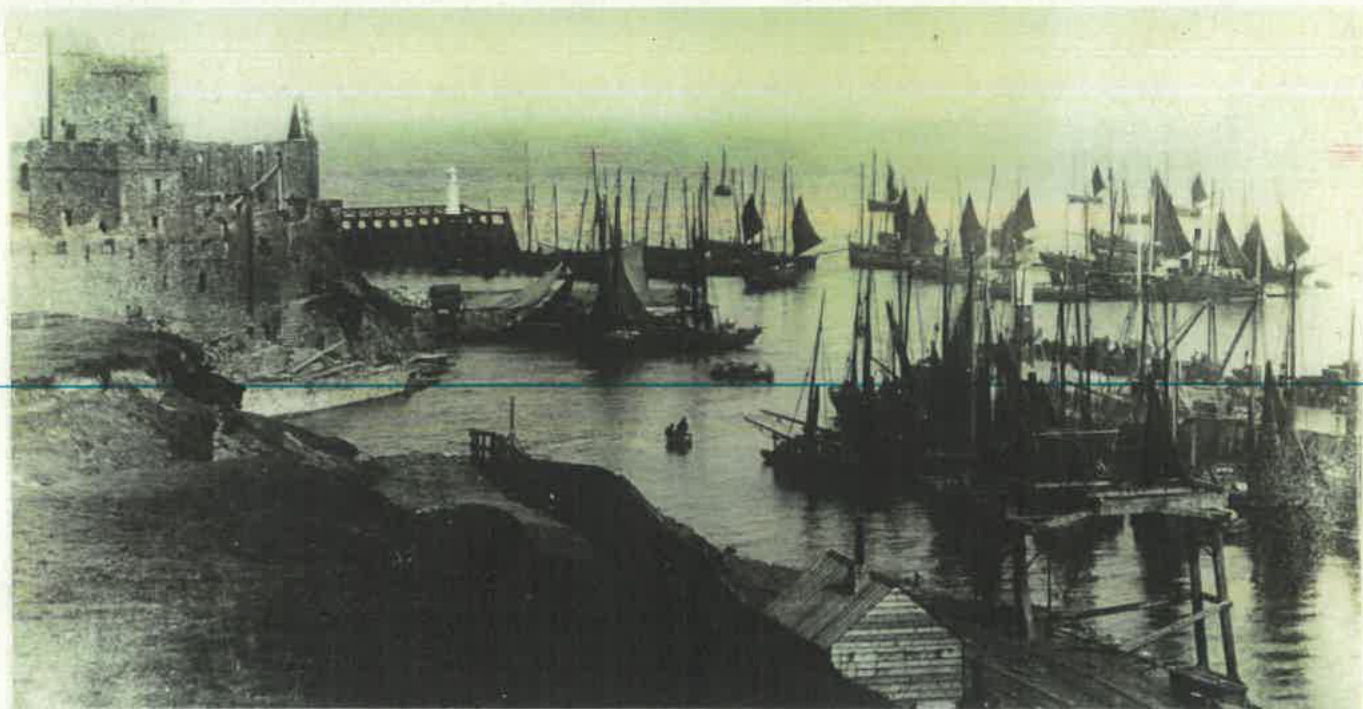
Peel breakwater was built to protect the fishing harbour of Peel and was originally constructed in a creosoted timber birdcage design known as an Abernethy Breakwater. This structure was deemed to be inadequate and works began on the existing breakwater in 1863, encasing the existing timber structure and extending further into the bay. The breakwater is constructed with stone and concrete walls and rubble infill; the project was completed in 1896.
Photograph 8 - Photo of original Abernethy Breakwater (c.1860 - imuseum)
Page 8 | 16
Scope of Works 26th September 2025
The building is not contemporary with the stone breakwater, and it has been constructed in two distinct phases.
Constructed at some time in the 50-60's, the Public conveniences are masonry construction, with asphalted concrete slab flat roof. The masonry walls appear to have been built off a 150mm thick concrete mat cast directly over the original cobbled surface. It is assumed that this is when the original foul sewer was installed and the outfall to the sea was established.
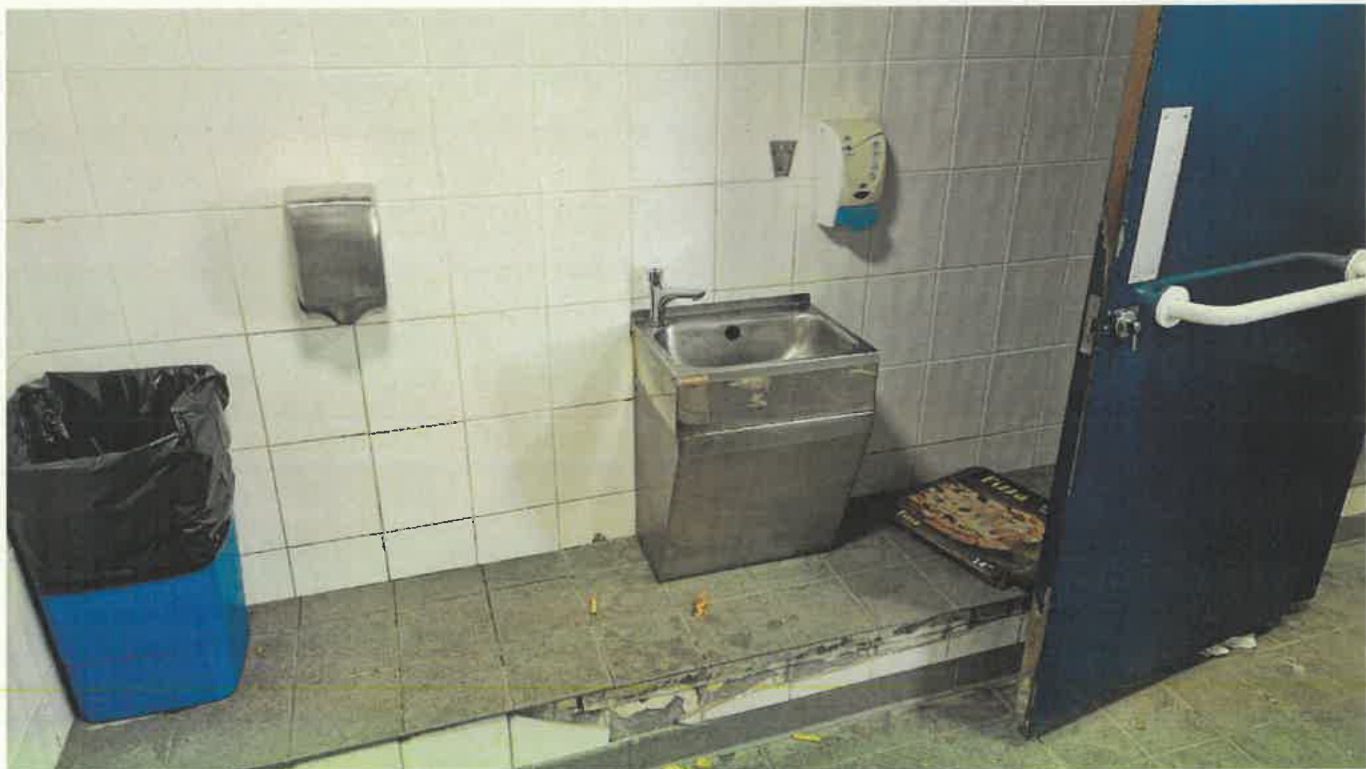
Built against the north wall of the breakwater, the original plinth and lower walkway are merged into the structure. The flat roof abuts the walkway, and the plinth is visible throughout the back of the conveniences.
Photograph 9 - Photo of handbasin within Ladies Convenience showing plinth
For many years a timber kiosk operated from the base of the pier, adjacent the public conveniences. In 2007 plans were approved for a permanent structure to house the facility. The Kiosk is built against the north wall also and shares a partition wall with the Ladies conveniences (the original window is obscured). Constructed in dense concrete block cavity wall, it is assumed that the structure is also built off a 150mm concrete matt on the original cobbled surface.
The concrete base plinth appears to have been demolished within the footprint of the kiosk during its construction.
Originally finished in a hard wearing square cobbled stone, the original surface has been replaced over the years with concrete cast in-situ slabs. The finishes are a patchwork mix of cobbles and concrete, with concrete replacing cobbles when any works have been undertaken over the years during repairs and installing services. The seating area in front of the kiosk has a raised timber deck built directly off the concrete hardstanding.
Scope of Works 26th September 2025
Refer to Kinleys Consulting Engineers drawings:
The site boundaries including working area, welfare facilities, compound, and Contractor parking, will be as noted on the Department of Infrastructure contract documents.
The Contractor will be responsible for giving 2 weeks' notice of the proposed start date to the public and other interested parties prior to setting up the site. This will be in the form of posted notices on the public conveniences and at the harbour masters office on the breakwater. The RNLI and the Kiosk business are to be informed in writing.
Upon hand over of the site the Contractor will take responsibility for the public conveniences. To allow for unhindered access to the building it will be closed to the public for the duration of the works. Temporary public conveniences will be supplied by the Client.
The site working area, compound, and welfare facilities, are to be always secured against unauthorised access. Suitable fencing must surround the site and be locked when the Contractor is not on site.
Site welfare facilities are to be provided by the Contractor and will be located within the site boundary.
The extent and location of the site compound is at the discretion of the Contractor but must be located within the site boundary. There will be no storing of materials and equipment anywhere else on the breakwater without prior permission from the Client.
Contractor parking will be within the site boundary designated to the Contractor within the Department of Infrastructure contract documents. No Contractor vehicles are to be parked anywhere else on the breakwater without prior permission from the Client.
The breakwater must always maintain functionality, with access to the full extent for fisherman, workmen and the public. Vehicular and pedestrian access must be maintained with an access corridor at least 4.8m wide provided throughout the duration of the contract. Parking should be suspended within this corridor.
During some work activity traffic control measures may be required to safely conduct works whilst maintaining access; a banksman may be required at times.
Any essential site activity that may cause temporary suspension of access and possible disruption of third party activities, should be notified to the Client in advance. A minimum notice period of 10 working days should be given to enable the Client to notify stakeholders.
Page 10 | 16
Scope of Works 26th September 2025
All existing services and drainage runs have been recorded following a visual inspection and with anecdotal evidence. No manholes were able to be lifted, and drawings are based on assumed runs.
Soakaway designs are based on the results of a single percolation test undertaken by Duncan Robertson of CTAS, the location of which is several metres from the proposed soakaway location.
The Contractor is responsible for a survey of the existing system to verify the assumptions made during the design. The survey should include for a camera survey of the system to investigate the possibilities of any additional incoming lines that are currently unknown.
Any variance from the existing layout should be highlighted to Kinleys Consulting Engineers to determine whether there are any implications to the proposed design.
The Contractor is responsible for undertaking a percolation test at the proposed location of the soakaway. The test should be performed as described in BRE Digest 365 with a minimum of three tests: results to be relayed to Kinleys Consulting Engineers to be used to verify the validity of the soakaway design.
During excavation of the percolation test, samples of soil should be taken and sent for WAC analysis so that any arisings from the excavations can be disposed of safely in an appropriate facility.
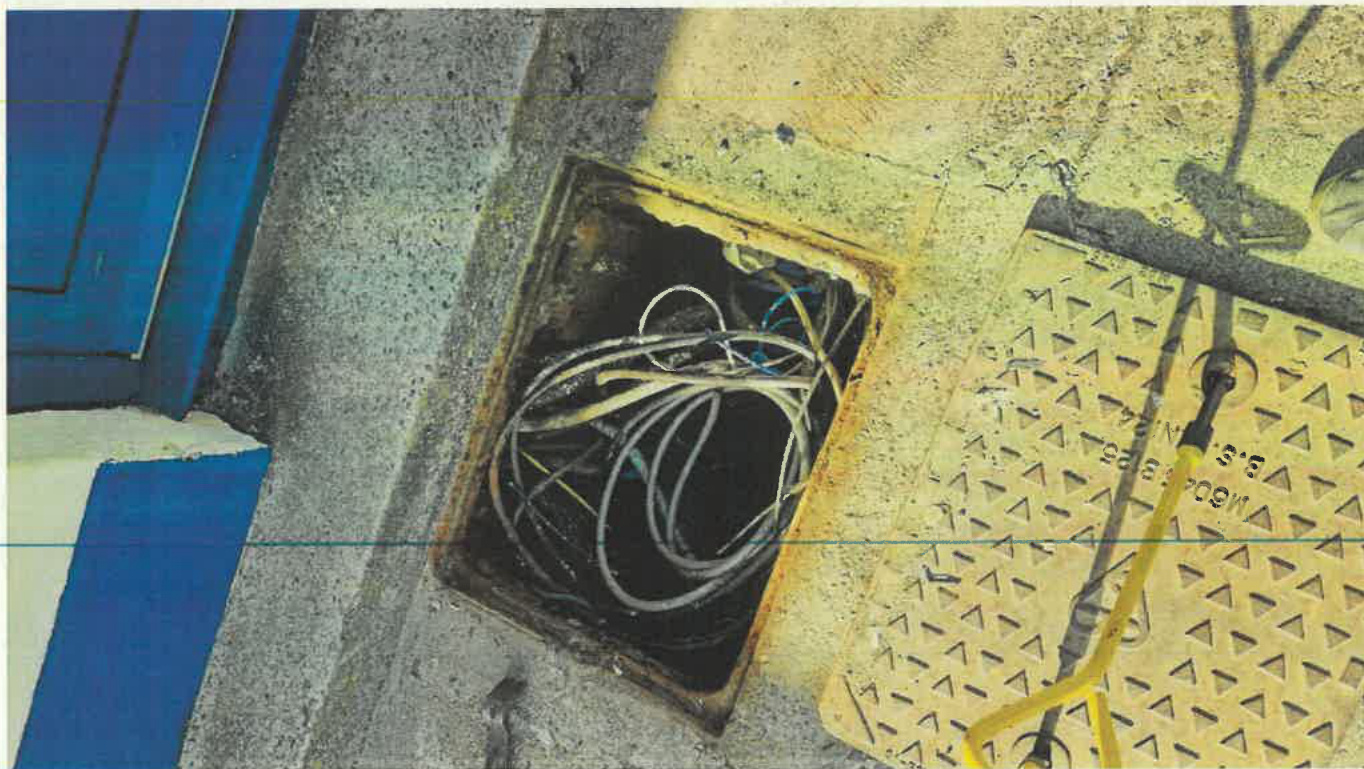
Within the services cupboard there is a Sure Mobile mast server which is connected to incoming data and power cabling. Contractor to liaise with Client’s representatives to determine which conduits are in use and which are obsolete.
Photograph 10 - Incoming cabling to server cupboard
Once site is established and preliminary investigations are complete drainage works can commence.
Page 11 | 16
Scope of Works 26th September 2025
The inspection chamber within the services cupboard represents the head of the proposed system and collects waste from both public conveniences. Invert levels have not been set at this stage since the exact configuration of the incoming stub stacks is unclear and services into the cupboard are not surveyed.
Invert levels will be determined on site to avoid clashes with essential data services and to ensure that all wastewater is adequately collected. Once the invert level is determined the proposed system will be reviewed to confirm proposed levels are adequate.
Contractor to liaise with Sure Mobile ([email protected]) to arrange for removal of server unit.
A new gulley is to be installed within the pavement at the front of the kiosk. Contractor is to liaise with the kiosk staff to arrange working method that will cause minimal disturbance to the operation of the business; this could involve working outside of business hours. Gulley install is outside of the site boundary and separate measures will be required to keep the public safe.
Drainage runs and new inspection chambers to be installed in Class 'S' bedding (150mm granular bed and surround) to minimum falls at levels set by the inspection chamber within the services cupboard. The line of the drainage will require the breaking out of concrete access ramps and may also require dismantling of ramp handrails.
Inspection chambers within the hardstanding areas are to be concrete encased.
Contractor shall safely excavate hole and construct base at level appropriate to incoming drainage. Masonry surrounds are to be constructed to underside of capping slab, and grease separator installed in accordance with Kinleys Consulting Engineers drawings and manufacturers details and specifications.
Once backfilled in accordance with manufacturer's guidelines, the vent pipe and stack to be installed prior to capping. The capping slab will be cast in-situ as per details in drawing 25014-KCE-XX-ZZ-D-C-50003.
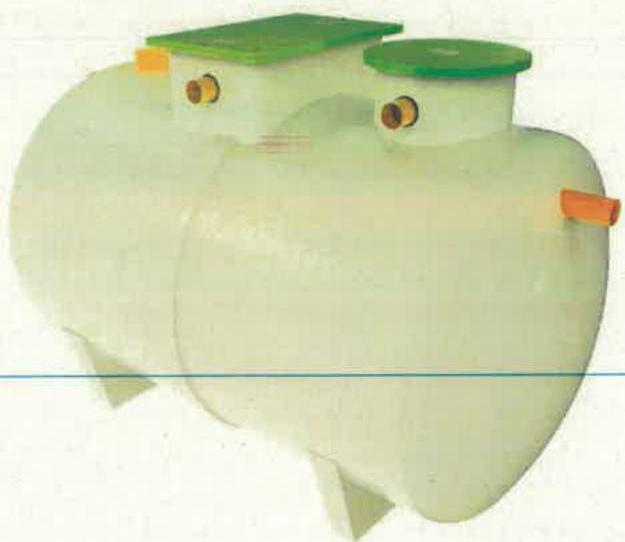
Contractor shall safely excavate hole and construct base at level appropriate to incoming drainage. Masonry surrounds are to be constructed to underside of capping slab, and package treatment plant installed in accordance with Kinleys Consulting Engineers drawings and manufacturers details and specifications.
Once backfilled in accordance with manufacturer's guidelines, the ductwork is to be installed and the Contractor to ensure that ducting is clear prior to capping. The capping slab will be cast in-situ as per details in drawing 25014-KCE-XX-ZZ-D-C-50003.
Contractor is to run an electrical connection through existing telecoms duct to power the kiosk. A small mass concrete extension to existing plinth should be cast upon which the kiosk will sit. The electrical feed from the ducting will run beneath the slab and enter the kiosk through the new base.
If the ductwork has no capacity, or if the ductwork is housing existing telecom/fibre, then a separate standalone duct should be installed to accommodate the new cabling.
Klargester Kiosk to be installed in accordance with manufacturers details and specifications.
Page 12 | 16
Scope of Works 26th September 2025
The blower housing is to be connected to the kiosk with cabling running in a duct beneath the slab and turned up into the new cast in-situ plinth upon which the blower housing sits. Ductwork to the package treatment plant will also terminate at the plinth.
Blower housing to be installed in accordance with manufacturers details and specifications.
Contractor is to install a sample chamber between the package treatment plant and the soakaway to allow for regular sampling of effluent quality. The sample chamber is to be concrete encased.
Contractor is to safely excavate a soakaway to the depths determined by soakaway design (this may differ from depths currently shown on the drawings). A perforated base is to be constructed upon which to sit the precast soakaway chambers. Contractor to install chambers and infill with appropriate media. The excavation surrounding the soakaway chamber is to be backfilled with free draining granular backfill.
A brickwork manhole chamber is to be constructed over the manhole cover slab as per drawing Kinleys Consulting Engineers drawings numbered 25014-KCE-XX-ZZ-D-C-50003.
It is essential that kiosk works cause minimum disruption to the business and should take place outside of regular business hours. It is assumed that the connection of the Kiosk sinks takes place at the end of the program, and with the full consent of the business owner. A date for the works should be given to the business at the start of the project, and any changes to the schedule should be notified to the business as soon as possible.
Confirmation of work dates should be given 10 working days before start to allow the business to accommodate the works. The Contractor is to liaise directly with the business over temporary movement of equipment and fixtures to allow for safe works.
The Contractor is required to install above slab drainage clipped to the outer walls and discharging waste through the southeast corner of the kiosk external wall. The Contractor will core through the outer wall to discharge the above slab drainage into the new gulley pot outside.
The Contractor is to remove all waste off site to an appropriate tip site (refer to WAC analysis) licenced to accept the waste.
Following completion of the drainage installation the concrete hardstanding (including access ramps and handrails) is to be reinstated by the Contractor, including manhole surrounds and flexible joints.
The Contractor is to arrange for the works to be commissioned and signed off by a representative of Klargester prior to hand over, to ensure that the system is functioning effectively. Completion will not be accepted without confirmation of such from Klargester.
Upon completion of the works and successful commissioning of the sewage treatment works the existing abandoned drainage should be filled with a cementitious grout to prevent the passage of water, odour, and vermin.
Page 13 | 16
Scope of Works 26th September 2025
The Contractor shall ensure that the abandoned sewer is sufficiently filled between the services cupboard and the first manhole on the seaward side of the breakwater wall. The manhole within the kiosk is to be infilled full to underside of the existing lid.
The site location and multi-function use results in several site constraints that should be factored into the Contractors plans. Whilst every care has been taken to highlight known constraints the following items can not be considered exhaustive. He Contractor is responsible for considering all external factors that may impact on the execution of the project.
Fuel tankers berth at the outer end of the breakwater approximately twice per month. During offloading of cargo, the breakwater is gated off at midspan and closed to unauthorized access. Fuel delivery schedules are available to the Contractor on request, however due to variances in weather and sea conditions these schedules are subject to change at short notice.
Fuel from the incoming tankers is pumped out of the tanker and piped through a fuel pipeline within the breakwater. The Contractor will be advised of the location of the pipeline, and a two metre (2m) exclusion zone must be adhered to. No excavations are to encroach within two metres of the fuel pipeline.
Works within the services cupboard cannot take place until the Sure Mobile server cabinet has been disconnected and removed from site. Contractor is to liaise with Sure Mobile ([email protected]) and allow 10 working days' notice to arrange for removal of the server. Sure Mobile will require access to reinstall following completion of the inspection chamber and reinstatement of the slab.
Sure Mobile will require one day to remove and one day to reinstall; works to be charged at a rate to be agreed by the Client.
The breakwater is situated on St. Patrick's Isle and is accessed via a bridge over the River Neb. The bridge has a weight limit of twenty tonnes (20T) and presents a tight turn onto the quayside which might be restrictive for long wheelbase vehicles. The Contractor is advised to review delivery routes to avoid any unforeseen issues.
The RNLI lifeboat station is situated south of the site, on the approach to the breakwater. The slipway for the lifeboat is on the opposite side of the road and the area in front of the lifeboat station is an urban clearway; no stopping allowed within the yellow hatched road markings.
Besides emergency deployment of the lifeboat, regular training exercises are undertaken at the lifeboat station, with full deployment of the lifeboat which may cause temporary suspension of access to the site.
Public access to the breakwater wall walkway must be maintained for pedestrians throughout, as well as vehicular and pedestrian access to the full extent of the pier.
Page 14 | 16
Scope of Works 26th September 2025
The breakwater is a working area open to fishermen year round, 24 hours a day, for the purposes of docking boats and landing their catch. Access to the boats for fisherman and their tending vehicles must be always maintained.
The Kiosk will remain open throughout the duration of the works; this will result in a high volume of public traffic in and around the proposed works. Dust and odour suppression must be considered to prevent nuisance to the diners utilising the external seating area.
The Contractor is expected to liaise directly with the management of the Kiosk to maintain a good working relationship that is necessary to achieve the smooth execution of the works.
Remnants of the old Abernethy Breakwater may be encountered during excavation for some of the deeper installations. The timber frame was not dismantled during construction of the present stone structure and timber may remain in reasonable condition due to treatment by creosote. It may be necessary for the Contractor to remove some sections of the old timber structure and to dispose to a facility licensed to receive hazardous waste (creosote).
The Contractor is required to produce a full program of works prior to starting on site, with key dates highlighted including those that impact third parties such as the Kiosk management. The Contractors program should follow where possible the following sequence of works, unless the Contractor is able to advise on a more suitable method in terms of contract period and third party disruption.
Page 15 | 16
Scope of Works 26th September 2025
Page 16 | 16
Water Management Solutions
Please request copy of specific sales drawing from our sales department {{table:546246}}
| Part Code | 1014882 |
| Issue | 02 – ECN 2191 |
| Description | BioTec+ 4-9 Manual |
| Date | March 2025 |
Copyright in submitted documents remains with their authors. Request removal
