Loading document...
xii. 11/00840/B - erection of replacement dwelling (see below), refused at appeal due to its design and massing being strikingly out of character with the landscape in which it would sit. There were also concerns about the size of the residential curtilage. The inspector refers to the scheme being modern and innovative but would be inappropriate here due to its size and design and would not result in an environmental improvement as it did not respond to its context:
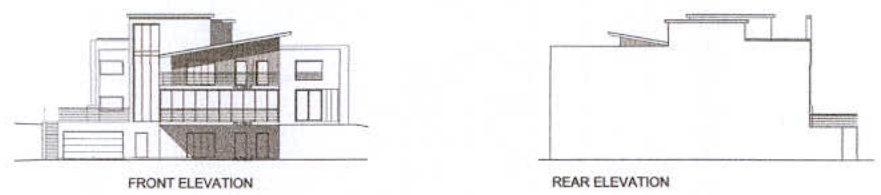
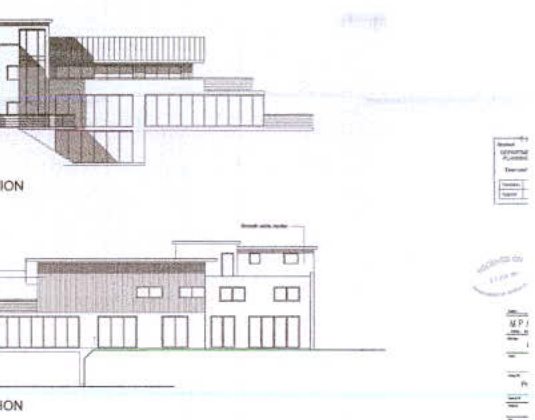
Other applications in the vicinity:
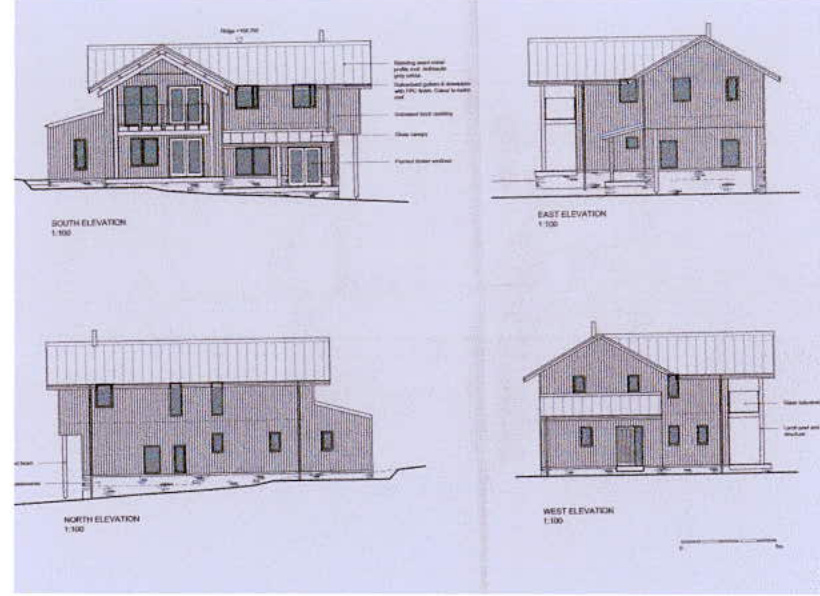
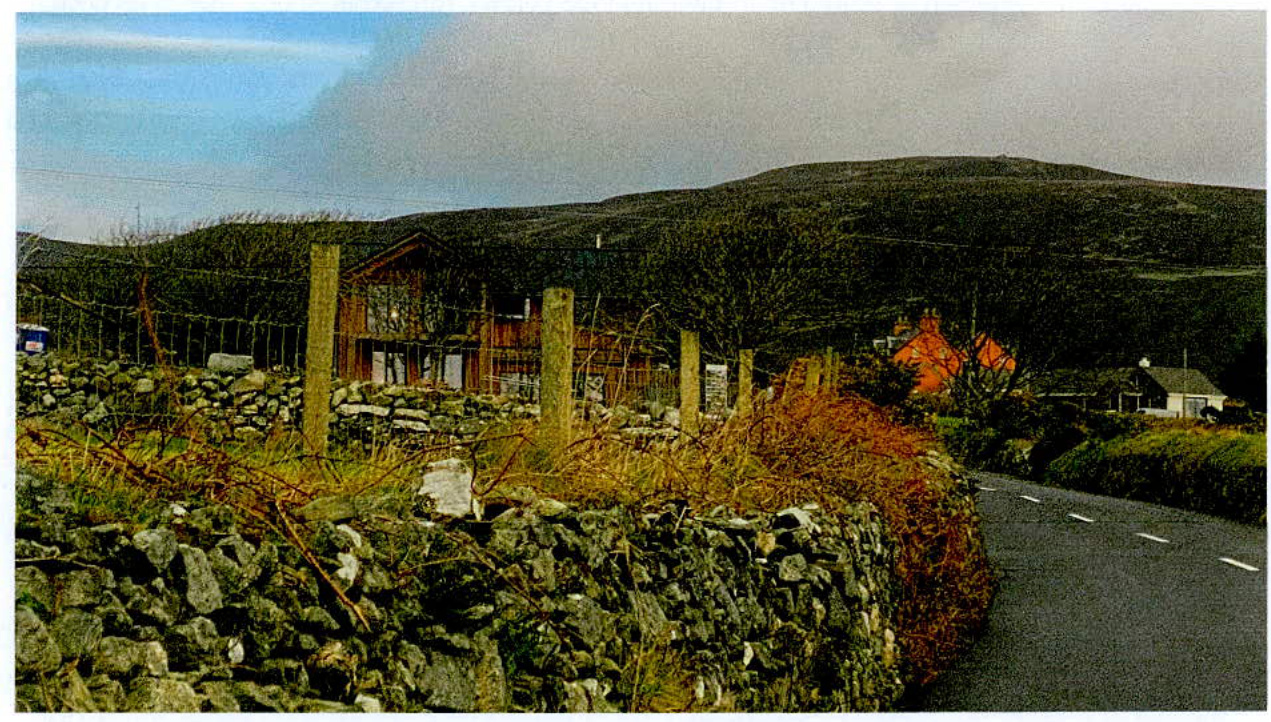
xiii. Permission was granted for the replacement of Fern Villa to the south of this site (20/01116/B): this includes an agricultural building/garage on a site of approximately one acre.
Sarah Corlett Town Planning Consultancy Ltd Registered address: Ballachrink Croft, Ballacorey Road, Bride, Isle of Man IM7 4AW t: 07624 485517 e: [email protected] w: www.sarahcorlett.com Directors: Sarah Elizabeth Corlett, Nicola Jane Corlett Company Registration 134325C
Sarah Corlett Town Planning Consultancy Ltd Registered address: Ballachrink Croft, Ballacorey Road, Bride, Isle of Man IM7 4AW t: 07624 485517 e: [email protected] w: www.sarahcorlett.com Directors: Sarah Elizabeth Corlett Nicola Jane Corlett Company Registration 134325C
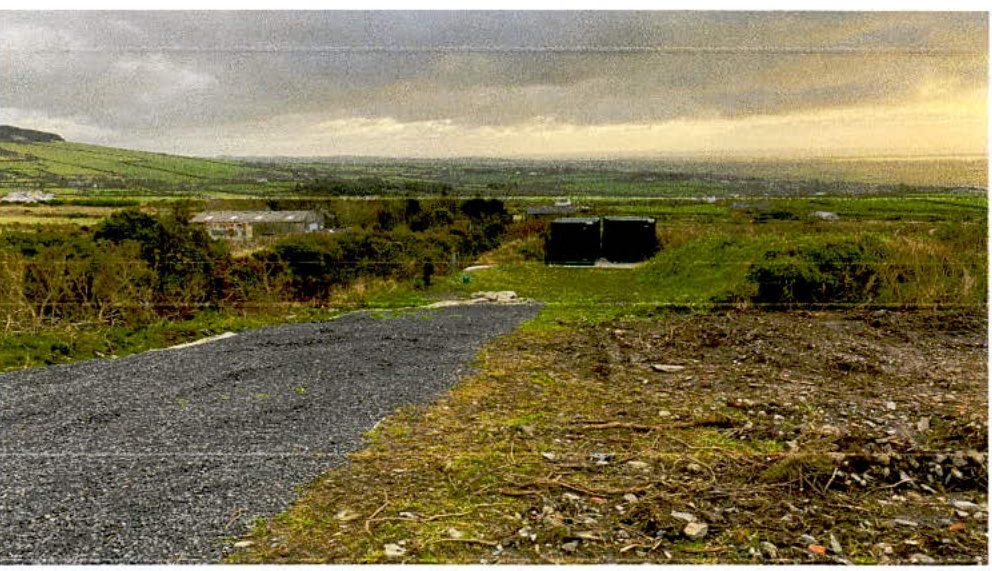
4.1 As originally submitted, the application proposed alterations to the house, the erection of a barn, and a pump house. Following comments from the Planning Officer and Ecosystems Policy Office, the proposal was amended to remove the proposed alterations and extensions to the house, to relocate the barn and provide additional information in respect of the ecological sensitivity of parts of the site. This information was received and circulated and put online.
4.2 The applicant was advised that there were concerns about the internal layout of the barn, although nothing has been published to this effect and he had not had anything in writing until 02.02.2023. The applicant had sought clarification of this from both the Planning Officer and the Department's Agricultural Officer but had received no response from either until today. As such, he sought his own independent agricultural advice and now provides additional information in respect of the barn, in the form of a report by Rural Business Consultancy Ltd, dated 20th January, 2023. The plan and layout of the barn has also been amended, ventilation added in the ridge and additional landscaping and mounding is now proposed to better screen the building.
4.3 The Department was e-mailed on 22.12.2022 to ask for additional time to be able to submit this additional information and respond to the concerns which had been raised and also to provide clarification on the issues which were to result in a recommendation for refusal. An automatic response advising of current workload levels and potential delays in responding was received on 22.12.2022 with no further response being received in this respect until today but as the application remained undetermined so we assumed that there was an opportunity to submit further information and commenced work on that. A response was received today from the planning officer, providing the comments of the Agricultural Adviser and also seeking further clarification of which parts of the application were at issue. As we were ready to submit the additional information, we have proceeded on this basis.
4.4 The applicant is not aware that there are any issues with the proposed pump house which is intended to better facilitate a supply of potable water to the property and to be built on the footprint of and enclosing two existing tanks.
Sarah Corlett Town Planning Consultancy Ltd Registered address: Ballachrink Croft, Ballacorey Road, Bride, Isle of Man IM7 4AW t: 07624 485517 e: [email protected] w: www.sarahcorlett.com Directors: Sarah Elizabeth Corlett, Nicola Jane Corlett Company Registration 134325C
4.5 The applicant understands the ecological sensitivity of the site and has relocated the barn to a place which is not ecologically sensitive and note Ecosystems Policy Office's response of 15.11.22 that states "We very much welcome this alteration and can confirm that we are happy with the updated barn location". They go on to suggest conditions about a Construction Environmental Management Plan and the applicant is happy to accept that and to work with EPO in the protection of the site and the introduction of new, appropriate planting to mitigate any loss of habitat from the proposed works although would suggest that there will not be any loss of habitat as a result of the pump house, as is suggested by EPO. 4.6 The siting of the barn is close to the approved site of stables (which would have been on the ecologically sensitive area) but relocated further from it and where the site has been partly excavated following that approval in 2008. The barn will be finished in green cladding and is partly dug into the natural ground slope with new mounding in front, limiting the visual impact to only the green slope of the roof and hardly any of the external walls as shown in the sectional drawing. The internal layout has also been amended to reflect the comments of the Agricultural Officer of the Department which were provided to us yesterday. He does not appear to object to the principle of the application and we would be happy to accept a condition requiring this if it is considered necessary. 4.7 The report from Rural Business Consultancy Ltd confirms that the building is justified in respect of the 20 acres of pastureland and the proposed increase in agricultural activity, introducing a 55 strong ewe flock and small area of vegetables. It refers to the range of equipment needed which currently has to be stored outside due to no suitable storage facilities and notes the resultant increased depreciation is increased and reduction in the lifespan of the machines as well as the reduction in the ability to maintain machines due to the lack of dry facilities. 4.8 The report explains that the provision of shelter for the livestock is good practice to ensure health and welfare will be not be compromised. This is an essential part of the code of conduct for animal welfare. It also confirms that the provision of a building to house ewes through the inclement weather and especially at lambing ensures that mortality is kept to a minimum and that livestock can be handled and cared for appropriately as well as the ability to store fodder for the ewes under cover is also key to reduce wastage, ensure feed is top quality and that costs are kept low. Poor quality feed can increase the risk of disease and health issues for the livestock. It concludes that the building would be fully utilised for the agriculture operations proposed. 4.9 We believe that this provides sufficient justification for the barn, satisfying General Policy 3 and Environment Policy 15. We also believe that the design, position and finish of the building and the landscaping proposed will not result in an adverse impact on the landscape, as is required by Environment Policy 1. The proposal will not result in any break of the skyline as is noted as important in the Landscape Character Assessment and ensuing policies in the Area Plan or the views out to sea. The building respects the natural slope of the land and its roof will continue this natural landform as can be seen in the side elevation drawings.
4.10 It is relevant that this particular part of the landscape is characterised by buildings scattered within it, including agricultural buildings, some, but not all of which are close to existing houses and other buildings. This part of the hillside is not particularly conspicuous due to the topography of the site and existing vegetation and we believe that the proposed buildings will not have a significant or adverse impact on the landscape as viewed from the front or the footpath from the rear. 4.11 In light of the additional and amended information we have provided, we believe that the proposal complies with all of the relevant policies and will have an acceptable impact on the environment, arguably enhancing it by introducing additional planting, as directed by EPO and will enable the land to be farmed and managed, supporting local agriculture and the Island's self sufficiency in a small way.
02.02.2023
or isolated areas or close to public highways and in all such cases will be subject to appropriate landscaping. The nature and materials of construction must also be appropriate to the purposes for which it is intended. Where new agricultural buildings are proposed next to or close to existing residential properties, care must be taken to ensure that there is no unacceptable adverse impact through any activity, although it must be borne in mind that many farming activities require buildings which are best sited, in landscape terms, close to existing building groups in the rural landscape.
Environment Policy 19: Development of equestrian activities and buildings will only be accepted in the countryside where there will be as a result of such development no loss in local amenity, no loss of high quality agricultural land (Classes 1 and 2) and where the local highway network can satisfactorily accommodate any increase in traffic (see Environment Policy 14 for interpretation of Class 1 and 2).
Environment Policy 20: There will be a presumption against large scale equestrian developments, which includes new buildings and external arenas, in areas with High Landscape or Coastal Value and Scenic Significance unless there are exceptional circumstances to override such a policy.
Environment Policy 21: Buildings for the stabling, shelter or care of horses or other animals will not be permitted in the countryside if they would be detrimental to the character and appearance of the countryside in terms of siting, design, size or finish. Any new buildings must be designed in form and materials to reflect their specific purpose; in particular, cavity-wall construction should not be used.
Environment Policy 40: Development will not be permitted which would damage, disturb or detract from an important archaeological site or an Ancient Monument or the setting thereof.
Environment Policy 41: The Department will require that archaeological evaluations be submitted prior to the determination of proposals affecting sites of known or potential archaeological significance. In cases where remains are affected but preservation in-situ is not merited, the Department will expect to secure excavations and/or recording in advance of construction work either by the imposition of suitable conditions attached to a planning permission or through a formal agreement entered into with the developer.
Housing Policy 12: The replacement of an existing dwelling in the countryside will generally be permitted unless: (a) the existing building has lost its residential use by abandonment; or (b) the existing dwelling is of architectural or historic interest and is capable of renovation.
In assessing whether a property has lost its habitable status(1) by abandonment, regard will be had to the following criteria: (i) the structural condition of the building; (ii) the period of non-residential use(2) or non-use in excess of ten years;
(iii) evidence of intervening use; and (iv) evidence of intention, or otherwise, to abandon.
Housing Policy 13: In the case of those rural dwellings which have lost their former residential use by abandonment, consideration will be given in the following circumstances to the formation of a dwelling by use of the remaining fabric and the addition of new fabric to replace that which has been lost. Where: a) the building is substantially intact; this will involve there being at least three of the walls, standing up to eaves level and structurally capable of being retained; and b) there is an existing, usable track from the highway; and where c) a supply of fresh potable water and of electricity can be made available from existing services within the highway. (1) Habitable Status is defined in Appendix 1 (2) Non residential use is defined in Appendix 174 This policy will not apply in National Heritage Areas (see Environment Policy 6). Permission will not be given for the use of buildings more ruinous than those in (a) above, or for the erection of replacement buildings. Extensions of dwellings formed in accordance with the above may be permitted if the extension is clearly subordinate to the original building (i.e. in terms of floor space(3) measured externally, the extension measures less than $50 \%$ of that of the original). 8.11.2 It is important that replacement dwellings should relate closely to the buildings they replace in terms of siting and size, that the resulting visual impact is appropriate for the countryside, and that existing stone and slate are re-used.
Housing Policy 14: Where a replacement dwelling is permitted, it must not be substantially different to the existing in terms of siting and size, unless changes of siting or size would result in an overall environmental improvement; the new building should therefore generally be sited on the "footprint" of the existing, and should have a floor area(1), which is not more than $50 \%$ greater than that of the original building (floor areas should be measured externally and should not include attic space or outbuildings). Generally, the design of the new building should be in accordance with Policies 2- 7 of the present Planning Circular 3/91, (which will be revised and issued as a Planning Policy Statement). Exceptionally, permission may be granted for buildings of innovative, modern design where this is of high quality and would not result in adverse visual impact; designs should incorporate the re-use of such stone and slate as are still in place on the site, and in general, new fabric should be finished to match the materials of the original building.
Consideration may be given to proposals which result in a larger dwelling where this involves the replacement of an existing dwelling of poor form with one of more traditional character, or where, by its design or siting, there would be less visual impact.
Smooth rounded summits, such as South Barrule, slope down to the steep coastal cliffs in the west and numerous steep sided upland glens flow down the southern slopes to the southern lowlands. Numerous large coniferous plantations with abrupt edges such as the ones at Stoney Mountain and Corlea cover large areas of the upland slopes, but leave the higher summits clear with panoramic views out to sea and across the Island.
Expansive wind swept areas of open moorland vegetation including heather, rough grasses and rough grazing. These give way to areas of exposed rock, bracken and patches of gorse on the steeper lower peripheral slopes that adjoin the Incised Inland Slopes Landscape Character Type to the south. Historic field patterns are visible in remnant form around places like Lower Scard and the Lagg River, where the mountain sod hedges have been abandoned and overgrown. Numerous small steeply sided burns cut through the area with low native scrub growing in the shelter offered by the deep ravines. Isolated white-washed hill farms and outhouses surrounded by trees are scattered on the lower slopes in areas such as on the slopes above Foxdale and on the lower upland slopes north of Port Erin around East Bradda. These are accessible by numerous stone wall lined roads and numerous green lanes with occasional post and wire fencing. These lanes attract numerous recreational users.
Cairns, Sheilings, abandoned farms, areas of peat cutting, disused mines (Cross Vein, Dixon Vein) and quarries show the former land uses that once took place in this area, with quarries such as Barrule Beg still in use. Other signs of human activity in the area include the telecommunications masts at Carnagrie and the Global seismology mast on the western side of South Barrule. There is a strong sense of tranquillity and a remote unified character in this area due to the sparsity of visible evidence of human presence, with the notable exception of the telecommunications masts and roads. The skyline is smooth and uninterrupted and large in scale.
The overall strategy for the area should be to conserve and enhance the character, quality, and distinctiveness of the open and exposed character of the moorland, its uninterrupted skyline and panoramic views, its sense of tranquillity, and remoteness and its wealth of cultural heritage features.
Sarah Corlett Town Planning Consultancy Ltd Registered address: Ballachrink Croft, Ballacorey Road, Bride, Isle of Man IM7 4AW t: 07624 485517 e: [email protected] w: www.sarahcorlett.com Directors: Sarah Elizabeth Corlett, Nicola Jane Corlett Company Registration 134325C
Copyright in submitted documents remains with their authors. Request removal
