AP250020 2400859B Fraser Reid Design Appeal Statement on Behalf of the Applicant
AP25/0020·13 pages·PDF
Appeals & Inquiry›Appeal Statement
1 of 8use ← → arrow keys
Loading document...
AP250020 2400859B Fraser Reid Design Appeal Statement on Behalf of the Applicant
PA24/00859/B ERECTION OF A SINGLE STOREY DWELLING PLOT OF LAND NORTH OF SCRONDALL, GLEN ROAD, BALLAUGH, ISLE OF MAN STATEMENT OF CASE ON BEHALF OF: MRS H M RADCLIFFE, APPLICANT/APPELLANT
SUMMARY
The development is in a locality, Ballaugh Glen, that can comfortably be recognised as a ‘hamlet’ in which development could be successfully accommodated and upon which basis, much residential development has been approved over the years.
The proposal is for infill development not sporadic or isolated development in the countryside.
Unfortunately, the proposed area plan for the North and West totally ignores Strategic Policy guidance (para 8.8.3) in not identifying small settlements for the provision of (new) appropriate development. This proposal falls into the latter category (as per para
8.8.2) in being an applicant who grew up along Glen Rd and close family members still live in surrounding properties to the area including running a nearby farm that utilises some of the surrounding farmland. This proposal would marry in with the existing development.
The principle physical features of the locality of Glen Road, namely Western and Eastern field and tree backdrops would not be harmed by the development.
No substantive objections have been received from Statutory consultees or third parties.
The principle physical features of the locality of this part of Glen Road would not be harmed by the development.
Consideration of the application has given insufficient weight to the lack of harm to the countryside which would arise from the development, instead reviewing the site in an incorrect manner.
The proposed dwelling is a typical example of rural/surrounding properties in aesthetics and sizing and not be detrimental to the area.
2.0 Backstory to application
The below is deemed to be important to give the Inspector a clear insight into the application but appreciate the following points do not relate specifically to the 3 reasons for refusal outlined in the Planning Decision and Report.
2.1 It should be made clear that this application has been one that is felt to have been poorly dealt with and not to the level expected or required, especially for Government sectors that employ civil servants who are meant to provide a service to the public.
2.2 It took a total of 10 months to get to the decision stage via Planning Committee. This far exceeds the Planning Departments time aims for a type 3 application as per the IOM Government website (pabc.gov.im).
2.3 A change of Planning Officer was had 5 months (December 2024) into the application. Whilst this was incredibly frustrating due to the timeline already created, a significant effort was put in by Agent and Applicant to bring the new officer up to speed so that a decision could be reached.
2.4 This involved organising an in person meeting between Agent and Officer at the Planning Department. This meeting lasted approximately one hour and allowed for the application to date to be reviewed and discussed. At this meeting, it was made verbally clear by the Officer that the application was finely balanced and that they would ensure that their written report was formed correctly to acknowledge this fact, especially as it was requested to go in front of the Planning Committee.
2.5 The officer also requested a new statement was written by the Agent outlining the application to assist them in completing their review of the application. This statement was supplied to the Officer on 20th February 2025.
2.6 Unfortunately, only one brief update was received from the officer following that (11th March) saying they were still working on their report and would provide updates as soon as concluded.
2.7 Despite multiple attempts for updates the next awareness was of the confirmation the application was going up in front of the Planning Committee on Monday April 14th and it was recommended for refusal.
2.8 As noted above, the applicant and agent were aware of the finely balanced nature of the application. However, it became apparent very quickly that the officers report was full of inaccuracies and lacking critical information that would instantly omit multiple reasons for refusal put forward on the report. This included dwelling size, ecological information and MUA information to name but a few.
2.9 This is clearly a significant failing and went completely against the finely balanced nature of the application which was noted by the officer and also shows that the officer did not take the time to read through any of the additional information supplied to them as requested by them nor was this application one that was taken on board to be dealt with in the required manner. If the information supplied via the formal planning application was reviewed in the manner it should have been by the Planning Department, this situation would not have happened.
2.10 The application went in front of the Planning Committee on 14th April whereby the Principal Planner requested the application be withdrawn so that an in house investigation could be undertaken into the concern raised.
2.11 A meeting was requested by the Agent and Applicant which was held in person on Wednesday 30th April and included the Planning Officer dealing with the application and a Principal Planner. At this meeting, the concerns by the Agent and Applicant were raised and reviewed.
2.12 Unfortunately at said meeting, it became apparent quickly that justification was applied by the planning department to negate the failings of the application process and review. Two points were also made by both the principal officer and second officer which for the Agent were cause for concern. They were only verbal but struck a chord for going against certain policies and aims of the Strategic Plan and policies/legislation in general.
“It’s not Forestries role to assist with planning applications and that they are in fact doing the planning department a favour as such”.
“Planning not being interested in what species of trees are present on a site or the improvement that would be had. More an overall look that if trees are taken down it goes against policy”.
2.13 Email follow ups to this meeting and those comments were sent by the Agent but to date no replies have been received. Given this included an important question on clarity for dealing with future applications and the Agents belief in tree licences and Sections 4 and 5 of the Tree Preservation Act 1993, surely responses by the Planning Department should have been sent?
2.14 The application was refused at Committee on 19th May 2025. As can be seen on the meeting minutes, the member discussed at length that the updated flood risk maps meant the site would be at an increased risk from flooding. This is completely incorrect as the site is not within the flood risk area at all on the new flood risk maps. It also raises the question of whether the committee members reviewed the application thoroughly as it is clear from the flood departments comments outlined within the officer’s report that they had no objections to the site/proposal. From experience, the flood department would certainly object if they gave cause for concern and risk of flooding.
2.15 This meeting highlighted the lack of role undertaking by the committee members and the planning officer. The members did not give chance for additional comment by the Agent before voting and nor did the Officer clarify this concern as inaccurate. The Committee seem to have leant on the Officer’s reasons to negate taking the time to review the application. If they had reviewed correctly, flooding would not have been brought up as an issue. It raises the question of the effectiveness of Planning Committee in undertaking a fair process.
3.0 Officer Reasons for Refusal Rebuttal
Officer Reason 1. The proposed development is situated outside the settlement boundary of Ballaugh and within the countryside, where residential development is restricted by Strategic Policy 2, Housing Policy 4, and General Policy 3 of the Isle of Man Strategic Plan (2016). The proposal fails to meet the criteria for exceptional circumstances that justify housing in this location, and no 'other material considerations' have been identified to outweigh these policies, which have been informed by public consultation and adoption by Tynwald.
Strategic Policy 2 Description: New development will be located primarily within our existing towns and villages, or, where appropriate, in sustainable urban extensions(2) of these towns and villages. Development will be permitted in the countryside only in the exceptional circumstances identified in paragraph 6.3.
3.1 The site is on one of two roads off of the A3 main road running through Ballaugh. This road on the IOM hierarchy map is classed as access. This is the same level to which the main proportion of Ballaugh settlement is located.
3.2 The site is only 0.8km from the village settlement boundary. This in fact would be reduced more going by certain sites noted on the recent inspection into the North and West Area Plan.
3.3 This is a small distance to a village that has a public house, shop, school, village hall, church, amenity space and strong connections to public transport that goes to all areas of the IOM.
3.4 Ballaugh is classed as Village on the Settlement Hierarchy and Policy Approach table 5 within the written statement for the North and West Area Plan. It states development should maintain the existing settlement character and should be of an appropriate scale to meet local needs for housing and employment opportunities.
3.5 This proposal clearly meets this approach as it maintains the character of the Glen Road settlement and is of an appropriate scale that meets the specific needs of the applicant.
Housing Policy 4 Description: New housing will be located primarily within our existing towns and villages, or, where appropriate, in sustainable urban extensions(1) of these towns and villages where identified in adopted Area Plans: otherwise new housing will be permitted in the countryside only in the following exceptional circumstances:
(a) essential housing for agricultural workers in accordance with Housing Policies 7, 8, 9 and 10;
(b) conversion of redundant rural buildings in accordance with Housing Policy 11; and
(c) the replacement of existing rural dwellings and abandoned dwellings in accordance with Housing Policies 12, 13 and 14.
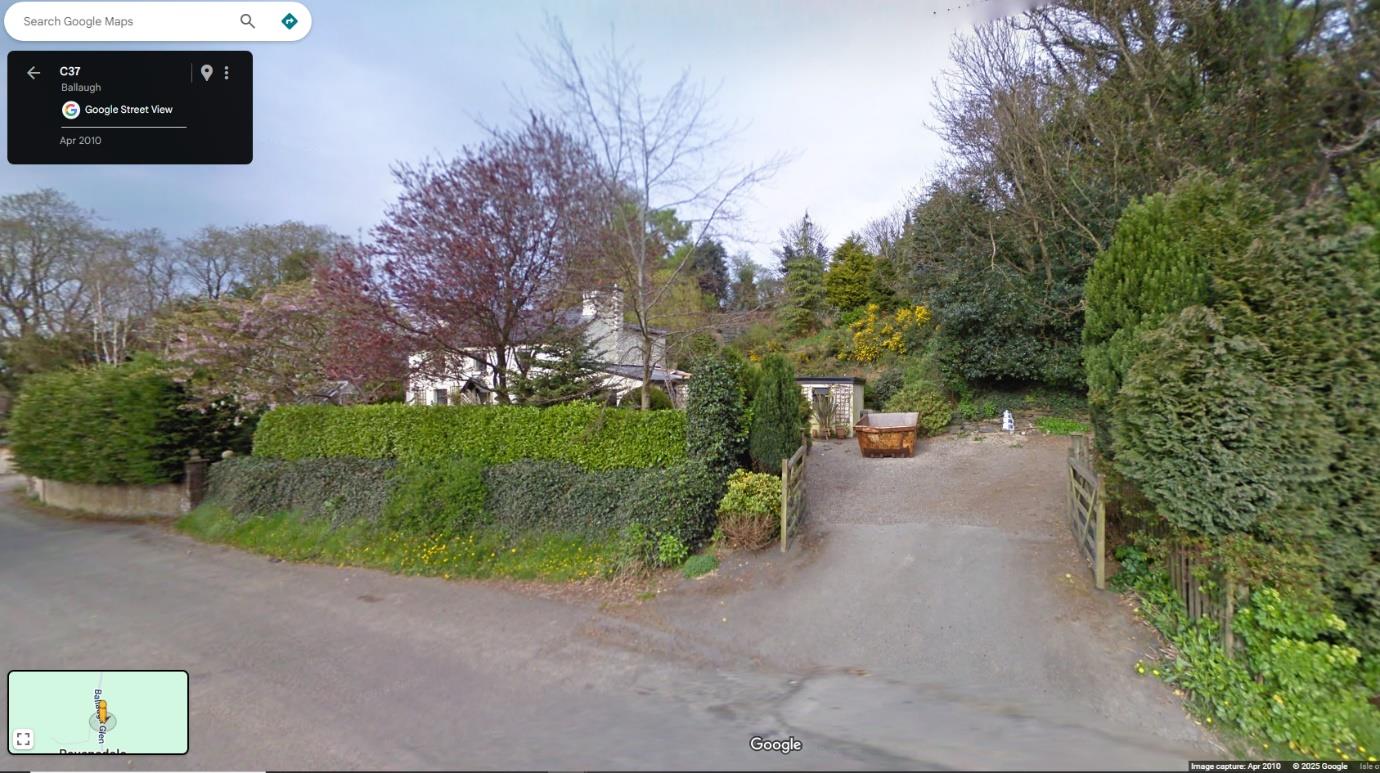
3.6 The proposal is a sustainable urban extension of Ballaugh Village. The proposal is for infill development not sporadic or isolated development in the countryside. The site can clearly be seen for what it is on the 2010 Google street view. It is not open countryside, woodland nor an enclosed field.
3.7 Unfortunately, the proposed area plan for the North and West totally ignores Strategic Policy guidance (para 8.8.3) in not identifying small settlements for the provision of (new) appropriate development. This proposal falls into the latter category (as per para 8.8.2) in being an applicant who grew up along Glen Rd and close family members still live in surrounding properties to the area including running a nearby farm that utilises some of the surrounding farmland. This proposal would marry in with the existing development.
3.8 The planning officer has failed to take this strong policy on board and it is felt this is a strong material consideration to be factored into this application.
8.8 Groups of Houses in the Countryside Description
8.8.1 There are in the countryside many small groups of dwellings which, whilst not having the character of, or the full range of services usually provided in a village, nevertheless have a sense of place and community. These groups are found variously at crossroads, in places sheltered by trees or topography or around chapels, abandoned mills or smithys.
3.9 The Ballaugh Glen Road has a strong sense of place and community.
3.10 There are approximately 25 houses to the North of the proposed site along the road on similar plots.
3.11 There are approximately 15 houses to the South of the proposed site along the road on similar plots.
3.12 These plots are located on both sides of the road as is the case for many locations throughout the IOM, including villages.
3.13 The site in question is in a location sheltered by trees.
3.14 The site in question was next to an old workshop that has in the past been replaced with a residential dwelling.
3.15 Infill Clarity: Below is a snapshot overlay showing the main existing settlement properties along the Ballaugh Glen road and the proposed site. This clearly shows the proposal site being naturally infill into the existing settlement.
8.8.2 Adding further dwellings to these groups may not accord with our strategic objectives relating to settlements and sustainability but may assist in meeting the need of rural areas; may maintain social and family associations and assist in sustaining the rural economy; and may reduce the pressure for purely sporadic and
isolated development which the Department would not support. Such additions would also need to be sensitively related to the existing settlement pattern and the landscape.
3.16 The site in question would meet the need of this rural area by creating an additional dwelling that Ballaugh needs and can have without any detriment.
3.17 The proposal would allow for maintaining strong social and family association and sustain the rural economy. The applicant grew up along Glen Rd and close family members still live in surrounding properties to the area including running a nearby farm that utilises some of the surrounding farmland.
3.18 The site is very specific and certainly not a random area of open countryside. This would reduce the pressure for sporadic and isolated development.
3.19 The proposal has been sensitively designed to relate to the existing settlement pattern and landscape of Ballaugh Glen Road. It would be surrounded by several residential properties of varying styles forming a cluster that is typical on the IOM.
8.8.3 In the most recent local and Area Plans, the Department has in fact identified a number of these opportunities and in future Area Plans all groups of houses in the countryside will be assessed for development potential by identifying the village envelope or curtilage and providing the opportunity for appropriate development within this area. There may be some settlements where no additional dwellings will be permitted. In considering the definition of this curtilage or envelope, particular regard will be had to the value of existing spaces in terms of their contribution to the general character of the settlement or to public amenity more generally. It is important, however that such development is controlled by the development plan process rather than as ad hoc decisions taken in isolation.
3.20 Unfortunately, no mention has been given within the proposed area plan for the North and West to groups of houses in the countryside that could be matched to. This is a big negative for future planning on the IOM considering the large area of what is deemed to be countryside outside of village settlements and the Governments provision aim for appropriate development.
3.21 A sensitively added dwelling on the site would consolidate the hamlet without expansion into the open countryside and would provide a home for a local family strongly connected with the farming economy.
3.22 The proposal would contribute to the character of the settlement and would certainly not be ad hoc.
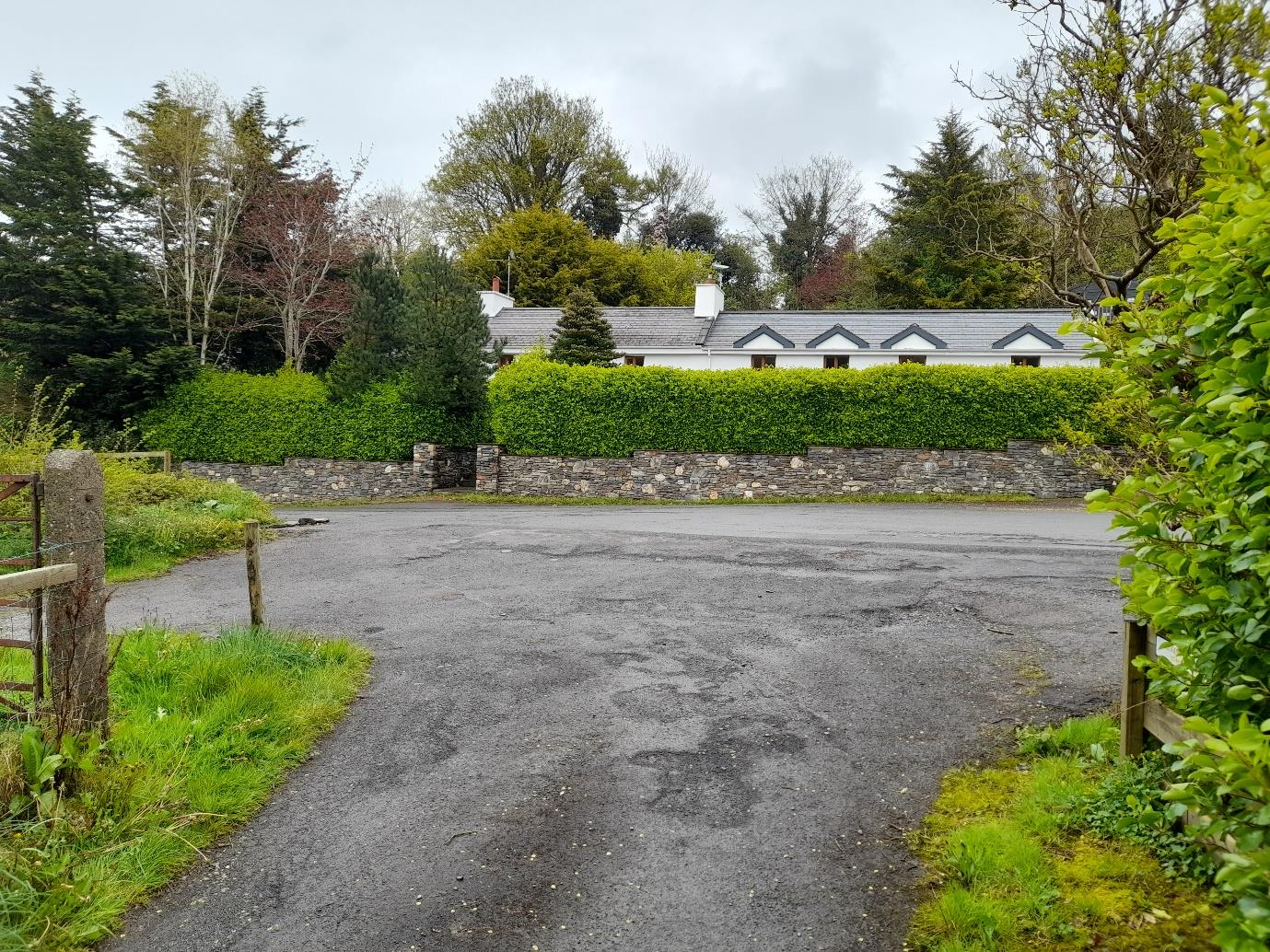
3.23 Carmodil Beg is opposite the site to the East side of Ballaugh Glen Rd. Whilst not a new dwelling, it can be clearly seen from the photographs below, that the dwelling on this site is comfortably over twice the size that it used to be. This dwelling is now far
larger in size than this proposal and shows how development can be done in these areas without being detrimental. This proposal also achieves this.
Carmodil Beg 2010 – Google Street View
Carmodil Beg - 2024
Officer Reason 2. Whilst many of the trees are of low amenity value, their removal still contributes to a fundamental shift in the site's rural and scenic character, affecting its visual integration within the countryside. Although individually these trees may not hold significant aesthetic or conservation importance, their collective presence maintains the character and landscape continuity of the area. The introduction of a domestic built form, combined with the loss of natural features, diminishes the site's ability to align with countryside preservation policies. As a result, the proposal fails to respect the rural setting, conflicting with Environment Policy 2 (EP2) and General Policy 2(b & c) (GP2) of the Isle of Man Strategic Plan (2016), which prioritize the protection of Areas of High Landscape and Scenic Significance.
4.1 The existing site comprises a large portion of Leylandii trees that under the Manx Wildlife Trust information are deemed to be an invasive species to the Isle of Man and often referred to as a weed. The Forestry Department confirmed in their report following a site visit that these trees were unsuited to the landscape and in poor condition.
4.2 The applicant and agent have outlined throughout this application the trees to be removed. This method was undertaken instead of a separate felling licence. This works along the information in Section 4 and Section 5 of the Tree Preservation Act 1993.
4.3 How can the Planning Officer form a refusal reason based on trees being removed that in their words are of low amenity value and hold no significant aesthetic or conservation importance but strong native mitigation proposals have been put forward?
4.4 The presence of invasive weed species does not maintain the character and landscape continuity of the area. This is clearly outlined by the Forestry Department noting them as unsuited to the landscape.
4.5 As per the IOM Strategic Plan 2016, all applications should be judged on their own merits. By not seeing past the low amenity value trees to the site, the Officer is failing to judge the site on its full merits.
4.6 It also raises the important question of Trees proposed to be removed under a planning application versus a licence. The officer given the Forestry Departments comments is aware that these trees could be granted a removal licence and as such omit them from site review.
4.7 The proposal introduces a large portion of site mitigation via new landscaping. This was outlined within the planning statement and on the drawings (PL04rev2 & PL05rev1). This includes native hedging throughout the site, native tree species and wildflower sections.
4.8 This mitigation is improving the sites ability to align with the countryside preservation policies, not diminishing it. Once established, the built form sympathetically proposed will blend in and establish itself with the surroundings.
4.9 The Manx Utility Authority have a wayleave over part of the site for ongoing access to the substation and electricity pole. This was factored into the proposal.
4.10 During the application process, the MUA have visited the site multiple times and have subsequently lopped back and felled several trees from the site. This we are aware is within their power and the Agent informed Forestry of this along with the Planning Department.
4.11 One aspect to note with this is two of these trees were on the opposite side of the river and trees noted as a woodland backdrop to the site.
4.12 The site under the 1982 Development Plan is classed as private woodland and parkland and as noted by the Planning Officer. This has been amended on the Area Plan for the North and West Map 1AN Environmental. It clearly shows the site in question being outside of any noted woodland areas and not within any areas of registered trees. Given the 43 year age on the 1982 Development Plan, it is important for this new document to be given strong material consideration as it is the basis for how the Government and specialist departments view the area.
4.13 Whilst we appreciate the Planning Department must view applications alongside policy, sensible evaluations cannot be based on out of date material or where in this case strong material considerations (new area plan for the North and West) has not been taken into account.
4.14 The main visual to the area is the far backdrop that takes in the Nature Reserve area and afar named the Keyllagh. The proposal does not in any sense impact this and more to the point improves the surrounding aesthetics.
4.15 The proposed building, along with the existing frontage development, would continue to be seen against the rural backdrop. The site and the proposed development would be partly screened by existing and proposed boundary vegetation, thereby softening its visual impression when viewed from the road.
Officer Reason 3. The proposal involves the removal of T2, a category B silver birch identified as holding landscape significance, which directly conflicts with General Policy 2(f) and Environment Policy 3 (EP3) of the Isle of Man Strategic Plan (2016). As the tree is highly visible from various locations it is considered to provide high amenity value to the area. The loss of the birch tree has not been justified in agricultural terms and its removal would have a detrimental impact on amenity and its loss to provide a dwelling on an unallocated site in the countryside is not considered to outweigh the loss of the amenity that would result from the removal of the tree. In addition it is considered that the proposed mitigation measures do not sufficiently compensate for the loss of this key landscape feature, failing to align with policy requirements for woodland preservation
and site integration. Given the non-zoned status of the site, T2's removal cannot be justified against existing policy protections, reinforcing the conflict with EP3 and GP2(f).
5.1 The T2 tree has not been confirmed as a category B tree. It has merely been assumed by the Forestry Department. This is mainly due to the poor condition of it covered in ivy etc.
5.2 The tree does not hold landscaping significance. It is a poorly formed, solitary tree that if anything impedes the more mature and aesthetically pleasing tree line behind.
5.3 It is confusing as to the Officer’s point of the loss of said tree not being justified in agricultural terms. The site and tree do not have any alignment with Agriculture? This is a confusing aspect of a refusal reason. A 2010 Google image to the back of this statement clearly shows the site was not agricultural in any form and also that the tree in question doesn’t hold any landscape value.
5.4 The proposed mitigation proposed was undertaken following Forestry assistance. The mitigation proposed exceeds their assistance by introducing significant areas of native hedging and wildflower space.
5.5 As it seems a lot of Government Departments are, Forestry was very busy throughout this entire application process and it was a struggle to gain any real assistance on the proposal. That led to the mitigation proposed being above what was discussed by them.
5.6 All mitigation proposed is native to the IOM and as such will create a site that far exceeds and improves the existing. Surely this is strong compensation for the loss of T2? Even though for complete clarity, T2 is not a key landscape feature.
5.7 It is felt EP3 is not a valid policy relating to this application as the site is clearly not woodland or semi woodland area. There are no surrounding registered trees or areas of trees and this is also on the most recent Government Documents. Surely these areas if holding conservation value or amenity value to the level described by the officer, would be noted specifically on the Draft Area Plan for the North and West and supporting written documents.
5.8 Absolutely no amenity would be lost to the site via the removal of T2 and the erection of the proposed single storey dwelling. As it stands, the tree does not hold any amenity value, nor does the site as a whole.
5.9 The proposal sees the site get rejuvenated with removal of invasive and poorly formed trees and overgrowth. It sees the implementation of positive native species and landscaping all of which will improve the site and surroundings biodiversity. This is something that is constantly strived for on the Isle of Man considering our high status as a bio sphere.
5.10The proposal does not conflict EP3 stated as this policy is not applicable to the site in question.
5.11 The proposal whilst removing trees is not undertaking this to the detriment of the site or in conflict of GP2(f). The tree line and fields behind the site are the visible feature of the surroundings. The proposal clearly incorporates the topography of the site and via the inclusion of new trees and hedges will incorporate the site as whole into the surroundings.
Other Aspects to Note
6.0 Flooding
6.1 As discussed, this was an aspect of the Officers Report that was felt to be considerably long given the Flood Department had no objection to the application. To note the Officers title for this part as ‘Flood Issues’ is also misleading to anyone reading given there being no issues.
6.2 This came to a head when the Planning Committee raised this as a concern of theirs, showing the members lack of application review which in itself is a failing.
6.3 In brief, Flood Department commented in 12th August 2024 commented and had no objections.
6.4 A cross sectional drawing was supplied on drawing ‘PL05 rev 1’ showing the river in relation to the site. This clearly shows that for flooding to happen on the proposed site, the entire West side of the river would need to flood first. Also a 1 metre drop is present in the river to the North edge of the site further showing the Northern side of the area would also need to flood before the proposed site had any issues.
6.5 The Department flood map does not have any of the site in the flood risk zone. It should be noted however that the existing substation is within an area of risk. If this risk was of any level, surely this substation would never have been located there?
7.0 MUA
7.1 MUA initially made comment on the application and concerns over the electricity pole being positioned within the garden and proximity to the proposed dwelling. This was easily resolved via an on site meeting with a design team member of MUA. A revised proposal was put forward and MUA made comment that they withdrew their objection.
7.2 They are a specialist Department who clearly deem the proposal not to be a cause for concern and this should always override any specific policies. If not then what is the point of specialist departments having an input?
8.0 Ecological
8.1 This proved to be one of the hardest aspects of the application. An ongoing battle requesting the Ecological Department visit the site following their objection comment made early on requesting a prelim ecological appraisal. This was deemed unnecessary by the Applicant and Agent due to their full awareness of the existing site condition and benefits to Ecology. A quick site visit would conclude that.
8.2 In short, it took 4 months for an Ecological Officer to visit the site following multiple requests. They subsequently wrote a revised comment stating they had no objection to the application. The full breakdown is within the application.
8.3 It should be noted however, this was one of the reasons for refusal the Planning Officer originally put forward on their report as they had not noted the new comments even though it was on the planning system and also clearly outlined in the Agents updated statement directly sent to the Officer on 20th February 2025.
8.4 It has clearly been stated throughout all the drawings and statements that the applicant places the sites biodiversity and Ecology high up there on importance.
9.0 Conclusion
9.1 The site proposal creates a well landscaped and screened site, details of which could comfortably be controlled via conditions on a planning decision. 9.2 The development would meet a local need as per Strategic Policy guidance (para
8.8.3). This is a clear need albeit not essential.
9.3 The development would not affect the amenity of the neighbouring properties.
9.4 The development would not result in coalition of settlements.
9.5 The development would not be harmful to the countryside or the visual aspects of the landscape contrary to IOM Strategic Policy. Insufficient weight is given by the Planning Department to this.
9.6 There are no objections to this from Ecological, Commissioners, Highways, Drainage, Fisheries, Flood, MUA or nearby neighbours. That leaves Forestry with their concern over one tree that has been outlined within this statement as being outweighed by a strong mitigation proposal.
9.7 It is felt the Planning Department have failed to review this application fairly or judge it on its own merits.
Copyright in submitted documents remains with their authors. Request removal
Source & Provenance
Official reference
AP25/0020
Source authority
Isle of Man Government Planning & Building Control