Loading document...
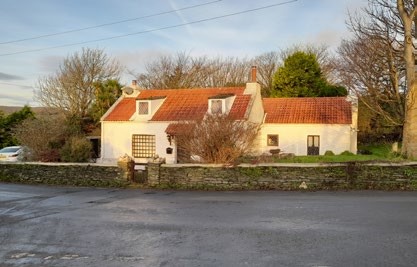
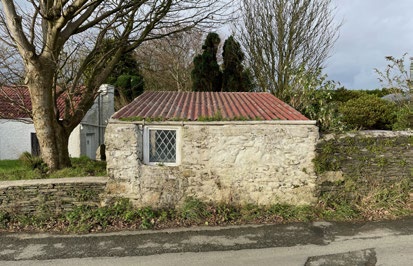
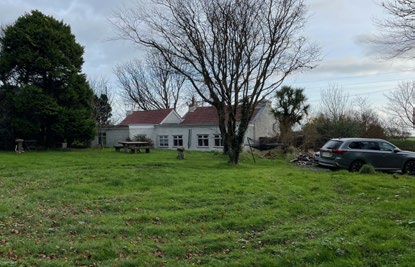
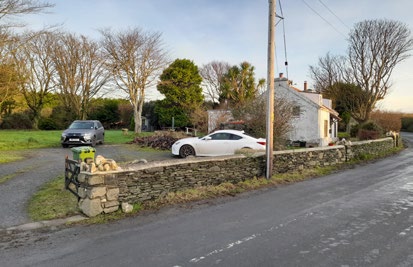
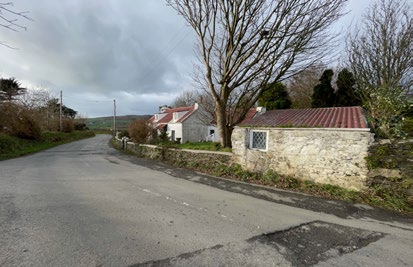
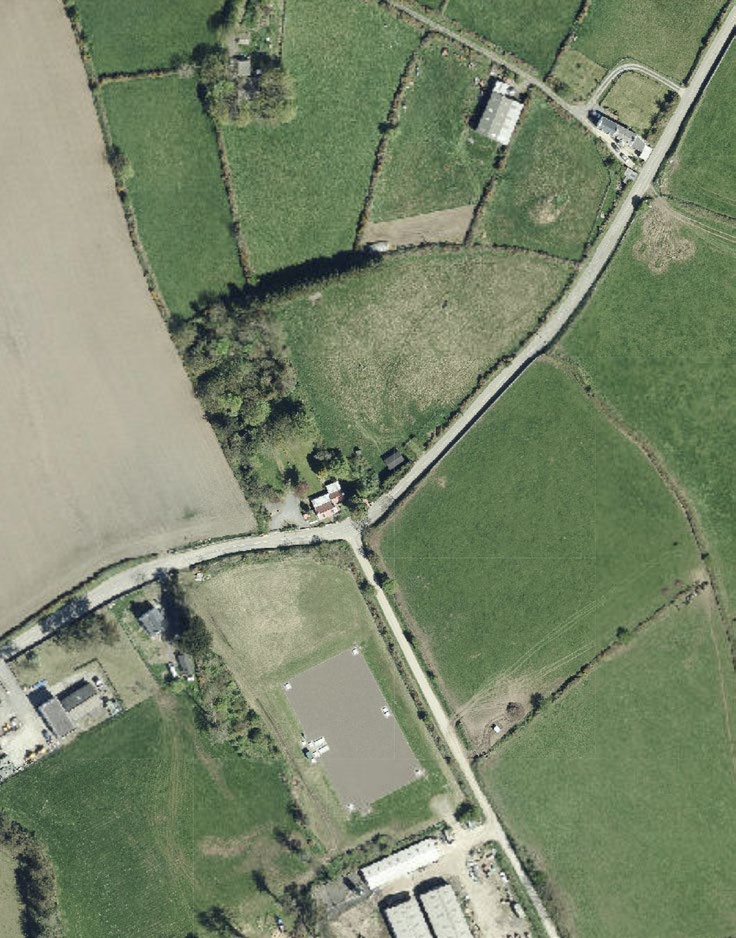
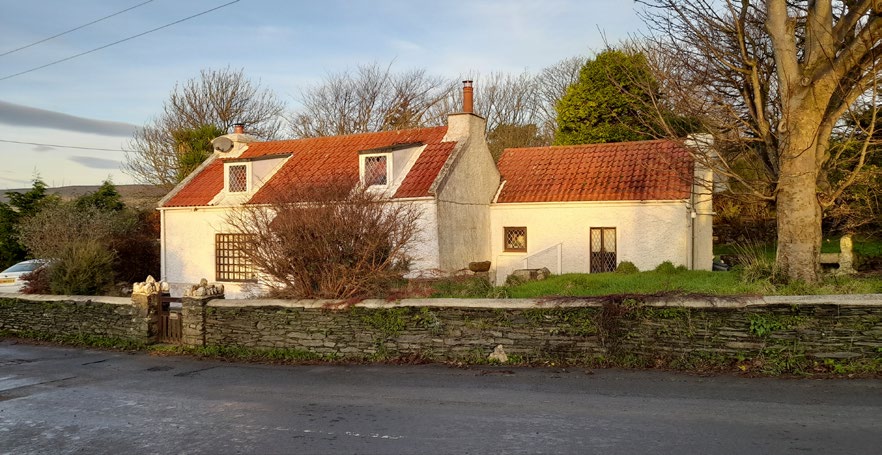
Thurlby Cottage is located on the northern side of the Ballagawne Road (A27), north east of the water treatment works building. It comprises of a traditional stone built crofters cottage with thie veg and a small animal store, all fronting onto the roadside boundary.
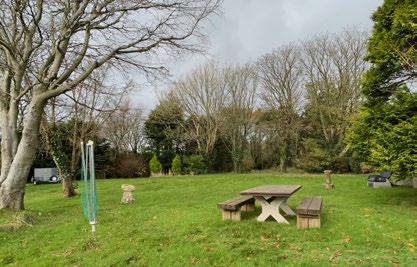
The cottage sits in a long parcel of land, heavily wooded to the rear with a rich variety of tree, shrub and bush species. This hedge boundaried parcel of land extends to 1 acre. To the left of the cottage is an agricultural field and to the right is another field which is in the ownership of our clients.
Our clients purchased Thurlby Cottage (then called Glendawn) a number of years ago, their first action was to return the the property to its orignal name. They plan to remain there indefinitely. The cottage with its extensions does not currently offer ideal family living standards from either a condition or layout aspect.
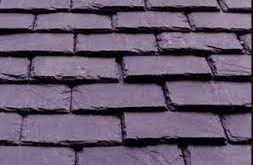
Not unusually, the dwellings aesthetic has changed over time and it is highly likely that during its lifetime the cottage has gone from its original thatched roof covering to a natural slate (or asbestos tile) and finally to the current red profiled tile.
External wall finishes have changed also along with door and window opening positions. These changes reflect the evolution and availability of differing building materials, how living standards improved and the way in which buildings were used over time.
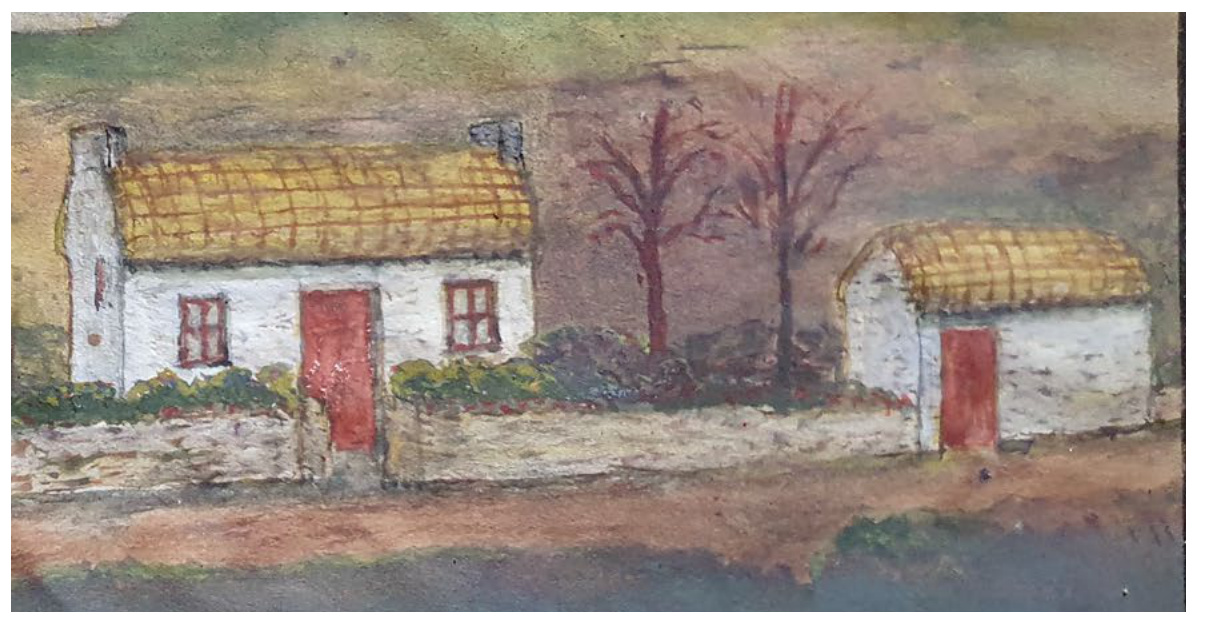
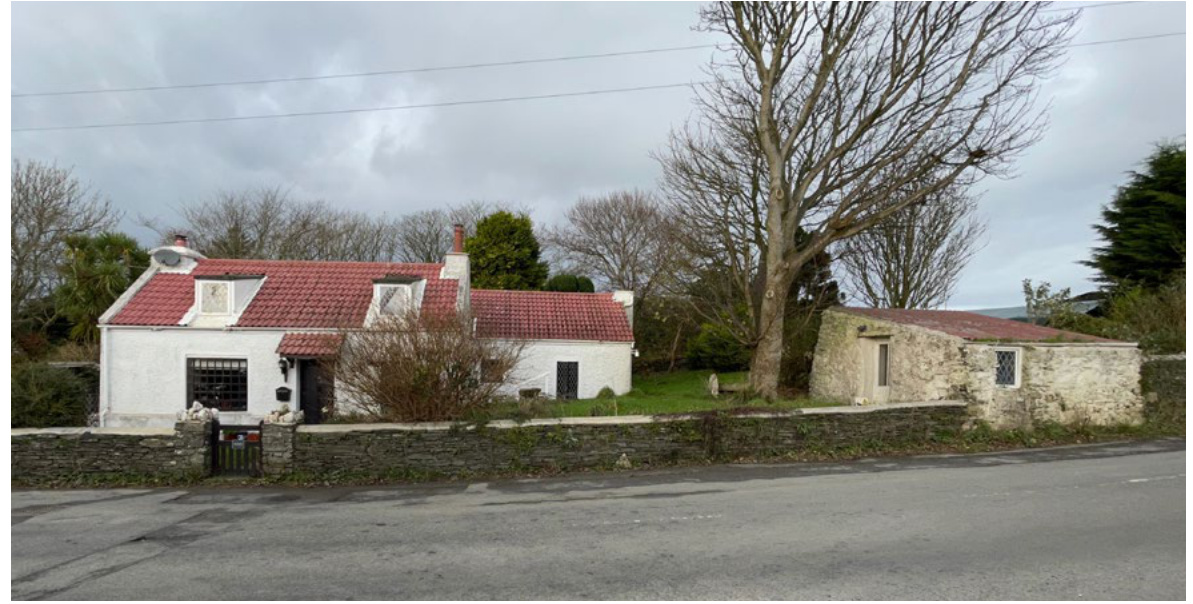
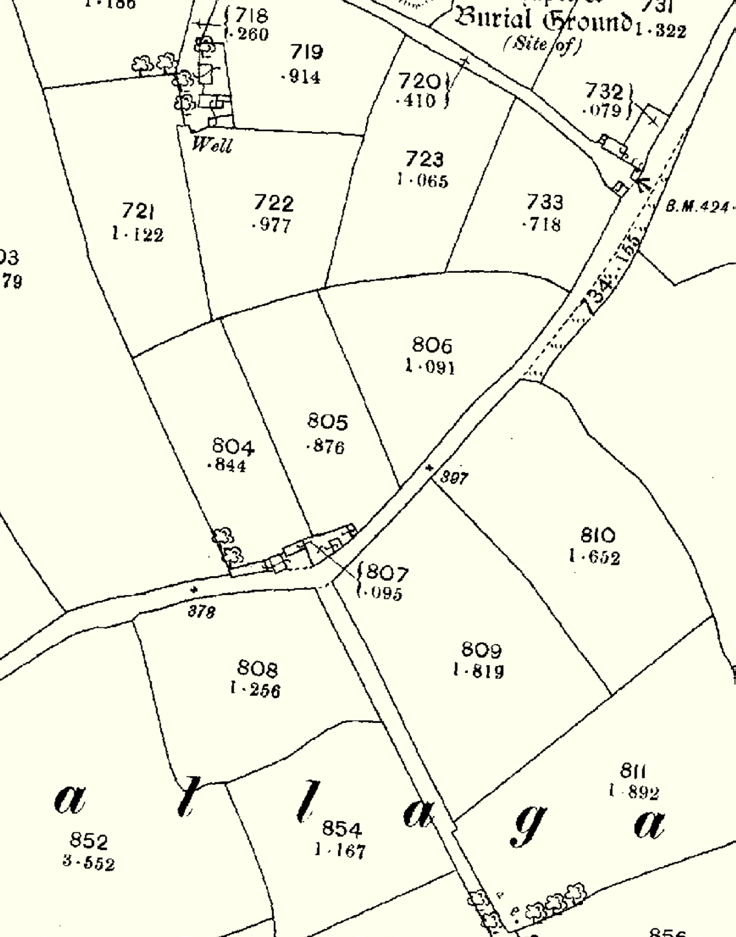
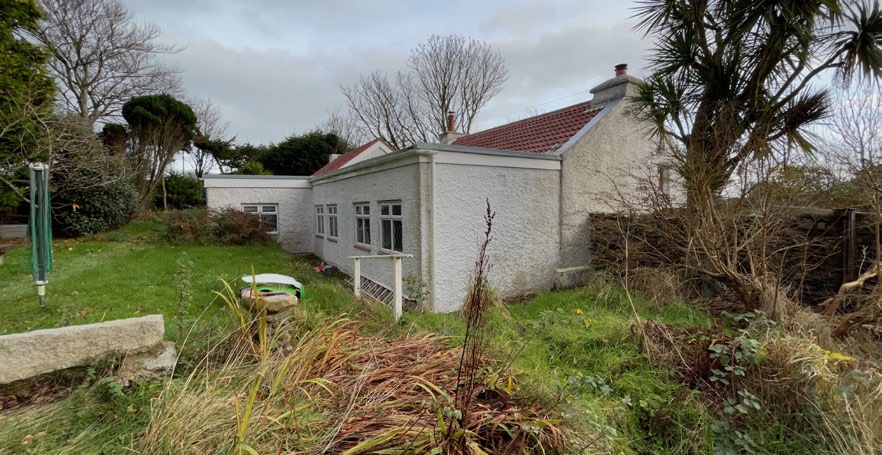
The cottage, along with its outbuildings, appears upon the 1860 mapping series and also in an old painting in the ownership of our clients, which shows the cottage thatched in very probably its first form. The mapping shows that the cottage and its livestock/store building still remain, with a building to its left now gone. More recently in the life of the cottage, it has been extended with two significant extensions. One with a pitched roof element to the side and the second with a flat roof to the rear.
Looking at the construction of these two, more recent additional elements, it is assumed that these extensions took place in the 70's and 80's. The extensions were of a time and served the accommodation requirements of its occupants but have in our opinion detracted greatly from the original cottages' traditional shape, form, and finish.
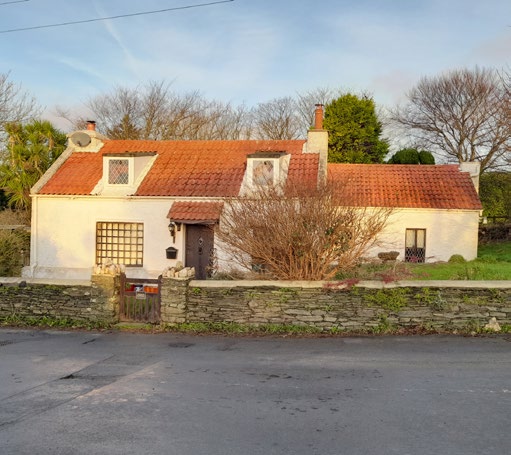
During these additions and alterations, the existing cottage roof has been raised at both gutter and ridge line, the window and door apertures have been altered, and the originality of the cottages' primary elevation, although not forfeited entirely, has been largely lost as a result.
It is as part of this planning application proposed to restore as much of the cottage as possible. A summary of the changes to the original cottage are summarised below along with a description of the proposed works to restore it to its former native state.
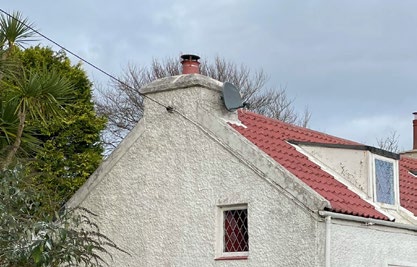
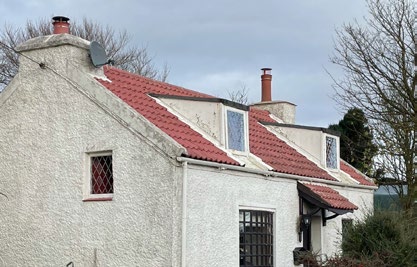
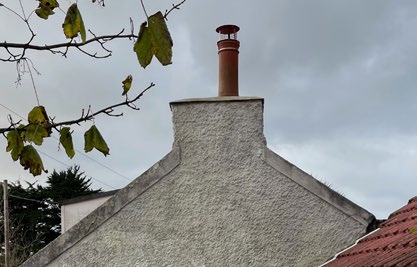
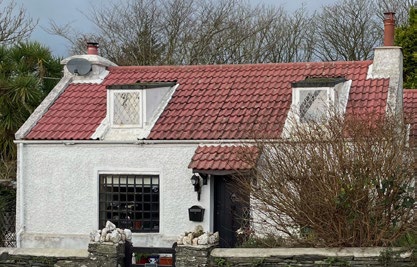
The extensions aside, the replacement roof raised the cottages original gutter and roof line, approaching the chimney stack tops. Viewed from the road frontage, the left stack appears original with the right reduced in its gable width. The addition of two flat roofed dormer windows are inappropriate and serve little purpose other than to bring light in to the void over the current living area.
The current inappropriate roof coverings further detract from the cottages appearance. Individually and collectively, these poor alterations/additions have pushed the cottage away from its attractive initial vernacular form.
To rectify the above it is proposed as part of this application to:
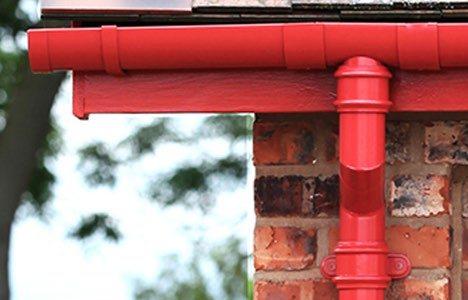
• Remove the existing roof in its entirety. • Reduce the roof ridge line and gutter line. • Reinstate the altered chimney stack and include an appropriate chimney capping. • Remove the plastic rainwater goods. • Install (to the cottage), cast iron rainwater goods (painted red). • Reconstruct the roof to the reduced pitch, ridge and eaves lines. • Apply reclaimed natural grey roof slate. • Form cast concrete copings to the roof verges. • Rebuild gable end chimney stack to correct proportion in matching stone. • Reinstate the timber purlins, A frames as part of this restoration internally.
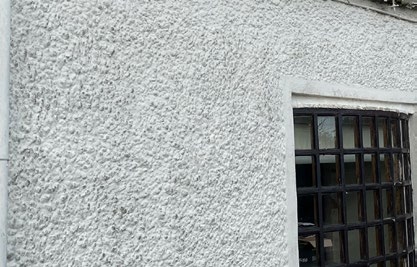
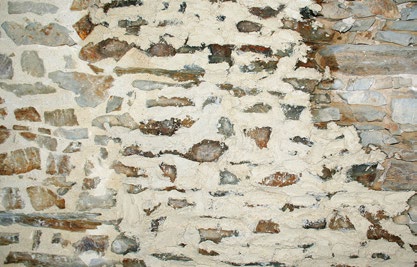
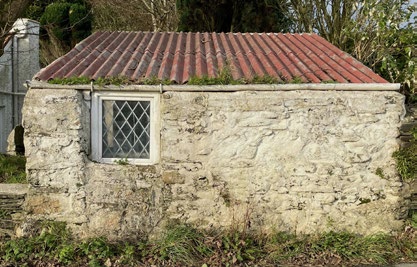
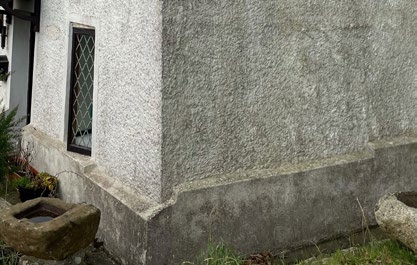
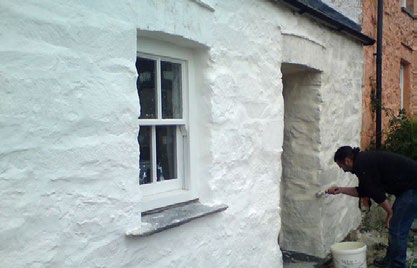
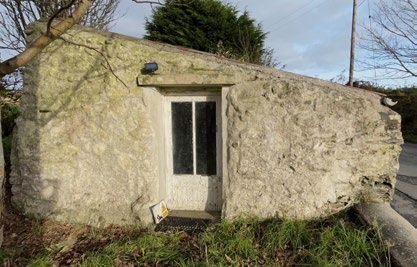
The existing cottage walls consist of a traditional stone construction comprising walls 600-700mm thick.
Internally, the walls have been lined off and externally have received a roughcast render system common through the 80’s and 90’s with a 600mm lower concrete/block work plinth applied. Very probably in an attempt to combat rising damp within the walls.
Traditionally, these walls would have received multiple layers of whitewash over the years, resulting in a smoother but undulating finish, (like that seen in the existing outbuilding) prior to being rendered in the current non traditional finish.
To rectify the above is proposed to:
• Remove the 600mm high concrete/block work lower plinth back to the original stone. • Remove the roughcast rendered finish all round. • Rake out all stone joints. • Repoint stone in a lime mortar. • Apply multiple layered lime wash to give the undulating white wall finish correct to the original cottage.
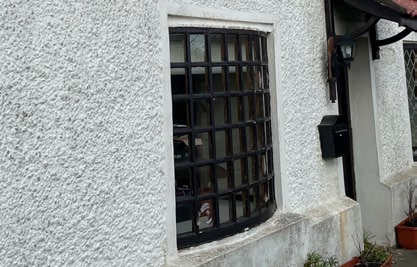
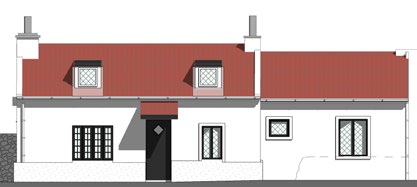
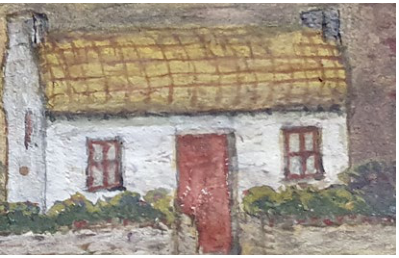
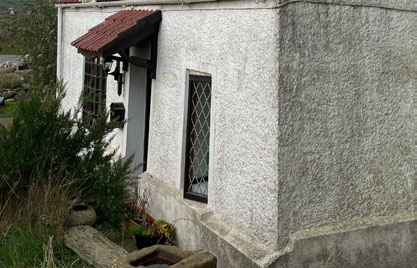
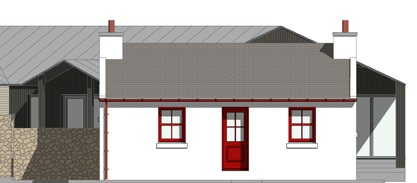
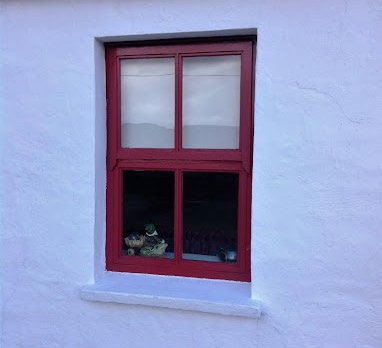
The existing roadside elevation has been altered historically with the doorway position moved off centre and the window to the left of this enlarged and fitted with a 70’s bay window with leaded windows.
To rectify the above it his proposed to:
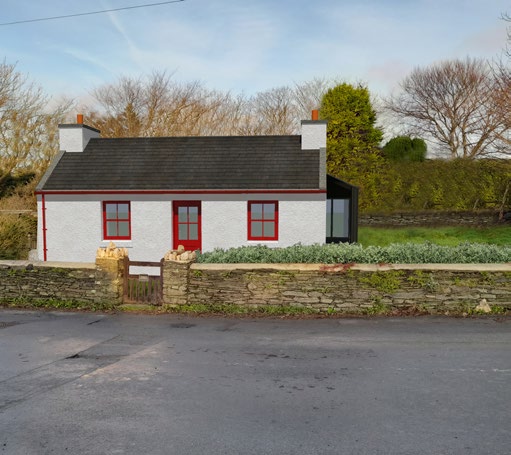
• Remove the existing timber windows and door. • Reduce the left side window opening from 1400mm to 900mm wide. • Alter the opposite window to match this 900mm width. • Move the door position by 300mm to re centralise the original entrance door. • Install timber sliding sash windows and door (painted red).
The painting shows the windows as a traditional timber sliding sash windows in red, with the entrance door matching also. The replacement windows and door would be in a hardwood timber with the windows being in traditional sliding sash, again in red to bring the elevation back to original.
The above is proposed to improve the cottages roadside appearance to its benefit when viewed by passers by, allowing it to once again be read as the traditional manx vernacular dwelling that Thurlby Cottage once was.
There have been two previous planning applications pertaining to this site:
12/00317/B Widening of the existing property access and creation of a hardstanding (retrospective) permitted May 12th. 13/91458/B Erection of garage and workshop. Permitted Dec 2013
The dwelling is not registered and does not fall within an area zoned as ‘High landscape or coastal value and scenic significance and is not within a conservation area’.
In the past the cottage has been poorly extended as shown in these photos
Housing Policy 8.12.2 Extensions to properties in the countryside Where development exists, either in an historic or recently approved form, it should not, when altered or extended detract from the amenities of the countryside. In the case of traditional properties, the proportion and form of the building is sensitively balanced and extensions of inappropriate size or proportions will not be acceptable where these destroy the character of the property.
The aim has been to adhere to the above policies but being able to provide the desired degree of modern living standards and accommodation whilst respecting the appropriate parts of what is important to the manx countryside and its vernacular form when viewed by the public. The position, size, finishes, colours and how the whole will be viewed, have been carefully and thoughtfully considered to respect the above policy.
With the policies at the forefront, the formulation of the application proposes to restore and use the existing cottage to visually guard the extension to the rear. It is this new element that would provide the family with the desired living accommodation, whilst importantly remaining visually subservient to the original element. This has been the primary aim in the formulation of the proposal “to not detract from the amenities of the area” and “to not destroy the character of the property” but rather to improve it.
The most direct view of Thurlby Cottage is seen when approaching the road junction by vehicle, or on foot from the B43 road. The restored cottage elevation acts to be the focal point and to protect what is desired behind it. Due to the angle the cottage is viewed from this primary aspect, the eye to ridge line does not allow the new contemporary roof lines behind to be viewed at all. (drawn elevations provide a flat aspect and not a true eye line view)
The extension to the rear of the cottage is kept low, is single storey and uses the existing site topography and features without the need to reduce the site levels. The form remains simple with a contemporary metal standing seam roof in a dark matt finish, which runs down to a concealed gutter system, meeting the dark stained vertical natural timber boarding. No guttering or downpipes would be visible to clutter this simple shape.
The direction and layout of the proposed contemporary element is primarily dictated by the existing cottage and how it is viewed head on from the road junction. The mass of this elevation conceals what is behind from this primary angle, as the cottage elevation render shows.
The new small link element (utility and bathroom) ensures that the proposed cottage ridge is not compromised by the new ridge behind, before the building steps up 400mm to the main living accommodation as the site levels rise also. The footprint then turns to allow a southern facing outlook from the kitchen and lounge areas, which allows sun to filter through the hedge boundary trees whilst also allowing a pleasant view out between these trees. The footprint turns to embrace the existing beech tree which would provide for an attractive established feeling at the dwellings entrance area.
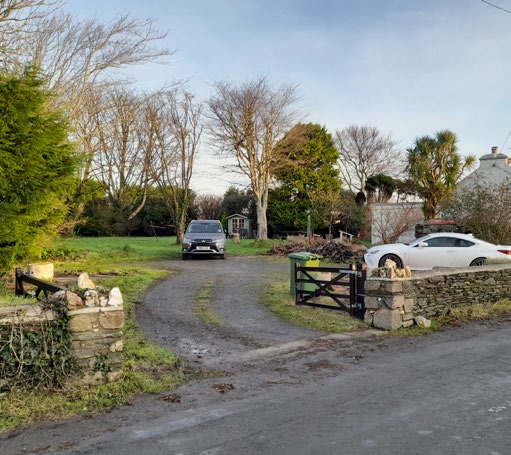
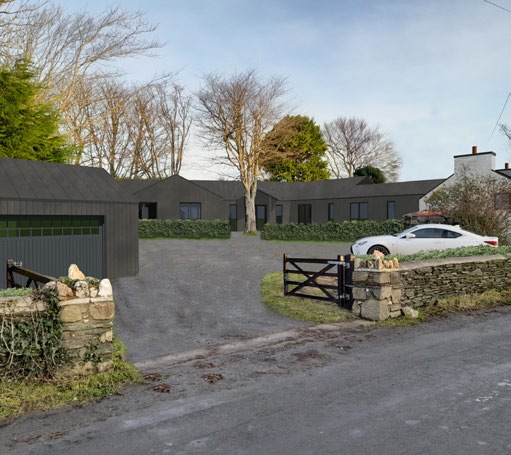
The existing driveway entrance area would be maintained with a new grey paver or cobbled surface to the drive area. New and reinforced hedge, bush and shrub planting as indicated would be added, as the plan, resulting in a green hedge boundary of mixed native species (fuschia etc) at the drive perimeter which breaks up and softens the aspect to the new extension seen through the drive entrance.
A previous planning application for a garage of similar size and in a similar location was approved previously (13/91458/B) and a garage is included upon this application to allow the consideration of an entire development plan, with the reasoning being, that no further extensions would be required to this proposal as the application provides for a four bedroom dwelling able to service the usual requirements of family living now and into the future.
The character of the existing building is improved greatly over what exists currently and the works proposed can only reinforce the identity of the traditional cottage, with the extensions secreted behind this focal point.
Housing policy 15 states:
The extension alteration of existing traditional styled properties in the countryside will normally only be approved where these respect the proportion, form and appearance of the existing property. Only exceptionally will permission be granted for extensions which measure more than 50% of the existing building in terms of floor space (measured externally).
Importantly and with regard to floor areas, we feel that the design of the extension should not be necessarily restricted to or by a floor area and certainly not be applied in this instance as the emergence and spirit of this line of policy was aimed at ensuring that the islands traditional buildings did not become lost or damaged by the addition of overbearing or inappropriate extensions, resulting in the loss of traditional elements.
This proposal respects the traditionally styled building, going a step further by offering restoration of the original cottage. The proportion, form and appearance of the original cottage is certainly considered and respected by proposing the extension in a simple, low subservient contemporary form which provides the necessary visual and physical separation, allowing consideration of the old and the new elements.
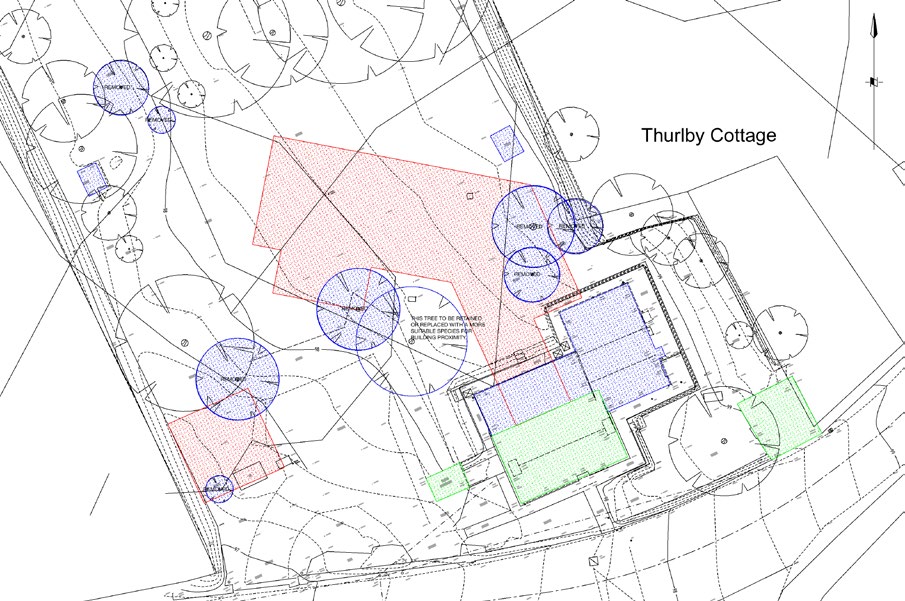
For completeness, a coloured plan view is attached which allows an overview of the floor areas existing and proposed.
The existing total areas are:
• Existing Cottage 115 sq m • Stone outbuilding 20 sq m • Thie veg 5 sq m • Two timber sheds 7 sq m Total floor area of existing structures - 147 sq m The proposed total areas are: • Original element thie veg & outbuilding 70 sq m • Proposed extension 241 sq m Total floor area of proposed structures - 311 sq m This is a total percentage increase of 111 %
The new garage has not been included in this calculation and equates to 40 sq m by itself. If included in the calculation this equates to 138 % increase.
Green - Traditional retained elements Blue - Unsympathetic parts to be removed Red - Proposed extensions and garage
Trees to be removed shown in blue
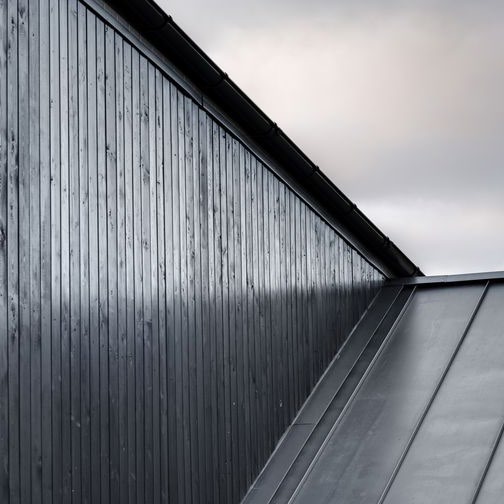
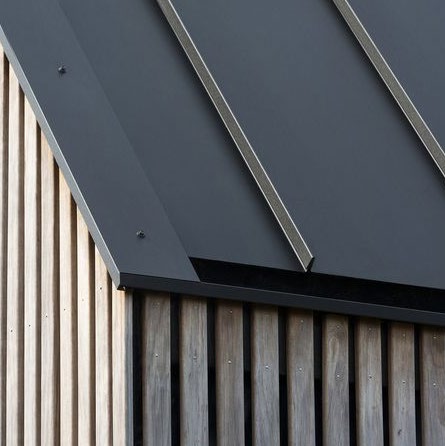
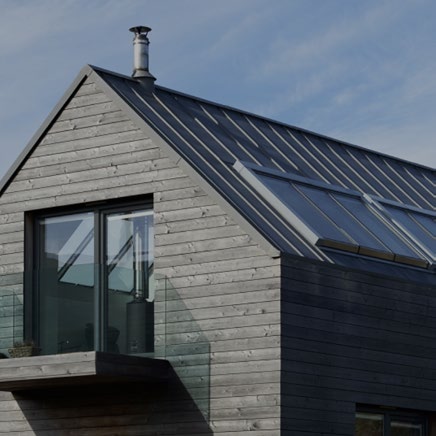
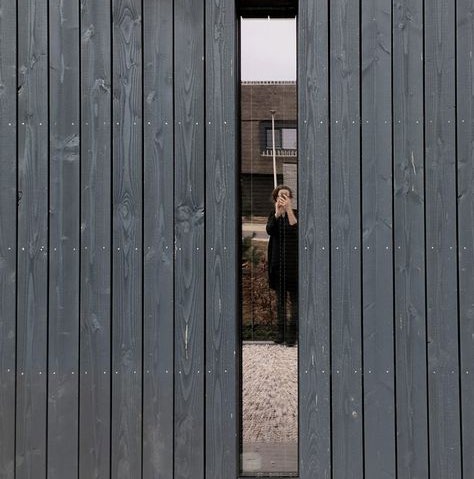
The roof finish is proposed as a dark coloured grey/ black zinc metal standing seam roof with its own concealed guttering and no wall overhangs.
The wall finishes are proposed in a natural cedar or scottish larch treated timber board with open joints, set vertically and stained with a dark Osmo oil to result in a grey/black board.
The areas below the roof canopy would be in a matching timber but left raw, un oiled or stained as a contrast but occur to the rear of the proposal away from the roadside aspect.
The proposed new windows and doors are proposed to be in either a grey upvc or aluminium with all materials utilised on this proposal being of high quality.
The approach and formulation of this design has been carefully and thoughtfully considered. Throughout the entire design development process, we have consulted regularly with the planning department in order to find a direction which may allow the formulation of an application which can agree with policy, respect the valuable parts of this dwelling, its setting and its location, whilst offering a desirable inconspicuous but attractive building form which would now and in future provide an appropriate building for modern living requirements.
Copyright in submitted documents remains with their authors. Request removal
