Loading document...
Department of Planning DEFA Murray House Mount Havelock Douglas Isle of Man IM1 2SF
3rd March 2021
Dear Sir / Madam,
This is a detailed planning application for a replacement dwelling at the property called ‘The Warren’, on the Clanna Road in Santon.
The following information is provided in support of this planning application:
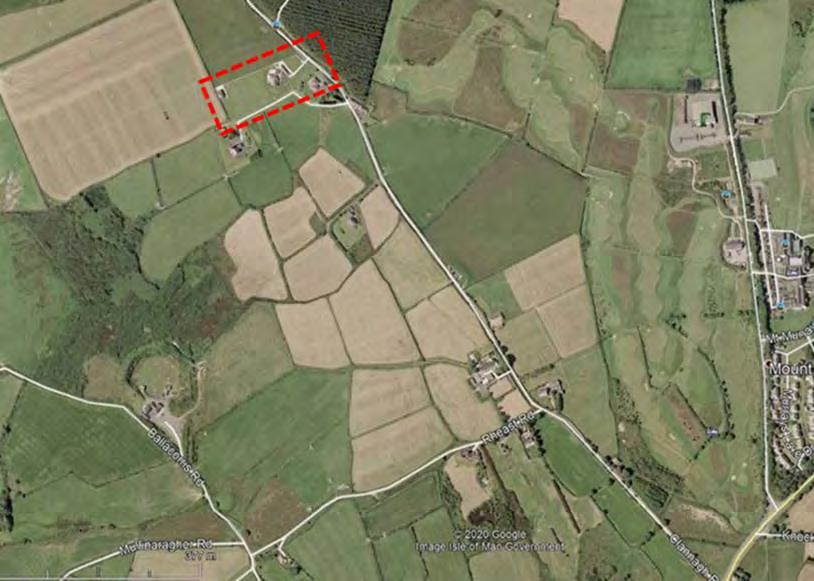
The proposed site is an existing residential property. It consists of a 2 storey house, a large detached garage with accommodation above, and various out buildings. All the external areas are laid out as a garden, consisting mainly of lawn.
The site is approximately 180m long by 68m wide at its widest point, and has an overall area of approximately 2.9 acres.
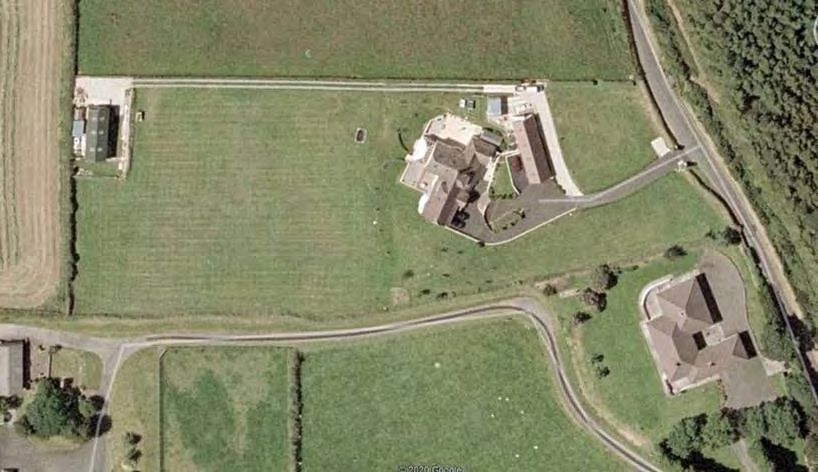
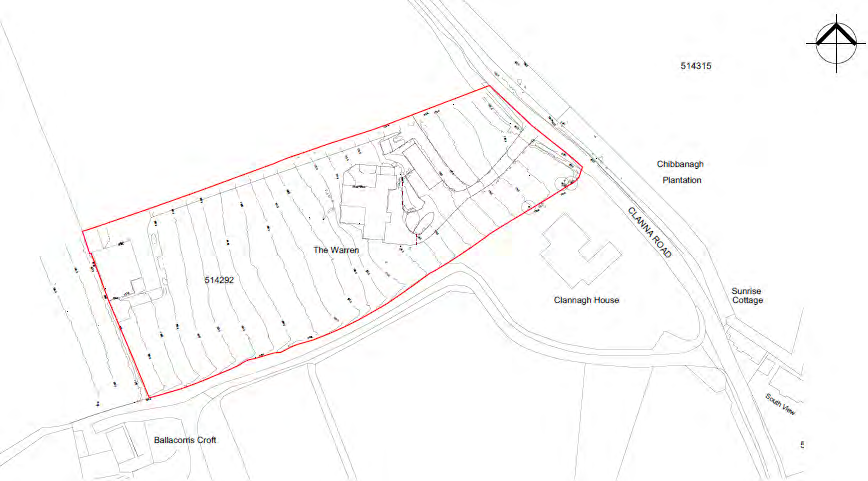
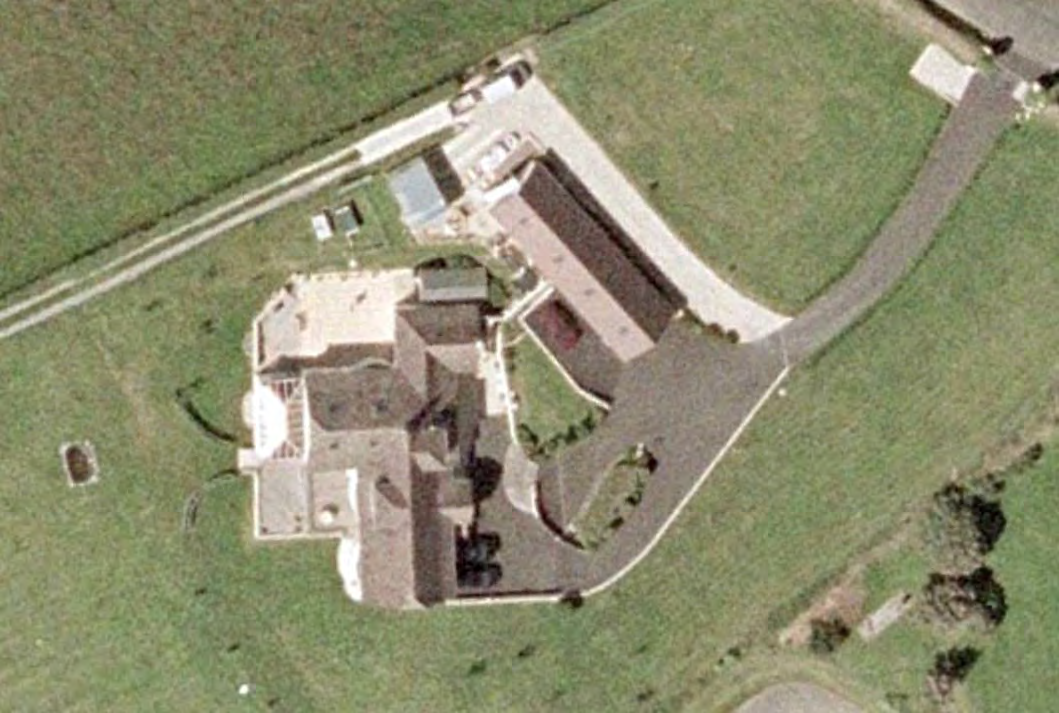
The current property includes a substantial dwelling, a large separate 6 car garage with accommodation above, and other additional ancillary buildings, boiler rooms etc. In addition, there is a large garden store building, measuring 15m by 6m by 3.8m high, at the south western end of the site, approved by PA05/00727/B.
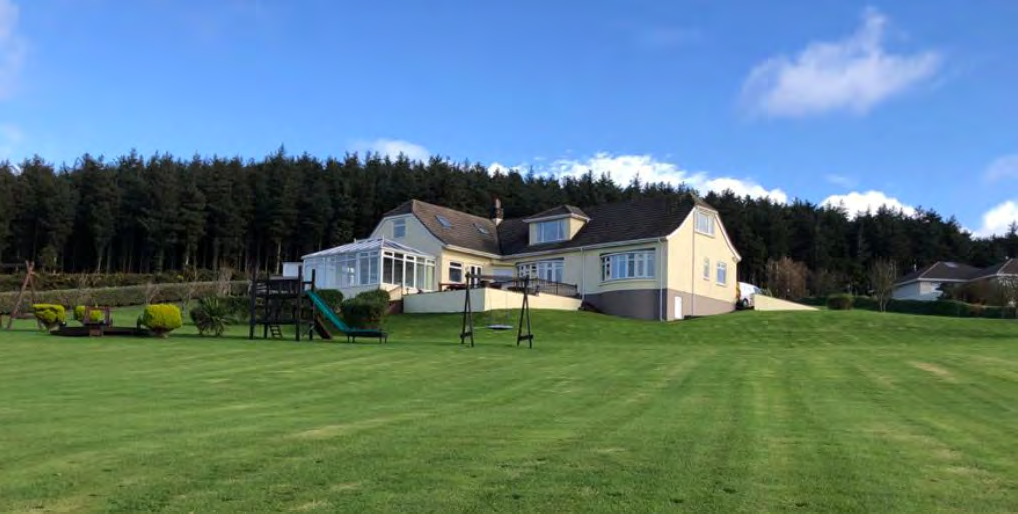
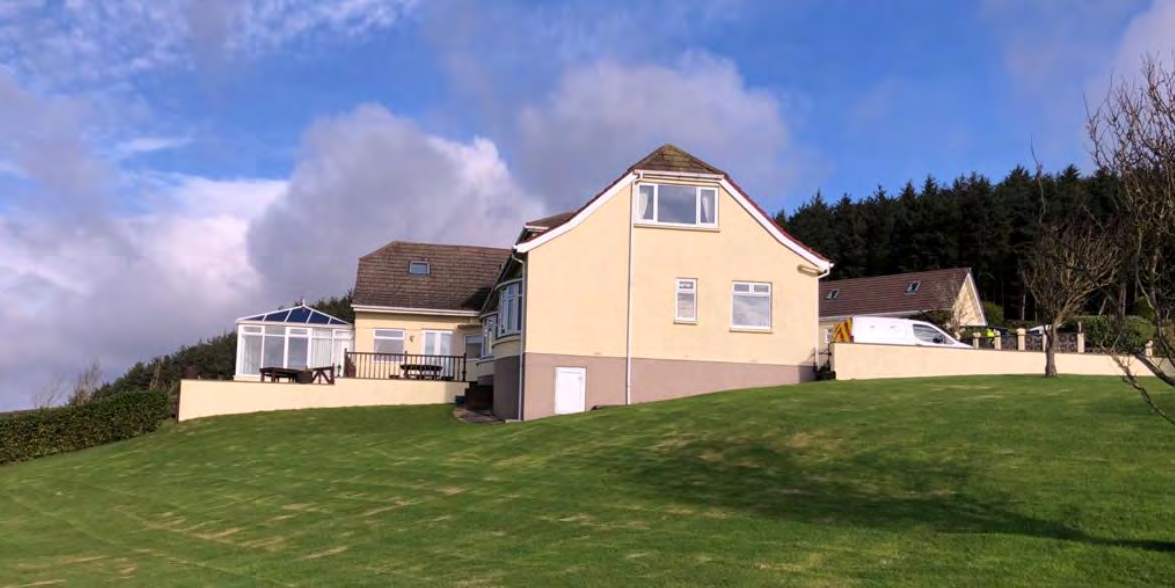
Accommodation within the existing house is over two storeys. In addition, due to the steep sloping site, the lower ground floor sits well above the external ground level, which has allowed underfloor storage area to be provided, as can be seen from the photographs of the building.
The house, and garage building, are relatively modern and have no architectural interest. They are finished in painted render and concrete roof tiles.
The above image shows the group of buildings on the site, excluding the large garden stores at the south western end of the site.
Existing Floor areas:
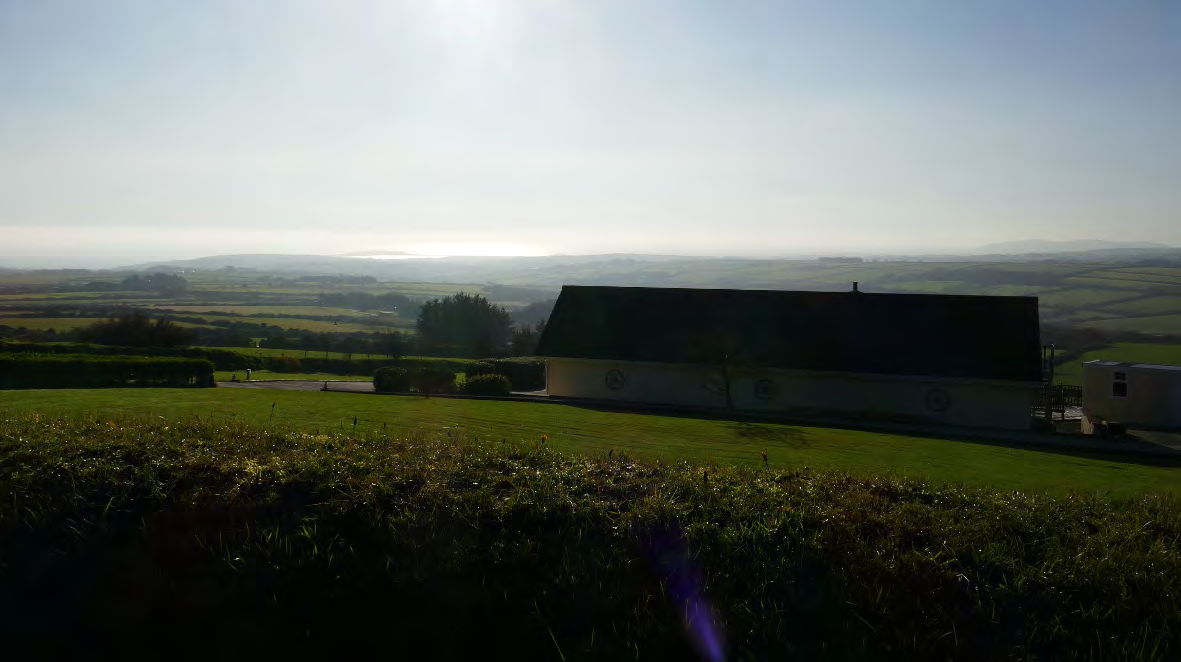
View of the property from the Clanna Road, showing the long elevation of the 6 car garage building in the foreground, with the distant views beyond.
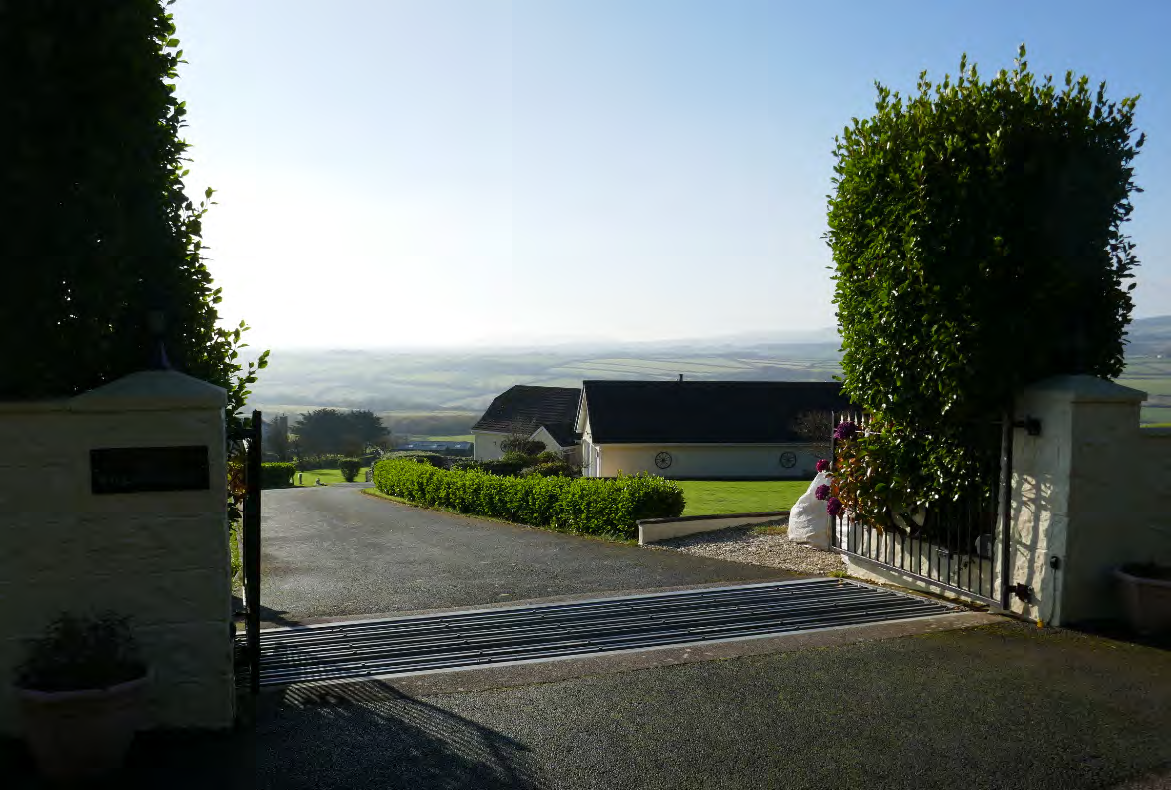
View of the existing garage and house from the site entrance. The view of the property is dominated by the garage block in the foreground.
View of existing house and garage building, from the south east boundary.
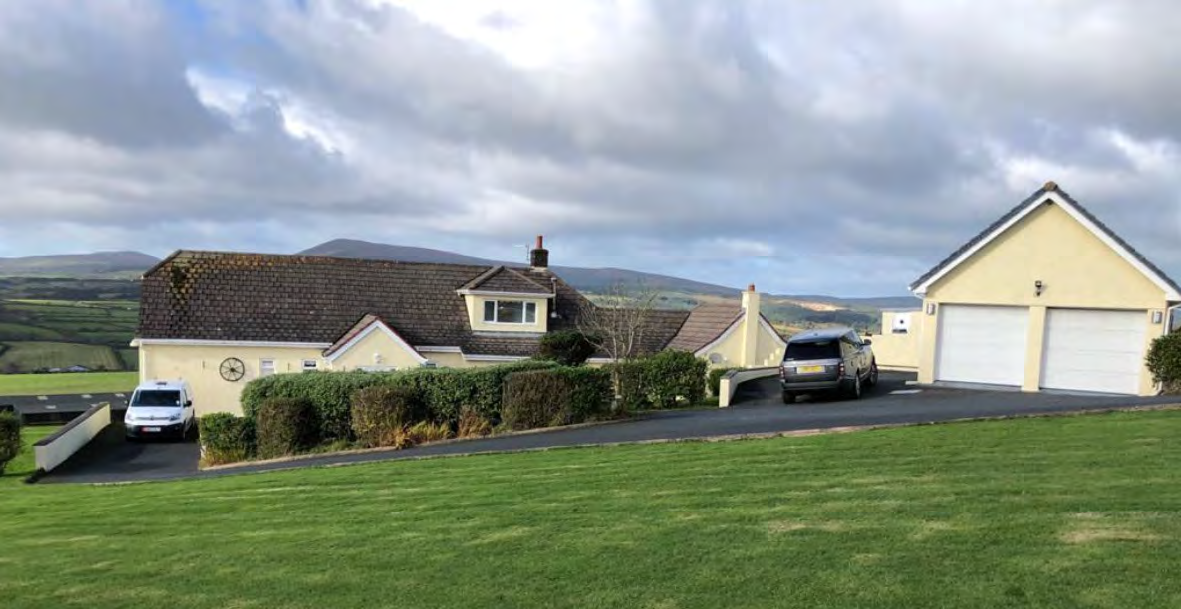
View of the existing house from the south west.
View of the existing house from the south, showing raised lower ground floor relative to external ground level, and the access to lower ground level.
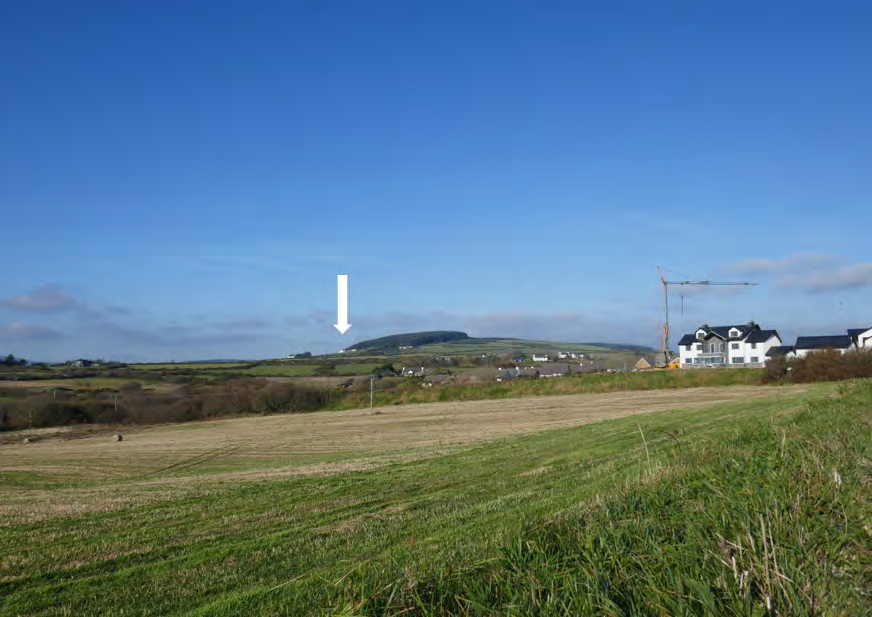
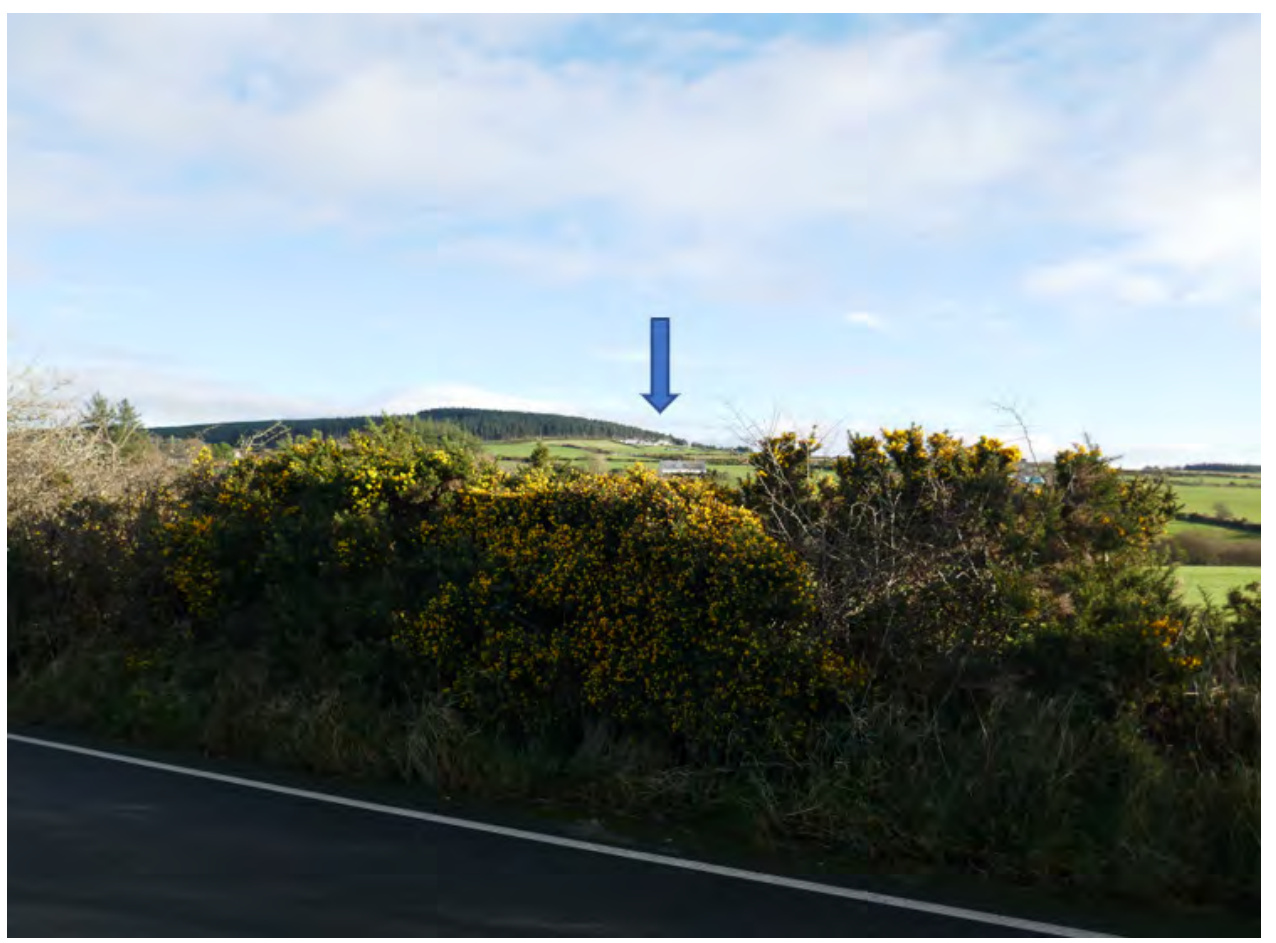
View from the St Marks Road, with the property highlighted by arrow.
Planning Application: 89/01108/B Proposal: Alterations and extensions Application Date: 22 Sep 1989 Status: Permitted, 1 Jan 1994
caravan, garden equipment, tractor and trailer Application Date: 18 Apr 2005
The existing house has therefore been altered and extended on a few occasions, which may have resulted in the compromised internal layout.
Where a replacement dwelling is permitted, it must not be substantially different to the existing in terms of siting and size, unless changes of siting or size would result in an overall environmental improvement; the new building should therefore generally be sited on the “footprint” of the existing, and should have a floor area(1), which is not more than 50% greater than that of the original building (floor areas should be measured externally and should not include attic space or outbuildings). Generally, the design of the new building should be in accordance with Policies 2- 7 of the present Planning Circular 3/91, (which will be revised and issued as a Planning Policy Statement). Exceptionally, permission may be granted for buildings of innovative, modern design where this is of high quality and would not result in adverse visual impact; designs should incorporate the re-use of such stone and slate as are still in place on the site, and in general, new fabric should be finished to match
the materials of the original building. Consideration may be given to proposals which result in a larger dwelling where this involves the replacement of an existing dwelling of poor form with one of more traditional character, or where by its design or siting, there would be less visual impact.
The following sections of this document will illustrate how the proposed design will comply with Housing Policy 14.
5 THE PROPOSED DEVELOPMENT The following are reasons why a replacement dwelling is being proposed:
Our proposal is to replace the existing house, garage building and other smaller garden buildings with a new house, purpose designed for the site. The new house will be predominantly single storey and be planned from the outset for energy efficiency, including air tightness, heat recovery, and sustainable energy generation by inclusion of Photo Voltaic panels.
The proposed design aims to create a new family home which makes the most of the views and deals with the slope of the site. Given its location, it was also important that the design was sympathetic to its rural setting.
The proposed house is made up of 3 individual elements, all single storey with pitched roofs, linked by flat roof elements and arranged in an ‘H’ shape. The central taller block is flanked by lower arms on either side to resemble the farmhouse flanked by barns in a contemporary interpretation using traditional materials and colours to fit into the landscape.
The front of the house forms an open sided courtyard and naturally channels visitors to the front entrance feature and which is protected by a large timber framed canopy. On one side of the entrance court is the garage arm, with bedrooms on the other arm, and the courtyard itself provides ample visitor parking.
At the rear of the house, the ‘H’ layout will create a sheltered south facing raised patio, which will include an outdoor pool and create solar shading to prevent overheating of the interior.
The roof finishes will predominantly be artificial slate or tiled, with the canopy sections in either lead with rolled joints or a standing seam metal roof finish, like Zinc, to add a contemporary feel. The walls will be finished in a combination of timber or synthetic timber board cladding. The proposed
finishes are commonly used in rural buildings and will help blend the new house into its setting coupled with the buildings form and proposed comprehensive landscaping of the site
The scale and layout of the new house will have the appearance of an agricultural complex when viewed from the Clanna Road. Even though the proposed house will have an overall larger footprint than the house it is replacing, being single storey facing the highway, the scale of the new house will have a reduced visual impact compared to the existing house. The closest property about 40m away (Clannagh House) and there are no windows overlooking that property from the proposed house.
The Proposals will include the following;
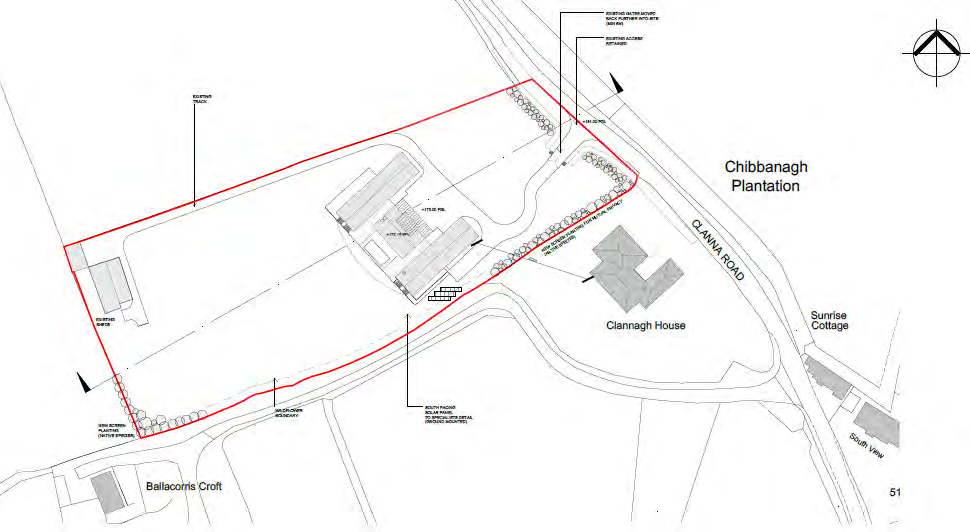
• Screen planting using native species will be provided on the front boundary, adjacent the highway, like the screen planting fronting the next-door property, Clannagh House. Screen planting will also be provided on the south eastern boundary to provide mutual privacy with neighbours.
Proposed site plan
In summary, the following lists how the proposed development complies with Housing Policy 14:
• The replacement dwelling will sit on the footprint of the existing house, garage and
outbuildings. SIZE
• The proposed house has a floor area of a approx. 898sqm, which is 6% larger than the 845sqm of the existing house. This is within the 50% larger that is permitted by Housing Policy 14.
The landscaping of the existing site consists predominantly of domestic lawn with a few planted bushes and boundary hedging, and therefore relatively sparse in terms of biodiversity.
The proposals include extensive new landscaping, which are detailed on the proposed site plan. The landscaping works will include:
The proposed landscaping will increase biodiversity and enhances the appearance of the site as well
The house will be built using modern construction methods and will be future proofed by exceeding current thermal insulation, air tightness and low energy use requirements.
Excessive solar gain will be prevented during the summer months by solar shading and limiting window sizes on the southern aspect.
The proposed house has been orientated as close to south as possible (without creating an overlooking issue with the neighbouring homes) to maximise the effectiveness of the PV Solar panels to be mounted on the roof. The electricity generated will be stored in ‘Teslar Powerwalls’, from where it will be used to power the house or used to charge electric vehicles and bicycles. During winter months, when PV panels will less efficient, the Powerwall will be charged up from the grid during the early hours of the morning, when there is a lower demand for electricity. The house will also use air source heat pumps to provide heating and hot water and are more efficient way of using electricity. The heat pump units will be positioned to the back of the garage, away from neighbouring properties, so there will be no noise concerns.
The house has been designed to allow natural day lighting to illuminate as much of the house interior as possible, to minimise the requirement for artificial lighting. The artificial lighting system will use low energy use LED fittings.
Foul drainage will be provided by a gravity fed private sewage treatment plant discharging to field drains located at the bottom, south western end of the site.
Storm water drainage will be via field drains located at the bottom, south western end of the site. Other utility services are currently available on site and will be reused.
The existing access will be retained and this provides good visibility in both directions when existing the site. The existing gates will be relocated further into the site and will be positioned a minimum of 6m from the edge of the highway.
The site is 1.25km from the Castletown Road, where there are regular public buses going to the north to Douglas and south to Castletown.
The proposed dwelling includes a large 3 car garage and ample driveway parking. There is ample space to store and charge electric bikes within the garage.
Pre application consultation with the Principal Planner, Miss Sarah Corlett, was undertaken via an initial email Planning Enquiry and followed up with a meeting on 18th December 2020. However, the scale of the proposals has reduced significantly since that discussion.
The proposed design for a predominately single storey dwelling, will be traditional in form but will be contemporary in design and will be of high quality. The use of well designed landscaping will help integrate the house better into the site than the current property. The mixed pallet of traditional and contemporary finishes used on the elevations, will soften the visual impact of the new house and help blend it into its setting.
The sustainable design considers orientation, solar shading, air tightness, high levels of insulation, low energy use, as well as the integration of sustainable energy generation.
An extensive landscaping scheme, including lots of tree planting, will help integrate the house into the landscape and improve biodiversity.
We trust that we have provided sufficient information for this application to be determined, but should you have any questions, please do not hesitate to contact the writer.
Yours faithfully
George Li For and on behalf of Hartford Homes.
Copyright in submitted documents remains with their authors. Request removal
