1.1 The application site is positioned centrally to the public car park on Shore Road, Glen Maye. The exact construction date of the Waterfall Hotel is unknown but it is of traditional stone wall construction and deeds of purchase found run back to August 1944 with discussions made dating back to 1907. It is two storeys in height (7.6m approx to top of ridge) with an additional attic area used for storage.
1.2 The site back in 1944 totalled 16.5 acres and included the National Glen and a large portion of land running down both sides and including Shore Road. Large portions of this land have obviously been sold off over the years and numerous property developments undertaken. It should be noted that the proposed site is not located within a Conservation Area. Nor is Glen Maye as a whole.
1.3 The site is approximately 2370sq metres in total. The public house site on its own is approximately 787m2. The beer garden site on its own is approximately 573m2 and the adjacent car park approximately 1010m2.
1.4 The hotel building is currently vacant and was last used as a business over five years ago. This was along with multiple previous attempts that ended unsuccessfully.
1.5 To the South side of the site is located the public car park and access into Glen Maye National Glen. To the North is Glen Close Cul De Sac which mainly houses one storey bungalows. To the East is the entrance into Glen Close and the vehicular entrance into the car park and Shore Road from the A27 running through Glen Maye. To the West is Waterfall House set over two stories and Shore Rd continues to run down to the National Glen, with
properties being located up to 0.5km down.
1.6 The hotel building is finished in painted render to all elevations. The roof is dark slate or cement tiles. The front elevation is traditional in style but has white uPVC casement windows, two modern rooflights and only two chimneys which makes the overall appearance less traditional and asymmetrical.
1.7 The rear elevation from inspection seems to have been extended multiple times in the past it would seem and has no aesthetic positives. The garden area to the rear at most is 20m long and is split levelled and runs right up to the boundary with Glen Close. This is overgrown and laid to both paving and grass.
1.8 Existing parking is via the public car park. There are approximately 45-50 vehicular spaces. The owners of the Waterfall Hotel own the car park. Within the 1960 deeds there is an agreement with the Forestry Board. This allows visitors to the National Glen to use the car park along with the patrons to the Waterfall Hotel.
1.9 Extract from 'www.isleofman.com' Glen Maye Glens description:
The glen was purchased by the Forestry Board in 1960 from the proprietor of the Waterfall Hotel, Agnes Welstead, who had previously acquired it from two men who owned the separate areas of the glen, Richard Edward Hughes in 1950 and Thomas Samuel Caleb Sidney Counsell (who owned the lower section) in early 1960. The trees in the glen were valued for the Forestry Board at £124.6s.6d, firewood value only, due to the difficulty in extracting it.
1.10 The beer garden site is laid to lawn and has not been utilised since the closing of the hotel.
2.0 Proposal
2.1 Full Planning Approval is sought for the demolition of the existing Waterfall Hotel and erection of 4 terrace dwellings in it's place, erection of 2 semi detached dwellings to the beer garden site and erection of a commercial premises to part of the car park.
2.2 The existing hotel is in a poor state of decay and has been vacant for more than 3 years. The proposed dwellings respect the traditional style of the existing hotel and immediate surroundings. The materials used will match in with the local vernacular.
2.3 The proposed terrace dwelling would be set over three floor levels but with a minimal height increase of 0.8 metres with the upper floor being located within the roof space.
2.4 Each dwelling would house 4 bedrooms, living space and integral garage and be approx 129m2 internally each.
2.5 Each dwelling would have it's own garden to the rear with the minimum size being 60m2. Each dwelling would have a small garden space to the front and the existing building line would be used to not disrupt the street scene.
2.6 The proposed semi detached dwellings would be set over two floor levels and house 4 bedrooms, living space, kitchen, utility, dining room and en suite. The overall internal floor space would be approximately 129m2.
2.7 The commercial building would have an internal floor space of approximately 72m2 and be set over one floor level. It is proposed that this building has allowance to be used for different class uses to give it the upmost chance of commercial success in a small village location.
2.8 The commercial building is proposed to be finished in a dark slate to the roof and walls to give a contemporary feel whilst utilsing a material ever present in the immediate surroundings and thus respecting the surroundings.
Key Policies for the Proposal
Below are the key Strategic Planning Policies that have been reviewed and taken into consideration during the creation of this proposal.
The application site is within an area recognised as being an area of “Residential/Woodland” under the Isle of Man Development Plan Order 1982. The site is not within a Conservation Area; nor within an area zoned as High Landscape or Coastal Value and Scenic Significance.
General Policy 2
General Policy 2 contains some useful wording: "Development which is in accordance with the land-use zoning and proposals in the appropriate Area Plan and with other policies of this Strategic Plan will normally be permitted, provided that the development:
(b) respects the site and surroundings in terms of the siting, layout, scale, form, design and landscaping of buildings and the spaces around them;
(c) does not affect adversely the character of the surrounding landscape or townscape;
(g) does not affect adversely the amenity of local residents or the character of the locality;
(h) provides satisfactory amenity standards in itself, including where appropriate safe and convenient access for all highway users, together with adequate parking, servicing and manoeuvring space;
(i) does not have an unacceptable effect on road safety or traffic flows on the local highways".
Strategic Policy 1
Strategic Policy 1: "Development should make the best use of resources by:
(a) optimising the use of previously developed land, redundant buildings, unused and underused land and buildings, and re-using scarce indigenous building materials;
(b) ensuring efficient use of sites, taking into account the needs for access, landscaping, open space and amenity standards; and
(c) being located so as to utilise existing and planned infrastructure, facilities and services."
Strategic Policy 2
Strategic Policy 2: "New development will be located primarily within our existing towns and villages, or, where appropriate, in sustainable urban extensions of these towns and villages. Development will be permitted in the countryside only in the exceptional circumstances identified in paragraph 6.3."
Strategic Policy 3
Strategic Policy 3: “Proposals for development must ensure that the individual character ofour towns and villages is protected or enhanced by:
(a) Avoiding coalescence and maintaining adequate physical separation between settlements; and
(b) having regard in the design of new new development to the use of local materials and character.”
Housing Policy 14
Housing Policy 14: “ Where a replacement dwelling is permitted, it must not be substantially different to the existing in terms of siting and size, unless changes of siting or size would result in an overall environmental improvement; the new building should therefore generally be sited on the “footprint” of the existing, and should have a floor area, which is not more than 50% greater than that of the original building (floor areas should be measured externally and should not include attic space and outbuildings)”.
Community Policy 4
Community Policy 4 - “ Development (including the change of use of existing premises) which involves the loss of local shops and local public houses, will only be permitted if it can be demonstrated that the use is no longer commercially viable, or cannot be made commercially viable.
3.0 Why can't business continue for the Waterfall Hotel?
3.1 Multiple attempts have been made over recent years to make the business work but have been unsuccessful. These have been at a considerable cost to the applicant.
3.2 The catering industry be it food, drink or both has taken a different route over the last 10 years, especially after the last recession. On top of this awareness has been given in a very positive way to the risk of drink driving.
3.3 The public are not going out as much now for the sake of it to eat and drink due to the above reasons. Rising costs are meaning people stay at home more and if they do go out it is to one of the main hubs for ease of getting home. Peel is the closest location for this and as can be seen, public houses and restaurants are flourishing their due to the ease of access. Unfortunately people are not going to commute out to Glen Maye when there are closer locations. It could be said the industry is over populated.
3.4 The Waterfall Hotel used to flourish due to the greater flexibility there used to be in the past. Competition from premises in Peel has been deemed impractical to keep up with.
3.5 The community of Glen Maye would probably argue the above and will state that a community facility is being removed. However it is deemed that only a small percentage of local residents would utilise the Waterfall Hotel as was the case with the previous attempts to run and would also not allow for a successful business to be run given the small population of the area. This in conjunction with point 3.3 creates the unfeasible situation. The village of Glen Maye is not of a sufficient size to sustain a public bar in high or low season 7 days a week and is not on a well used thoroughfare so as to generate passing trade.
3.6 Surrounding businesses have closed through the years for similar reasons. These include the old cafe, the shop which has been given permission to change to tourist accommodation, and the old post office.
3.7 The Liverpool Arms has closed it's doors to the public which is very similar to the Waterfall Hotel. Not a local position but with surrounding dwellings. However it shows a sign of the times and how public houses/hotels are not being utilised enough to continue business. The same can be said for the Ballacallin Hotel in Dalby that has recently been demolished.
3.8 Comments have been made in previous applications by the public that the applicant was a typical Isle of Man based property developer out to make a quick buck. This is not the case at all which is evident by the multiple years trying to make a go of the business. The applicant has multiple high profile trading companies employing circa 60 people on the island. A lot of these companies are in the hospitality sector and has been a backbone of the business for many years.
3.9 The applicant owns a portfolio of properties leased to trading companies, all of which generate jobs on the island.
3.10 Many years have been invested in attempting to make a success of the current business. Trading losses of over £200,000 have accrued and that is as stated above from someone with vast experience within the industry.
4.0 Why can't the existing hotel be renovated and converted?
4.1 The existing hotel has been empty and vacant for over five years. This follows multiple attempts to run the business successfully.
4.2 This has led to the building slowly creeping into a bad state of decay. It is of original construction with stone external walls, render finish and slate roof. Given time on their own these buildings start to feel the severe effects of damp. It would require a considerable financial investment to do this.
4.3 The existing building would have to be carefully stripped right back to the bare external walls. From brief inspection, at least the internal walls, floors and roof construction are not up to current Building Regulation Standards if converted.
4.4 The existing would need considerable investment to get up to standards, especially from a thermally efficient perspective. Upgrading the insulation to the building would generally involve constructing secondary stud walls internally which would encroach on the existing floor area and take away from the usable floor space.
4.5 Conversion to one dwelling is not feasible due to the investment already put into the site and the additional investment needed to renovate. A single property would not be valued high enough to cover this.
4.6 Due to the current layout it would be required to construct a new extension onto the rear of the existing that brought it up to two storey's in height to create sufficient floor space to convert into dwellings. From reviewing, any extension to the rear would have to be similar to the proposed. However the work involved would be considerably more to tie in with the existing, create more disruption to the surroundings and also create something that was not as efficient and had a limited lifespan.
4.7 The existing whilst in a prime position at the start of Shore Rd, has minimal architectural value. Asymmetrical chimneys, uPVC windows and rooflights. The rear as stated is an amalgamation of bad design and does not have any intrinsic value.
4.8 The proposal would create dwellings that far exceeded the U-value requirements set out in the Building Standards. They would be thermally efficient and work alongside modern energy systems to completely minimise energy consumption both electrical and heating. This would not be achievable with a conversion of the existing.
4.9 Cost involved to convert or build new would be very similar. Buyers of course would have to undertake regular maintenance on the converted option.
4.10 Through the above thought processes it is deemed that demolition and construction of new would be the most practical, feasible and efficient for both applicant, surroundings and potential purchasers.
4.11 The owner/applicant has struggled greatly to get public liability insurance for the building given its condition. It was renewed during a previous application at the last minute from an off island insurance broker as no on island company would insure the building. The longer it is left the greater the risk becomes of it not being insurable and becoming a safety issue.
5.0 A smaller venture?
5.1 The existing Waterfall hotel has been discussed in depth above. One problem for the existing business/building is that it is too large and requires far too much investment to make it viable and successful.
5.2 Glen Maye is a small village and it is appreciated and understood that a small venture in this location would stand more of a chance of success in comparison to the existing. This is strengthened even more so if the building was brand new and designed specifically for commercial use where initial investment was not required to even get a building into a state of use.
5.3 A smaller building would give broad scope to be used as a cafe, bar, restaurant, shop, community hub to name but a few. This is why the proposed commercial building is within this application and is proposed on an area of the site that has previously been occupied by a building.
6.0 Visual impact upon character of the village and the street scene
6.1 The overall proposal would result in a two and half storey building, two storey building and a single storey building located within a prominent position within Glen Maye Village. When travelling through the village, along the A27 road, the majority of properties are characterised as traditional in appearance, ranging from single storey Manx cottages to two storey properties. There are also more modern properties in the village, including single storey bungalows, a row of two storey terraced properties (commissioners houses) and estates (Glen Maye Park). These are located throughout and including directly behind the proposed site forming Glen Close. The proposal would be apparent from a number of public viewpoints
in relation to the street scene (access to car park from A27 road, within the car park, along Shore Road) and with this in mind the applicant has wanted to create a proposal that completely respects the surroundings whilst being aesthetically pleasing to the eye in comparison to some of the surrounding properties.
6.2 In terms of planning policy General Policy 2 paragraph b and c are relevant to consider. Paragraph b indicates that development will only be permitted if the proposal respects the site and surroundings in terms of the siting, layout, scale, form, design and landscaping of buildings and the spaces around them. Paragraph c states that any development should not affect adversely the character of the surrounding landscape or townscape.
6.3 As described in full in part 8.0 of this statement, the proposal has been designed in a manner that respects the traditional character and appearance of Glen Maye. Being on an existing site (hotel) and being only 0.8m higher at most to the existing hotel, it would not represent a detrimental feature to the amenities of the locality and the village of Glen Maye. Materials and proportion have been carefully considered throughout the design stage.
6.4 The beer garden dwellings have been designed along similar lines to the terrace dwellings however with different material finishes. Namely timber cladding in parts to respect the proximity to the National Glen. These dwellings will be a similar height to the terrace houses and as such will not have any detrimental impact on the surroundings. This southern boundary is lined with trees and of a height whereby the new dwellings would not have any impact on.
6.5 It is important to note that the beer garden site previously had a building/s situated on it for commercial purposes.
7.0 Previous Buildings on Site
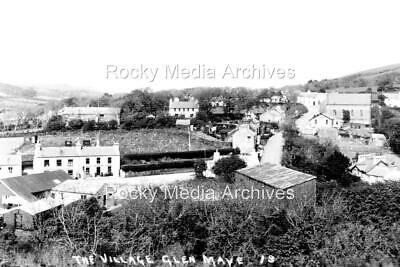
7.1 The proposal put forward within this application is not far away from what has been located on the site in the past. Multiple buildings have been located on the site along with the Waterfall Hotel. The beer garden has seen multiple buildings positioned of varying sizes and
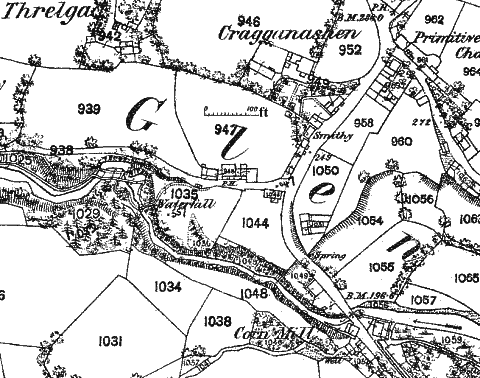
materials. The area proposed for the commercial building housed a large building and there was a small stone cottage located at the immediate entrance to the car park. These can all be seen on the image below.
The old map below also shows clearly the positioning of the cottage to the car park entrance.
A black and white archival photograph showing a village landscape with buildings and hills, captioned 'The Village Glen Maye, I.O.M.'
There is clear precedent for development of the site given its past history both commercially and residential.
8.0 Layout Feasibility
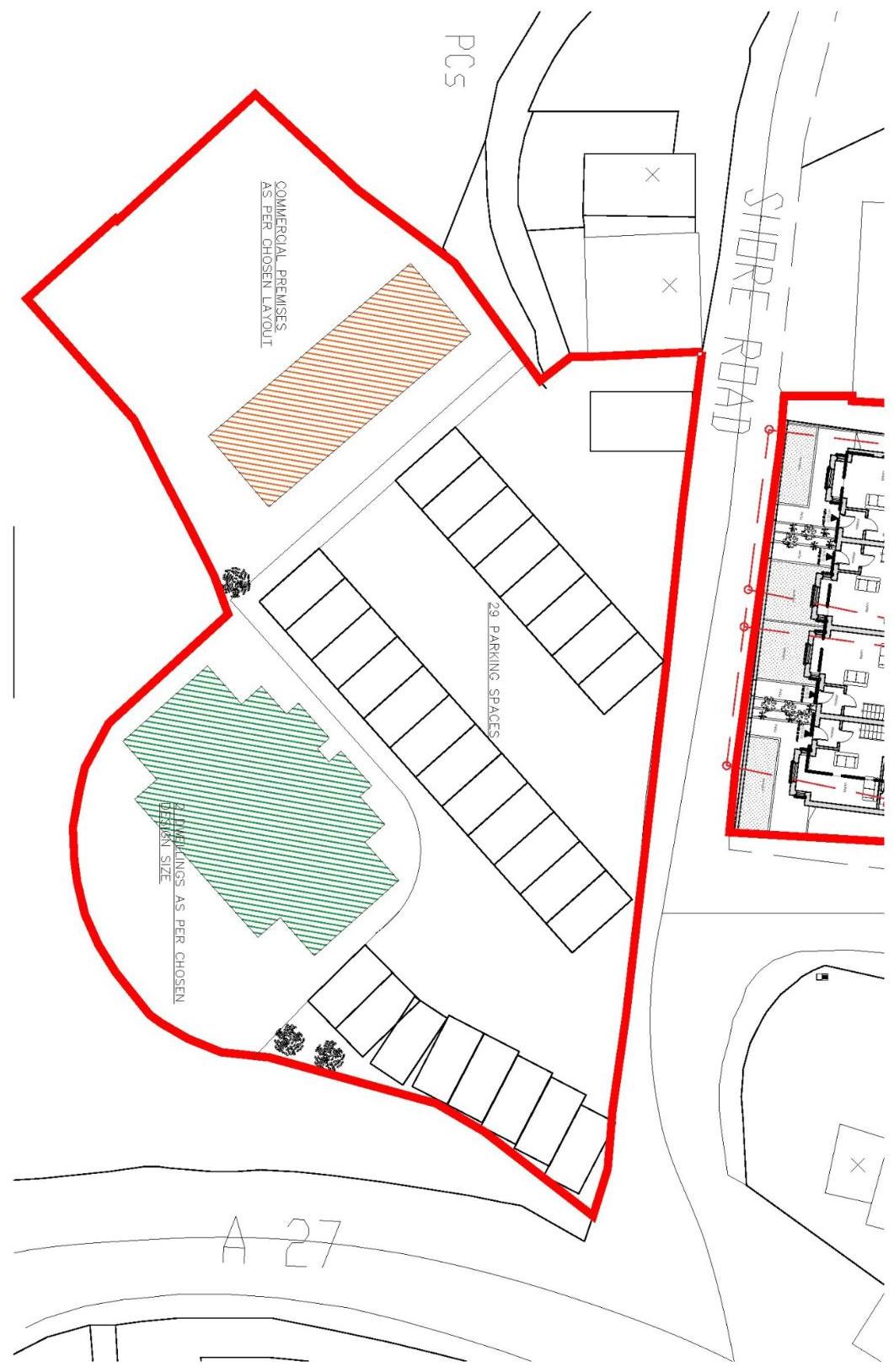
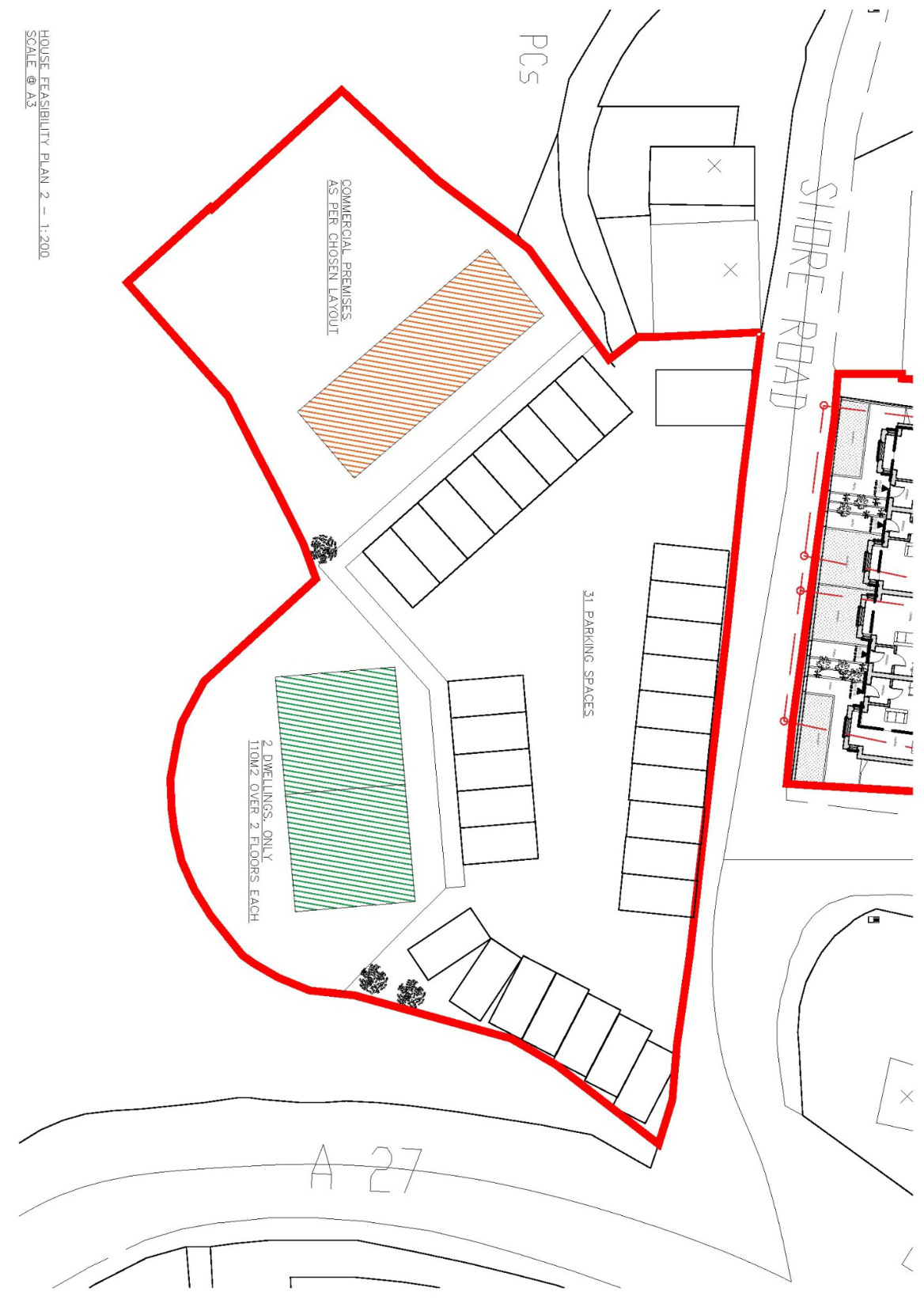
8.1 A feasibility study was undertaken to finalise what layout for the site was best. The other site layout options not chosen can be seen in Appendix 1.
8.2 The locating of the commercial premises to the beer garden works, however the dwellings to the car park area are not viable as it was deemed that too many car parking spaces would have to be omitted to create either of these options.
8.3 Positioning two semi detached dwellings to the car park area that are identical to the dwellings proposed on the beer garden would reduce parking spaces down to 29 overall. Once the 12 dwelling spaces are taken away that only leaves 17.
8.4 Positioning two smaller semi detached dwellings to the car park area would still reduce
A black and white historical topographical map showing field boundaries, place names, and elevation points in a rural area.
the parking spaces down to 31. This would leave 19 for use by visitors to the Glen or commercial premises. These smaller dwellings would also not lend themselves financially to the overall development with a total floor area over two floors of approximately 110m2 only.
9.0 Parking
9.1 Each of the 6 dwellings will have 2 parking spaces within the car park that the applicant owns.
9.2 The car park layout will be slightly altered for the proposal and have 40 spaces in total. These spaces will be to current sizing standards which cannot be said for the existing 45-47 spaces that are on the smaller side.
9.3 Covered by deeds, the car park is solely for use by the patrons of the Waterfall Hotel and visitors to the Glen Maye National Glen. A large sign is present within the car park that states this.
9.4 The car park will be re covered with new tarmacadam as part of the project.
9.5 Considering the main use for the car park would be removed, namely the Waterfall Hotel, the remaining 28 spaces are deemed sufficient for users of the commercial premises and visitors to the Glen. 1 of these spaces will be disabled size.
9.6 The two spaces per dwelling meets the space requirement outlined in the Isle of Man Strategic Plan 2016.
9.7 The deed covenant would still be in place for visitors to the National Glen to have use of the car park.
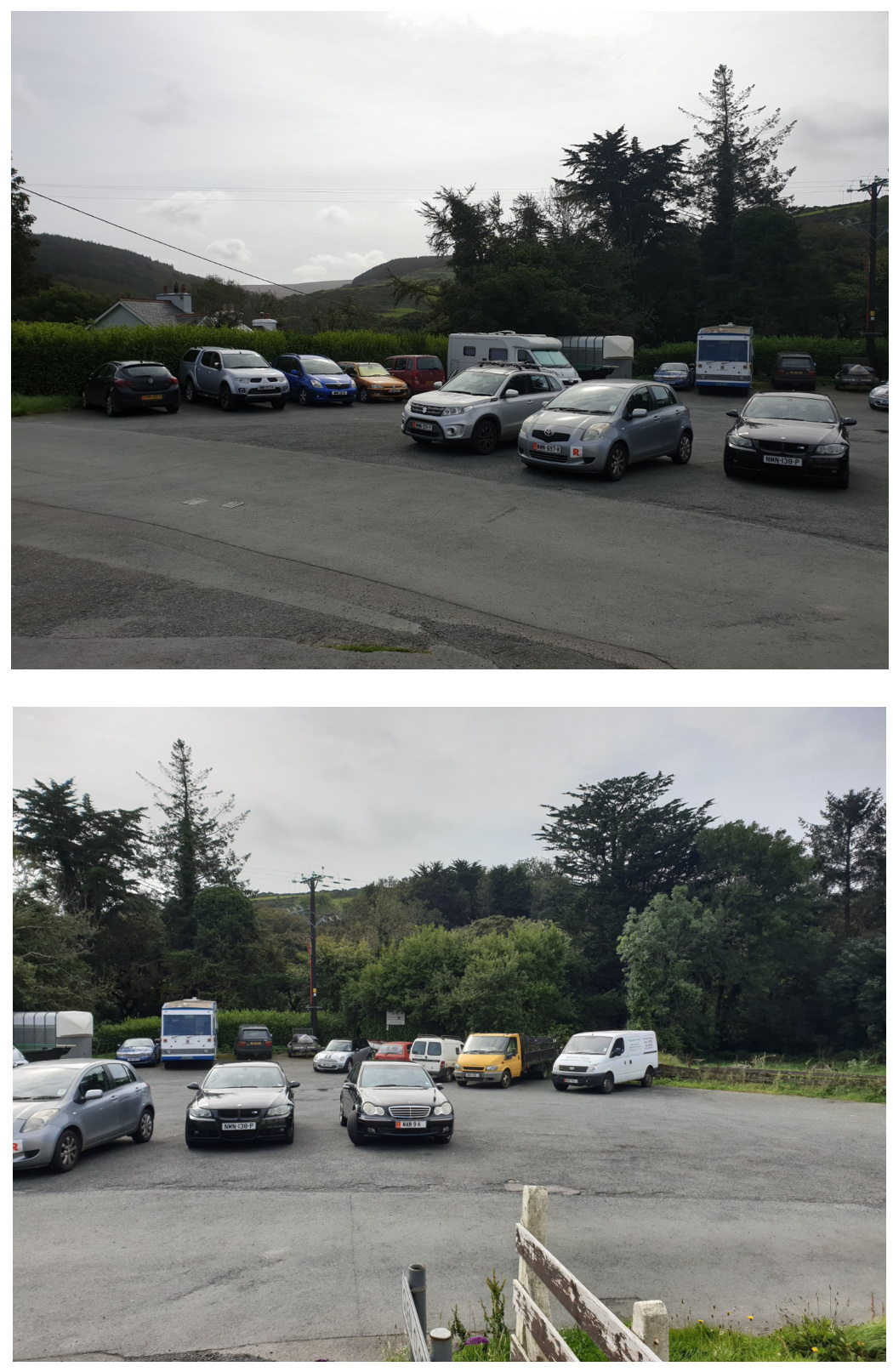
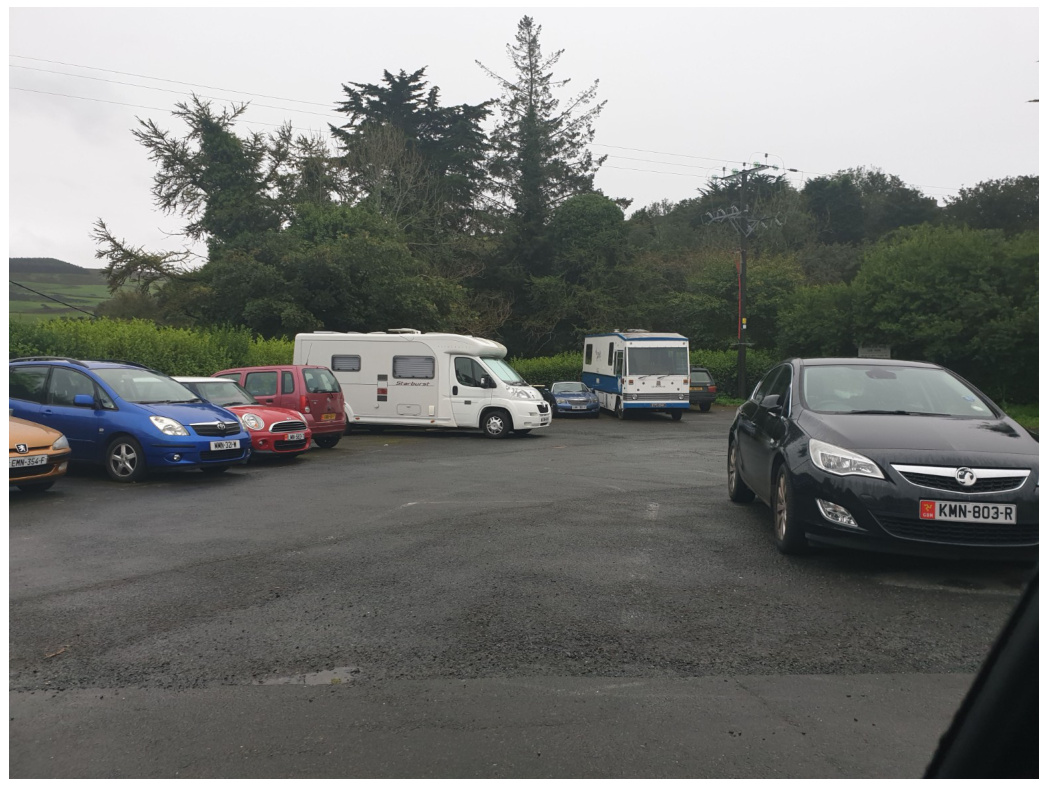
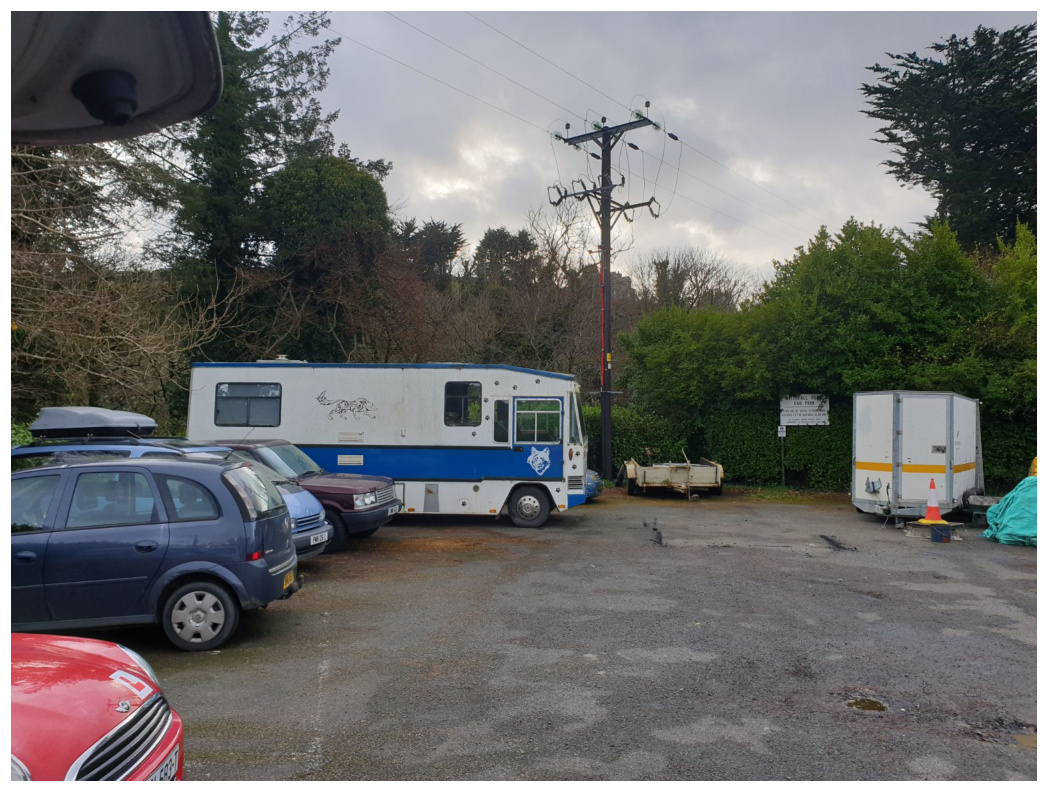
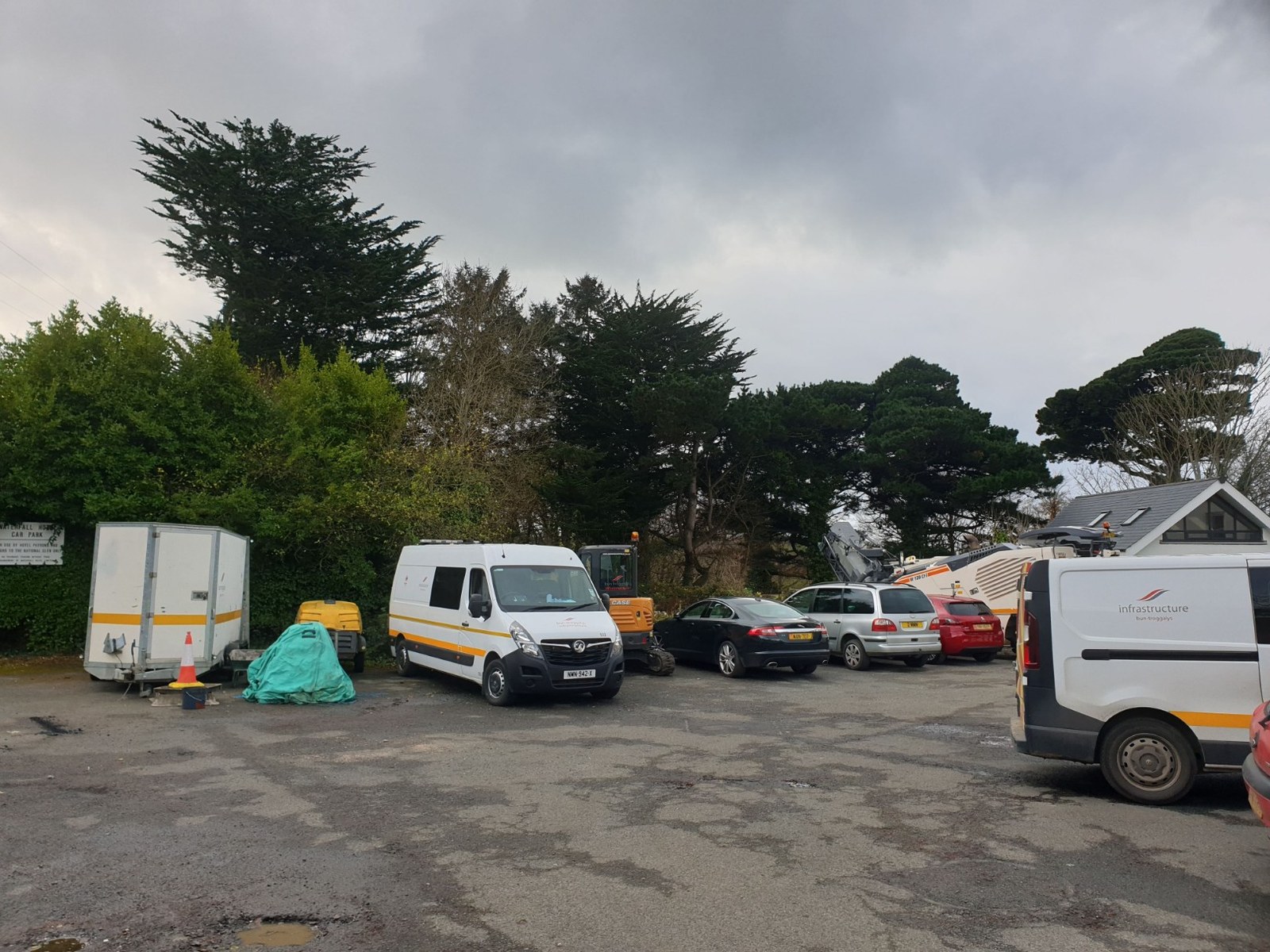
9.8 It is important to note that a vast amount of the existing car park is continuously taken up by vehicles parked up illegally for long periods of time. These vehicles are neither owned by patrons of The Waterfall Hotel or The National Glen. When this is taken into account, the proposed commercial premises is not taking any existing parking away from the site. Photo’s
of these vehicles can been seen in Appendix 2.
10.0 Part B of General Policy 2 - siting, layout, scale, form, design and landscaping of buildings and the spaces around them
10.1 The siting of the proposed terrace dwellings has been carefully considered to respect the current set up of the Waterfall Hotel which is to be demolished. The existing building line will be repeated.
10.2 The area of the proposed dwellings is nearly identical to the existing. The overall external ground area of the proposed building is 220sq metres. The current Waterfall Hotel is 231sq metres.
10.3 The layout of the dwellings is mainly set over two floors. Kitchen, dining, living, WC, utility to ground floor. 3 bedrooms are created (2x double, 1 x single) to first floor alongwith one en suite and bathroom. The internal area totals 122sq metres.
10.4 The scale of the proposal does increase upon the existing but only marginally to allow the creation of the additional third floor. It was imperative from the clients perspective to limit the impact the extra floor had on the surroundings. The front eaves level has been slightly reduced by 350mm. The rear eaves height is approximately 2.7 metres higher due to the existing reducing down to one level at the rear. The ridge has increased by 0.8 metres. This reduces any potential impact down to a bare minimum. It should be noted that whilst increasing in height, there would be no overbearing problems due to the surrounding Glen
Close properties being higher than the proposed due to their increased ground level.
10.5 The form of the terrace of dwellings will completely respect the traditional nature of Glen Maye and the surroundings. The pitched roof will be finished in a dark slate. The main walls will be of painted render finish. Chimneys and gable copings will be fitted also. These match and respect the construction nature running through the traditional Glen Maye properties. Windows to the front elevations will be sliding sash. It will create a Manx Cottage feel.
10.6 Stone cladding is to be utilised to the front bays.
10.7 The semi detached dwellings is as outlined in point 2.6 of this statement. They will mimic the respectful design of the terrace dwellings.
10.8 Timber cladding is the main difference that is to be utilised for these dwellings. The aim of bringing this material in is to respect the local vernacular. Both timber and stone being a strong factor found within the National Glen. This is a strong factor that meets Strategic Policy 3 point b.
10.9 The commercial building has been designed specifically as a single storey unit. This is to respect the history of the site and previous buildings alongwith ensuring it is subservient to the surroundings.
10.10 The commercial building is proposed to be finished in a dark slate to the roof and walls to give a contemporary feel whilst utilising a material ever present in the immediate surroundings and thus respecting the surroundings.
10.11 It should be noted that the surrounding properties are mainly more modern in design with a mix of bungalows and detached dwellings. The roof finish of Waterfall House next door to the Waterfall Hotel has it would seem replaced the slate roof with concrete tiles which are not in keeping with tradition. This is the same for the bungalows.
10.12 As above precedent is in place for design flexibility. The proposal is felt to respect the locality and tradition of Glen Maye more than the current surrounding properties.
11.0 Amenity
11.1 Each dwelling will have suitable refuse storage that is out of public site but can be easily located for refuse collection.
11.2 Each dwelling will have and as shown on the proposed drawings a large garden that is generally over 50% of the floor area of the dwelling.
11.3 Even with the large gardens proposed it is felt with the National Glen on the doorstep, there should be some flexibility in amenity requirement.
11.4 The commercial premises has suitable amenity space for not only visitors but for users of the building.
11.5 A contemporary glazed roofed veranda is proposed to the commercial building. This will allow flexibility to visitors to sit outside even when the weather is not ideal.
12.0 Outlook
12.1 The front elevation to the terrace dwellings which houses the living room to the first floor will have a pleasing view looking out onto the upper trees of the national glen and also landscape further afield heading up to Dalby. The car park would not be the most aesthetically pleasing view but would be no worse than that of the surrounding properties. As stated in the parking part of this statement, the applicant will look at refurbishing the car park and landscape parts in the future which would improve this aspect.
12.2 The rear elevation would have a nice outlook out onto the gardens. At between 13-20 metres long they allow for a nice environment to be enjoyed.
12.3 The upper rooms would have an outlook to Glen Close. The rooms to the rear are purely bedrooms and as such the outlook is not as important.
12.4 Windows proposed within the dwellings, will maximise natural light penetration within the rooms. The proposed respects the original theme of sash windows.
12.5 The semi detached dwellings will have a pleasant outlook to their rear elevation directly onto the National Glen. The front elevations will look out onto the car park and surrounding dwellings. This will be a vast improvement on the existing.
13.0 Overlooking
13.1 There will be no overlooking to the front elevations of both the terrace and semi detached dwellings that will be facing one another. They will be approximately 26 metres apart and as such are outside the general distance max given to overlooking issues.
13.2 No windows have been placed to the end terrace gables to eliminate any overlooking to neighbours on both Shore Road and the A27.
13.3 Whilst dwellings are located to Glen Close behind the terrace dwelling site, overlooking will not be an issue. The Glen Close dwellings are mainly bungalows and with their higher ground level (3.5 metres approx) could not be overlooked. Vice Versa the Glen Close dwellings could not create any overlooking issues to the new dwellings due to the distance. The Gables and Vale View which are directly behind the dwellings are approximately 26 metres away from the rear of the proposed.
14.0 Impact on Trees
14.1 The Southern boundary of the beer garden site is directly to the National Glen. There are multiple trees along this boundary area, some 19 in total, with species including Cypress, Pine, Fir, Oak, Sycamore, Spruce and Ash.
14.2 This boundary is rather steep down to the Glen and some of the trees mentioned above are directly on this slope with partially exposed roots.
14.3 Whilst not necessarily the most aesthetically pleasing of trees, they are one of the first visuals for visitors to the Glen. As such the proposal has been created to not impact the trees in any capacity.
14.4 The approximate maximum spread of these trees is 7 metres. The proposed dwellings will be located a minimum 9 metres from this boundary, well outside of the canopy spread.
14.5 Any development within this proposal will be undertaken with the professional assistance of a Structural Engineer. This will be very important as it is proposed that pile foundations would be designed and utilised for the beer garden dwellings to eliminate any potential impact on the tree roots that could occur with standard foundations. Whilst pile foundations would technically not be needed outside of the tree canopy spread zone, they would be utilised throughout for added safety and protection.
14.6 A full tree survey would be undertaken and a written proposal compiled for review and approval by both planning and Building Control Departments prior to any construction works being undertaken.
15.0 Impact from Trees
15.1 The trees to the Southern boundary of the beer garden are rather large in size, nearing 70 feet for some.
15.2 This height is not complete from the ground level of the site as they are situated on the slope going down to the Glen. As such, the potential overbearing factor is less.
15.3 The proposed ridge height of the dwelling is approximately 8.4m. This will be comfortably below the canopy spread of the trees and means that the 9m distance to the trees will be felt throughout the entire dwellings.
15.4 Whilst the trees will take away some natural sunlight from the dwellings, it will not be to a detrimental level given the past comments. The floor layouts have been created so that both front and rear elevations are utilised by the primary rooms to the dwellings. The rear gardens are larger than the ground floor footprint of the dwellings to give a pleasant clear outlook that is not hindered by the trees. The trees will lend themselves to be a pleasant backdrop to the site that will be savoured.
16.0 Impact on Glen entrance
16.1 The proposed semi detached dwellings to the beer garden part of the site are closest to the pedestrian entrance to the Glen. The closest part of the proposed dwellings would be over 6 metres away. In the past, proposals have been put forward that would create visibly impactful designs that would take away from the natural beauty of the site.
16.2 The proposed design has been given careful consideration. This is why the wing to each dwelling is stepped down to a ridge height of approximately 5.6m in comparison to the main ridge height of 8.4m. This will minimise any visual impact from the dwelling for users of the footpath.
16.3 As an extra design benefit, it is proposed that the dwelling wings are finished with a timber cladding. This will not only soften the appearance in comparison to painted render but also respects the local vernacular of the Glen and surrounding trees. It will allow for the dwellings to partly blend into the surroundings.
16.4 It should be noted that this is a far cry from the approved and recently undertaken conversion of the old gift shop to the Northern side of the pedestrian Glen access. This is directly on the entrance footpath and is bold painted render that has given no thought to the Glen.
17.0 Green Energy
17.1 It is proposed that every dwelling will be installed with Air Source Heat Pumps and Solar Panels for heating and hot water. This will be alongside high levels of insulation and high quality double/triple glazing gas filled to maximise the green credentials and be as eco friendly as possible.
18.0 Drainage
18.1 It is proposed that the foul drainage from the dwellings and commercial premises would run out to the front onto Shore Road and tap into the existing foul sewer running down the
road.
18.2 The usage of the sewer will not be increased in comparison to what the existing building has implemented.
18.3 It is proposed that the dwellings to the public house site have separate soakaways located within their rear gardens.
18.4 The commercial building and beer garden dwellings will have soakaways installed within the car park area to allow them to be 5 metres from any building and also not be near the slope into the Glen. This to confirm is not allowed re Building Regulations and also is another factor in minimising impact on the stability of the boundary tree line.
18.5 A full percolation test would be needed but the aim will be to separate the foul from the surface drainage to reduce the inflow to the main sewer.
18.6 From research it has been found that a public sewer line runs approximately half way across the back amenity area of the terrace site and down the West boundary next to the neighbouring property Waterfall House. This sewer run picks up the drainage from the properties to Glen Close.
18.7 All building works undertaken within 3 metres of this sewer line running through the site would be undertaken via a build over agreement with the Isle of Man Drainage Authority.
19.0 Landscaping
19.1 The front curtilage of the dwellings will have a mixture of hard and soft landscaping.
19.2 The paved areas will have a permeable hardstanding that matches the dark grey colour of the windows, guttering and fascias. It is important that these hardstanding areas are permeable material to eliminate any impact on surface drainage.
19.3 Small lawned/planted areas will be located along each boundary between dwellings. A mixture of shrubs, planting will be incorporated.
19.4 The rear gardens to the public house site will be split level due to the difference in ground level. The lower part is proposed to be paved. This will match the dark grey colour of the windows, guttering and fascias. Steps created leading up to upper garden will match the main patio area.
19.5 The upper levels will be mostly laid to lawn.
19.6 Boundaries will be created with dwarf stone walling to the front to tie in with the local vernacular and close boarded fencing to the side and rear. The existing natural hedging and shrubs to the rear are proposed to be kept as much as is feasible. Any new to be planted will be chosen to tie in with the existing.
19.7 The rear gardens to the beer garden dwellings will be laid to lawn.
19.8 It is proposed that the actual material used for the paving, patio and driveways is confirmed with the Planning Department prior to ordering so agreement can be had on type used.
Conclusion
It should be considered that the proposal can be viewed favourably when assessed against each of the key criteria. Provisions have been made from the Development Plan with strong regard for Strategic Plan Policies:
- General Policy 2
- Housing Policy 14
- Strategic Plan 1
- Strategic Plan 2
- Strategic Plan 3
- Community Policy 4
- Environmental Policy 3
- Environmental Policy 28
- Environmental Policy 42
As described in this Planning Statement, it is felt that the proposal complies with the Policies outlined above.
Appendix 1
This image displays a site layout plan outlining the proposed development boundaries in red. It details the allocation of space for commercial premises, 23 parking bays, and landscaping areas adjacent to Shore Road.
HOUSE FEASIBILITY PLAN 1 - 1:200 SCALE @ A3
HOUSE PERIODIUM PLANE 2 - 1.200 HOUSE 400
A house feasibility plan showing the proposed layout for a commercial premises and two dwellings with 31 parking spaces along Shore Road.
Appendix 2
Vehicles, trailers and boats left on car park illegally (Sept )
Vehicles, trailers and boats left on car park illegally (Sept )
Same vehicles and trailers on car park illegally ( 25th November 2022)
Other vehicles, trailers and machinery on the car park without permission (November 2022)
Note: Other photographs can be supplied of various dates showing the continued use of the car park illegally and completely outside the ownership and covenant use for the parking of various vehicles.
A photograph showing a paved parking area or forecourt with several work vans, cars, and construction equipment parked on it, with trees and a building in the background.
Copyright in submitted documents remains with their authors. Request removal
Source & Provenance
Official reference
22/00361/B
Source authority
Isle of Man Government Planning & Building Control