Loading document...
on the
at
On the Instructions of: Ballamanaugh Properties Limited and Mr. and Mrs. G A Moore
August 2010
Report Prepared by: Oliver Stones BSc (Hons) MRICS FAAV Dee Atkinson \& Harrison The Exchange Exchange Street Driffield East Yorkshire YO25 6LD Tel: 01377253151 Email: [email protected]
Section Description Page 1 Terms of Engagement ..... 3 2 Purpose of this Report ..... 3 3 The Property ..... 3 4 Inspection ..... 5 5 The Current Farming System ..... 5 6 The Adopted Farming System ..... 6 7 The Agricultural Dwellings on the Holding ..... 7 8 Conclusion ..... 8 Appendix 1 Plan of the Holding Appendix 2 Detailed Plan showing the location of Tramman and the Farmhouse
1.1 Dee Atkinson \& Harrison have been instructed by Ballamanaugh Properties Limited and Mr. and Mrs. G A Moore, to prepare an independent Agricultural Appraisal on the Ballamanaugh Home Farm in order to assess the number of agricultural workers needed to operate the holding and any essential requirements for the workers to reside on the holding. 1.2 This report has been prepared by Oliver Stones BSc(Hons) MRICS FAAV, a partner of Dee Atkinson and Harrison based in Driffield, East Yorkshire. I hold an Honours degree in Rural Enterprise and Land Management, am a Professional Member of the Royal Institution of Chartered Surveyors (Rural Practice Division) and a Fellow of the Central Association of Agricultural Valuers. 1.3 I have provided professional advice on a range of rural property issues, including planning matters, to clients based throughout the north of England since 1998 and have experience of the Isle of Man agricultural sector since 2007, whilst employed by Carter Jonas, Savills Property Consultants and Dee Atkinson \& Harrison. 1.4 This report is based on information obtained during several inspections of the Ballamanaugh Home Farm and meetings with the existing tenants, together with my own professional observations and conclusions.
2.1 The purpose of this report is to provide an objective appraisal of the agricultural unit comprising the Home Farm and an assessment of the labour requirements on the holding. 2.2 When preparing this report, I have considered and made reference to the following documents:
Produced by the Department of Agriculture, Fisheries and Forestry;
2.3 I have also considered the standard labour requirements for agricultural enterprises set out in the Agricultural Budgeting and Costings Book (ABC Guide) ( 70th Edition - May 2010) produced by Agro-business Consultants.
3.1 Area and Land Uses
Ballamanaugh Home Farm comprises a mixed arable and livestock unit extending to approximately 911 acres ( 791 acres farmable) or thereabouts, together with three farmsteads and three dwellings. A breakdown of the current land uses on the holding is shown in Table 1 below:
Table 1 – Area and Land Uses
3.2 The holding is divided into five separate blocks of land as shown on the plan at Appendix 1, located between the village of Sulby and Ballateare on the north west coast of the island. Together, the consecutive blocks of land and buildings are known as Ballamanaugh Home Farm, with the largest block of land (and the main farmstead) referred to as 'Home Farm'. The distance between the main farmstead and the most outlying block of farmland is approximately 6.5 miles. The area of farmable land included with each block is as follows:
Table 2 – Farmable Area
| Land Use | Area (Acres) |
|---|---|
| Arable | 280.88 |
| Grassland suitable for mowing | 175.06 |
| Permanent Pasture | 135.15 |
| Rough Grazing | 200.14 |
| Trees, Gorse, Tracks, Yards & Waste | 119.96 |
| Total = | 911.19 |
3.4 The land included with the 'Home Farm' has been extensively re-claimed and a significant area of the grassland is steep and difficult to access with machinery. This land is most suited to sheep grazing.
3.5 Farm Buildings
The three largest blocks of land are served by farm buildings which briefly include:
| Land Use | Home Farm | Staward Farm | Gob y Volley Land | Land at Ballaterson | Land at Ballateare | Totals |
|---|---|---|---|---|---|---|
| Arable | 48.84 | 51.58 | 72.20 | 108.26 | 280.88 | |
| Mowing Grassland | 51.09 | 120.25 | 3.72 | 175.06 | ||
| Permanent Grassland | 127.18 | 7.97 | 135.15 | |||
| Rough Grazing | 200.14 | 200.14 | ||||
| Trees, Gorse, Waste etc. | 70.88 | 30.07 | 17.88 | 1.13 | 119.96 | |
| Totals = | 449.29 | 207.13 | 73.18 | 73.33 | 108.26 | 911.19 |
General purpose farm building used for crop storage ( ) 3.6 The buildings are modern and well suited to a mixed livestock (cattle and sheep) and arable enterprise. The buildings are considered adequate for a holding of this size and nature. Presently, the tenants of the holding do not use the farm buildings on the land at Staward.
Both the Home Farm and Staward Farm include dwellings occupied by agricultural workers, known as the 'Farmhouse' and 'Shepherd's Bungalow' respectively. In addition, there is a larger dwelling near the Home Farm steading known as 'Tramman'.
4.1 I have inspected the Ballamanaugh Home Farm on a number of occasions and most recently on the 31 e March and 20th October 2009. The inspections included the farm buildings and the dwellings known as Tramman and the Farmhouse at Home Farm, together with the Shepherd's bungalow in Staward, as well as the land.
5.1 The holding was purchased in 1996 and initially farmed in-hand using a Manager and employed labour. However, due to downward pressures on profitability, the unit was not considered viable as a stand-alone unit and the inhand farming enterprise ceased in 2004. 5.2 Since 2004, the holding has been let out on a tenancy. The tenants (Andrew and Susan Sanders) operate a substantial dairy unit approximately 12 miles to the south of the Home Farm at Ballalough. Due to the continued pressures on profitability in agriculture, it is likely that the holding will continue to be let out in the future. 5.3 The holding is currently farmed by the tenants as a mixed arable and livestock unit, with young stock for dairying housed in the buildings at the Home Farm and grazed on the grassland. In addition, approximately 200 head of sheep are fattened on the rough grazing annually. The arable land is used for growing fodder crops and cereals. 5.4 The Farmhouse is occupied by the son of the tenants who is principally employed on the Ballamanaugh Home Farm. 5.5 The residence known as 'Tramman' is a substantial and well maintained 4 bed room dwelling which is currently unoccupied and has remained unoccupied for some time. 5.6 The Shepherd's bungalow at Starward is occupied by an agricultural worker, whom is employed full time as a dairyman on the tenant's main holding at Ballalough. 5.7 Essentially, the Ballamanaugh Home Farm is currently managed and operated
by one full-time agricultural worker who resides on site in the Farmhouse at the Home Farm, with additional labour provided as and when necessary in busy periods.
6.1 Presently, the holding is managed as a secondary unit to support the main dairying enterprise operated by the tenants at Ballalough. The land at Ballamanaugh is primarily used to produce arable crops to feed the cows at Ballalough, as well as grazing for replacements. Sheep have been grazed by the tenants on the higher land, but due to the lack of profitability this enterprise was ceased and
6.2 As a consequence, in my opinion, the labour requirements for a holding of this size and nature are lower than would normally be expected in comparison to the holding being operated in isolation as a stand-alone unit.
6.3 Using the benchmark data adopted by DAFF and set out in the Planning Policy Note (December 2008) and the ABC Budgeting and Costings Guide, I have assessed the labour requirements for the Home Farm on the basis that it is operated as a stand-alone unit. I have adopted what is considered to be a reasonable farming system which is appropriate to a holding of this size and nature. The system adopted is as follows:
Table 3 shows the labour requirements calculated using the DAFF benchmark data for the proposed crops (cereals, silage cereals, and grass), based on the areas shown in Table 2.
Table 3 - Proposed Cropping and Labour Requirements
A standard livestock system based on grass finished suckler calves and sheep (ewes purchased with lambs at foot) are considered appropriate enterprises for the Ballamanaugh Home Farm. The standard labour requirements for the adopted livestock enterprises have been calculated as follows:
| Crop | Area (acres) | Labour Requirement (hours per annum/acre) | Total Labour Requirement (hours per annum) |
|---|---|---|---|
| Arable | 280.88 | 8 | 2,247 |
| Grassland (Mowing and Permanent) | 310.21 | 1.6 | 496 |
| Rough Grazing | 200.14 | 0.6 | 120 |
| Totals = | 791.23 | 2,863 |
| Stocking Rate (Cows per acre) ½ ABC Guide rate adopted due to quality of the permanent grassland | 0.47 |
| Area (Mowing & Permanent Grassland) | 310.21 |
| Total Herd Size = | 146 |
| Enterprise | Labour Requirements (Hours/annum) |
|---|---|
| Crops | 2,863 |
| Cattle | 1,312 |
| Sheep | 1,475 |
| Total = | 5,650 |
| Labour Requirements (hours per head per annum) = | 9 |
| Total Labour Requirements = | 1,312 |
Note: Assumed stock rate adopted to reflect the productivity of the steep/rough grassland
| Stocking Rate (per acre) * | 2.84 |
| Area (Rough Grazing) | 200.14 |
| Total Herd Size = | 567 |
| Labour Requirements (hours per head per annum) = | 2.6 |
| Total Labour Requirements = | 1,475 |
The DAFF guidance suggests one full time labour unit on a holding is equivalent to 2,000 hours per annum and at least one full time labour unit is needed to justify each dwelling house.
6.10 Based on the above Benchmarking data, overall (including crops) the Ballamanaugh Home Farm justifies 2.83 full-time labour units.
It is not essential to live on site to deal with the cereals and grassland. This is already evidenced by the fragmented layout of the land included with the Home Farm, with the arable and mowing land located away from the main farmstead (Home Farm).
6.12 In my opinion, it would only be essential for an agricultural worker to live on-site to deal with the livestock enterprises. Taking the livestock enterprise in isolation, the labour units generated by the standard enterprises adopted have a functional requirement for 1.39 agricultural workers to reside on the holding.
6.13 The current farming system operated by the tenants of the Home Farm however demonstrates that it is possible to manage their current arable and livestock enterprises effectively and efficiently with only one labour unit residing on-site.
7.1 Presently, two out of the three dwellings on the holding are restricted by Agricultural Occupancy Conditions including Tramman which is a substantial dwelling located to the north of the Home Farm buildings, but separated from them by a good sized garden and a mature line of trees, as shown on the plan
at Appendix 2. The second dwelling restricted by an Agricultural Occupancy Condition is the Shepherd's bungalow which is located adjacent to the other main farm building and silage clamp at Starward.
7.2 It is my understanding that the Farmhouse was the original dwelling associated with the Home Farm and was constructed prior to Tramman, for which planning approval was granted in 1984. I have not inspected the planning files relating to justification for Tramman, but understand that at the date of the application, the Home Farm was operated in-hand and a specialist cattle breeding enterprise was operated on the holding. Since 1984, the operation of the holding has changed considerably, with far less labour employed on the Home Farm, which is reflective of the overall agricultural industry.
7.3 The Farmhouse is not constrained by an agricultural occupancy condition, but is occupied by an agricultural worker. This property is located immediately adjacent to the main range of farm buildings on the Home Farm and approached by the existing farm entrance.
7.4 The Farmhouse is within sight and sound of the farm buildings which helps to ensure that any animal welfare or husbandry requirements can be dealt with promptly at all hours, if required. The size and nature of the Farmhouse is also considered commensurate with the normal requirements of an agricultural occupier on a holding of this size and sustainable from the income, which the agricultural enterprises on the holding are reasonably expected to generate.
7.5 Whilst the farm building on the land at Staward is not currently used the Shepherd's bungalow is modest and located immediately adjacent to the main building, allowing an agricultural worker to be on site at all hours of the day, if required.
8.1 On the basis of the information gained from the owners, tenants, and from the site inspections together with my own conclusions, I am satisfied that the Ballamanaugh Home Farm has a maximum labour requirement of 2.83 full-time agricultural workers based on the standard system adopted. I am also satisfied that it is only essential in terms of the functional need generated by the standard system for a maximum of 1.39 full-time agricultural workers to reside on the holding and to be in sight and sound of the farm buildings.
8.2 I am also satisfied that the long-term labour requirements of the Home Farm at Ballamanaugh, particularly in relation to the requirements for agricultural dwellings to be sited on the holding, is unlikely to increase.
8.3 After considering the size, nature, and functional requirements of the holding, I also consider that the most appropriate dwellings for occupation by agricultural workers are the Farmhouse and the Shepherd's bungalow, bearing in mind their proximity to the two main ranges of farm buildings at the Home Farm and Staward.
8.4 Whilst the dwelling know as Tramman was originally constructed as an agricultural dwelling, the Farmhouse at the Home Farm is considered to be the most appropriate dwelling for an agricultural worker due to its location and size. In my opinion, the Farmhouse is a more reasonable agricultural dwelling which could be sustained financially by the income which could reasonably be
PRIVATE & CONFIDENTIAL
generated from the standard enterprises adopted on the holding or an agricultural wage. 8.5 Based on the current management of the Ballamanaugh Home Farm or a reasonable farming system operated in isolation, there appears to be no long term need based on the functional or business requirement for Tramman to be occupied by an agricultural worker on the holding.
Signed Date O F STONES BSc (Hons) MRICS FAAV
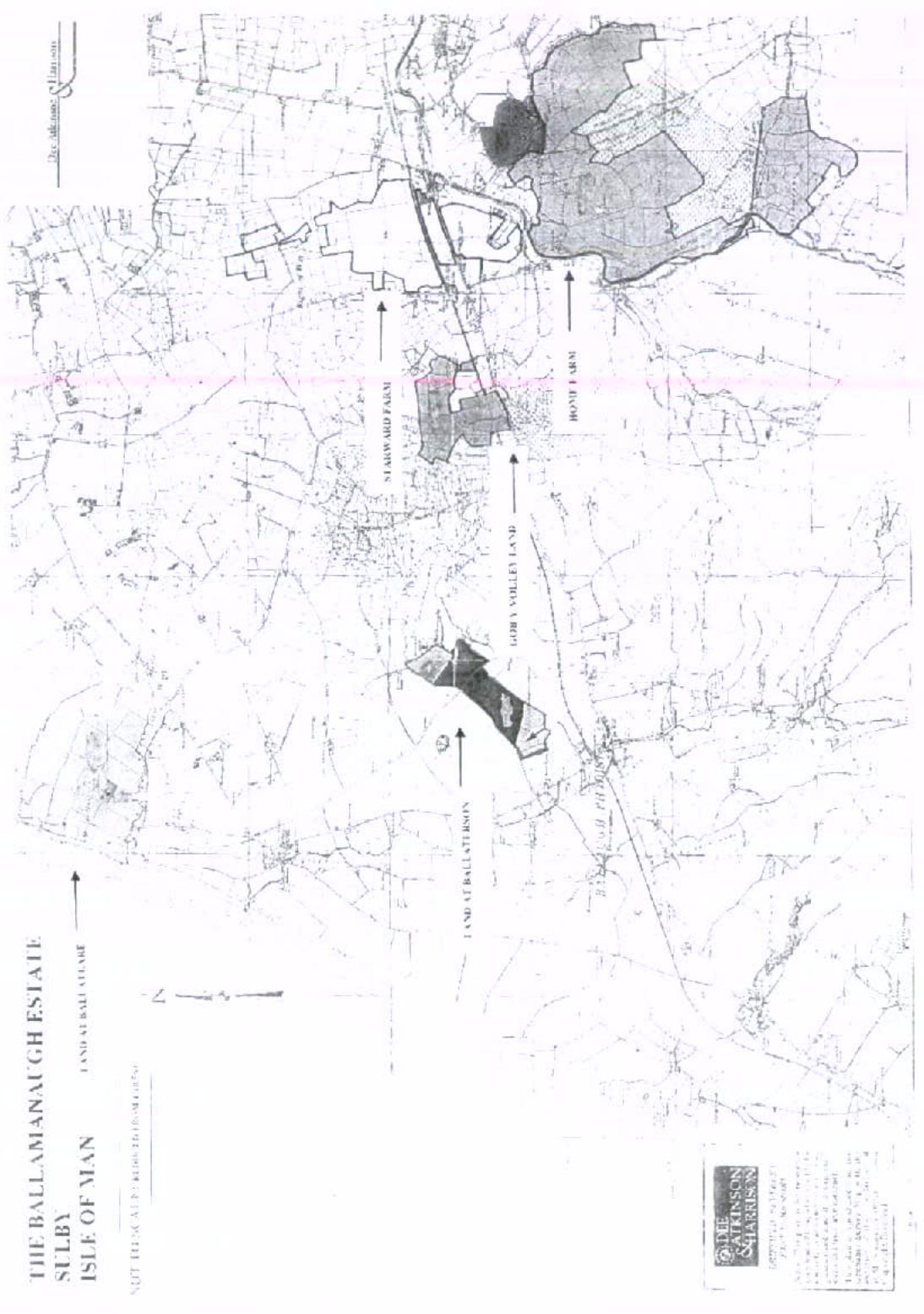
Plan of the Holding
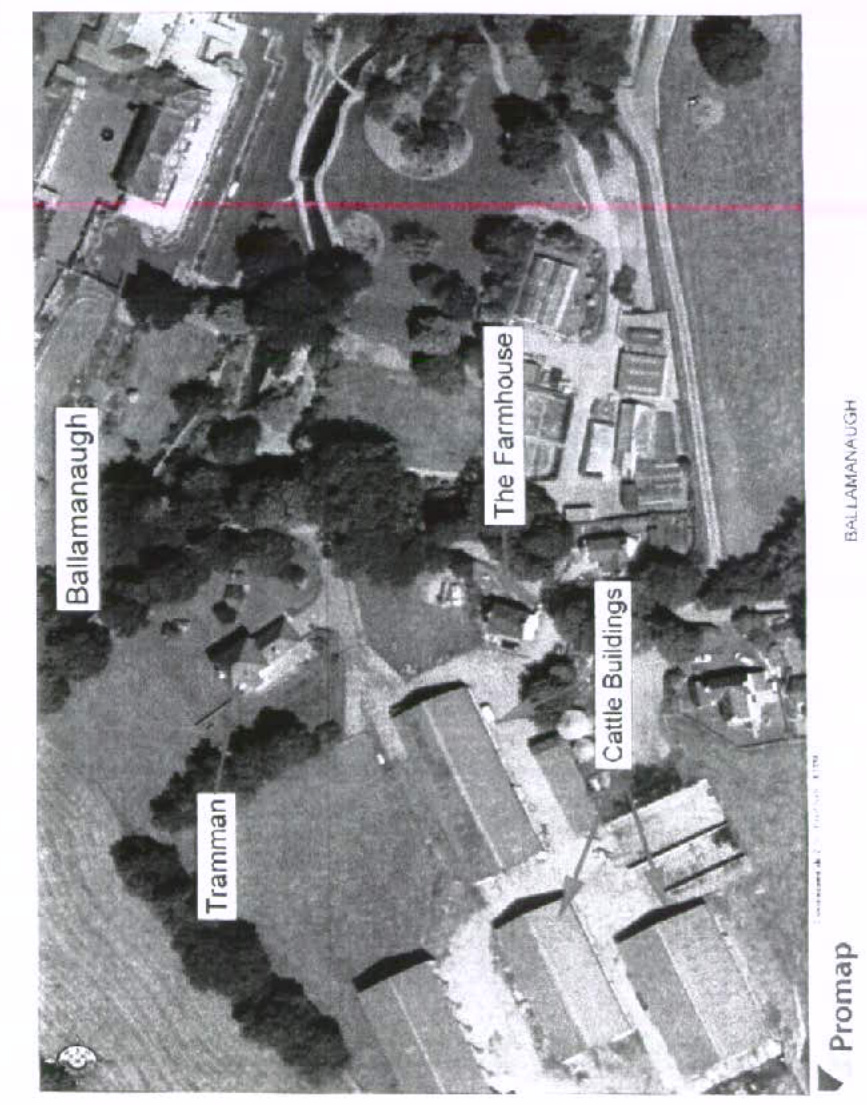
Detailed Plan showing the location of Tramman and the Farmhouse
Copyright in submitted documents remains with their authors. Request removal
