Loading document...
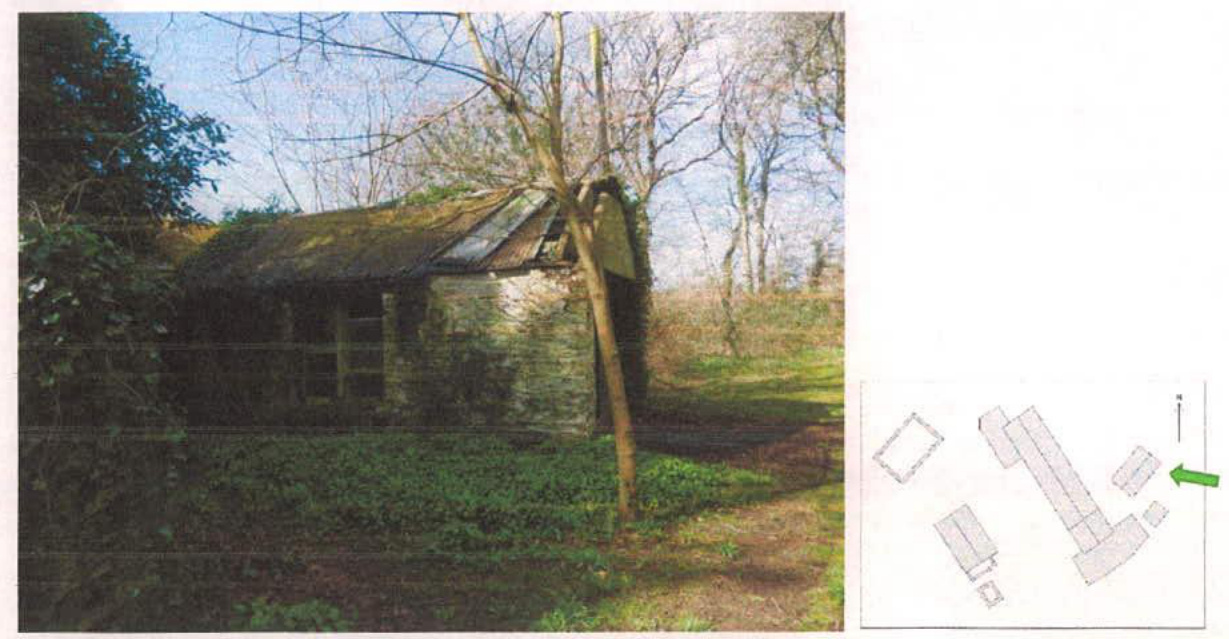
Fig 9. The Hay Loft from the North West side, openings to be enlarged and first floor opening to be peaked. {{image:284220}}
Fig 10. The Ruined outbuildings behind the Hay Loft, to be partially reconstructed and incorporated within linking structure.
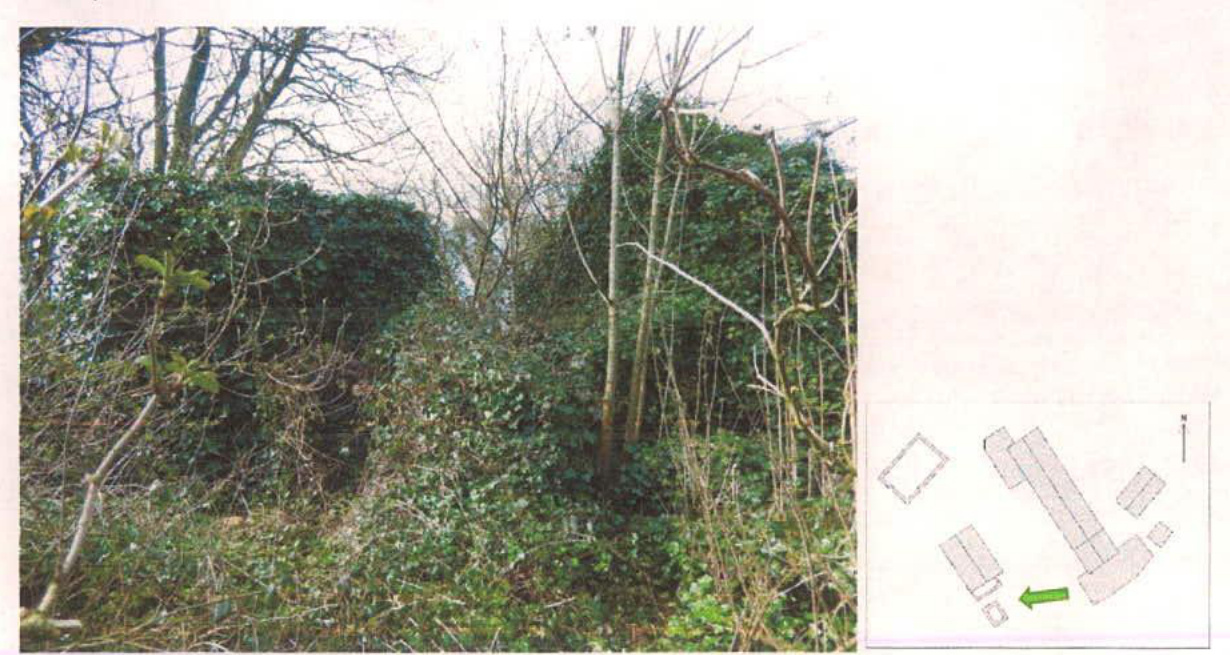
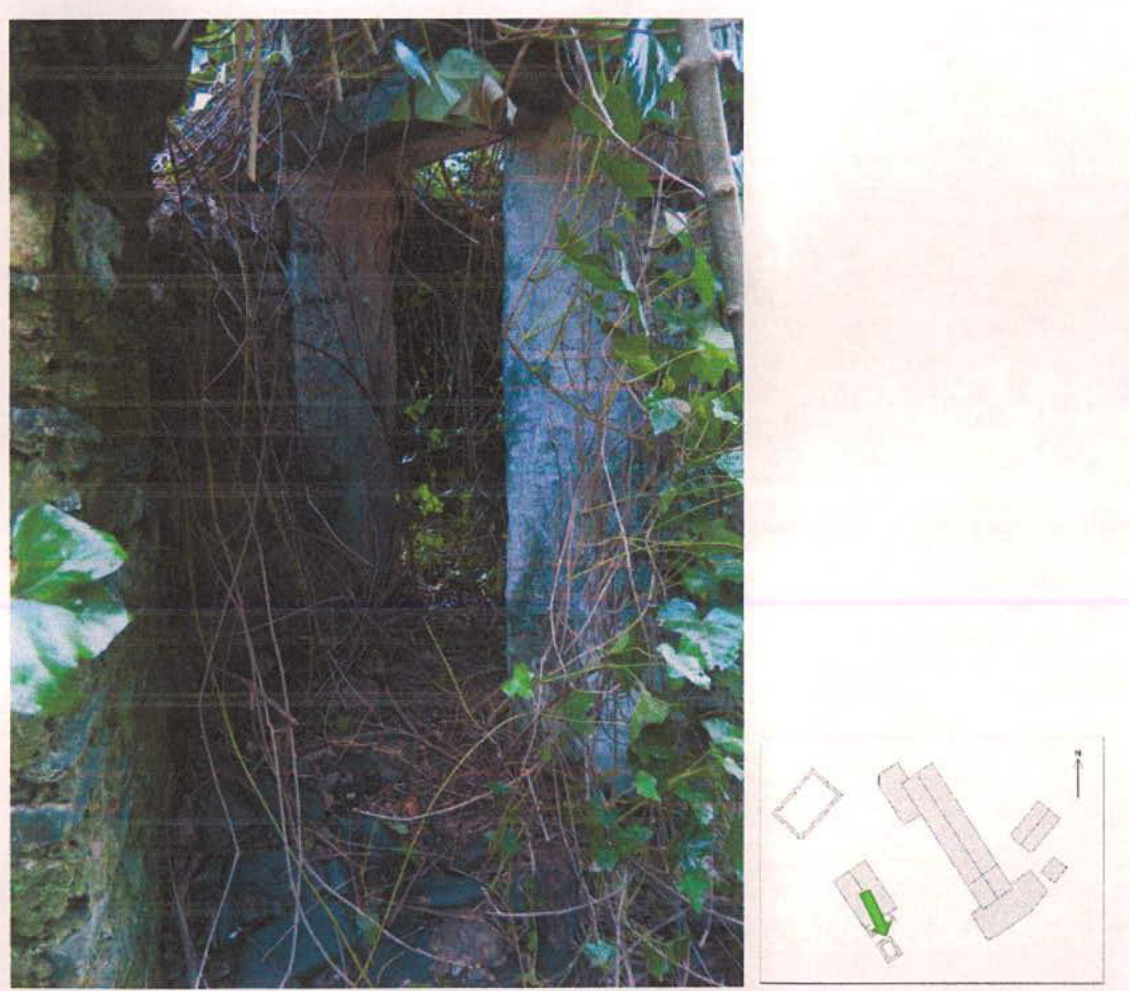
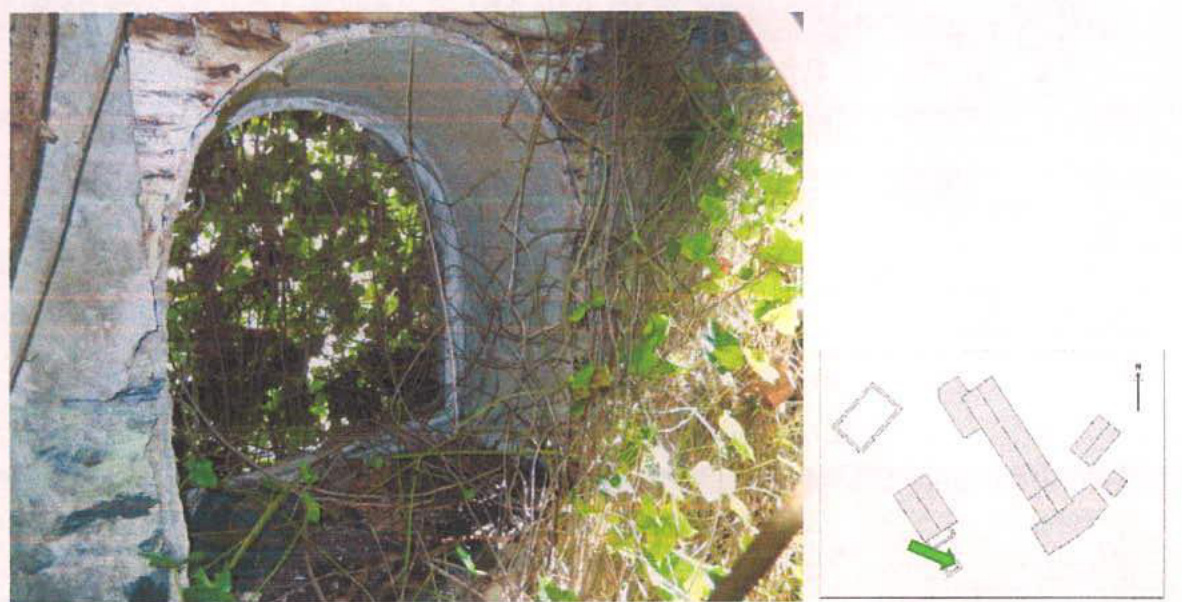
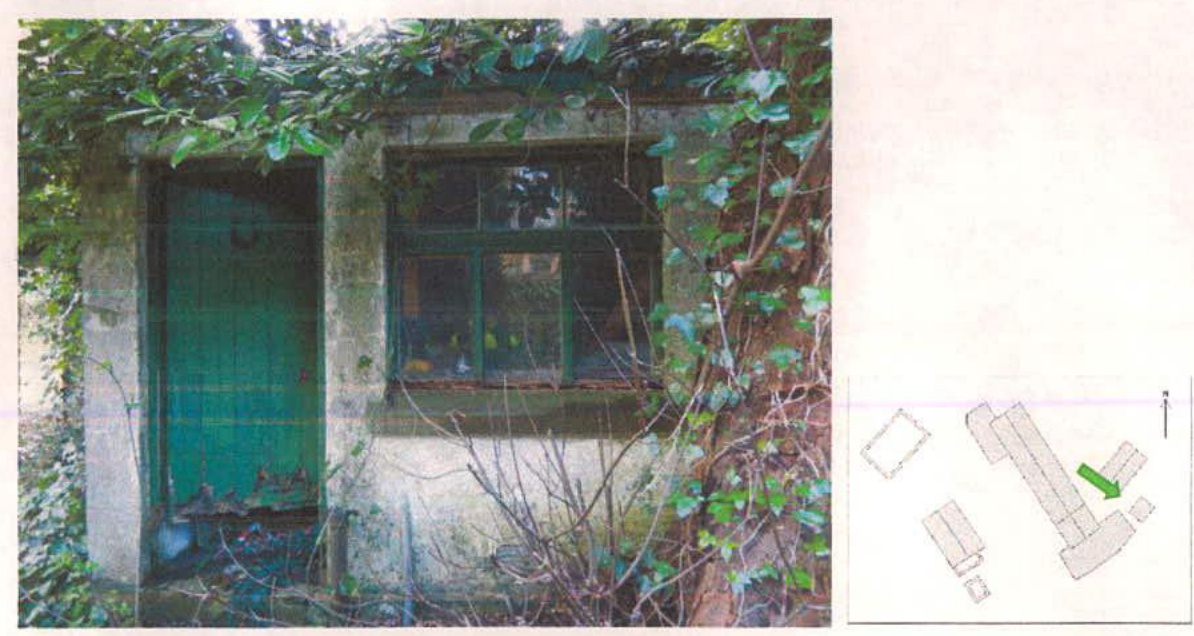
Fig 11. Arched opening in the ruined outbuilding to provide an opening through into water closet.
Fig 12. Curved wall and entrance to the ruined outbuilding to provide entrance to spiral staircase to first floor of Hay Loft.
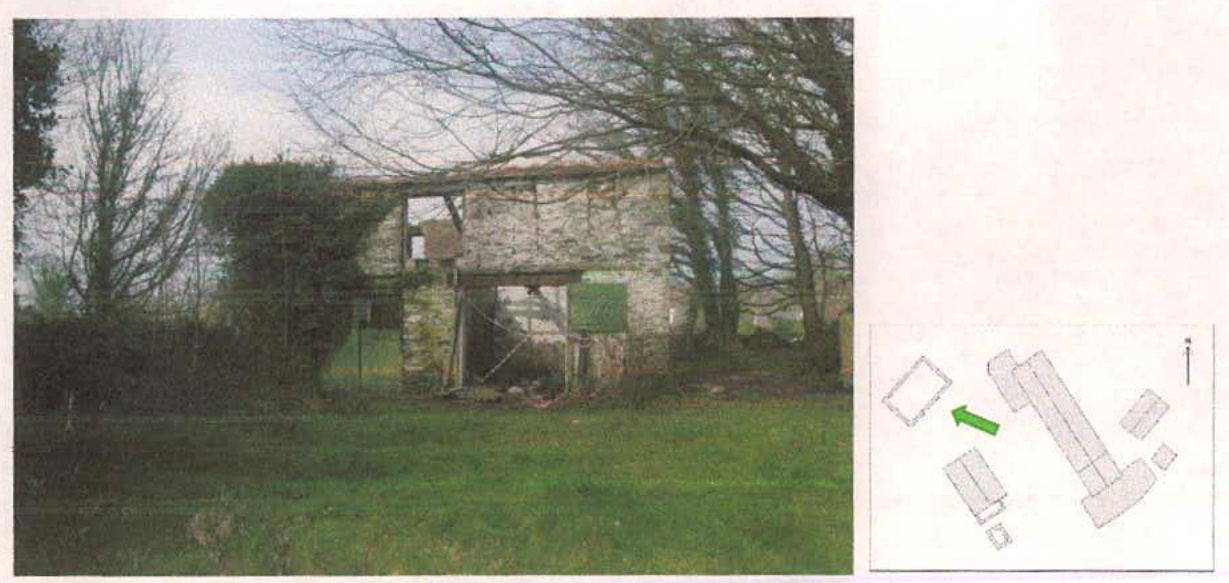
The two storey barn to the North West of the main farm yard and barn area is currently in very poor condition having been damaged by fire in 2014. Entry is unsafe, with charred timbers and debris littering the floor area.
It stands in a prominent position in the complex and has evidently gone through some alterations in its time as can be seen in the blocked up narrow windows to the first floor.
It is proposed to remove this structure and replace with a smaller 3 bay timber frame garage slightly further to the South West (the siting of which will require the removal of one small medium sized Sycamore, for which permission will be sought from DEFA). The windows of the new Garage will be shaped and sized to match the original narrow bricked up windows to the first floor of the two storey barn.
Removal of this structure will open up the space to the West across farmland and remove a dangerous building from the area.
All hard materials in the removal of this structure can retained and re-used on site in the construction of the other structures rather than importing materials which may not be compatible.
Fig 13. The Two Storey Barn, to be removed. Stone to be re-used on site.
There is a tin roofed garage to the side of the barn complex which is in need of renovation. The garage has been altered and although it is largely solid wall later parts of the wall at the front wall have been replaced with a cavity construction which is in poor condition.
It is proposed to renovate this building and retain as it is by rebuilding the gable in matching stonework and re-roofing in natural slate.
Fig 14. Garage to be refurbished
There is a small shed of recent construction, compared to the rest of the barn complex, situated to the edge of the site to be removed. The building is in poor condition and detracts from the condition of the adjacent buildings.
Fig 15. Shed to the rear of the complex to be removed.
As already described the buildings are redundant outbuildings probably constructed before the main house Glyn Moar which is No. 268 on the Isle of Man Registered Building list and was listed due to it's Architectural and Historical Merit.
A report was formulated by a local Charted Architect and Academic Mrs Patricia Tutt where it goes into great detail about the house but the out buildings have little mention. Nonetheless they should be treated in a manor befitting of a registered building on the Isle of Man and any restoration should be carried out in as sympathetic manor as possible.
The barns have not been used for agricultural use for a number of years. Some areas have been used for storage in the past and others are considerably over grown.
Due to this disuse, some of the barns are starting to deteriorate badly.
The buildings have been redundant for a number of years and due to this have fallen into a state of disrepair. Mrs Watson has recognised this and has decided to restore the buildings to their former glory by removing any modern structures and alterations, sympathetically restoring the buildings and avoiding imitation in any of the new structure where possible to provide a story of how the buildings and evolved over the years.
The buildings will require thermal insulation as part of the conversion process to comply with modern building regulation and this will be done as sympathetically as possible whilst retaining the character of the building. For instance only internal insulation will be used to retain the appearance of the façade for how it has looked throughout its life.
It is envisaged that this development could provide a private high quality home for a family with guest or ancillary accommodation.
There are 5 bedrooms in the proposal, three of which are in the main building (the Long Barn) and two of which are in the linked building. There are three ensuites, one bathroom and two WCs to facilitate the living accommodation.
By sticking to the existing layout of the barns as much as possible and enclosing one side of the farmyard with the glazed link it has been possible to enhance the building's configuration and create a high quality characterful space.
It was a principle desire to retain the crosscut passage way as a main entry to the building and also to recreate the farmyard area to become the open space which the historic buildings will frame.
By enclosing the farmyard area across one side we managed to achieve this and create a distinct space with a rural feel.
This layout also has the added benefit that allows uninhibited egress into the farmyard from all parts of the building.
Vehicular access is from the road via a driveway, following the line of an old lane, which curves round into the farmyard area. Parking is off to the side of the development and garaging nearby.
The property is sheltered, not overlooked and hidden from view in one of the most secluded spots on the island.
The existing total footprint area of all the buildings on the site is 414 sq m . This comprises of: The Long Barn, 228 sq m The Hay Loft, 55 sq m The two storey Barn, 60 sq m (to be removed) The Garage, 31 sq m The Shed, 8 sq m (to be removed) And the ruins, 32 sq m .
The proposed total footprint area of all the buildings on the site is 448 sq m . This comprises of:
The Long Barn, 195 sq m (after the removal of the lean to at the north) The new conservatories to the north of the long barn, 28 sq m The new Glazed Link, 76 sq m The restored ruins, 32 sq m (on a slightly smaller footprint) The Hay Loft, 55 sq m And the New Timber Framed Garage, 62 sq m .
The existing landscaping of the site can best be described as overgrown. There are many areas that would benefit from clearance of brambles and undergrowth, however part of the farmyard area is open and grass lies over what could possibly be a cobbled surface in places.
The landscaping surrounding the site comprises mainly of mature trees that it is prudent to maintain as far as possible.
Where possible cobbles will be lifted \& re-laid to form features. However the amount of cobbles available is unknown. The driveway will be finished with brick setts \& indin slate will be used in the courtyard.
The surrounding land dominated by large trees would benefit from clearance and maintenance to become a wooded garden.
The proposal includes removal of some small sycamore trees (non-native to the island) to form a new access and garage area. It is envisaged that some 10 plus trees will be planted on site which will be native species to the Isle of Man such as Rowan, White Beam and Holly.
Due to the removal of the two storey barn and the siting of the timber framed garage, an area to the west of the farmyard would be opened up creating a clear garden area overlooked by the property.
It is envisaged that around the scheme small bird boxes will be placed to encourage birds to treat the area as their home and species such as bats and owls will be encouraged to also inhabit the site.
The appearance of the building will be maintained as much as possible within the scope of the project to conserve the barn complex and ensure its future use, continued maintenance and upkeep.
All materials used in the construction will be local in nature and finished in traditional methods such as mineral paint, bare stone, plain render, wood and glazing.
New additions are designed in a low key contemporary way by using plain render and plain glazing to give attention to the more historic areas of the building.
The living roof and glazed link would increase the proposals environmental credentials, raise the $U$ value of the new build to retain energy and sit comfortably alongside the historic fabric, complimenting the agricultural character of the site.
Also, by using timber as a principle material for additions such as the garage and conservatory we have aimed to create new buildings that enhance the site, while being softer than and sympathetic to the character and setting of the historic stone buildings.
The main Gothic Revival style house at Glyn Moar and the barn complex are listed on the protected buildings register (Reg. Bldg. No. 12/00268/REGBLD)
Because of this, maximum care has been taken to design a proposal that pays respect to the historic nature and character of the buildings while ensuring they are habitable in a modern manner.
Although the barn complex and Glyn Moar house occupy the same grounds the style of both are very different. Any attempt for one to mock the other would be completely inappropriate. It is considered that the barn complex is tucked far enough away from the main house for it to have its own distinctive character in its own right and would not pose any threat to the character and setting of the main house.
There are many historic features that it has been possible to retain and design in to the proposal.
Much of the building's roof structure is sound and most of the beam work will be retained and exposed in the proposal.
It is anticipated that window and door joinery will require replacing but it is proposed that replacements will be of a style and material sympathetic to what is removed.
The low hatch type openings to the first floor windows on the hay lofts in the Long Barn will be retained as distinctive features.
There is significant timber work in the stable at the North end of the Long Barn which it is proposed to retain and use in the proposal.
Upon inspecting the site in detail various window and door openings were discovered either bricked up or hiding behind vegetation, which are proposed to be restored and retained.
Interesting features were also found in the ruined buildings such as an arched opening and a curved wall. These features will be incorporated into the proposal by using the archway as a door into a WC and using the curved wall to inspire a curved staircase to the first floor.
A building such as this would mean full time employment both on a cards in scenario and selfemployed basis for approximately ten men continuously.
The materials and plant which is required would also be significant again helping out the Local Building Suppliers, with local suppliers preferred over companies from across the water.
Working on an ethos of local jobs for local people.
Mrs Watson wishes to develop the outbuilding at Glyn Moar with long term aims of improving the area for herself and her children and grandchildren through the restoration and conservation of the main Gothic Revival house and grounds. The main house at Glyn Moar is
largely unrestored and un-modernised and contains many period features. For further details see RB268 Registered Building Confirmation Report by P. Tutt 2010.
The Development has been designed with the Requirements of the Planning Department in mind that the building should be sympathetically restored and with the conservation ethos that as much of the existing structure should be retained as possible whilst additions distinguish themselves against the historic structure. It should have significant Architectural merit whilst utilising modern building techniques, materials and technology to live sustainably and also blending in as well as possible into the surrounding countryside.
We have aimed to conserve as much of the good quality historic fabric as possible further conserving the embodied energy in its construction. Loss is targeted at the less historic areas which are not in keeping with the main building and all materials will be salvaged and reused on site where appropriate.
The development will utilise existing landscaping to help to screen the development and also to promote bio diversity in the area.
Copyright in submitted documents remains with their authors. Request removal
