Loading document...
Our Ref: 13/PH/877 10th February 2014
Planning Statement & Architect's Statement on behalf of: Pauline Howell - Scholaby Mill, Ballakilpheric Road, Colby
By Ashley Pettit RIBA
It is estimated that Scholaby Mill was built in the early 1800's and used until the early-mid 1900's before subsequently falling into disrepair. It is notable for its split level design that allows the grain to enter on the first floor ready to be milled, as opposed to conventional mills where the grain would have to be carried up. It also made use of of a double dam system to power the water wheel, this method allows for constant power through a constant supply of water.
In 2007 an application for the Approval in principle to convert the mill into a dwelling was made (PA 07/00359/A) was submitted and approved.
In 2009 a Reserved Matters application for reinstatement of residence and extension of track to mill Dwelling Adjacent to Scholaby Mill Ballakilpheric Road Colby Isle Of Man was made and approved.
A more recent application PA13/00869/B was withdrawn at the Committee Stage after it was recommended for refusal. That Application was supported by Rushen Parish Commissioners. The reasons for refusal were:
R1: the extensions to the Eastern Elevation will undermine the simplicity, charm and character of the existing building and thus be contrary to the requirements of Housing Policy 11. These extensions are not considered to be required for the provision of essential facilities and as such are considered unwarranted.
R2: The provision of a car parking area as proposed would alter the appearance of the building as viewed from the East and would provide inadequate space for vehicles to be able to park and manoeuvre safely in and out of spaces, to the detriment of the users of the public footpath immediately adjacent to the site.
The approved application significantly altered the external fabric of the existing building. In total five additional openings and two alterations to an opening have been made, thus altering the character of the mill. This application aims to preserve as much of the
James Place Victoria Road Douglas IM2 4HD
Tel: 01624 624307 Fax: 01624 628854 www.apa-iom.com
existing fabric as possible, therefore only one additional opening and one alteration to existing openings have been made. The application also aims to improve track access and parking on the site (see photos E-H, appendix 1). The accommodation is the same in the new application as approved previously.
General Policy 3: Development will not be permitted outside of those areas which are zoned for development on the appropriate Area Plan with the exception of:
(b) conversion of redundant rural buildings which are of architectural, historic, or social value and interest; (Housing Policy 11);
Scholaby Mill is of historic interest to the local area. The book ‘The Industrial Archaeology of the Isle of Man’ describes the Mill in detail:
“Among the better preserved farm mill buildings is that at Scholaby, SC 224707 GBM 24/110, which has been gutted and is now used as a machinery store. It is noteworthy for its very large double dam, which may possibly have supplied water to the washing floor of one of the adjacent mines, and the skilful way in which the building has been fitted to the difference in ground levels.”
The Industrial Archaeology of the Isle of Man. (1972) By L.S. Garrad, T.A. Bawden, J.K. Qualtrough and W.J. Scatchard Published by David & Charles: Newton Abbot
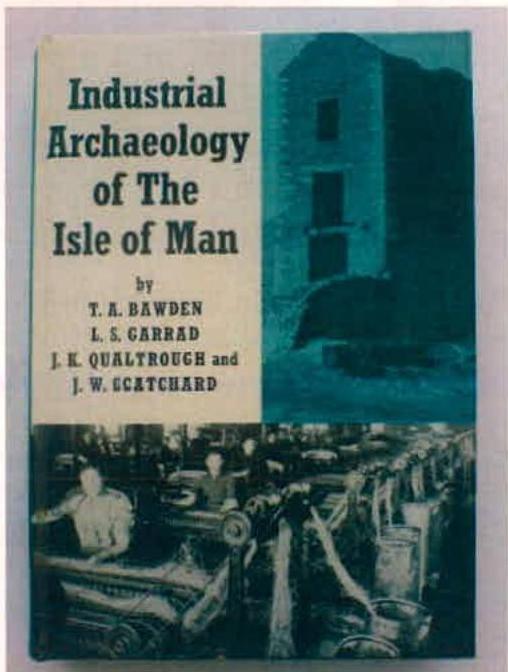
The book goes on describe several other less important mill buildings before giving a full page to a plan of the Scholaby Mill that was surveyed at the time.
Scholaby, Rushen {{image:245944}} Scholaby, Rushen, a typical farm mill (sketch plan from IA record card) Full page plan of Scholaby Mill showing both plans overlaid The Industrial Archaeology of the Isle of Man. (1972) (Page192)
(c) previously developed land [1] which contains a significant amount of building; where the continued use is redundant; where redevelopment would reduce the impact of the current situation on the landscape or the wider environment; and where the development proposed would result in improvements to the landscape or wider environment;
The development is located on previously developed land where continued use of the site as a mill is clearly redundant. The redevelopment of the mill would reduce the impact of the current situation on the landscape where the mill presently appears as dilapidated and boarded up (see photos A-D, appendix 1). There is also no protection on the track on which the public right of way is located to the east of the building where there is a 8 ft drop (see photo B, appendix 1).
(h) buildings or works required for interpretation of the countryside, its wildlife or heritage.
The development aims to preserve as much of the built fabric of the Mill as possible, the inclusion of a water wheel to generate power would allow the former use and heritage of the building as a mill to be expressed.
Housing Policy 13: In the case of those rural dwellings which have lost their former residential use by abandonment, consideration will be given in the following circumstances to the formation of a dwelling by use of the remaining fabric and the addition of new fabric to replace that which has been lost.
a) the building is substantially intact; this will involve there being at least three of the walls, standing up to eaves level and structurally capable of being retained; and b) there is an existing, usable track from the highway; and where a supply of fresh potable water and of electricity can be made available from existing services within the highway.
This policy will not apply in National Heritage Areas (see Environment Policy 6). Permission will not be given for the use of buildings more ruinous than those in (a) above, or for the erection of replacement buildings. Extensions of dwellings formed in accordance with the above may be permitted if the extension is clearly subordinate to the original building (i.e. in terms of floor space [3] measured externally, the extension measures less than 50% of that of the original).
The building is intact and structurally capable of being retained and reused. There is already an existing usable track and services can be made available in conjunction with renewable energy sources such as a water wheel and solar panels.
The existing floor area of the building is 187 m2 and the proposed floor area would be 280.5 m2, adding just under 50% to the total floor area.
Scholaby Mill is structurally sound and adds to the character of the local area, therefore its reuse would be beneficial. The proposed development includes extensions which would allow much of the built fabric of the Mill to remain unchanged, these extensions would also allow the mill to make use of renewable energy resources, ensuring a low energy family home would be created.
Ashley Pettit Architects were approached by Ms Howell of Mines Cottage, to create proposals for both the development of Scholaby Mill and Mines Cottage concurrently. The Mill is a large stone built mill that used to use a water wheel powered by a double dam system.
The Mill has a large opening onto first floor level that is northerly facing, there was once a water wheel on the west elevation by the river and the east elevation presently looks out onto a flat area roughly 8ft from the track above. The previous timber first floor has been removed at some point and the openings are currently boarded up.
The extensions aim to give a clear indication of what is old and new and preserve as much of the original fabric and character of the Mill as possible.
The new section of the building has been designed to give the appearance of a sequential extension, starting with a small, stone-clad extension with a cat-slide roof which runs directly from the eaves of the existing building. The next element of the extension houses two bedrooms, and has a slate roof which follows the line of the cat-slide roof. This element is to be clad with textured fibre-cement panels, to give a more industrial look to the extension, respecting the industrial origins of the existing building. This bedroom block is separated from the stone-clad extension by a glazed link, which not only allows natural light into the circulation area of the extension but also provides a clear visual break between the more massive-looking stone structure and the lightweight bedroom block.
The roof of this extension would also provide a suitable located for solar panels which would generate hot water to heat the building.
The sunroom extension would be in polyester powder-coated aluminium framing with a sheet copper roof and would slot inside the existing built fabric of the lean-to section of the mill. The form aims to match the existing character of the building with its steep pitched roof, whilst the glazed nature of the sunroom would allow the original form of the building to be “read” through the full-height glazing.
This project is up-cycling a derelict and otherwise unusual building. The design incorporates a new build element which can be fabricated off site at a fixed cost allowing the first phase of construction to involve stabilising the existing building and adding a habitable ‘pod’, the new build element.
This provides a fixed cost start to the project and will provide a stable base for the remaining work to proceed.
The building has the potential to use the solar power to heat water and water power in the mill race to develop electricity. Any development of water power will be a separate application and fully involve the Department of Environment, Food and Agriculture and any other interested agencies.
In addition the house will be insulated to a high standard and large south facing windows in the sunroom will maximize solar gains.
The development aims to put back into use a derelict building of historical importance to the local area in a way that allows the form of the original building to be clearly identified.
The building has permission as being capable of being converted in to a four bedroomed house. This application explores how the building can be adapted to a four bedroom house with a small extension to make a more practical conversion.
Copyright in submitted documents remains with their authors. Request removal
