1.1 GreenScene Ltd was engaged by their client Mr Morgan on the 26thJuly in order to submit arboricultutral advice regarding a proposed new garage build.
1.2 For the purpose of engagement, this advice relates to arboricultural impact and tree protection planning in order to mitigate against any potential disturbance and compaction to a Sycamore tree within the grounds of the property.
2.0 Background
2.1 I have also been informed that my client would like for the tree to remain and that the Architect is happy to specify an engineering solution if required.
3.0 Survey Methodology
3.1 Data Collection – tree data was collected from ground level by a suitably qualified arborist from the garden of Thal'loo Glass.
3.2 Site Observations/ interpretation – by a suitably qualified arboricultural consultant on the current site features in relation to potential impact.
3.3 Physical investigation – included marking up of the proposed development as per the proposed site plan in order gain an impression of root distribution across a defined area.
3.4 The output was to highlight whether or not there are significant amounts of root volume in the sample pits adjacent to the proposed construction area that could have a detrimental effect on the tree.
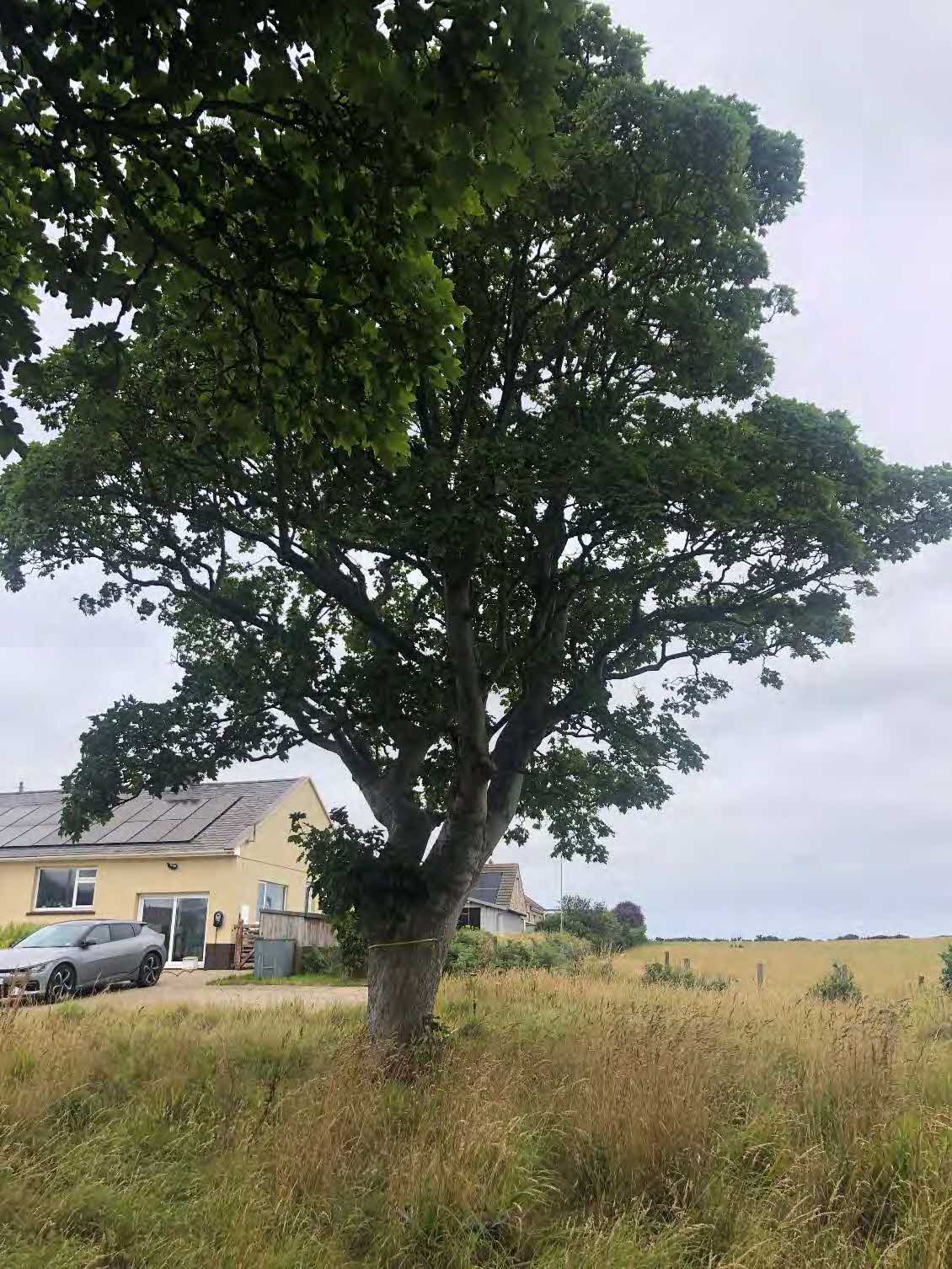
4.1 Tree spreads out into 3 significant primary stems at 2.20m with expected secondary and tertiary crown formation.
4.2 The canopy in relation to trunk size gives the impression that the tree is somewhat stunted probably due to its proximity to the coastline and prevailing winds.
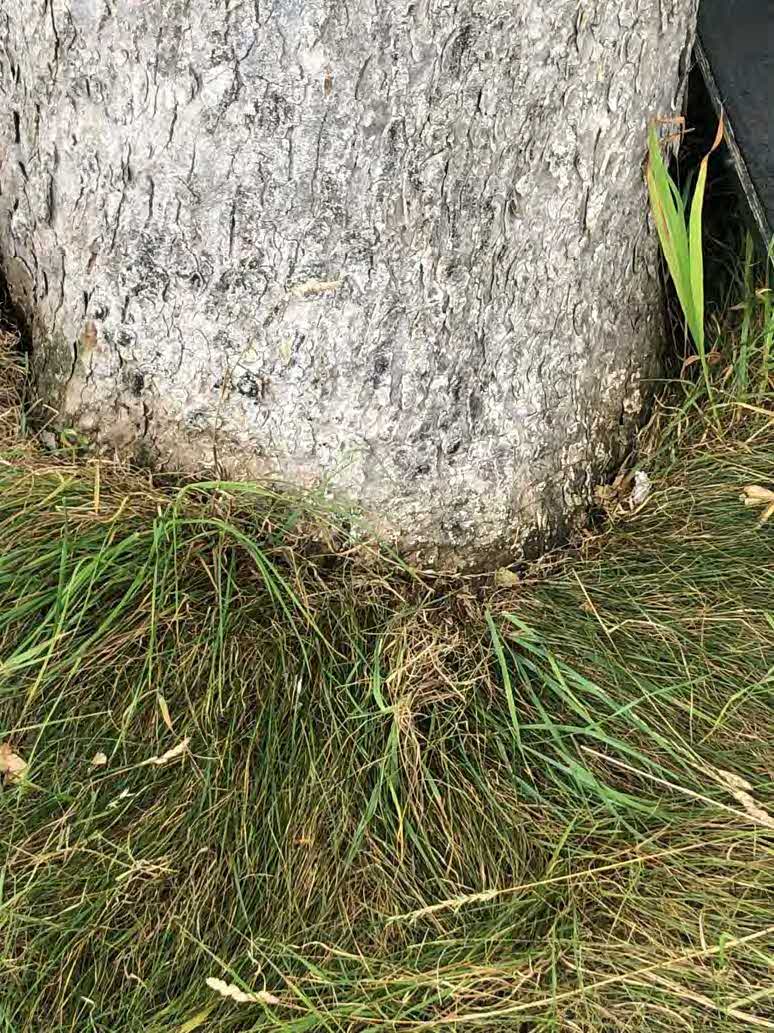
4.3 There are 3 historic pruning wounds to the south and west with some advantageous regrowth this has led to the tree having poor crown formation see Appendix 1, Photo 1. 4.5 No natural root flare at ground level see Appendix 1, Photo 2; foreign object (bird box on trunk); some minor dead wood <10%.
5.0 Site and situation
5.1 The tree may be seen from the Nassau Road however it is sat back within the grounds of Thal'loo Glass partially obscured by other trees in closer proximity to the road, it offers minimal value in terms of street scene. (see Photo 3)
5.2 The pre-existing hardscape includes a block driveway to the west and parking to the North/ Northwest there is no evidence of surface rooting, undulation or disturbance associated with advantageous tree roots to any of these features.
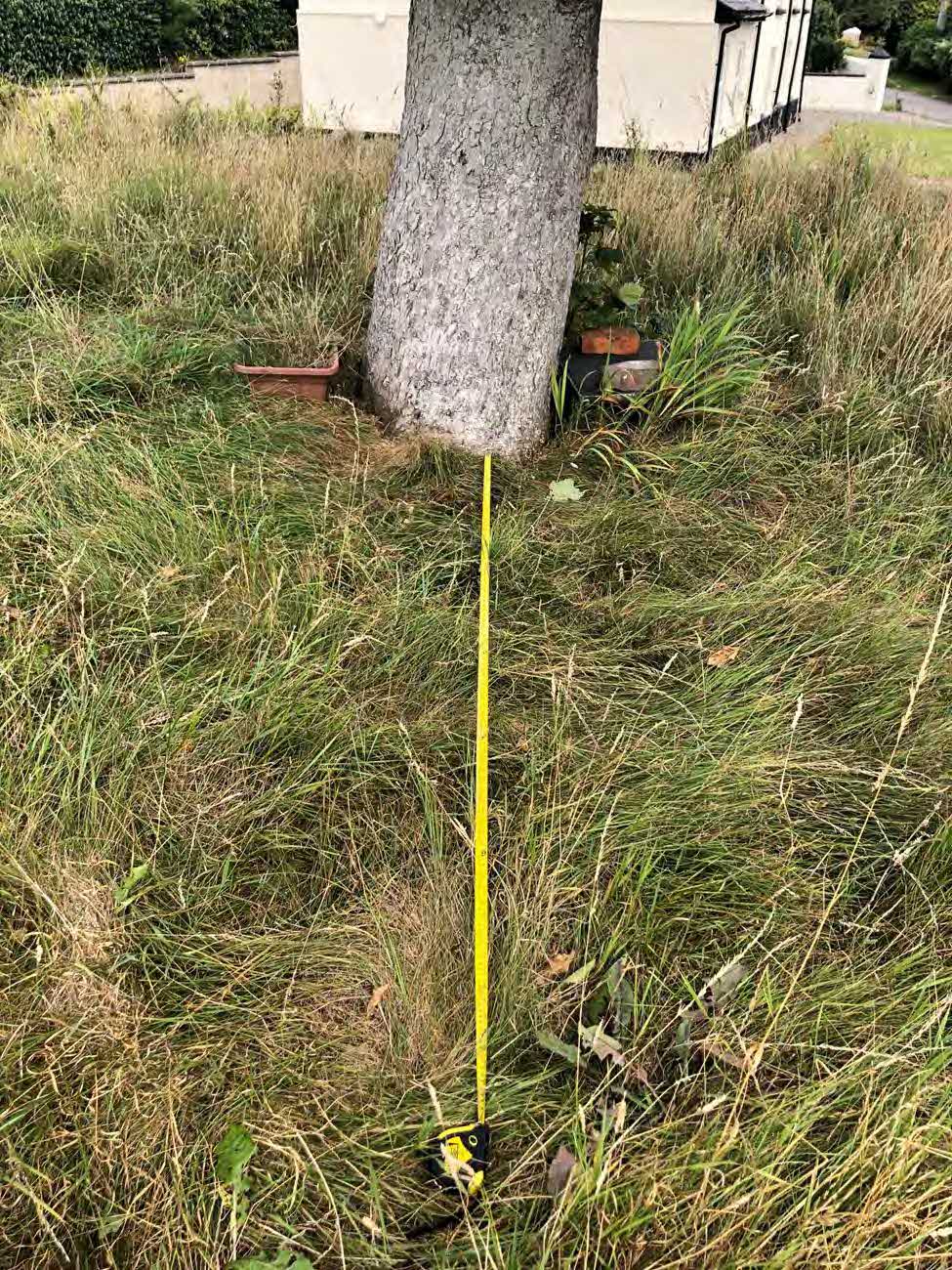
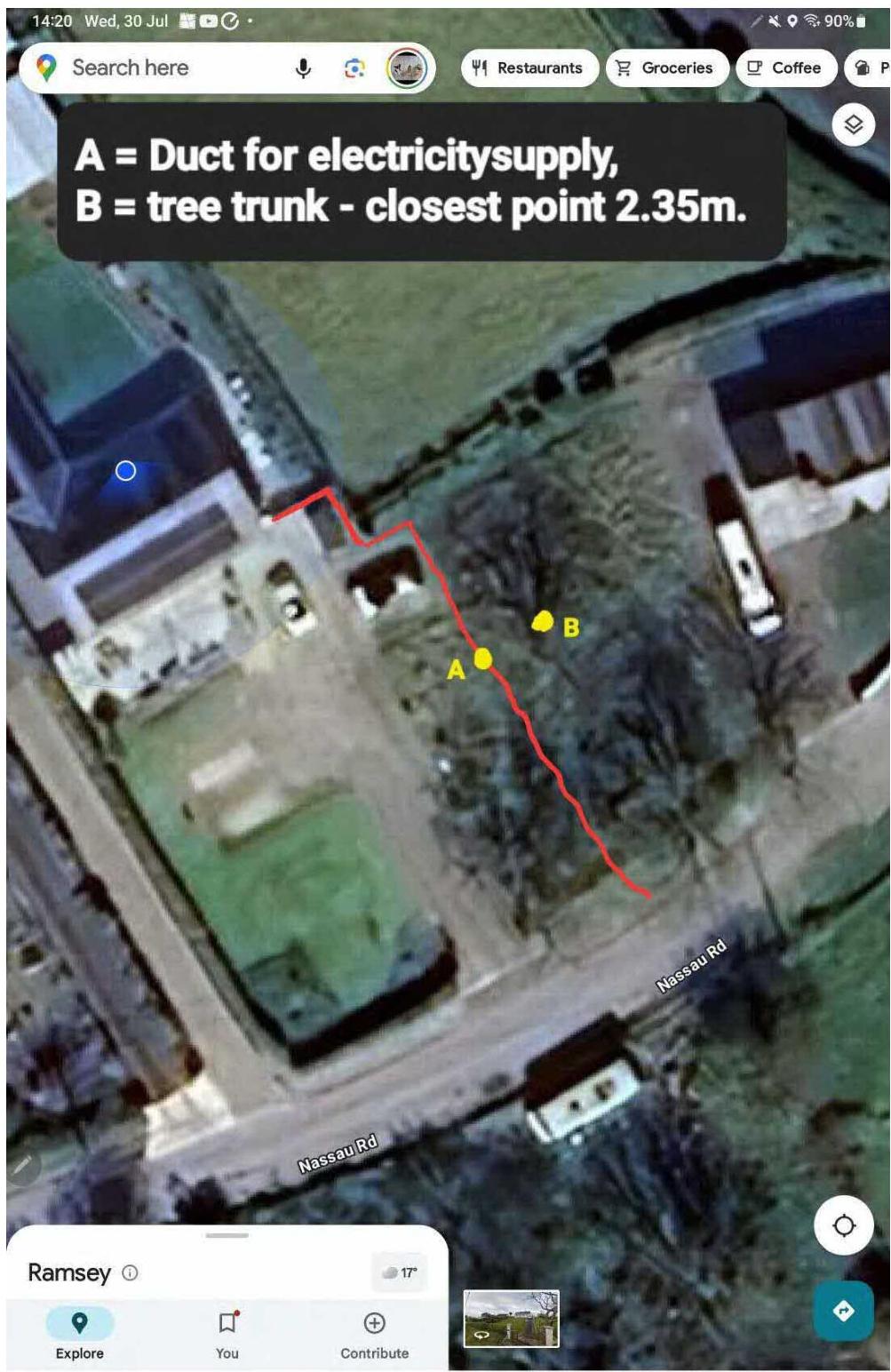
5.3 In May 2022 the MUA had used and excavator to dig a trench in order to lay underground electric supply to the property. This trench cut straight through the trees rootzone to the west and southwest and comes within 2.35 and 2.6m of the tree. (see Photo 4 and Appendix 2)
6.0 Site investigation
6.1 On Wednesday 30th July an investigation was undertaken in order to consider the underground constraints of the proposal as per 3.3-3.4 of the methodology.
6.2 Process - Marked up the proposed development with the measurements taken off April 2025 working drawing, the following were indicated on the ground.
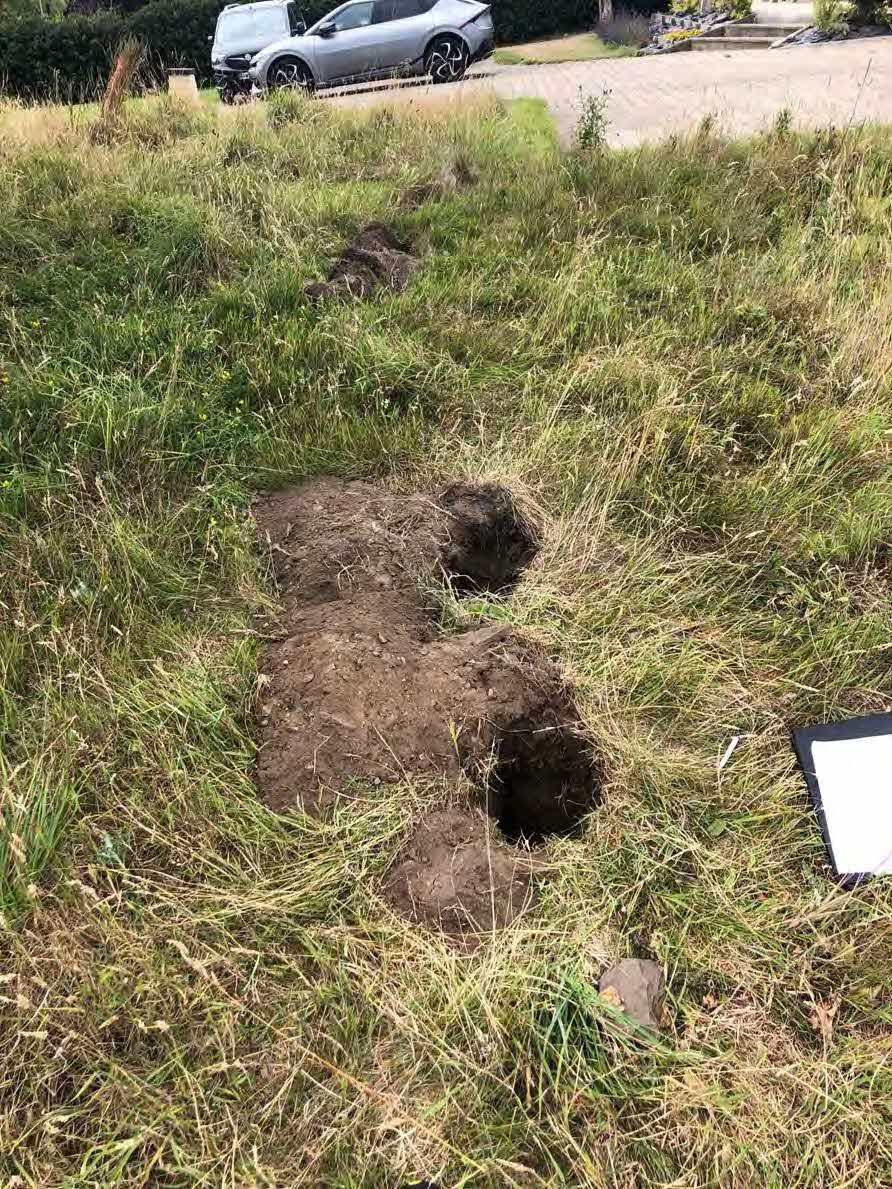
6.3 For the purposes of this investigation 3 trial pits to the north of the tree were opened up by hand.
7.0 Results
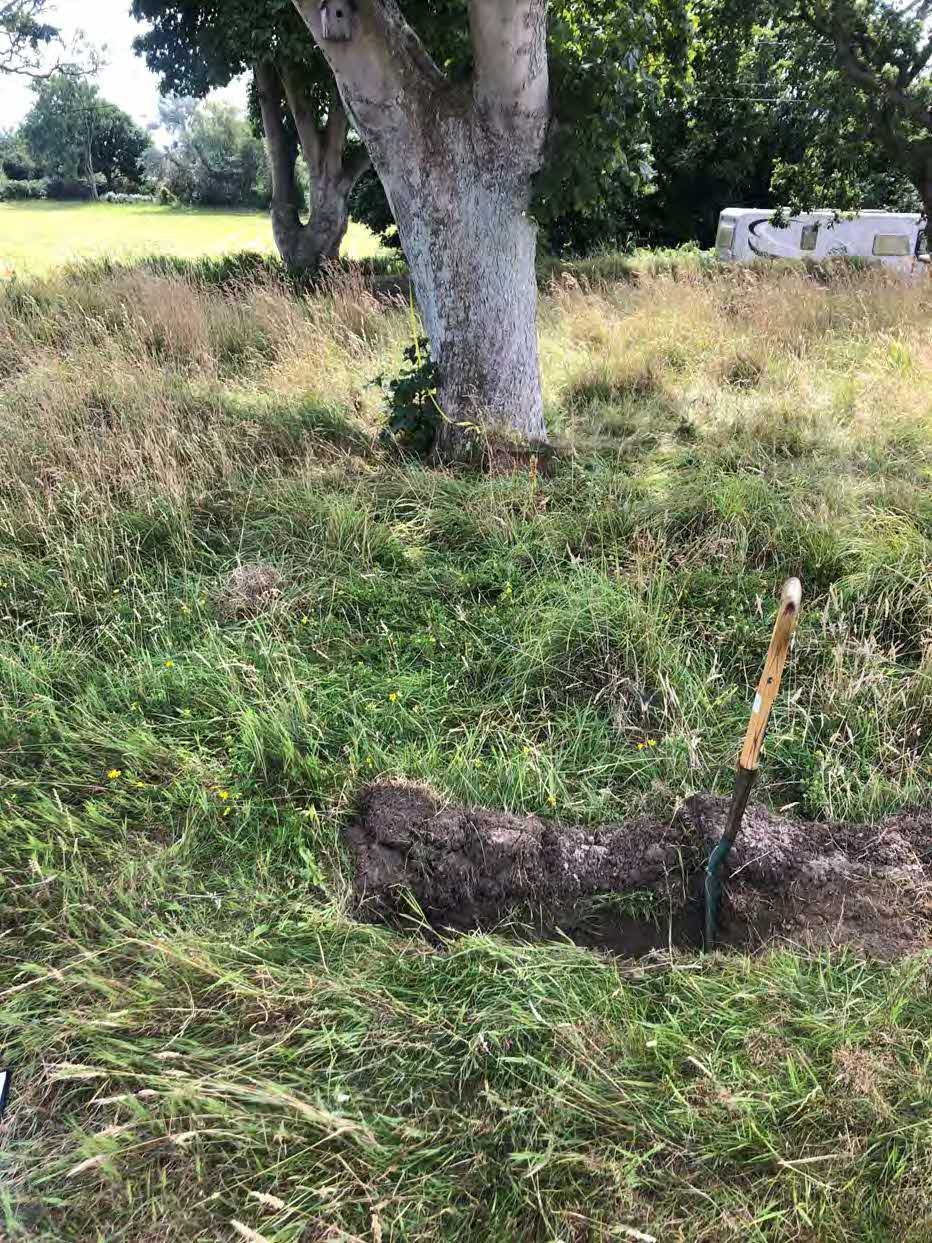
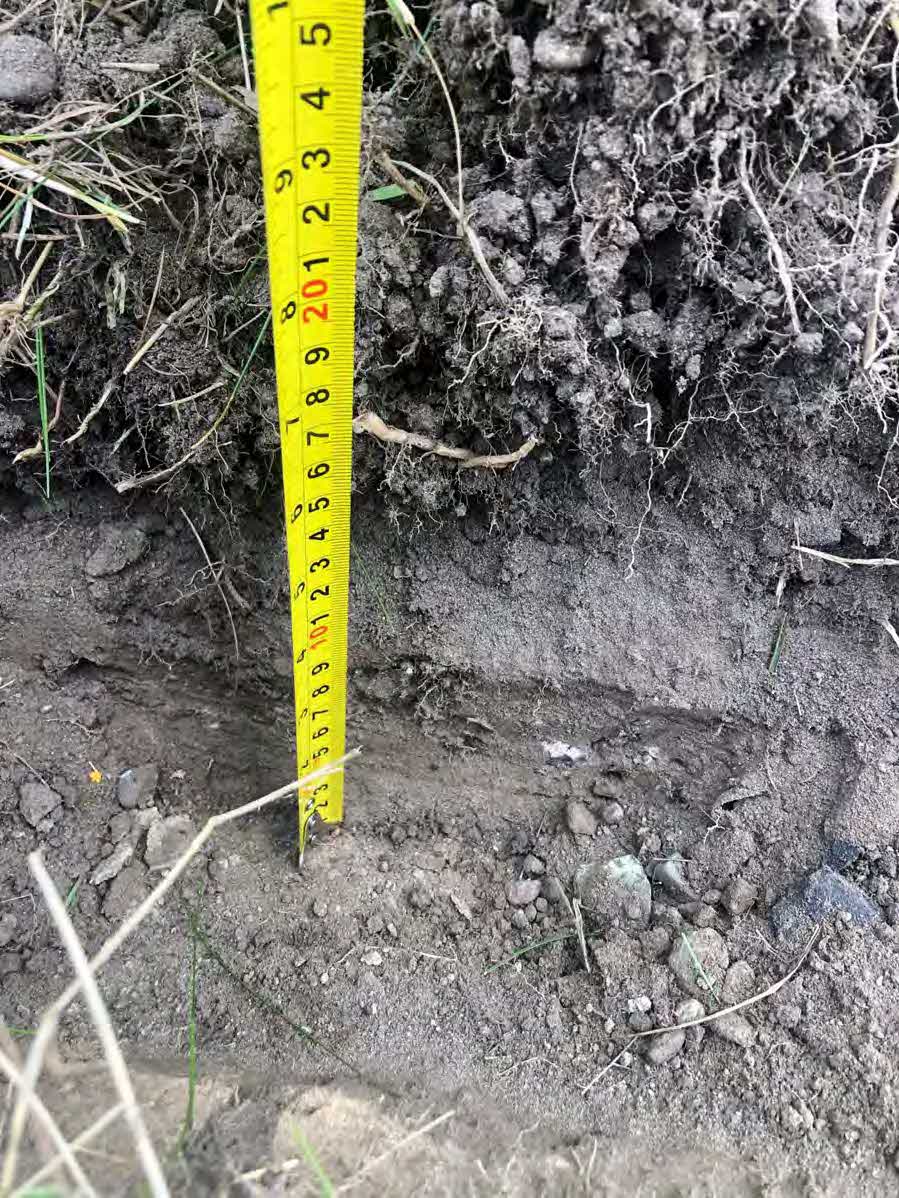
Pit 1
4.3m from tree
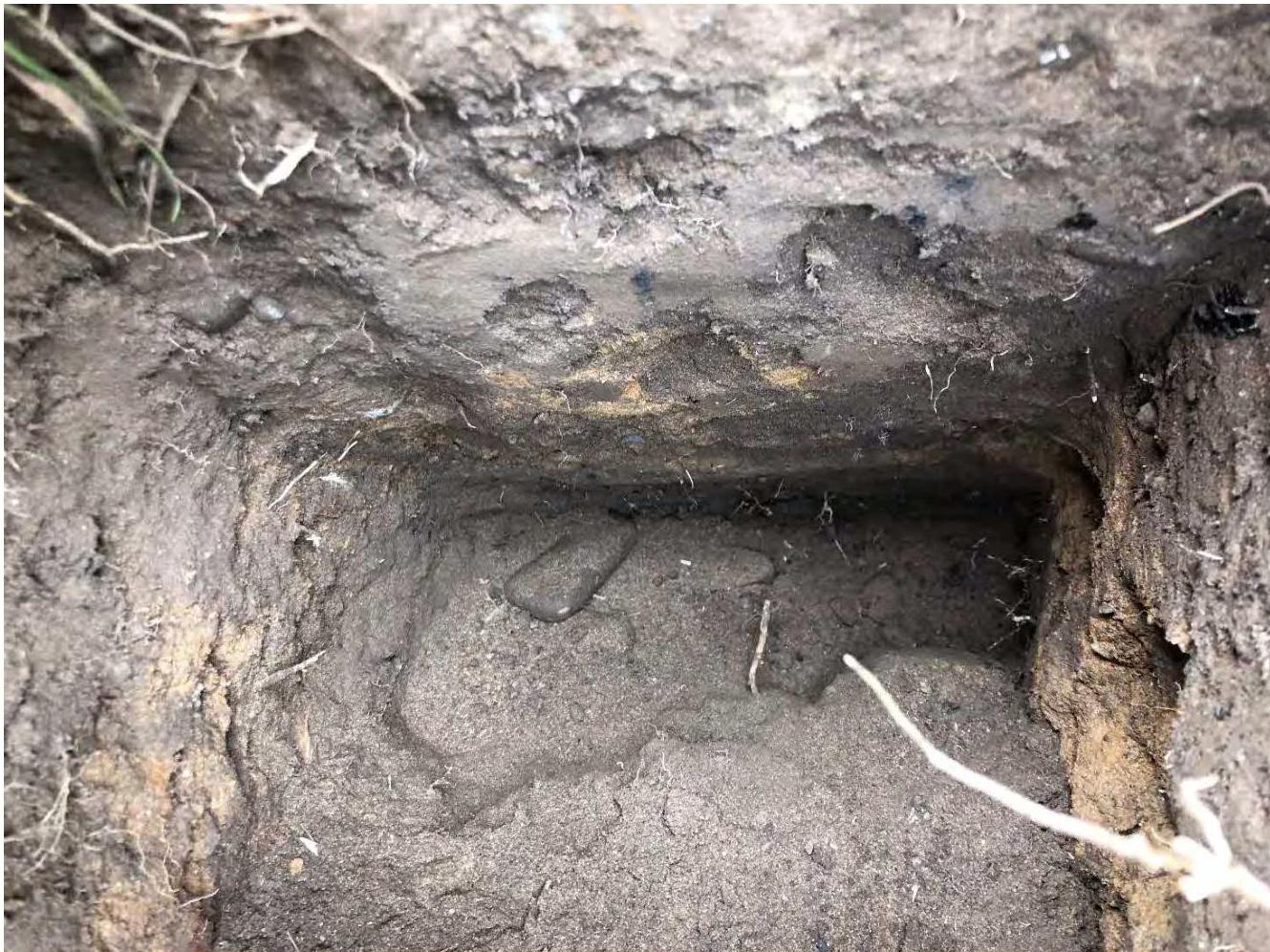
Soild at 200mm in depth you would need breakout force of air tool of mini excavator to investigate deeper. Compacted/ panned layers of soil stone and rubble No evidence of rooting present
Prit 2
4.5m from tree
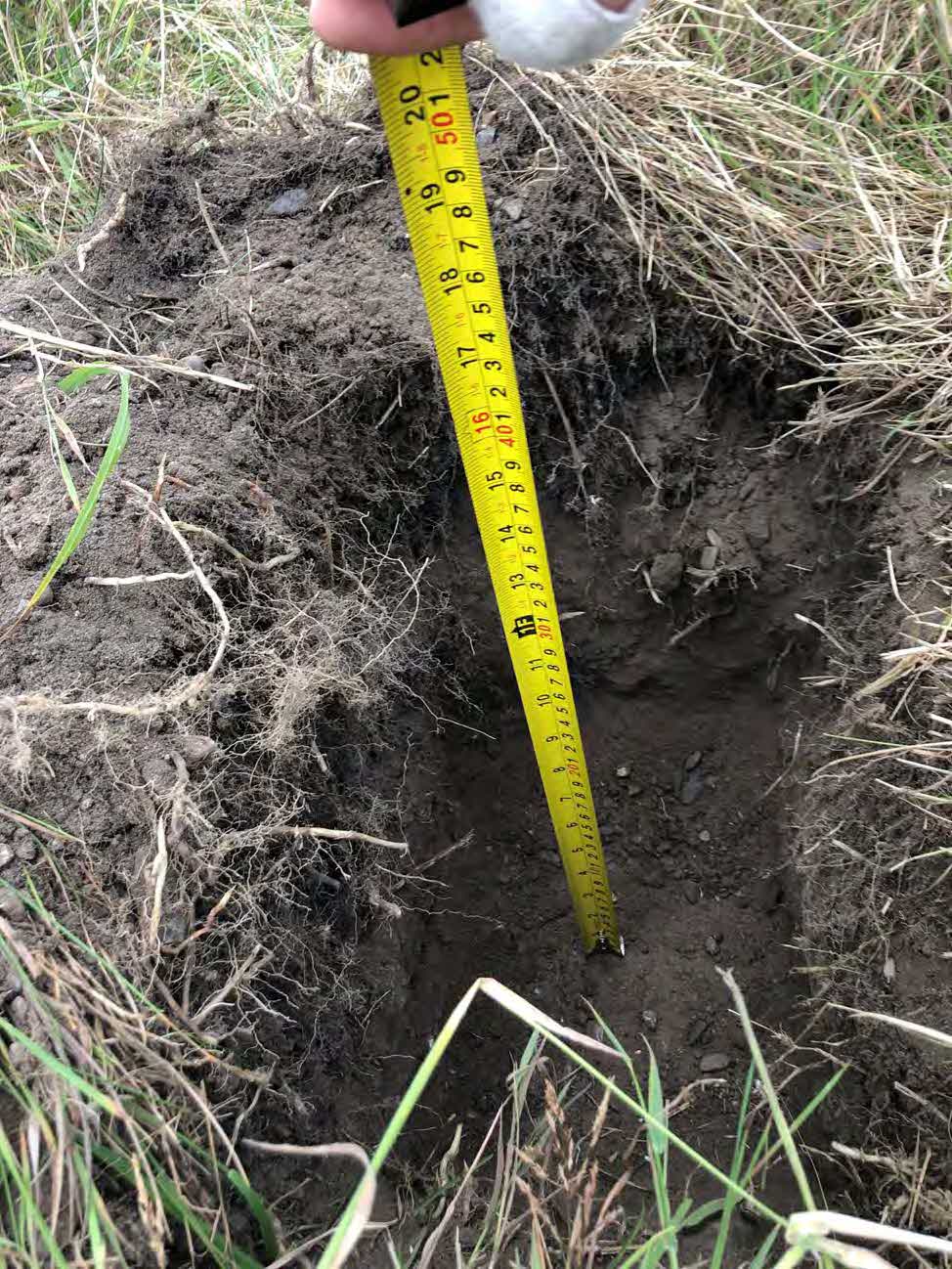
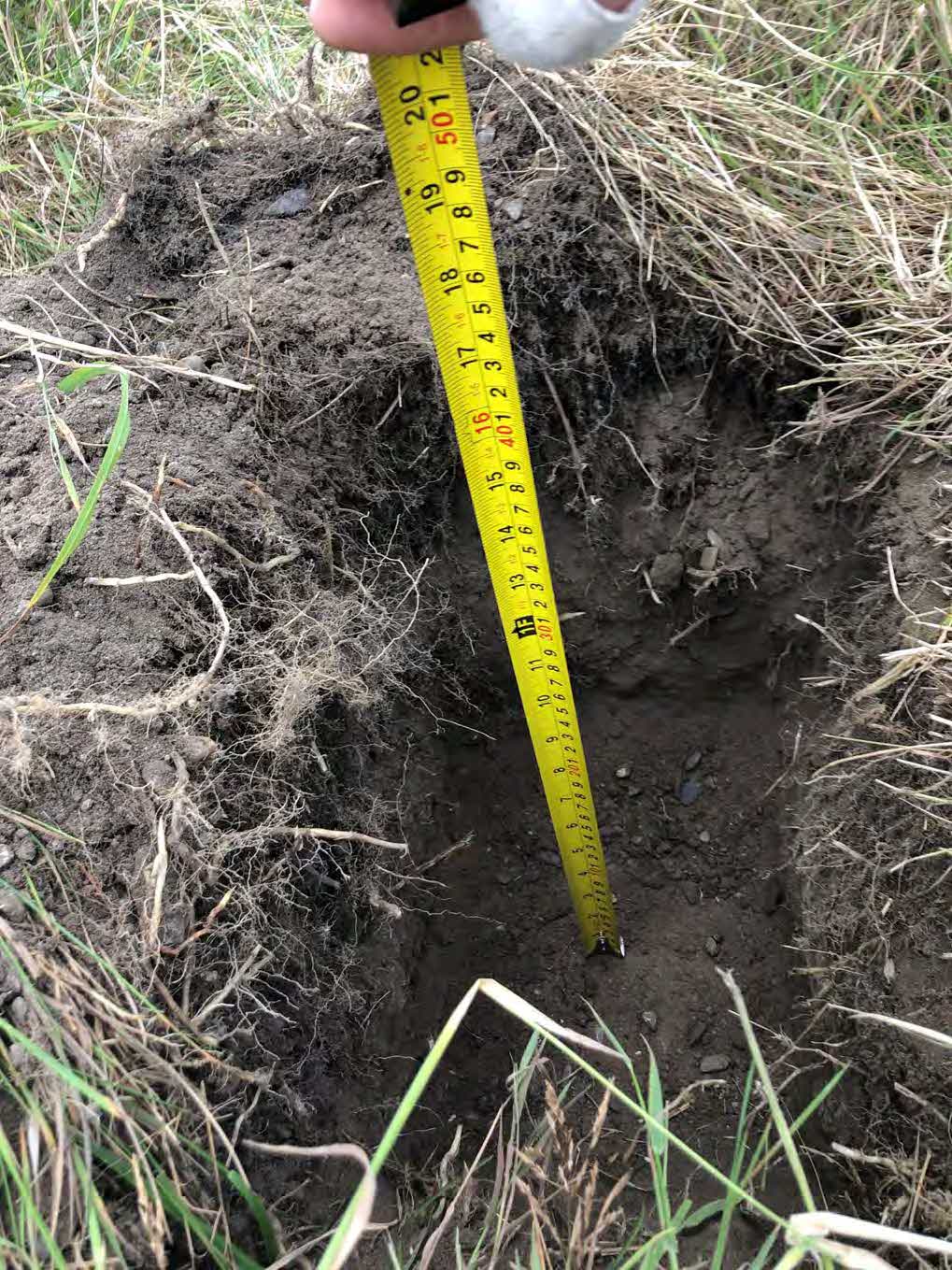
Solid at 400mm in depth you would need breakout force of air tool of mini excavator to investigate deeper. Compacted/ panned layers of soil stone and rubble Roots detected at 250mm however no significant quantities of roots present. No significant roots over 10mm in diameter were detected
Pit 3
4.9m from tree
Solid with rubble, pottery and stone as this material was not compacted it could be broken out by hand to a depth of 500 and then 650mm. Some fine roots were detected at 300mm No significant quantities of roots present No significant roots over 10mm in diameter were detected.
(See photos 5-12)
8.0 Conclusions
8.1 Above ground constraints
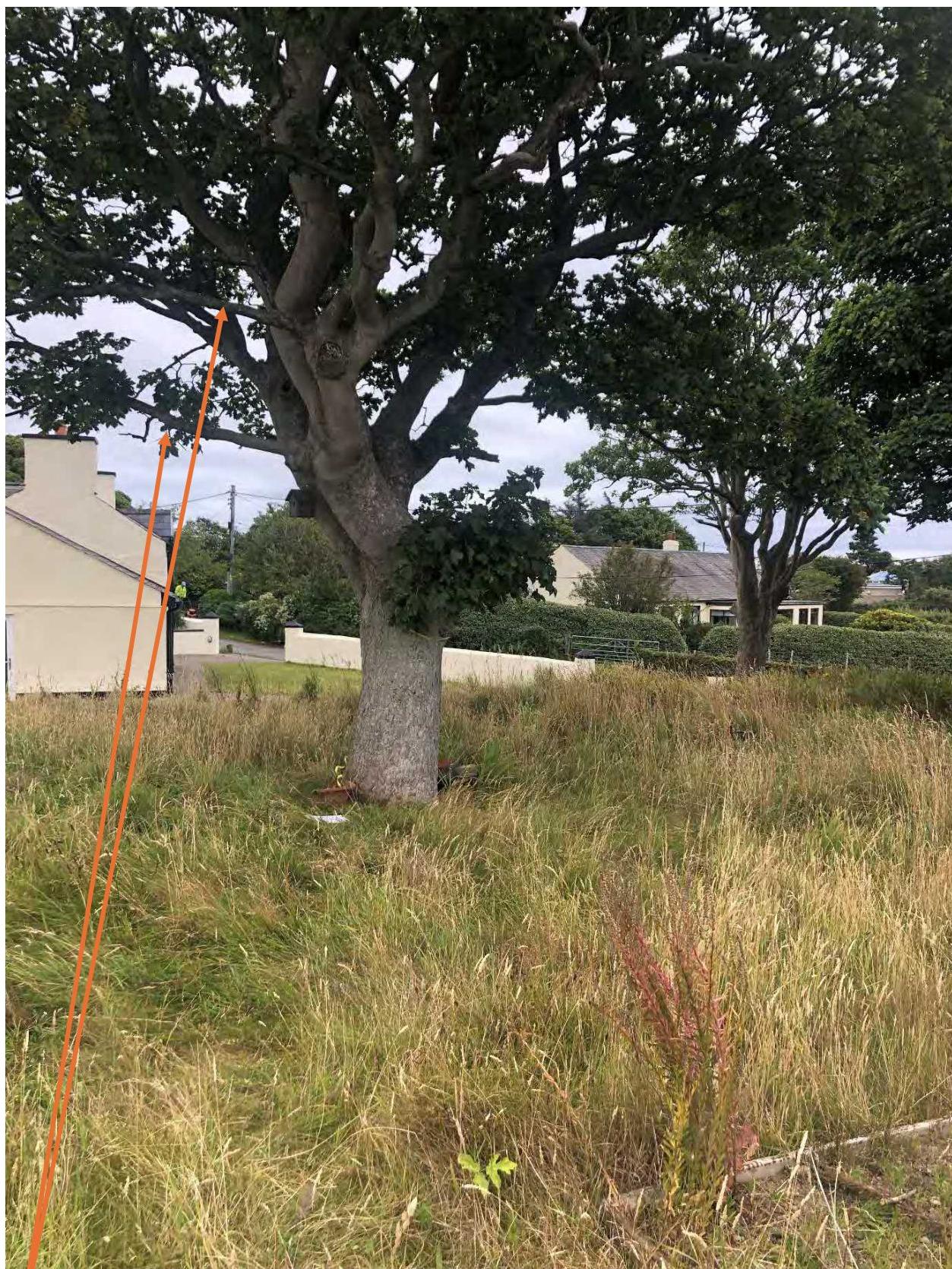
8.2 Prebuild the crown raising of x2 branches back to the main stem would need to take place, see Photo 13.
8.3 Post build debris in gutters could be a problem but may be alleviated through installation of brush or mesh gutter guards.
8.4 Longer term depending on growth rates there might be pressure to prune the tree away from the garage as it matures further a 0.5 to 1m reduction to the North/ Northwest could be specified as required.
8.5 Pressure regarding future safety concerns could be managed through inspections every 24 months or after extreme weather events.
8.6 Below Ground constraints
8.7 Pre build - Soil conditions are of overriding importance, thus downwards penetration of tree roots can be halted by excessive stoniness, ironpans, compacted soil layers especially compacted clay (Forestry commission 2005). On investigation the soil type to the north or the proposed development at Thal'loo Glass is made up of 200mm topsoil before hitting compacted pans rubble like material of where there is minimal rooting evident.
8.8 On considering the topography, soil type and that post development the proposals would be sited on an area which appears to of been historically compromised by buried preexisting hardscapedebris, it is my opinion that the proposal should have minimal detrimental impact to the tree during and post construction.
8.9 Post development as proposed no pressure is envisaged as there is adequate spatial separation between the proposed development and tree.
My opinion is that the proposed development is acceptable with minimal potential for disturbance and compaction to the tree; and that extra safeguarding could be managed through appropriate tree protection measures.
9.0 Recommendations Low category seek removal as part of the proposed development or the tree should be protected byan agreed tree protection plan.
10.0 References
FORESTRY COMMISSION (2005) The influence of soils and species on tree root depth
End
Appendix 1 Photographs
Photograph 1 Poor crown formation due to past pruning regime
A photograph showing a large tree in the foreground with a single-story house and solar panels visible in the background, set against a rural landscape.
Photograph 2 Built up compacted root plate with no root flare
A close-up photograph showing the base of a large tree trunk with rough grey bark, surrounded by grass and vegetation.
Photograph 3 View of tree from the road
A close-up photograph of an excavated test pit or trial trench showing soil strata and a layer of concrete or hard standing.
Photograph 4 shows distance form MUA cable buried in 2022
A photograph of a grassy plot of land featuring a large tree trunk and a yellow measuring tape extended on the ground, with a white building visible in the background.
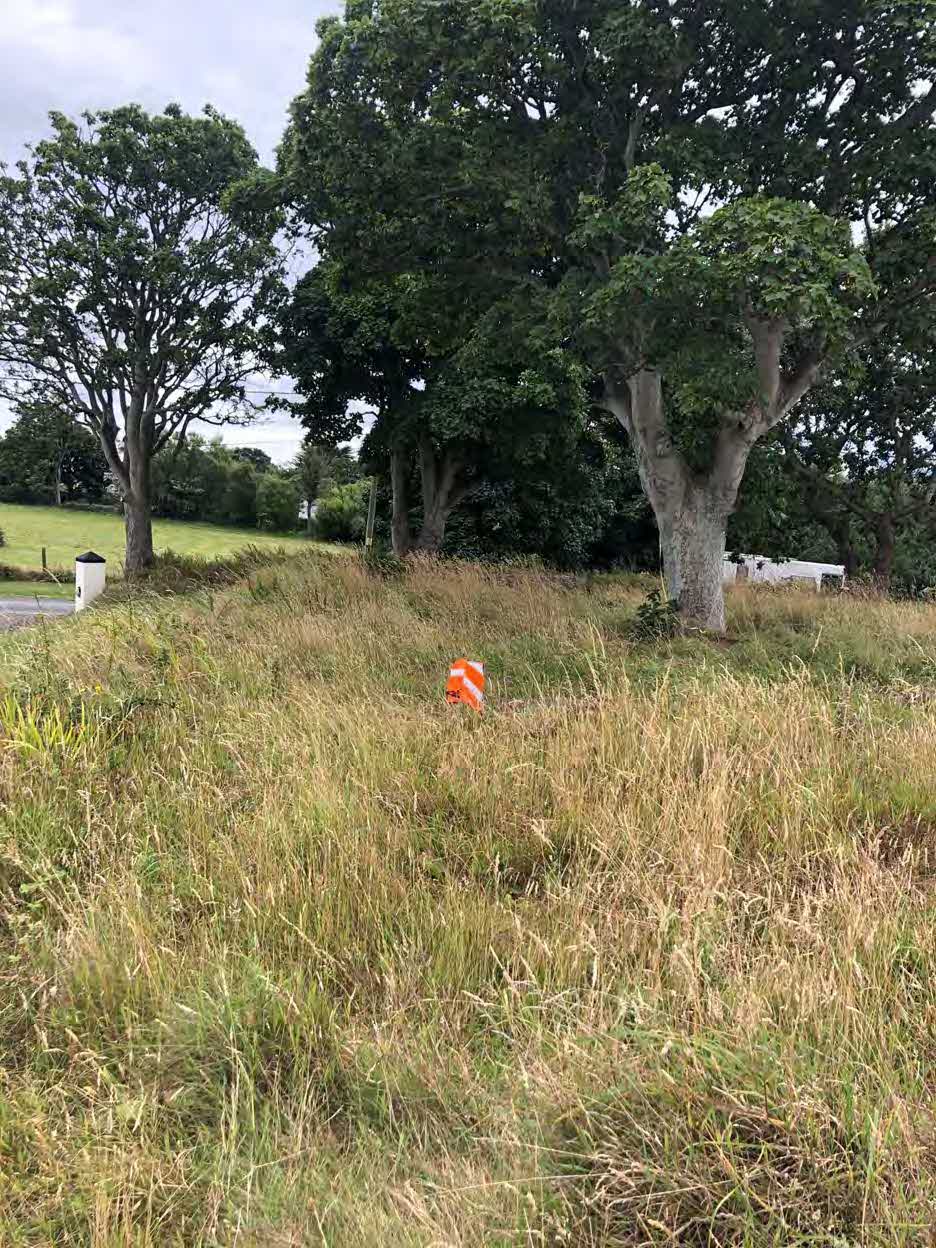
Photograph 5 Marking up the site prior to digging trail pits.
A photograph showing a grassy, overgrown plot of land with large trees in the background and an orange survey marker in the foreground.
Photograph 6 Pit 1
A photograph of a grassy rural site featuring a large tree and a dug trench with a shovel.
Photograph 7 opening up of pit 2
A photograph showing several excavated test pits or boreholes dug into a grassy area, likely for a ground investigation, with a car parked on a driveway in the background.
Photograph 8 Pit 3
Photograph 9 Pit 1
A close-up photograph showing an excavated soil trench cross-section with a yellow measuring tape indicating depth.
Photograph 10 Pit 2
A photograph showing a test pit dug into the ground with a yellow tape measure inserted to measure depth.
Photograph 11 Pit 3
A close-up photograph showing a test pit or trial trench dug into the ground with a yellow tape measure extending into it to measure depth.
Photograph 12 Pit 3 down to 650mm
Photograph 13 indicates the 2 branches which would need to be crown raised to accommodate the proposed development
A photograph of a grassy plot of land featuring a large tree in the foreground and residential houses in the background. Orange surveyor poles or arrows are visible, likely indicating height or measurement points.Aerial satellite view screenshot of a property site on Nassau Rd with annotations indicating a duct path and tree trunk location.
Appendix 3 Limitations
This is an arboricultural assessment and as such no reliance should be given to comments relating to buildings or engineering method.
The inspection was undertaken from ground level. Test boring, ultrasound, air spade and climbing investigations do not form part of this report.
The comments of this report are valid for a period of one year from date of this report. Trees are dynamic, biological systems which are subject to change with age; as a result of changes to the environment and the effects of pathogens. These factors reinforce the need to have trees inspected by a professional regularly.
No tree is ever absolutely safe due to the unpredictable laws and forces of nature
Copyright in submitted documents remains with their authors. Request removal
Source & Provenance
Official reference
25/90498/B
Source authority
Isle of Man Government Planning & Building Control