Loading document...
January 2025
 | |
| Job number: | 24_60 |
| Title: | Laxey River Section 6 - Habitat Mitigation Plan |
| Client: | Burroughs Stewart Associates |
| Prepared by: | Amy Dunderdale BSc (Hons) MSc - Ecologist |
| Verified by: | Adam Denard MCIEEM - Ecologist |
| Date of Issue: | January 2025 |
| Version: | 4 |
| Revisions: | 3 |
| Status: | Final |
| Job number: | 24_60 |
| Title: | Laxey River Section 6 - Habitat Mitigation Plan |
| Client: | Burroughs Stewart Associates |
| Prepared by: | Amy Dunderdale BSc (Hons) MSc - Ecologist |
| Verified by: | Adam Denard MCIEEM - Ecologist |
| Date of Issue: | January 2025 |
| Version: | 4 |
| Revisions: | 3 |
| Status: | Final |
| This report is prepared by Ecology Vannin Consultancy Services for the sole and exclusive use of Burroughs Stewart Associates and their contractors in response to their particular instructions. No liability is accepted for any costs, claims or losses arising from the use of this report or any part thereof for any purpose other than that for which it was specifically prepared or by any party other than Burroughs Stewart Associates. Any biological records for wildlife found in survey will eventually be submitted to Manx Biological Recording Partnership. This report does not prevent MWT pursuing its charitable objectives in relation to planning.<br><br>This report has been prepared by an environmental specialist and does not purport to provide legal advice. You may wish to take separate legal advice.<br><br>The information which we have prepared and provided is true and has been prepared and provided in accordance with the BS42020 2013 and Chartered Institute of Ecology and Environmental Management’s Code of Professional Conduct and guidelines for preliminary ecological appraisals (CIEEM 2017). We confirm that the opinions expressed are our true and professional bona fide opinions.<br><br>Signed (Author) Signed (QA) Electronic Signature Electronic Signature<br><br> |
|---|
Amy Dunderdale BSc (Hons) MSc is an ecologist with several years’ experience in baseline ecological survey and assessment and specialist protected species surveys including for bats and reptiles. Amy holds a Biology bachelors degree from the University of Durham and a masters degree in Wildlife Management and Conservation from University of Reading. She has experience working in ecology consultancy in the UK including experience in completing PEAs and BREEAM Land Use and Ecology reports.
Adam Denard BSc (Hons) MCIEEM is Senior Ecologist with Ecology Vannin and has been a professional ecologist for over 10 years, with particular emphasis on recording and assessing habitats in England and the Isle of Man for their potential to support protected species. After graduation with First Class honours in Conservation and Land Management, Adam worked on professional bat surveys for Oxford University before going onto work for ecological consultancies in England 2004 –
Rationale
“No works of development on site shall commence prior to the submission of a habitat mitigation plan, written by a suitably qualified ecological consultancy, has been provided to DEFA Planning and approved in writing. The plan should contain details of propionate habitat replacement works, alongside a timetable for implementation. The development shall be carried out in accordance with the approved details.”
Legislation – designated sites
“intentionally or recklessly kills, injures or takes any wild animal included in Schedule 5 without reasonable excuse”
And/or “damages or destroys, or obstructs access to, any structure or place which any wild animal included in Schedule 5 uses for shelter or protection; or disturbs any such animal while it is occupying a structure or place which it uses for that purpose”.
Birds
“any person intentionally or recklessly — (a) kills, injures or takes any wild bird; (b) takes, damages or destroys the nest of any wild bird while that nest is in use or being built; or (c) takes or destroys an egg of any wild bird”.
“Intentionally or recklessly — (a) disturbs any wild bird included in Schedule 1 while it is building a nest or is in, on or near a nest containing eggs or young; or (b) disturbs any nest or egg of such a bird; or (c) disturbs dependent young of such a bird”.
2.7 Certain plant species are listed on Schedule 7 as protected species.
It is an offence: “If any person intentionally or recklessly picks, uproots or destroys any wild plant included in Schedule 7”.
“if any person plants or otherwise causes to grow in the wild any plant which is included in Part II of Schedule 8”.
This change is not currently implemented as it requires an ‘appointed day order’, but 10% biodiversity net gain (BNG) is now a legal requirement in England under Schedule 7A of the Town and Country Planning Act 1990 (as inserted by Schedule 14 of the Environment Act 2021).
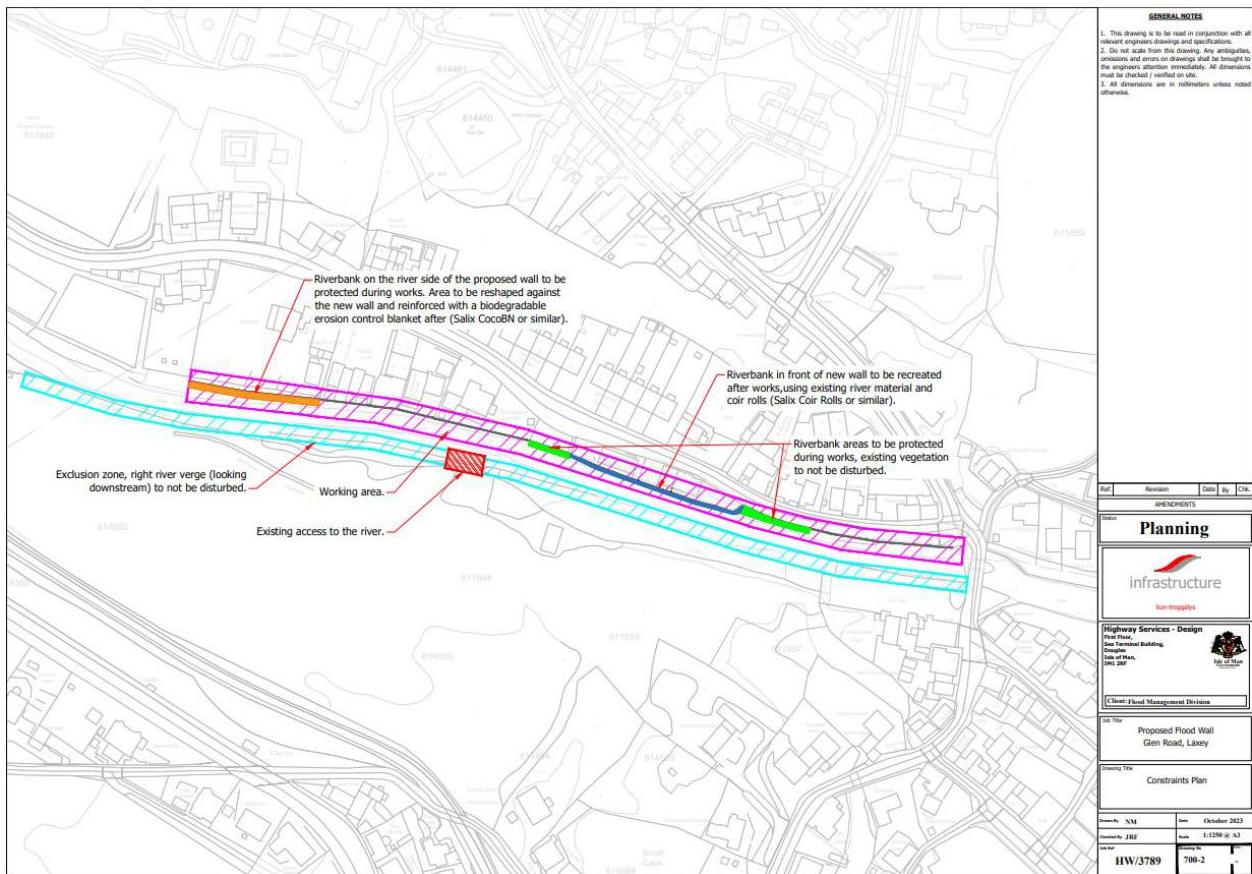
Figure 1 Constraints Plan
| Table 1 Proposed habitat mitigation plan for Laxey River Section 6 | Table 1 Proposed habitat mitigation plan for Laxey River Section 6 | Table 1 Proposed habitat mitigation plan for Laxey River Section 6 |
|---|---|---|
| Potential adverse impacts / locations<br><br> | Proposed mitigation | Timescale for implementation |
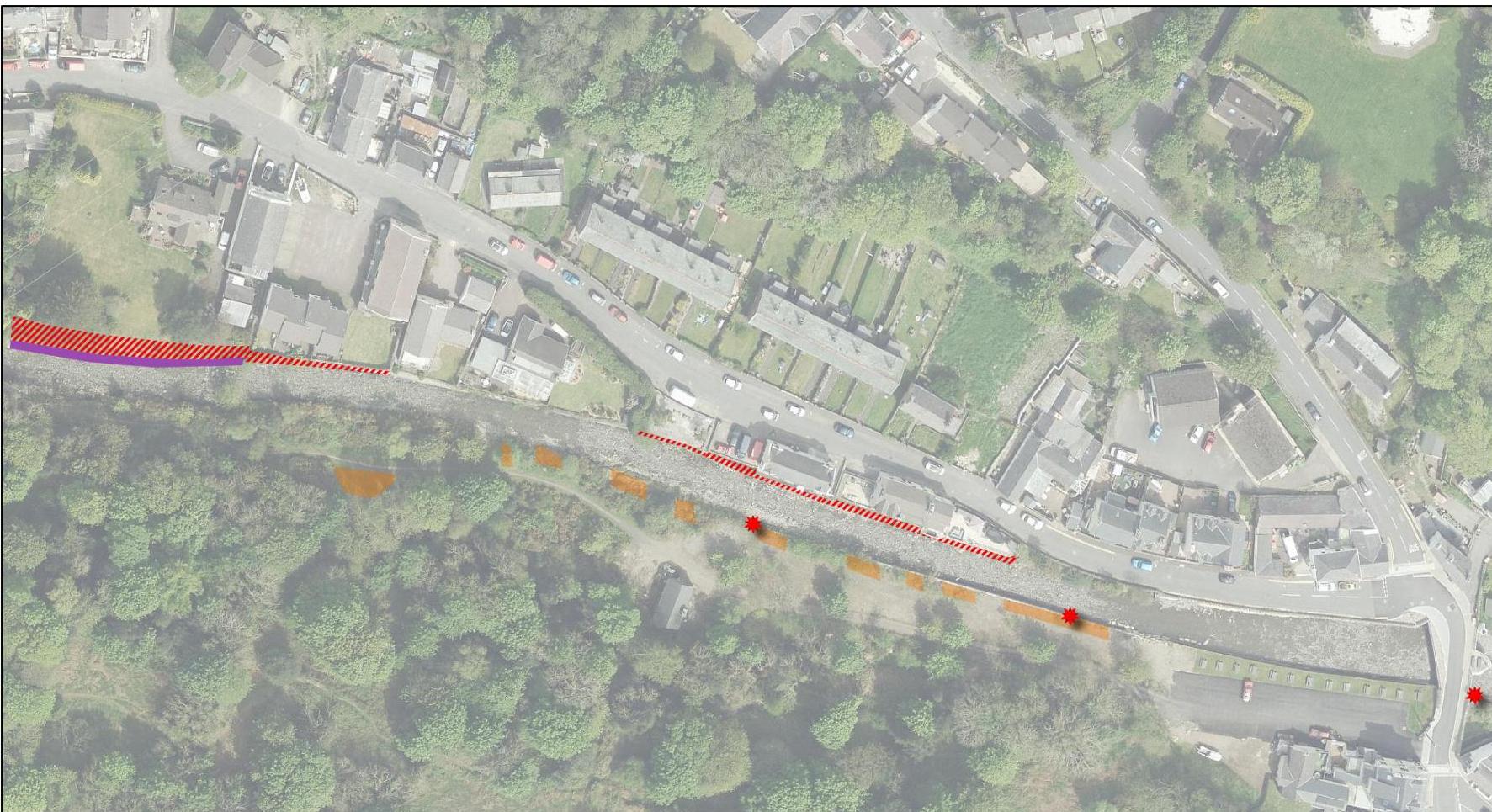
| 1. General | In accordance with the Constraints Plan, no works will be carried out on the southern bank of the river. In addition, one section of works area bank (on the northern side) will be retained completely (vegetation untouched).<br><br>Along one section, (purple block on Figure 2), the riverbank will remain in-situ and then be reprofiled and coir (biodegradable) matted which will allow vegetation to recolonise. This is discussed as mitigation in relevant sections below. See Appendix 2 for example products.<br><br>In all locations, construction of any new foundations, concrete toes, block and stone walls to be undertaken as sensitively as possible with regard to existing vegetation and riverbank and following the prescribed specifications upon which the following mitigation proposals have been based. | This habitat creation is to be implemented within 6 months of the completion of the flood wall construction |
| 2. Loss of Grey Wagtail nesting and feeding habitat.<br><br>Grey wagtails favour habitats near water like riverbanks, where they feed primarily on small invertebrates in and around the water. | It is proposed to provide 6 nesting boxes for Grey Wagtails at the site and within the wider lower Laxey River area. Specifically, it is proposed to install:<br><br>• 3 grey wagtail boxes on the current application site stretch of river. The most suitable locations have been deemed to be on the southern side of the river where there are sections of north-facing wall with | Nest boxes to be positioned prior to works commencement.<br><br>See Appendix I for recommended wagtail boxes. |
| Table 1 Proposed habitat mitigation plan for Laxey River Section 6 | ||
| Potential adverse impacts / locations | Proposed mitigation | Timescale for implementation |
|---|---|---|
| 1. General | In accordance with the Constraints Plan, no works will be carried out on the southern bank of the river. In addition, one section of works area bank (on the northern side) will be retained completely (vegetation untouched). Along one section, (purple block on Figure 2), the riverbank will remain in-situ and then be reprofiled and coir (biodegradable) matted which will allow vegetation to recolonise. This is discussed as mitigation in relevant sections below. See Appendix 2 for example products. In all locations, construction of any new foundations, concrete toes, block and stone walls to be undertaken as sensitively as possible with regard to existing vegetation and riverbank and following the prescribed specifications upon which the following mitigation proposals have been based. | This habitat creation is to be implemented within 6 months of the completion of the flood wall construction |
| 2. Loss of Grey Wagtail nesting and feeding habitat. Grey wagtails favour habitats near water like riverbanks, where they feed primarily on small invertebrates in and around the water. | It is proposed to provide 6 nesting boxes for Grey Wagtails at the site and within the wider lower Laxey River area. Specifically, it is proposed to install: • 3 grey wagtail boxes on the current application site stretch of river. The most suitable locations have been deemed to be on the southern side of the river where there are sections of north-facing wall with | Nest boxes to be positioned prior to works commencement. See Appendix I for recommended wagtail boxes. |
| There is expected to be some unavoidable loss of some existing potential nesting niches and feeding habitat. | overhanging vegetation and under the new bridge. Holes on the boxes should be facing downstream<br><br>• 3 boxes elsewhere between the Laxey Woollen Mills and the river mouth at Laxey, to be decided before installation with the input of an Ecologist/ECoW in helping to locate/position them. Chosen locations will need to be above the general water flood line, out of full sun, and without easy access to predators.<br><br>In addition, there is expected to be some short-term loss of suitable feeding areas for grey wagtail. The retention of the southern riverbank and some sections of the northern riverbank along with downstream and upstream feeding opportunities will minimise the short-term loss. In the longer term the reestablishment of riverbank vegetation through use of the CocoBN Matting from Salix, or similar, along with the other proposed mitigation for shrub/woody scrub losses will replace that lost. | |
|---|---|---|
| 3. Loss of shrub/scrub vegetation outside of Braeside and Palladian House.<br><br>Outside of Braeside and Palladian House properties it is proposed to “cut back” existing vegetation to allow for wall construction. The woody scrub/shrub requiring cutting back or removal (it is not currently known which) will have potential to support nesting birds and this loss of habitat should be mitigated for.<br><br>This is in addition to the reprofiling of the riverbank required in this location. | The planting of native woody species such as hawthorn, holly and blackthorn to create areas of new habitat is proposed in some suitable locations, to replace the lost shrub / scrub.<br><br>The new planting, once mature, will provide suitable nesting habitat for birds.<br><br>Suitable locations have been agreed with stakeholders in areas shaded orange on the plan, to be in staggered rows approximately 1 m back from the river’s wall/ edge, mixed with the willow trees described in 4. The locations provide infill / bolster planting along the southern river edge. In addition a semi-circular area further west can also be planted as an additional thicket of native woody shrub. | As a far as reasonably practical with regards to proposed planting times and access required for machinery creation during site works, or within 3 months of its completion.<br><br>Additional specifications The best time for planting bare root plants is November to March. Pot grown plants can be planted throughout the year. The plants may need watering during the summer months for the first year. Plants chosen should be a minimum of 90cm tall so that the new habitat is as functional as possible early on. Planting densities for holly, blackthorn and hawthorn for 90cm plants is roughly 5-10 per m2. |
| There is expected to be some unavoidable loss of some existing potential nesting niches and feeding habitat. |
overhanging vegetation and under the new bridge. Holes on the boxes should be facing downstream • 3 boxes elsewhere between the Laxey Woollen Mills and the river mouth at Laxey, to be decided before installation with the input of an Ecologist/ECoW in helping to locate/position them. Chosen locations will need to be above the general water flood line, out of full sun, and without easy access to predators. In addition, there is expected to be some short-term loss of suitable feeding areas for grey wagtail. The retention of the southern riverbank and some sections of the northern riverbank along with downstream and upstream feeding opportunities will minimise the short-term loss. In the longer term the reestablishment of riverbank vegetation through use of the CocoBN Matting from Salix, or similar, along with the other proposed mitigation for shrub/woody scrub losses will replace that lost. | |
|
3. Loss of shrub/scrub vegetation outside of Braeside and Palladian House. Outside of Braeside and Palladian House properties it is proposed to “cut back” existing vegetation to allow for wall construction. The woody scrub/shrub requiring cutting back or removal (it is not currently known which) will have potential to support nesting birds and this loss of habitat should be mitigated for. This is in addition to the reprofiling of the riverbank required in this location. |
The planting of native woody species such as hawthorn, holly and blackthorn to create areas of new habitat is proposed in some suitable locations, to replace the lost shrub / scrub. The new planting, once mature, will provide suitable nesting habitat for birds. Suitable locations have been agreed with stakeholders in areas shaded orange on the plan, to be in staggered rows approximately 1 m back from the river’s wall/ edge, mixed with the willow trees described in 4. The locations provide infill / bolster planting along the southern river edge. In addition a semi-circular area further west can also be planted as an additional thicket of native woody shrub. |
As a far as reasonably practical with regards to proposed planting times and access required for machinery creation during site works, or within 3 months of its completion. Additional specifications - The best time for planting bare root plants is November to March. Pot grown plants can be planted throughout the year. The plants may need watering during the summer months for the first year. Plants chosen should be a minimum of 90cm tall so that the new habitat is as functional as possible early on. Planting densities for holly, blackthorn and hawthorn for 90cm plants is roughly 5-10 per m². |
| 4. Loss of riverbank vegetation Outside Rivers Court, and at the Commissioners’ Area: The vegetated riverbanks in these locations will be lost due to construction of a new concrete toe, The lengths comprise colonised common grasses and ruderal species with some encroaching gorse scrub. Digby House, Brookside, Lewins Cottage: New Stepped concrete blocks in place of existing riverbank (or in place of existing concrete toe in the case of Lewins Cottage), loss of existing vegetation (largely colonised common grasses and ruderal). Further loss outside Braeside | Mitigation (reprofiled riverbank) shown as solid purple on Figure<br><br>2. The reprofiling of the riverbank in this location will take place after works are complete. The loss of existing ephemeral / ruderal vegetation will be mitigated by the use of a biodegradable coir mat such as the Salix brand CocoBN on top of the new bank which will allow the colonisation of the bank by vegetation.<br><br>The creation of a new riverbank previously proposed within the blue area of the Constraint plan is no longer viable. Instead, planting within the orange areas on Figure 2 below this table is proposed, comprising some Grey Willow (a minimum of 10) in small clumps sporadically (e.g. 3 clumps of 2-4 plants each). These can be mixed with the planting in 3. Grey willow is an excellent source of early pollen and nectar source for pollinators and larval foodplant for invertebrates such as moths, and will therefore contribute to providing for foraging birds and bats, | This habitat creation is to be implemented within 6 months of the completion of the flood wall construction.<br><br>Additional specifications The willows should be planted between November and March. |
|---|---|---|
| 5. No material loss of habitat outside of Cumberland House and Cumberland Lodge<br><br>Existing riverbed rocks and wall retained | As specified in row 1, sensitive approach to the works should be followed with regard to existing vegetation.<br><br>The mitigation and enhancement measures proposed are considered suitable for mitigating any loss within these areas, if any should occur. | NA<br><br> |
| 6. Easternmost stretch nearest the new Bridge.<br><br>Beyond the shown retained section (green on Constraints Plan) to the east, the current information is that the wall is to be assessed and reinforced where needed. Works in this area could result in loss of further habitat (largely scrub). | Clarification on works in this area will be needed in order to specify required mitigation. Protected Species may be at risk e.g. roosting bats and nesting birds and there is potential for an offence to be committed. |
| 4. Loss of riverbank vegetation Outside Rivers Court, and at the Commissioners' Area: The vegetated riverbanks in these locations will be lost due to construction of a new concrete toe, The lengths comprise colonised common grasses and ruderal species with some encroaching gorse scrub. Digby House, Brookside, Lewins Cottage: New Stepped concrete blocks in place of existing riverbank (or in place of existing concrete toe in the case of Lewins Cottage), loss of existing vegetation (largely colonised common grasses and ruderal). Further loss outside Braeside | Mitigation (reprofiled riverbank) shown as solid purple on Figure 2. The reprofiling of the riverbank in this location will take place after works are complete. The loss of existing ephemeral / ruderal vegetation will be mitigated by the use of a biodegradable coir mat such as the Salix brand CocoBN on top of the new bank which will allow the colonisation of the bank by vegetation. The creation of a new riverbank previously proposed within the blue area of the Constraint plan is no longer viable. Instead, planting within the orange areas on Figure 2 below this table is proposed, comprising some Grey Willow (a minimum of 10) in small clumps sporadically (e.g. 3 clumps of 2-4 plants each). These can be mixed with the planting in 3. Grey willow is an excellent source of early pollen and nectar source for pollinators and larval foodplant for invertebrates such as moths, and will therefore contribute to providing for foraging birds and bats, | This habitat creation is to be implemented within 6 months of the completion of the flood wall construction. Additional specifications - The willows should be planted between November and March. |
| 5. No material loss of habitat outside of Cumberland House and Cumberland Lodge Existing riverbed rocks and wall retained | As specified in row 1, sensitive approach to the works should be followed with regard to existing vegetation. The mitigation and enhancement measures proposed are considered suitable for mitigating any loss within these areas, if any should occur. | NA |
| 6. Easternmost stretch nearest the new Bridge. Beyond the shown retained section (green on Constraints Plan) to the east, the current information is that the wall is to be assessed and reinforced where needed. Works in this area could result in loss of further habitat (largely scrub). | Clarification on works in this area will be needed in order to specify required mitigation. ** Protected Species may be at risk e.g. roosting bats and nesting birds and there is potential for an offence to be committed.** |
Figure 2: Habitat Mitigation Measures
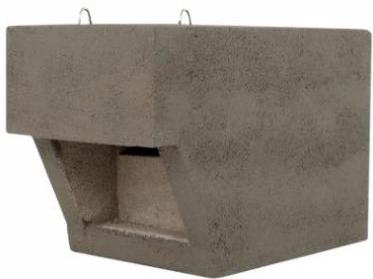
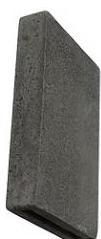
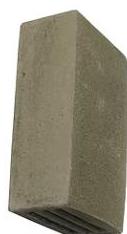
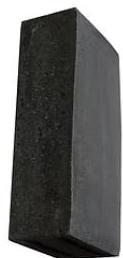
https://www.nhbs.com/vivara-pro-woodstone-grey-wagtail-and-dipper-nest-box
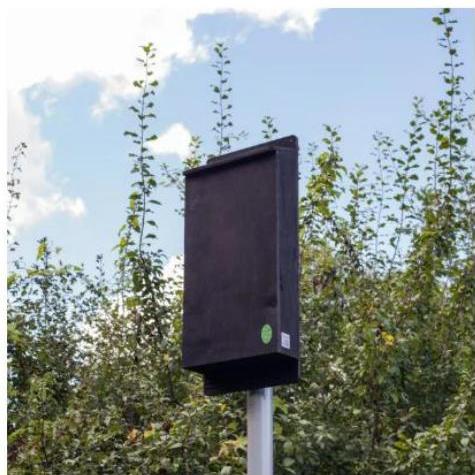
As an alternative to fixing to walls (as with the above boxes), a pole-mounted box could also be used as one of the 4 reommended boxes.
From nhbs.co.uk
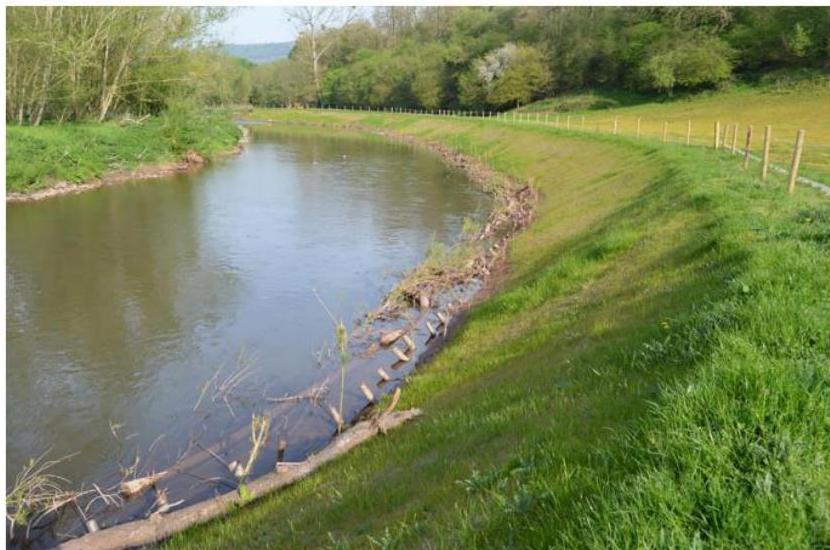
Coir matting - CocoBN
https://www.salixrw.com/wp-content/uploads/2018/06/CocoBN-1.2.pdf
Copyright in submitted documents remains with their authors. Request removal
