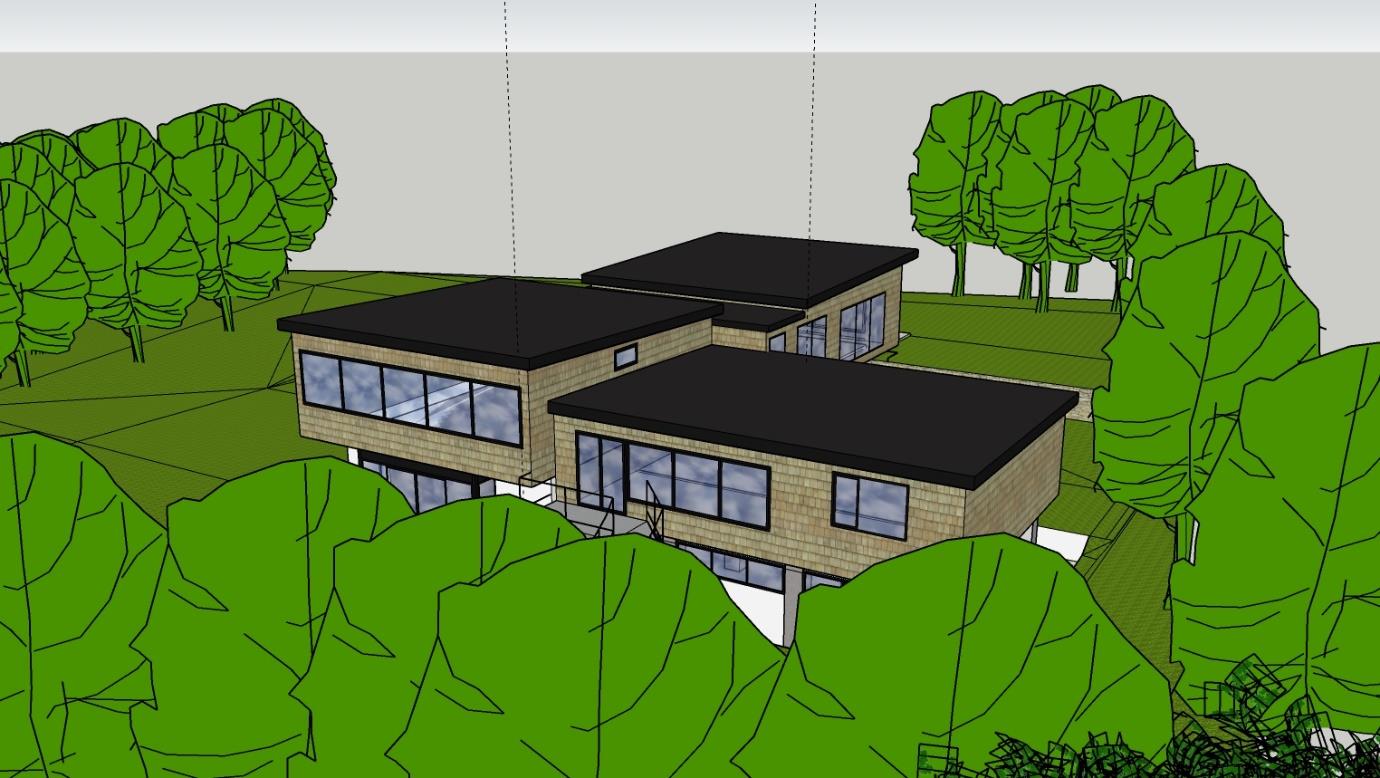
For: Residential Extension and associated works At: Peace House, Lhoobs Road, Foxdale, Isle of Man, IM4 3JA
1.0 Introduction
1.1 This planning statement is submitted in support of an application for the extension and associated works of an existing residential dwelling at Peace House, Lhoobs Road, Foxdale, Isle of Man, IM4 3JA.
1.2 The proposed extension is designed to enhance the functionality and aesthetic of the existing property while adhering to the Isle of Man Strategic Plan 2016, Isle of Man Residential Design Guidance 2021, and relevant local policies.
1.3 This statement provides an overview of the existing site, the proposed extension, associated works and their alignment with the strategic planning framework.
2.0 Site Description and Existing Conditions
2.1 The site is situated on Lhoobs Road in Foxdale and currently comprises a residential dwelling surrounded by garden areas and access roads.
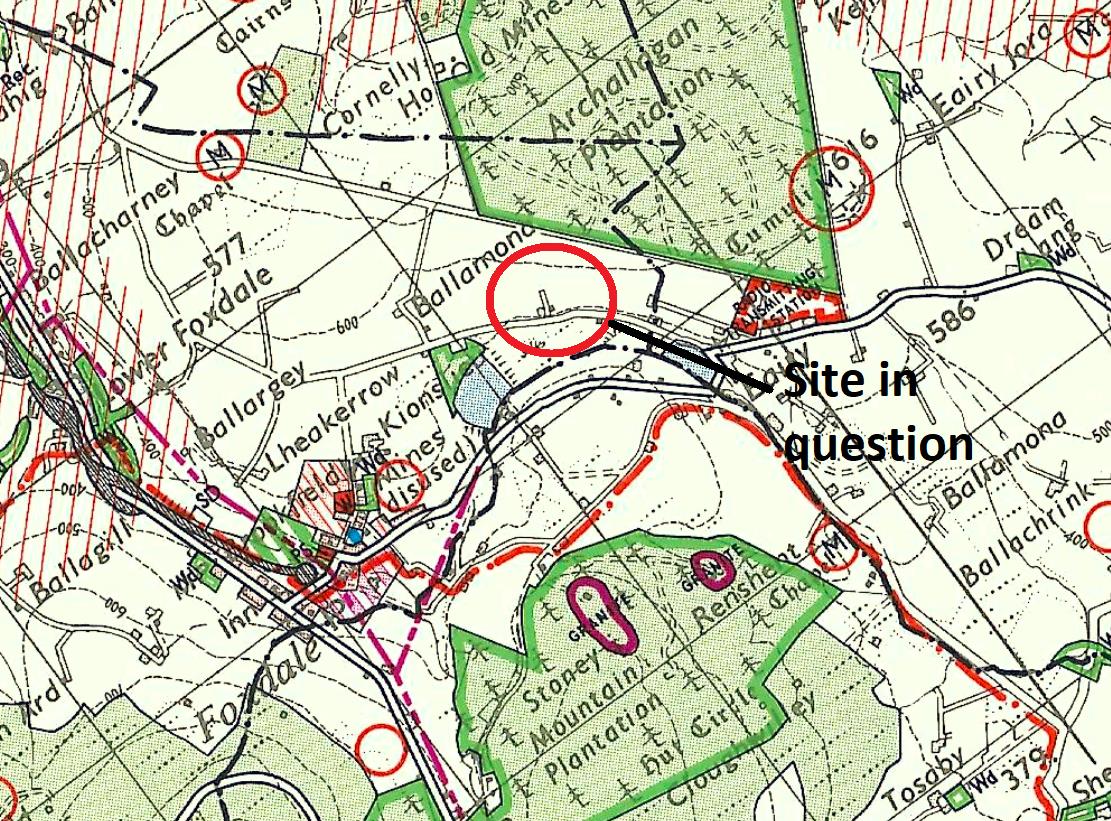
2.2 The site is approximately 800m along Lhoobs Rd from the Eastern junction with the A24 Foxdale Road.
2.3 The existing dwelling, as depicted on drawing 20171-PL03, is a two-story structure with some traditional design elements, including utility spaces, a garage, kitchen, and living room on the ground floor, and multiple bedrooms on the first floor. The overall design however is non-traditional with a flat roof finish and all over timber clad upper level with low quality stone finish to the ground floor level.
2.4 The site is well-shielded by mature trees and sod hedging, creating a private, rural setting. The site in question has approximately 137 trees present.
2.5 The site lies within an area designated within the 1982 Isle of Man Development Plan as not for a particular purpose - essentially countryside as defined in Environment Policy 1 of the Strategic Plan. It should be noted that this development plan is well beyond its useable time and a given the site is already of residential use, the site is in line with the suitability for residential development and its alignment with broader planning policies.
2.6 There are no areas of ecological interest, registered trees area or registered trees on or around the site from reviewing of the Isle of Man Government Island Environment Map, Environmental Constraints Map and the Infrastructural Constraints Maps.
3.0 Planning History
3.1 A recent planning application was sought in 2024 for the alterations, extensions and landscaping works to the existing site under 24/90993/B. This was refused for the below reasons:
R 1. The form, design, scale and appearance of the proposed extensions are not considered to be sympathetic to the character and appearance of the existing property and would not have a positive impact on the surrounding environment, contrary to Housing Policy 16, Environment Policies 1 and 2 and Strategic Policy 5.
R 2. As a result of preliminary site clearance works and the lack of information to inform ecological mitigation, the proposals fail to preserve or enhance the natural landscape and as such are considered contrary to Strategic Policy 4 of the IOM Strategic Plan.
3.2 This proposal proposed an overall increase in floor area of 139% over the existing. It also proposed a complete alteration of the dwelling design from flat roof to a pitched roof that incorporated an additional floor level within. In conclusion this completely changed the site and look from the Highway and surroundings.
4.0 Planning Policy Context
4.1 The Strategic Plan provides planning guidance which applies to all of the Island. Here, development is generally directed towards settlements (Strategic Policies 1, 2 and 10, Spatial Policy 5 and Transport Policy 1). The countryside is protected for its own sake (Environment Policy 1) and development which is harmful to the countryside is presumed against.
4.2 However, provision is given within the Strategic Plan 2016 for the extension of existing dwellings in the countryside. Two policies guide this form of development - one relating to existing traditional dwellings (Housing Policy 15) and the other to all other forms of dwelling, described as either non-traditional or of poor form (Housing Policy 16). The existing dwelling in question is not traditional and as such, it is this Housing Policy 16 that is considered the more appropriate in this case. It states:
The extension of non-traditional dwellings or those of poor or inappropriate form will not generally be permitted where this would increase the impact of the building as viewed by the public.
4.3 Development will comply with the general standards set out in General Policy 2 and in the assessment of the impact on the living conditions of those in adjacent properties
and general, the provisions of the Residential Design Guide are also considered relevant.
2.5.3 Green or brown roofs are, in short, vegetated roofs, or roofs with vegetated spaces. They are also referred to as eco-roofs and roof gardens. They bring many benefits including:
• reducing and managing rainwater run-off (thereby helping to prevent overloading of drainage systems and flooding);
• improved thermal performance of building;
• reduction in sound transmission;
• improvement in air quality;
• reduction in the urban heat island effect; and
• provision of habitat for native flora and fauna;
2.5.4 As well as complying with relevant Legislation (Wildlife Act 1990) proposals should aim to:
• protect and enhance the existing biodiversity on site through the retention and protection of existing wildlife features (as a priority);
• compensating against their loss where retention is not possible (as a last resort); and
• by providing enhancement measures.
2.5.5 The outcome should be to achieve an overall net gain in biodiversity. Consideration should be given to the following points.
• Retention and protection of important habitats for wildlife such as mature trees, hedges, sod banks, ponds & semi-natural habitats.
• Protection of features from the impacts of artificial lighting.
• Retention and protection of bat roosts or bird nest sites within buildings (e.g. designing roof space to retain bat roosts or swift nest sites).
• Where reasonable and proportionate, providing alternative wildlife features as compensation, should retention of existing features not be possible (e.g. creation of a new sod bank or the erection of integrated bat and bird bricks).
4.2.2 Extensions should generally appear subordinate to the existing house i.e. appear as smaller additions rather than being overbearing features dominating the existing house.
4.6.1 Generally, the main issues for rear extensions relate to potential loss of light and/or overbearing impact upon the outlook of neighbouring properties.
4.7.3 Furthermore, contemporary designed flat roofed extension can be acceptable in certain circumstances.
4.7.4 Also, careful consideration of the finishes of the extension needs to be given to avoid a jarring being existing and new.
5.2.4 The introduction of large windows can maximise natural light, but need to be designed and positioned to sit comfortably with neighbouring buildings/the existing part of the building. Larger sections of glazing are more likely to be supported where they are part of a well designed contemporary scheme.
5.3.14 The Department recognises that in some instances contemporary design solutions may be appropriate, providing they are of a high standard of design quality, and are of appropriate form, scale, and materials. Examples of more modern finishes include large areas of frameless glazing forming the extension, the use of timber/metal cladding, and a variety of roofing finishes, including sedum, copper, or aluminium.
5.0 Proposal
5.1 The proposed development involves an extension to the rear elevation of the existing dwelling to increase living space and modernize the property.
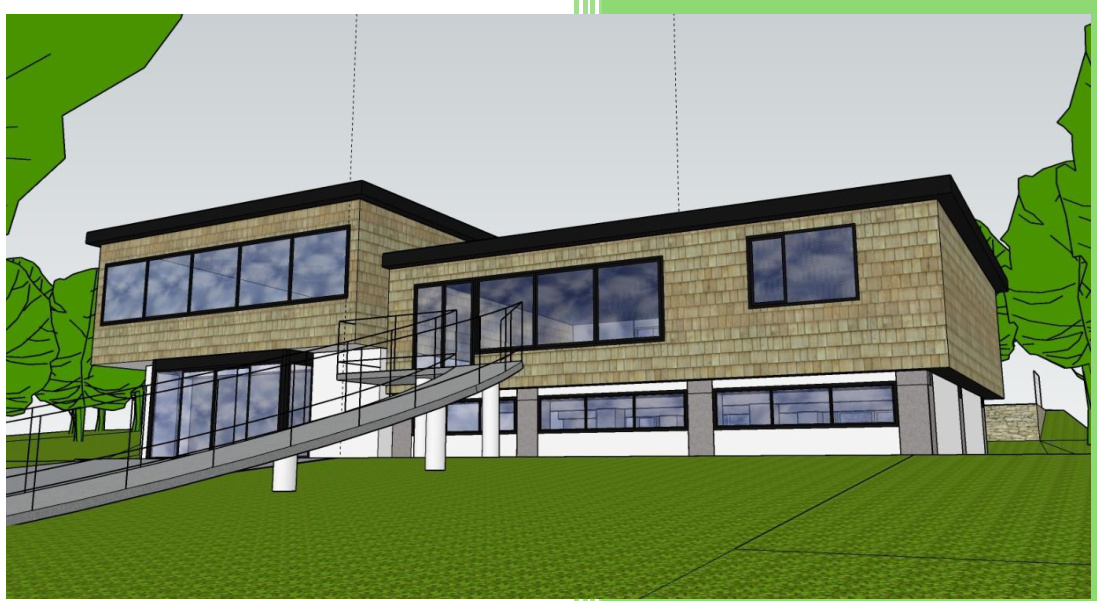
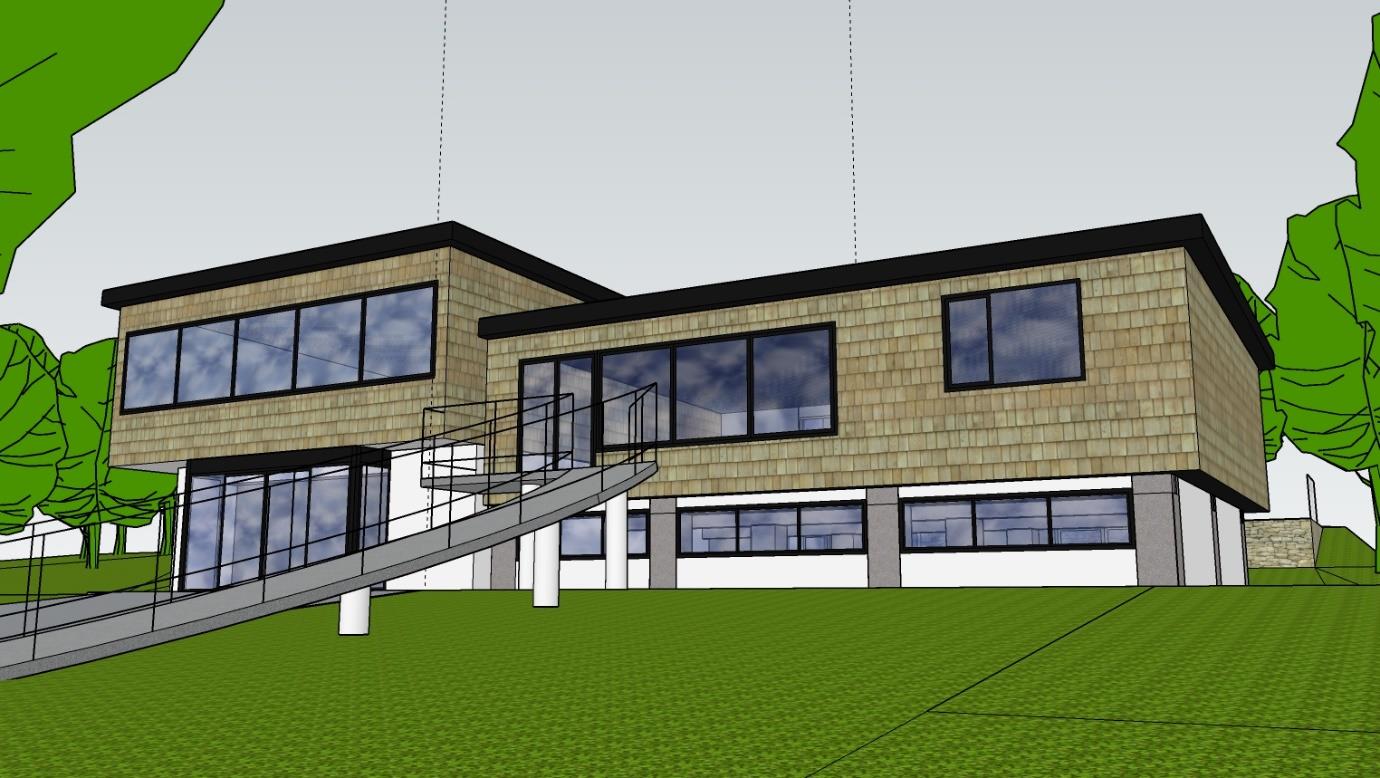
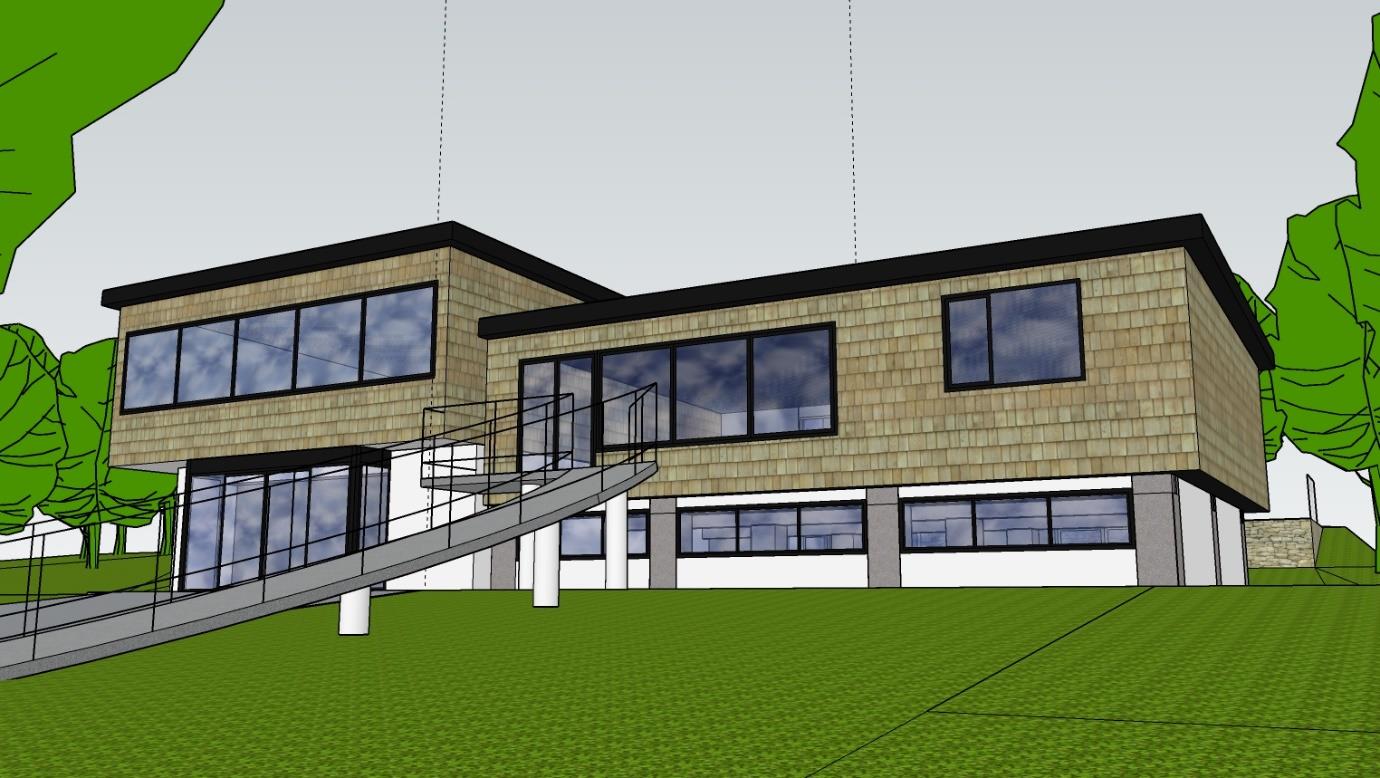
5.2 The extension is to be located to the rear elevation to not detract from the existing view of the property from the public highway. The extension has been designed to seamlessly integrate with the existing structure, enhancing both the functionality and appearance of the home.
5.3 Key aspects of the proposed extension and alterations work, as illustrated on drawing 20171-PL04, include:
- Taking on board the previous planning application refusal comments and respect the existing dwelling.
- Maximising natural light into the property.
- Maximise functionality predominantly upon the existing footprint and not overdevelop the site.
- Improve the aesthetic quality of the dwelling.
- Respect the existing dwelling and the local vernacular by utilising timber and stone cladding both of which are prevalent in the surroundings plantations and quarries.
- Create a highly functional living space.
Maximising existing functional space.
5.4 The extension is positioned and designed to respect the existing and to remain subservient to the existing. It features a contemporary design that respects the existing architectural style whilst improving upon it.
5.5 The extension will add a portion of living space, including a new bedroom and extended living area that will enhance natural light and connectivity between indoor and outdoor spaces.
5.6 The existing ground level storage area is to be altered to form two additional bedrooms and a home gym space. To achieve this the floor level is to be lowered down to create a suitable head height for this use.
5.7 From on site inspections it has been determined that this storage area had been lower in the past but at some point the level had been raised which is thought to be to assist with any site flooding issues to the topography in a quick way.
5.8 It should also be noted that this storage area was completely walled in previously but at some point prior to the current owners had been partially removed. Again, this is thought to be to assist with any site flooding issues to the topography in a quick way.
5.9 It is proposed to replace the existing timber cladding with a new timber shingle cladding that will be throughout the entire upper floor level as per the existing cladding. The existing is aged and needs replacing. The shingles finish is felt to be more aesthetically pleasing and also respect the local surroundings of multiple plantations and the site itself that has over 100 trees located.
5.10 The ground floor will be predominantly a smooth painted render.
5.11 The extension roof will match the existing in style with a lower and smaller flat roof junction to ensure it remains subservient. It is proposed to have this roof finished with sedum to increase the biodiversity of the site for local wildlife and flora and fauna. This will also meet the guidelines outlined in the Residential Design Guide 2021 as noted above point 2.5.3.
5.12 All fascia’s and soffits will be replaced throughout to improve the aesthetic quality of the dwelling.
5.13 A glazed porch is proposed to the front elevation that sits under the cantilevered upper floor level. The glazed design will minimise impact and respect the overall proposal whilst creating a necessary sheltered entrance for the dwelling given the exposed location.
5.14 The existing floor area of the dwelling is 309 m². The proposed extension will increase the total internal floor area to 441 m². This represents an increase of approximately 43% increase in the overall floor area, significantly enhancing the
liveability of the property but ensuring it remains comfortably within the 50% margin outlined in Housing Policy 15.
5.15 The proposed extension respects and factors in the topography of the site.
6.0 Drainage Strategy
6.1 The proposed extension will utilize existing drainage infrastructure to manage both surface water and foul water effectively, ensuring minimal environmental impact and compliance with local regulations:
6.2 Surface Water Drainage: Surface water from the extended areas will be directed to the existing drainage ditch on the site. This method will effectively manage runoff, preventing any potential flooding or waterlogging on the property and surrounding areas.
6.3 Foul Water Drainage: The foul water from the extended dwelling will be managed by the existing septic tank system. This system will be inspected professionally to ensure it has capacity to handle the increased load resulting from the extension, ensuring that wastewater is treated and disposed of in an environmentally responsible manner.
6.4 The site is shown partially to have a small likelihood of surface water flooding. This will be factored in at the detail design stage with the addition of drainage channels etc.
7.0 Impact on Existing Trees and Boundaries
7.1 The proposed extension has been carefully designed to ensure that it does not negatively impact the existing natural features or boundaries on the site:
7.2 Tree Preservation: No existing trees will be affected by the extension. The design respects the mature vegetation surrounding the site, maintaining the ecological value and aesthetic appeal of the property.
7.3 Boundary Integrity: The extension will not alter or encroach upon the existing boundaries, including the sod hedging and other physical demarcations. The development will preserve the current site layout and the privacy it affords.
7.4 Bio Diversity: The proposal as per dwg: shows that additional landscaping will be undertaken to the site including wildflower areas. This will increase the natural habitat of the site and bio diversity.
7.5 It should be noted that during the recent Storm Darragh, some of the existing trees to the site were uprooted and came down. As above, this does not have any link to the proposal but any trees that have come down will have new trees reinstated in the future on the site to ensure the continued site wildlife habitat.
7.6 Additional hedgerows of native shrubs such as hawthorn (Crataegus monogyna) and blackthorn (Prunus spinosa) will be planted to create wildlife corridors, facilitating movement between habitats throughout the overall site.
7.7 To increase site habitat, bat boxes will be established on the site.
7.8 It was noted on the refused application 24/90993/B that preliminary site clearance had been undertaken. That site clearance had been undertaken previously and was completely in line with what one is allowed to do on their property without any permission. As per the dwelling proposal and as outlined above, the improvements that will be undertaken to the site will be of great benefit to the site and the natural habitat.
8.0 Compliance with Manx Wildlife Trust and DEFA Guidelines:
- All works to the garden will comply with relevant guidelines set by the Manx Wildlife Trust and DEFA, including:
- Biodiversity Strategy: Supporting the Isle of Man Biodiversity Strategy by restoring native habitats, controlling invasive species, and promoting species-rich ecosystems.
- Protected Species: Proposed works are to be undertaken outside of areas where there are any existing species located and as such will avoid disturbance to any species during the implementation of the project.
- Invasive Species Control: Any invasive species identified during works, such as rhododendron, will be systematically removed and managed in accordance with DEFA guidelines.
- Sustainable Management: A long-term management plan will be implemented, ensuring the ongoing health and sustainability of the habitats.
9.0 Compliance with Isle of Man Residential Design Guidance 2021
9.1 The proposed extension has been designed in accordance with the Isle of Man Residential Design Guidance 2021, which provides a framework for ensuring highquality residential development across the island. The proposal meets several specific points outlined in the guidance:
9.2 Design Quality and Character: The extension has been designed to respect the existing character of the dwelling and its surroundings. The choice of materials and architectural style reflects the local vernacular, ensuring that the new development integrates harmoniously with the existing environment. This approach aligns with the guidance’s emphasis on maintaining the character and quality of residential areas.
9.3 Sustainability: The design incorporates sustainable building practices, including the use of energy-efficient materials and the retention of existing natural features. The extension’s design also allows for natural ventilation and maximizes natural light,
reducing the need for artificial heating and lighting. These measures are consistent with the guidance’s recommendations for sustainable residential design.
9.4 Privacy and Amenity: The proposal has been carefully planned to ensure that the privacy of both the residents and neighbours is maintained. The extension has been positioned and designed to avoid overlooking adjacent properties, and the existing boundary treatments will be retained to provide additional privacy. This aligns with the guidance’s principles on protecting residential amenity.
9.5 Internal Space Standards: The extension will provide well-proportioned rooms that meet or exceed the recommended internal space standards outlined in the guidance. The design focuses on creating functional and comfortable living spaces, ensuring that the new areas enhance the overall quality of the dwelling.
9.6 Access and Connectivity: The extension has been designed to improve connectivity within the property, with clear and logical circulation routes between rooms and enhanced access to outdoor spaces. The layout promotes ease of movement and accessibility, in line with the guidance’s recommendations on internal and external connectivity. 10.0 Compliance with the Isle of Man Strategic Plan 2016
The proposed extension aligns with the objectives of the Isle of Man Strategic Plan 2016, supporting sustainable development and improving the quality of residential properties on the island:
- Policy SP 1 (Sustainable Development): The proposal makes efficient use of the existing structure and site, avoiding unnecessary land use expansion while significantly enhancing the property's functionality.
- Policy SP 2 (Housing Supply): By increasing the floor area and modernizing the design, the extension enhances the standard of living within the property, contributing to the strategic goal of improving the housing stock on the Isle of Man.
- Policy SP 5 (Environmental Protection): The design ensures minimal environmental disruption, with specific attention to the preservation of existing trees and boundaries.
- Policy SP 6 (Design and Quality): The extension is designed to high standards, ensuring it complements the existing structure and enhances the overall quality of the property.
- Policy GP2 (General Development Principles): This policy requires that new development respects and enhances the character of the surrounding area, maintains the quality of the environment, and supports sustainable development. The extension has been designed to complement the existing building in terms of scale, materials, and design, ensuring it does not negatively impact the visual or residential amenity of neighbouring properties. Additionally, the extension contributes to the efficient use of
land and promotes energy efficiency. The extension helps to maintain the overall quality of life and environmental integrity as outlined in the Strategic Plan.
11.0 Conclusion
11.1 The proposed extension works will not be publicly visible due to being located to the rear of the property and the mature boundary treatments present.
11.2 The proposed works do not change the modern non-traditional character of the property and would not look out of place or detrimental in any way.
11.3 The proposal does not result in any overlooking issues given the extension positioning and lack of close adjacent properties.
11.4 The proposed extension and associated alterations to Peace House, Lhoobs Road, Foxdale, are a well-considered enhancement that not only improves the aesthetic quality of the existing dwelling but improves the entire site.
11.5 The works have been carefully designed to ensure the preserving of the scale and character of the property.
11.6 The extension is compliant and follows the advice given within the Isle of Man Strategic Plan 2016, the Isle of Man Residential Design Guidance 2021, and relevant local policies, offering improved living conditions while preserving the character and natural features of the site.
12.0 1982 Development Plan Location
13.0 Visuals of Proposal
A topographical site location map highlighting the proposed development site with a red circle and text label 'Site in question' within a rural setting near Ballamona.
11
12
Copyright in submitted documents remains with their authors. Request removal
Source & Provenance
Official reference
25/90101/B
Source authority
Isle of Man Government Planning & Building Control