Loading document...
Sarah Corlett Town Planning Consultancy Ltd Registered address: Ballachrink Croft, Ballacorey Road, Bride, Isle of Man IM7 4AW t: 07624 485517 e: [email protected] w: www.sarahcorlett.com Directors: Sarah Elizabeth Corlett, Nicola Jane Corlett Company Registration 134325C
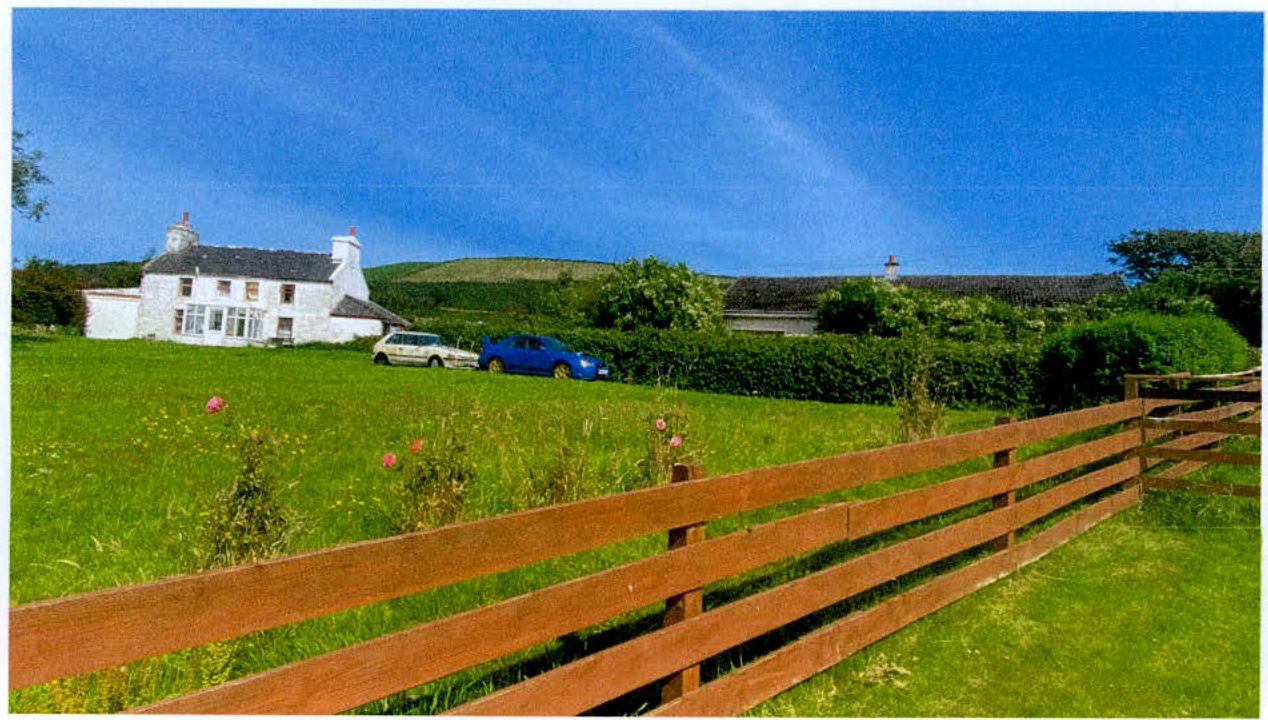
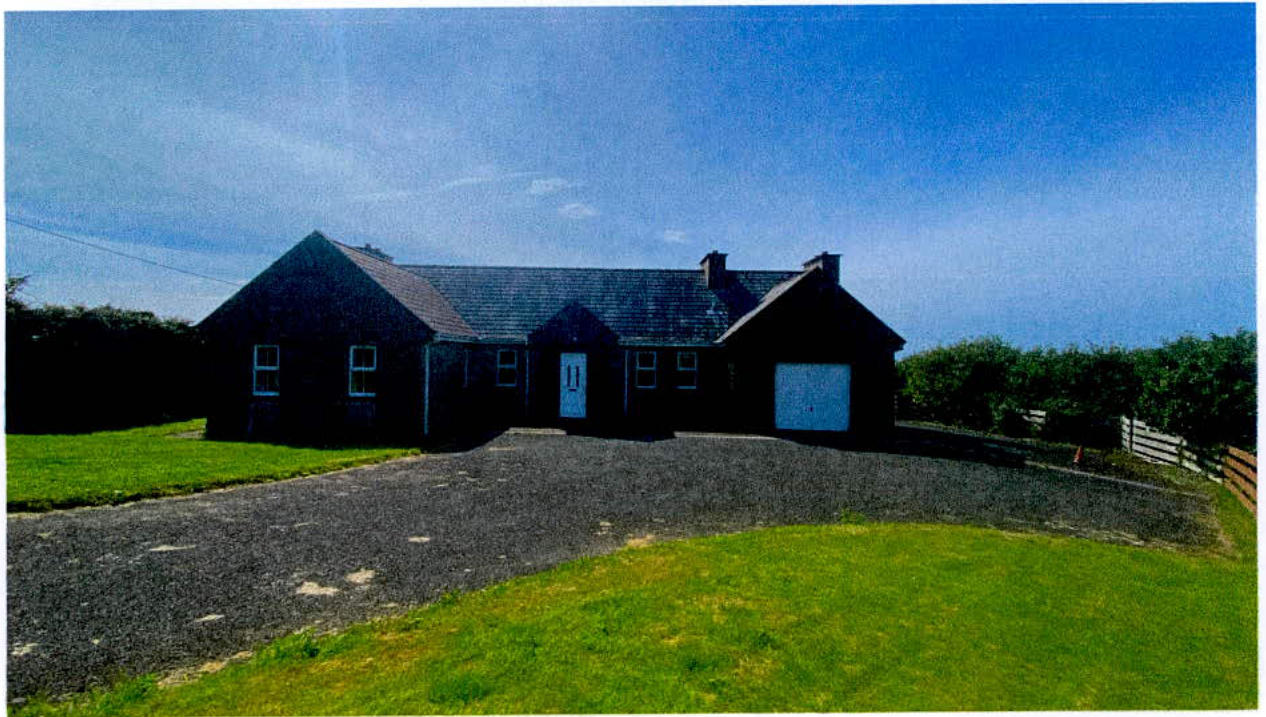
1.1 Cornerstones is an existing dwelling which is situated on the northern side of Ballagyr Lane which runs from the northern side of Peel to join the Switchback Road. 1.2 The dwelling is a detached bungalow with accommodation in the roof space which sits in a curtilage of approximately 0.8 acres ( $0 / 3$ ha) with a frontage of approximately 90 m onto Ballagyr Lane. It was built in 1998 following a successful planning application (see Section 2 - Planning History). 1.3 To the immediate east are two dwellings - a traditional Manx farmhouse - The Retreat, and East Lherghydhoo Farm bungalow. To the east of these is Arcadia, also a bungalow. All three bungalows (Arcadia, East Lhergydhoo Bungalow and Cornerstones) were permitted as agricultural workers properties, East Lhergydhoo Farm bungalow having been built by the Local Government Board.
2.1 Cornerstones was approved under 96/00779/B with a condition which required that "The occupation of the proposed dwelling(s) must be limited to persons whose employment or latest employment is or was employed in agricultural in the Island and including also the dependants of such persons as aforesaid." This application was preceded by an approval in principle, 95/01409/A which was permitted. Information submitted at that time indicated that 230 acres of land were farmed by then applicants, Mr. and Mrs. Clucas who had farmed it since 1955 as East Lhergydhoo Farm. The officer's report includes the following: "The proposal is one which, although governed by Planning Circular 3/88, refers to the provision of a retirement home for Mr. and Mrs. Clucas. The chosen site is at the extremes of the farm holding in order to allow the farm manager/herdsman to be on hand to tend to the day to day running of the business from the farmhouse.
The plot is approximately 350 m from the main farm buildings and as Mr. Clucas does not have a successor to take over the farm the sole purpose of this application is to build a modest retirement home from which Mr. Clucas will be able to, in the short term, carry on farming, the longer term proposals are for the farm to be sold off as a complete unit." 2.2 The application site was also the subject of a successful application for tipping of hardcore and soil ( $92 / 01120 / B$ ) which followed an unsuccessful application for change of use of the site from agricultural to infill site ( $91 / 01546 / \mathrm{C}$ ). 2.3 Arcadia was approved under 88/01857/A and 89/01407/B as part of Lhergydhoo Farm (not to be confused with East Lhergydhoo Farm), at which time the LGB bungalow was there as was the Manx farmhouse (The Retreat). Arcadia too had an agricultural occupancy condition attached. The Retreat is not and has never been the subject of an agricultural occupancy condition. 2.4 Permission was granted to remove the agricultural occupancy condition from Arcadia, under 14/01114/B. That property also had permission for the erection of a stable block $(11 / 00628 / B)$ and for extensions to the dwelling ( $15 / 00586 / B)$.
3.1 Proposed is the removal of the condition which was imposed on the original approval, effectively removing the requirement for the property to be occupied by persons employed in agriculture. 3.2 The property was occupied by Mr. And Mrs. Clucas, being the applicants for the original dwelling, until 2004 when Mr. Clucas passed away. Mrs. Clucas, his widow, continued to live in the property until September, 2023 when she moved out, aged 89. The property was put on the market and a sale was agreed. During the conveyancing, the agricultural occupancy condition was discovered and with which the prospective purchaser would not comply. 3.3 This current application is submitted to seek to remove the agricultural occupancy condition.
4.1 The countryside is protected for its own sake and development is generally discouraged unless justified. Environment Policy 1 protects the countryside from harmful development and General Policy 3 sets out the presumption against development other than where it might comply with a range of exceptions. 4.2 There is provision within these protective policies which allows for the development of buildings which are required for agricultural purposes - both dwellings and farm buildings. General Policy 3(f) makes provision for building and engineering operations which are essential for the conduct of agriculture or forestry. Environment Policy 15 adds further guidance on such applications:
Environment Policy 15: Where the Department is satisfied that there is agricultural or horticultural need for a new building (including a dwelling), sufficient to outweigh the general policy against development in the countryside, and that the impact of this development including buildings, accesses, servicing etc. is acceptable, such development must be sited as close as is practically possible to existing building groups and be appropriate in terms of scale, materials, colour, siting and form to ensure that all new developments are sympathetic to the landscape and built environment of which they will form a part. Only in exceptional circumstances will buildings be permitted in exposed or isolated areas or close to public highways and in all such cases will be subject to appropriate landscaping. The nature and materials of construction must also be appropriate to the purposes for which it is intended. Where new agricultural buildings are proposed next to or close to existing residential properties, care must be taken to ensure that there is no unacceptable adverse impact through any activity, although it must be borne in mind that many farming activities require buildings which are best sited, in landscape terms, close to existing building groups in the rural landscape. 4.3 Housing Policies 7-10 provide further advice on agricultural dwellings:
Housing Policy 7: New agricultural dwellings will only be permitted in exceptional circumstances where real agricultural need is demonstrated.
Housing Policy 8: Where permission is granted for an agricultural dwelling, a condition will be attached restricting the occupation to a person engaged or last engaged solely in agriculture; or a widow or widower of such a person, or any resident dependants. 8.9.4 Such a condition will not usually be removed on subsequent applications unless it is shown that the long-term need for dwellings for agricultural workers, both on the particular farm and in the locality, no longer warrants reserving the dwelling for that purpose.
Housing Policy 9: Where permission is granted for an agricultural dwelling, the dwelling must be sited such that; (a) it is within or immediately adjoining the main group of farm buildings or a group of farm buildings associated with that farm, (b) it is well set back from any public highway, and (c) it is approached via the existing farm access.
Housing Policy 10: Where permission is granted for an agricultural dwelling, the dwelling should normally be designed in accordance with policies 1-7 of present Planning Circular 3/91 which will be revised and issued as a Planning Policy Statement.
5.1 Agricultural occupancy conditions may be removed if the Department is satisfied that there is no longer a need for an agricultural worker's dwelling. 5.2 The applicant, having lived and worked in this area almost all her life, is familiar with the adjacent farms and the accommodation they have available to them. East Lhergydhoo Farm (letter A and coloured green on the attached map), which sits to the immediate south of the site, and with which Cornerstones was originally associated and justified, was at the time a working dairy farm - it is now involved in store cattle and has a farmhouse and the LGB bungalow adjacent to Cornerstones. Its farmhouse and farm buildings are some 336 m to the south east of the site. The farmer of this land has indicated in writing that he has no requirement for a third dwelling and has no objection to the application. 5.3 The remaining land surrounding the application site is farmed in conjunction with a number of farms - Staarvey Farm (D - light blue), Ballagyr and Ballacross (E - orange), Ballakilmurray (F - purple), Kew (G - brown), and Little Ballagyr (J - grey) in addition to land between the coast road and Ballagyr Lane (B - blue), land formerly with Ballakilmurray and Kew now farmed with East Lhergydhoo (H - red) . All of these farmers have been contacted and none has an objection to this application and all were happy to confirm that they had no requirement for a further farm dwelling in association with their holdings. Letters confirming this are included with this application (with the original letter from the applicant to these parties) together with a plan showing the location of these holdings relative to Cornerstones and with a letter from German Parish Commissioners indicating that they do not oppose the application. 5.4 Lhergydhoo Farm and land (C- yellow) lies to the immediate north of Cornerstones and the farm house and farm buildings are some 327 m as the crow flies (Lhergydhoo Farm buildings are not on Ballagyr Lane). The owners of this farm holding have indicated that they have no objection to the application but were not in a position to confirm that they would never have a requirement for a further farm dwelling at some point in the future, although have no requirement at the present time. 5.5 We would submit that there is no agricultural need for this dwelling to justify retaining the agricultural occupancy condition imposed upon it.
5.6 In addition, it is clear from the information provided at the time of the application in 1996, that, unlike most applications submitted for agricultural dwellings on the Island, the intention was that the farmers would retire into this property and leave the main management of the farm to those living in the farmhouse in the short term, with, in the longer term, the intention to sell the farm off and have the bungalow occupied with no association to it. This is what has happened, with the bungalow having no agricultural land associated or available to it since 2000. 5.7 This is not dissimilar to Arcadia when the dwelling was approved with a clear indication that there was no long term agricultural need for the property and indeed the condition on that property was removed 24 years after its application. 5.8 The property is not within or immediately adjoining the, or indeed any main group of farm buildings or a group of farm buildings associated with that or any farm, is well set back from any public highway, and is not approached via the, or indeed any existing farm access as are required by Housing Policy 9. 5.9 As such, we would submit that there is no longer agricultural need for this dwelling sufficient to warrant retention of the agricultural occupancy condition in this case, thus satisfying the provisions of paragraph 8.9.4 of the Strategic Plan - it is shown that the longterm need for dwellings for agricultural workers, both on the particular farm and in the locality, no longer warrants reserving the dwelling for that purpose.
12.08.24
Copyright in submitted documents remains with their authors. Request removal
