Loading document...
25/90708/B - Erection of a portal frame stable and creation of a menage at Longcroft
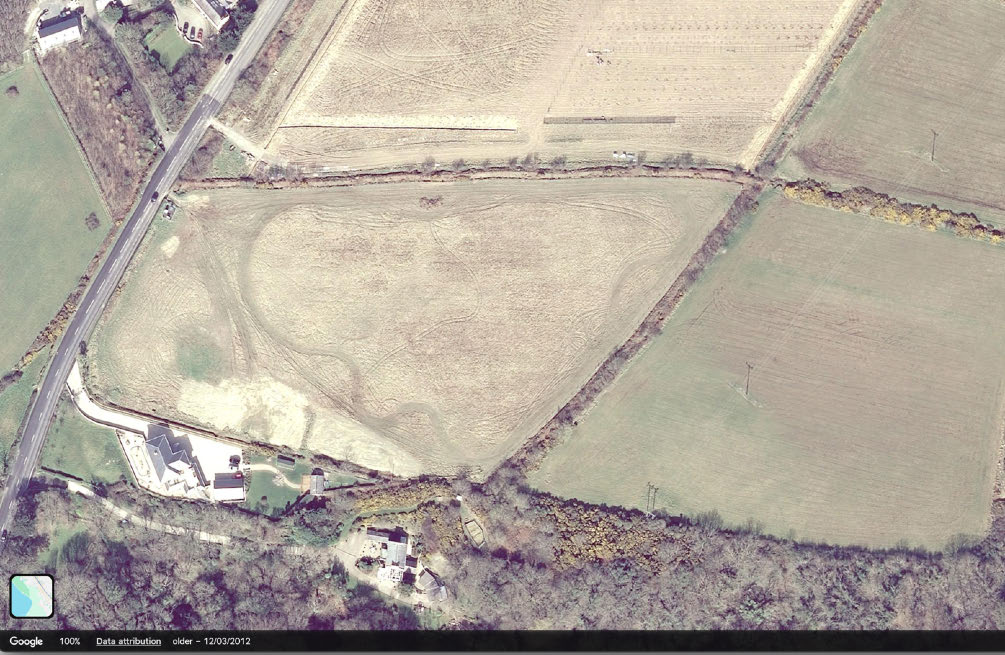
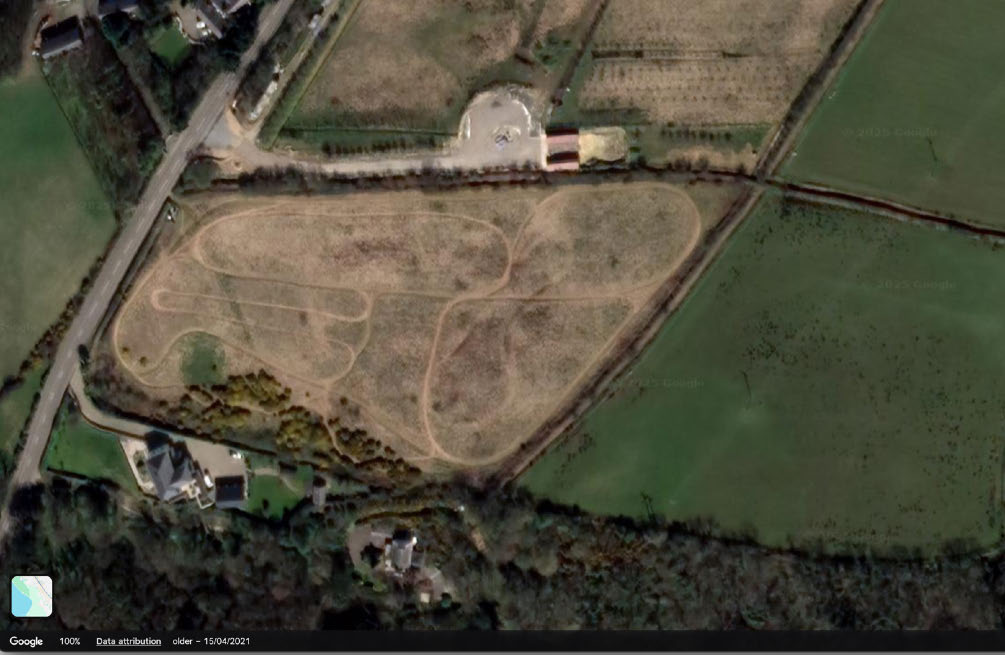
Our client purchased Longcroft because the location of the house in relation to the field made it ideal for having horses close to the property. The most recent owners used the field for quad biking (see google maps screenshots below) and previous to that, the field had been used for grazing sheep and cattle. We believe equestrian use is far more in keeping with the location than the most recent use and our clients have received positive comments from neighbours supporting this.
Longcroft will be their forever home and as such the intention is to ensure the barn is of the highest quality and complements the area, hence the chosen style of building to be more visually appealing than the usual steel portal frame, metal clad sheds found on farms. We have specified high quality, low maintenance materials to maintain the presentation of the barn for many years to come.
The field is approximately 7 acres and whilst there is currently only one horse, our client is awaiting the arrival of a Freisen Colt that is 6 months old in late October. A third more mature horse will be arriving once the barn is complete.
A barn with internal stabling is best for exposed locations such as this so that the horses can be fed, watered and cleaned out in a dry, less windy environment. The wide corridor means that they can be tied up inside during cleaning and have a small space for exercise during very bad weather. It will also double as a washing bay. Having this little bit of extra circulation space makes a much more pleasant and lower stress environment for horse and human. The steel structure is much more robust than typical wooden frame stables and the external materials chosen will remain sound and looking good for many years.
In addition to space for three horses, there is need to be able to purchase and store 6 months of hay and straw and have a stock of Bran, Pony nuts, Pony mix and Beet. Typically 10 to 12 sacks per month, with an additional 2-3 weeks of feed in storage. There is also need for a room for storing tack including saddles, rugs (multiple per horse ranging from fly sheets to rain sheets and warmer rugs). The tractor store will be used to house a new tractor for general maintenance of the field. It is important to keep this under cover due to the coastal location of the site or it will deteriorate very quickly.
The additional covered space outside of the stable area will be used to store tractor attachments such at a flail mower, buckets and spikes as well as a smaller ride on mower that is used for tighter areas. It will also be used to store portable horse jumps and other paraphernalia.
We would argue this is not a large scale equestrian development, it is a small scale private stable for the personal use of the owner of the land and their horses only. The building has been sited as close as is possible to the residential buildings associated with Longcroft taking into account the site levels and other factors to negate creep of built environment too far into the field. Development of this sort is common in the general vicinity of of the site and wider Area of High Landscape or Coastal Value and Scenic Significance. Lynague Farm immediately to the north of the site and over the road, has a series of agricultural style barns of various scales and forms. There is a large greenhouse directly to the south of the site at “The Millstone”. To the south west of the site there are a series of agricultural buildings of varying forms, some very large, others more utilitarian (15/00710/B Chicken shed and 19/01384/B maintenance building to store equipment, materials and food stuffs).
The only real view of the proposed stable from the road is through a gap in the hedging, where we have proposed screening. To the immediate left of this gap is the large new access as approved under PA 20/00661/B to access ‘The Apple Orphanage’ along with this application there was also (albeit temporary) permission to construct a retail outlet built from shipping containers with a PVC canopy roof between (20/00765/B). These two applications are much more visually intrusive within the Area of High Landscape or Coastal Value and Scenic Significance than our proposal.
To the east of the site, still within the Area of High Landscape or Coastal Value and Scenic Significance, there has recently been planning permission granted for a very large equestrian development (25/90314/B). This development is for a 15 horse stable with associated storage and other rooms, alongside a covered arena. The building is approximately 32x57m in footprint, vastly larger than our proposals.
Our client wishes to maintain and manage their 7 acre field with a well presented private equestrian facility. This is a better use of the land than the recent unofficial quad biking area. It could be returned to high quality sheep and cattle grazing very easily in the future if required. If the field is left fallow it will deteriorate further after the last ten years of misuse.
The ‘scrub’ is gorse and brambles which have become established along the border between the field and house through poor management of the land during the previous residents ownership. Had sheep or cattle grazed the field for the last ten years, there would be no ‘scrub’. The below Google earth screenshot is from 2006 and shows a well managed field.
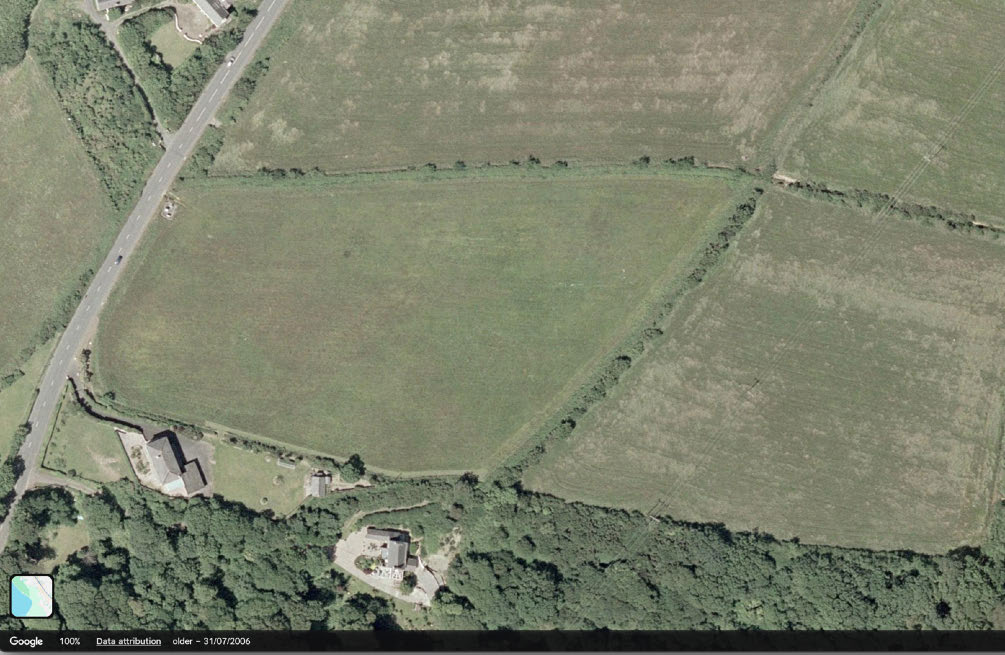
The following images from 2012 and 2021 show tracks throughout the field where quad bikes and other farm vehicles have driven around the land, the patterns would suggest driving around for enjoyment rather than necessity. An area of lighter ground on 2012 map is where by 2021 the gorse is becoming established. Also visible on the 2021 plan is the large access and turning head of the Apple Orphanage and shop unit.
The access point from the driveway has been chosen because of the contours of the site. If we were to attempt to access the stable further up the driveway, the difference in levels between driveway and stable become much greater, requiring a much steeper access over a shorter length. The position chosen is also a natural point to enter the field as it is at present the clearest place with regards gorse and to minimise the slope when transporting the horses in a horse trailer. This location minimises the impact on existing vehicle movements, parking and turning for the house. Given the desire to remove the gorse which will otherwise take over the field, putting the access path in this area allows us to protect the existing grazing areas and also ensure any works are a close as possible to the buildings and existing driveway.
The tree officer has raised concerns regarding the drainage of the site, the existing situation is that the field drains into a series of ditches at the south and west field boundaries. The south boundary especially is being encroached upon by gorse, preventing proper maintenance and clearing. Even without the erection of the stable, the gorse will need clearing to prevent it blocking the ditches over time and to allow proper access for machines to clear the ditches if required. The stable surface water is proposed to drain to a new soak away, to be sized appropriately to the satisfaction of Building Control.
With regard to the temporary field shelter, the structure is a mobile field shelter on skids that can be easily moved around the field. It sits on the grass and has no foundations or base. This shelter will be regularly moved to other sections of the field to manage grazing and prevent wear to the field. Our clients understanding was that a mobile shelter would not need planning. It is in place for the incoming winter weather and they hope to use this after the barn is complete so that the horses can seek shelter during the day if the weather is bad. If this is not the case then could you please let me know and we can seek to resolve this matter separately to our currently submitted planning application.
John Watling RIBA PENKETH MILLAR LTD
Copyright in submitted documents remains with their authors. Request removal
