APPENDIX A – SITE PLAN AS PROPOSED ............................................................. 12
APPENDIX B – PRECAUTIONARY WORKING METHODS ..................................... 13
1 Document History
VERSION
DATE
AMMENDMENT
AUTHOR
1.0
October 2023
Planning - First Issue
D Humphrey
1.1
November 2023
Planning – DEFA Ecologist Feedback
D Humphrey
1.2
February 2024
Planning – DEFA Ecologist Feedback. Internal H&S feedback.
D Humphrey
2 Introduction
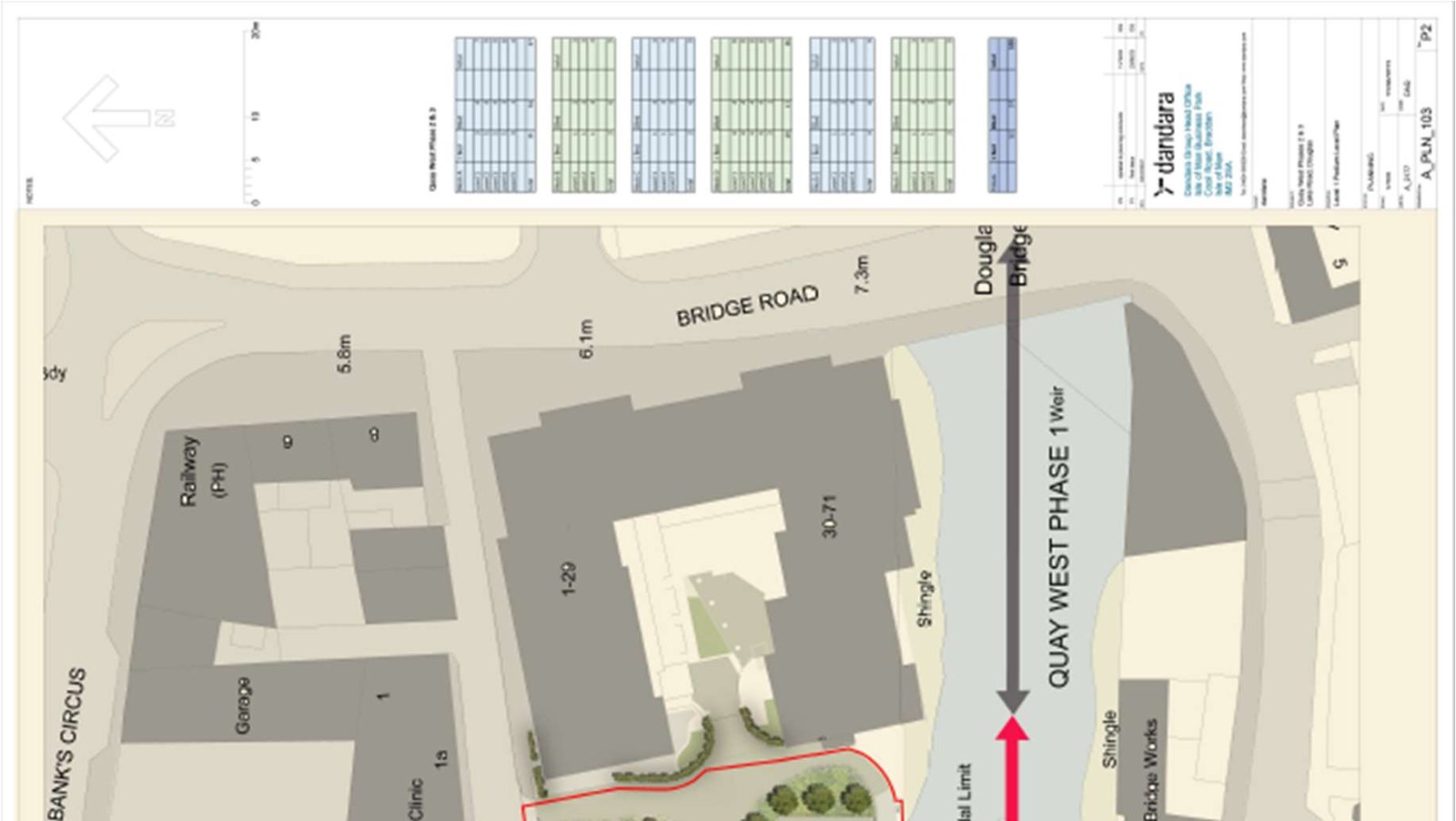
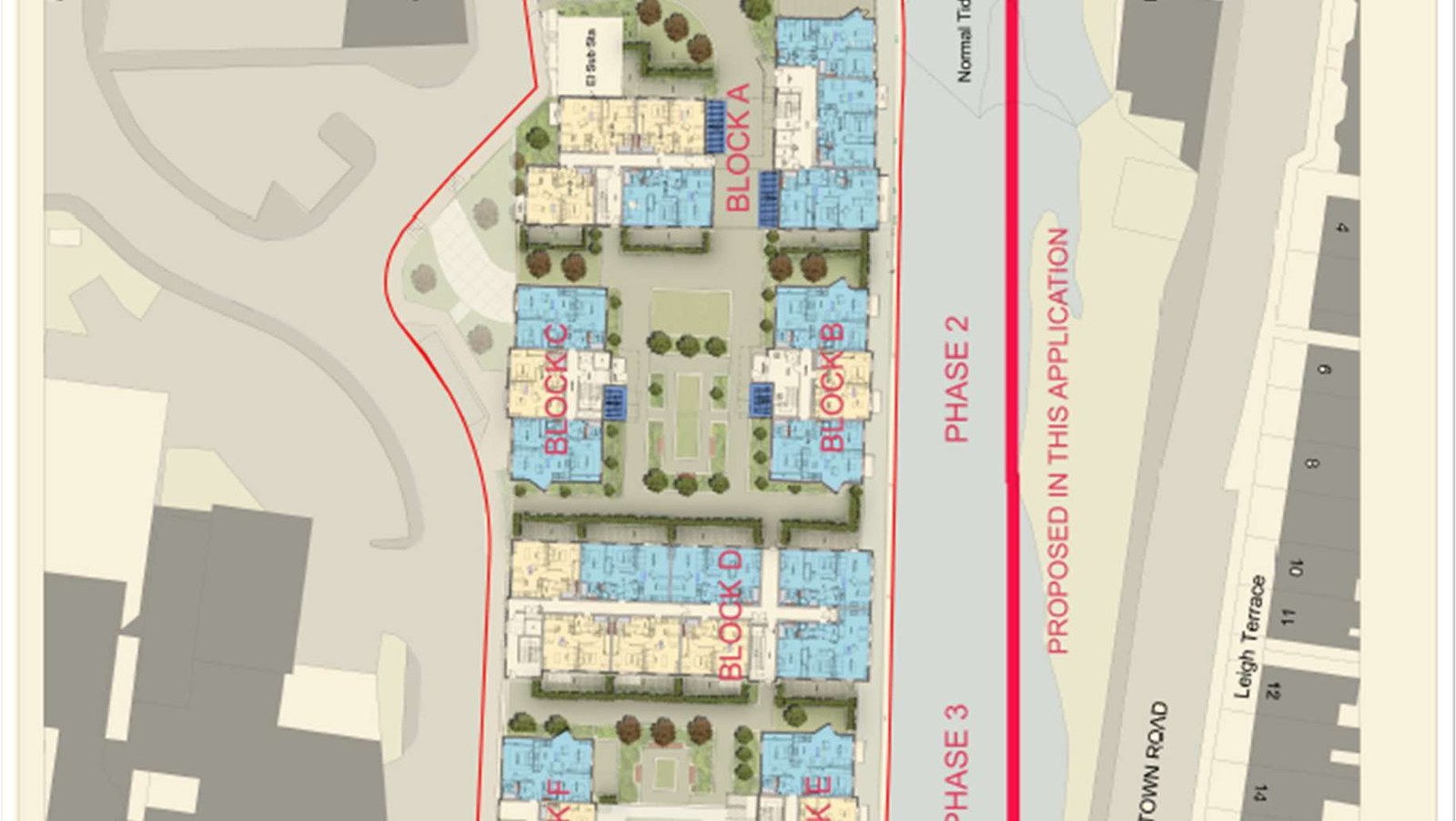
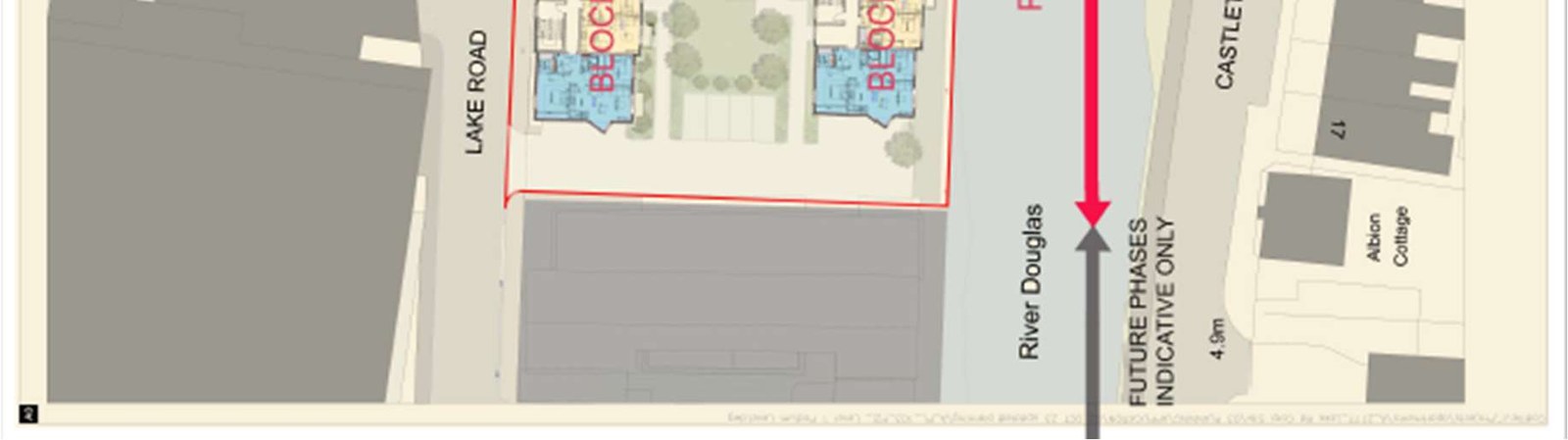
This Site & Construction Environmental Management Plan (CEMP) has been prepared for the development of one hundred and nine apartments on a previously developed site at Lake Road, Douglas. See Appendix A - Site plan as proposed.
The CEMP was formulated using several documents for reference, including:
Construction (Design and Management) Regulations 2003
HSG150 Health and Safety in Construction
BS 5228 Code of Practice for Noise and Vibration Control on Construction and Open Sites
BRE Pollution Control Guide - Controlling Particles, Vapour and Noise Pollution from Construction Sites
BS 5837 (2012) Trees in Relation to Design, Demolition and Construction – Recommendations (not relevant in this instance)
The following points will be addressed in this plan:
Noise
Dust
Vibration
Environment
Waste Management
Vehicle Movement and Site Access
Public Liaison
Security
Compliance
3 The Development
3.1 Development Location
The site is situated on previously developed land between Lake Road and the River Douglas, and immediately to the west of the existing Quay West development. It is currently used as a car park.
3.2 Surrounding Area
The site lies on the southern side of Douglas, with the railway station, bus depot and Tesco store to the north. The Old Castletown Road and the dwellings which front onto it are across the river to the south.
3.3 Development Outline
Permission is being sought for a development of 109 apartments with associated car parking and open space.
3.4 Working Hours
Normal working hours will be:
Monday – Friday 8am – 6pm Saturday 8am – 1pm Sunday and Bank Holidays No work where noise is audible at the site
boundary.
3.5 Site Set Up
The site is currently enclosed by temporary 2.4m solid hoarding and 1.8m high lollipop fencing alongside Lake Road which will remain in place during construction, as will the riverside wall. Where required HERAS security fencing will be erected to separate the site from adjoining land to the west and east for the duration of construction.
4 NOISE
4.1 GENERAL SURROUNDINGS AND NATURAL MITIGATION
We shall aim to minimize the noise nuisance produced by the construction works affecting neighbouring properties and undertake works in compliance with the relative Legislation, Codes of Practice and guidelines on noise control for construction operations.
For example:
There will be no audible works at the site boundary outside of normal business hours.
Adjacent landowners/occupants shall be notified in advance prior to any works or events likely to generate noise outside of normal working hours.
4.2 Machinery
Regular servicing and maintenance of company owned plant and machinery will be undertaken to reduce noise.
Any hired plant or plant provided by subcontractors is required to have service records and maintenance schedules supplied to Site Manager.
Where possible it will be specified that plant and machinery will have any available noise reduction devices fitted.
There will be a drive to reduce generated noise levels by using state of the art plant, equipment and processes.
Suitably trained operatives will use plant and equipment.
4.3 Work Activities
All potentially noisy or disruptive works will be conducted during the normal site working hours.
All works will be conducted in compliance with relevant Health and Safety legislation to ensure that site neighbours and the workforce is suitably protected from high noise levels.
The workforce’s personal radios shall not be played at a volume that is likely to disturb residents.
4.4 Traffic/Deliveries
Vehicles will enter the site via the main access point and will keep generated noise as far away as possible from adjoining properties.
Once inside the site, areas will have been designated for the unloading and manoeuvring of delivery vehicles, negating the need for reversing of vehicles and subsequent auto-initiated reversing audible warning devices.
The speeds of vehicles operating within the construction site shall be restricted to 5 mph which will assist in the reduction of noise.
4.5 Site Set Up
The site will be set up to reduce to the lowest level reasonably practicable for noise stemming from traffic and other construction activities on site. The compound will be situated on the western site of the site and the mixer bays situated at the furthest most point to reduce the noise impact of the mixers.
5 Dust And Vapours
Dust emissions from construction sites can have a detrimental effect on health and the local environment. Particles and vaporous discharges can have an adverse impact on the health of site operatives and residents by affecting particularly the eyes, nose,
mouth, lungs and skin. Dust settlement from windblown dust can influence the cleanliness of the local environment and neighbouring property.
The following control measures will be employed to reduce as far as possible the risks associated with construction site dust.
5.1 General Surroundings And Naturalmitigation
A wheel wash area shall be located before the exit of the site to ensure that all exiting vehicles are necessarily cleaned, and the public highway is kept as clean as possible.
The use of a road sweeper to clean the highway in the vicinity of the site, as and when needed, should any debris inadvertently leave the site.
All waste removal vehicles are to be securely covered and sheeted prior to leaving the site.
Where possible and appropriate, the area(s) of working will be limited so that vehicles are confined within an area that can be subject to appropriate dust control.
5.2 Vehicle Movements
Vehicle movements will be controlled and segregated from pedestrian access within the site.
The vehicles that operate within the site will be kept on clean areas of hard standing and distribute friable materials solely within the site to prevent these materials falling onto the public highway.
The speeds of vehicles operating on the construction site roads shall be restricted to 5 mph which will assist in the prevention of dust creation.
5.3 Wetting Down
Weather reports will be checked daily by the site management, where dry spells are likely to affect the nature of the site appropriate wetting down will take place, thereby effectively controlling ground dust, as necessary.
Particular attention will be paid to construction access and where necessary shall be wetted down to ensure the surface remains compacted to mitigate dust generation.
5.4 Smoke And Fumes
Burning of materials and debris on the site will not be permitted.
5.5 Power Tools
Compulsory use of dust extraction/vacuums/dust suppression will be used on all small hand/power tools.
6 Vibration
6.1 MACHINERY
The tracking of excavators around the site will be kept to a minimum thereby reducing ground vibration levels.
The use of vibratory compaction devices will take into consideration the proximity of surrounding neighbours and will be limited to normal business times.
HAVS to be managed across the project, all small tools/power tools to be assessed for trigger times, operative allocation to be recorded on site.
6.2 SITE TRAFFIC
Vehicle speeds will be controlled to 5mph when travelling on or entering/exiting site, reducing vibrations created by the movement of both empty and full delivery vehicles.
7 Environment
7.1 Contamination Prevention
Only inert material will be imported.
Spill kits will be located around the site and are to be used for unforeseen releases of substances that can contaminate the local watercourses. In the event of an incident occurring spill kits will be immediately deployed in accordance with manufacturer’s recommendations, subsequently contaminated waste will be disposed in accordance with the C.O.S.H.H. assessment for the substances involved, so as not to create further contamination.
Water run-off will be controlled using bunds, sumps and silt traps and will be constructed to prevent any water run-off and contamination of local watercourses. Sumps will be regularly emptied/cleaned and silt traps replaced.
Clean ground water will be pumped off site via a siltbuster and allowed to discharge into the river (as per the construction of QW1).
In the event of a release of a pollutant from the site that requires the use of the spill kits DEFA EPU Officers will be contacted on 01624 685885 and asked to attend in order to inspect the receiving watercourse and to ensure sufficient equipment has been deployed to contain and protect the environment.
Site fuel bowsers will be of the double skinned bunded type with the bund able to contain 110% of the bowsers capacity.
Refuelling of plant will take place away from any watercourses.
Concrete overspill will be allowed to harden prior to disposing off site to a recycling facility.
Concrete wagons and plant to be washed out into suitable containment receptacles to prevent contaminated water entering the water course.
7.2 Storage Of Oils And Chemicals
To prevent any spillages onto open ground any oils, chemicals or fuels that are to be stored on the site shall be in kept in suitable containers and in locked storage areas appropriate to the substance concerned, with warning signage as appropriate.
Site fuel bowsers will be of the double skinned bunded type with the bund able to contain 110% of the bowsers capacity.
7.3 Existing Services
During our due diligence investigations we have obtained all the existing surrounding services location information. Surface water gullies that discharge into the river will be blocked off to prevent any flow of contaminants into the river. Existing foul drainage will be sealed at the site boundary.
7.4 Precautionary Working Methods
(ECOLOGY)
The site is previously developed land with a hard surface, and habitat potential is likely to be limited to the riverside wall and adjoining vegetation. Any Development will be undertaken in accordance with the Precautionary Working Methods Statement attached at Appendix B (where relevant in this instance).
7.5 Construction Methods (To Protectwatercourse)
General;
The proposed apartment development consists of a load bearing masonry superstructure with reinforced concrete composite floors with trapezoidal metal decking.
The roof consists of either a traditional slate or a lightweight zinc type covering both supported on steel galvanised “Z” purlins spanning between structural steelwork frames.
The ground floor podium will consist of a reinforced concrete flat slab construction, supported internally by concrete columns.
The substructure will consist of a reinforced concrete undercroft suspended slab, supported on an arrangement of ground beams spanning between pile caps.
The piles will be continuous flight auger end bearing bored piles taken down onto the slate.
Sequence of Works;
The following sequence of works is to be adhered to ensure that the water carrying capacity and ecology of the river are not affected.
Working inside the river wall concrete continuous flight auger piles are to be installed working from existing ground floor level.
A scaffold will be erected on the outside of the south elevation, as construction progresses, built up off the cycleway slab.
The above exterior cantilever scaffold will be (a) fully sheeted and sealed vertically and (b) sealed horizontally above the water to prevent debris or dust entering the water course.
The works and site will be continuously monitored to ensure adequate arrangements, procedures and facilities are in place for environmental protection purposes.
Site visits will be arranged with DEFA Fisheries and/or DEFA EPU for monitoring purposes.
7.6 Existing Ground Contamination
All arising from the piling operation and any excavated material will be classified using the Waste Acceptance Criteria (WAC) testing process. The material will be classified as non-hazardous or hazardous waste and will then be either re-used on site (where appropriate) or disposed of at a suitable landfill site.
8 Waste Management
8.1 General
A hierarchy of waste disposal will be employed whereby waste materials will firstly be reused on site, or on another Dandara Homes site, and if not then recycled or disposed of. Where waste is to be disposed of and depending on the waste type it will be firstly offered for incineration at the Energy from Waste Plant and as a last resort sent for landfill.
8.2 Site Generated Waste
Regular site checks will be undertaken to ensure that general waste, including plastics, is collected and disposed of appropriately.
All waste generated on site will be placed in the appropriate receptacles for removal from site to the Dandara Homes Compound where it will be segregated into specific waste streams and recycled, reused, or disposed of accordingly.
All waste removed from site in open receptacles will be sheeted or netted down to prevent windblown debris.
Waste masonry products will be crushed and reused on site.
9 Vehicle Movements, Site Accessand Construction Workers’Travel Plan
9.1 SITE ACCESS
Vehicles are not permitted to enter the site outside the hours of 7.30 am to 6.00pm Monday to Friday and 7.30 am to 1.00pm on Saturdays, unless otherwise agreed with the Local Environmental Health Officer.
9.2 WORKFORCE TRAVEL
Operatives will be encouraged to car share, use public transport and where practical cycle to work.
The Isle of Man Government ‘Cycle to Work’ scheme will be actively encouraged for all Dandara Homes employees, thereby reducing the impact of vehicular movements to and from the site.
9.3 VEHICLE MOVEMENTS
Deliveries to site by Dandara Homes delivery vehicles will be co-ordinated to the extent that the correct vehicle is used for a specific load, the full capacity of the vehicle is used and that large vehicles are not used for small loads. Where only small loads that do not make full use of the capacity of the delivery vehicle are used, then they are to be delivered by a vehicle making multiple deliveries to other locations, thereby using the full capacity of the vehicle.
Regular servicing and maintenance of company owned delivery vehicles will be undertaken to maintain efficiency and minimise the effect on the environment.
10 Public Liaison
Prior to starting, a newsletter will be distributed to the surrounding residents to keep them informed of the works. It will contain details of the site contacts, working hours and contact details both during work time and out of hours in order that neighbours may have a point of contact for information and/or complaints.
Every effort will be made to minimise disruption to the neighbouring residents, however, it is inevitable that those in the surrounding area will be caused a degree of disruption during construction works. In this case every effort will be made to engage with the neighbouring residents and inform them of activities that may cause a disruption.
Dandara Homes operate a “Good Neighbour Policy,”
Should we consider that any site operations require specific notification to surrounding residents a Good Neighbour Policy letter shall be distributed.
11 Security
The site will be secured using the existing boarding and temporary lollipop fencing, and additional Heras fencing where required. As the site build progresses the use of permanent ‘Lollipop’ fencing may be employed.
The entrance gate will be 6m wide and 2.5m high metal security gate.
Gates will be chained and padlocked at the end of each day.
Any potential points of unauthorised access will be fenced off prior to commencement.
Use of Kelios system to manage site access/egress, and reduce risk of public trespassing.
12 Compliance
Monitoring for compliance with the CEMP will be undertaken on a daily basis by the Site Manager, who will be responsible in the first instance for undertaking remedial action as soon as possible. Any wider issues will be reported to the Health & Safety and Labour Manager, and where appropriate to the Contracts Manager, who will ensure that corrective action is undertaken as soon as is safely and practically possible. Corrective action may require the involvement of other qualified persons, for example an ecologist, as outlined in this CEMP.
13 Appendicies
A site location plan showing the proposed development area outlined in red near Quay West Phase 1 Weir, surrounded by existing buildings and Bridge Road.A detailed site plan illustrating a large residential development with multiple apartment blocks labeled A through F, green spaces, and phase divisions.A site plan showing a proposed residential development site adjacent to Lake Road and the River Douglas, highlighting the boundary and future phases.
APPENDIX A – SITE PLAN AS PROPOSED
APPENDIX B – PRECAUTIONARY WORKING METHODSPrecautionary Working Methods (Ecology)
1. Legal Context Bats, Common Lizard, Common Frog
1.1 Horseshoe bat (all species) Rhinolophidae and typical bats (all species) Vespertilionidae, Common Lizard (Zootoca vivipara) and Common Frog (Rana temporaria) are all protected under Schedule 5 of the Isle of Man Wildlife Act 1990 (as amended).
1.2 As such, a person is deemed to have committed an offence if he or she:
damages or destroys, or obstructs access to, any structure or place which any wild animal included in Schedule 5 uses for shelter or protection; or disturbs any such animal while it is occupying a structure or place which it uses for that purpose.
Birds
1.3 Wild birds are afforded protection under the Isle of Man Wildlife Act 1990 (as amended). An offence is deemed to have been committed if:
any person intentionally or recklessly — (a) kills, injures or takes any wild bird; (b) takes, damages or destroys the nest of any wild bird while that nest is in use or being built; or (c) takes or destroys an egg of any wild bird.
1.4 In addition, species listed on Schedule 1 of the act makes it an offence to:
intentionally or recklessly — (a) disturbs any wild bird included in Schedule 1 while it is building a nest or is in, on or near a nest containing eggs or young; or (b) disturbs any nest or egg of such a bird; or (c) disturbs dependent young of such a bird.
Schedule 8 invasive alien plants
1.5 Certain plant species are listed on Schedule 8 of the Wildlife Act due to the threat of invasive spread into native habitats. It is an offence:
if any person plants or otherwise causes to grow in the wild any plant which is included in Part II of Schedule 8, he shall be guilty of an offence.
2. Habitats Riverside Wall & Vegetation
2.1 Any necessary works to or part removal of the riverside wall or river bank vegetation should be undertaken outside of the nesting bird season unless the works have been approved by a qualified ecologist following an on-site check.
2.2 Prior to any necessary works to or part removal of the riverside wall checks for potential bat roosts in gaps should be undertaken (i.e. visual checks with a torch, with any deeper gaps to be checked by an ecologist.
2.3 Prior to any works taking place to the riverside wall or vegetation DEFA EPU and Fisheries Division should be consulted to establish a permitted period for working in the river, or when special dispensation will be required from the Inland Fisheries Team to allow works outside the permitted period. Works will be undertaken in accordance with any agreed construction method statement. Watercourses
2.4 Care must be taken to ensure no contaminants or sediment load enter any existing watercourses.
2.5 Prior to construction and enabling works, site drainage, watercourses and groundwater source protection zones must be identified and protected from all sources of pollution, including sediment, construction materials, chemicals and oils.
Protection may include cut-off ditches, earth bunds, straw bales or similar.
Protection measures must remove any sediment and other contaminants from water that will eventually enter a watercourse.
2.6 DEFA Environmental Protection Unit (EPU) and Fisheries Division should be consulted before construction commences so that the drainage and sediment control measures can be checked.
2.7 Prior to any works taking place within the river DEFA EPU and Fisheries Division should be consulted to establish a permitted period for working in the river, or when special dispensation will be required from the Inland Fisheries Team to allow works outside the permitted period. Works will be undertaken in accordance with any agreed construction method statement.
2.8 Regular checks must be made to the watercourse during construction and after heavy rainfall to check for river contamination issues, including high sediment levels, dead fish, oils etc.
2.9 Arrangements should be in place for the washing of equipment, e.g. cement and concrete, so ensure that these contaminants do not enter watercourses and are instead disposed of in accordance with best practice guidelines. All operatives must be aware of and comply with these arrangements.
2.10 Pollution prevention measures must be in place under any items where there is a risk of spillage or leaks.
2.11 Spill kits must be available and must be appropriate to the risk of spillage on site. All operatives must be trained in how to use them.
2.12 Arrangements must be made for the safe disposal of hazardous waste, including anything resulting from spills.
2.13 DEFA Inland Fisheries and DEFA EPU must be notified immediately if any incidents occur so that a site visit can be undertaken, e.g. high sedimentation within the watercourse, dead fish etc.
2.14 Any incident or unforeseen problems leading to watercourse contamination must be dealt with immediately, e.g. additional sediment control measures, use of spill kits etc.
2.15 Temporary construction lighting should be located and angled so as to be focused only upon working areas and to avoid unnecessary illumination of the watercourse.
3. Species Bats
3.1 Prior to any necessary works to or part removal of the riverside wall checks for potential bat roosts in gaps should be undertaken (i.e. visual checks with a torch, with any deeper gaps to be checked by an ecologist. Should bats be found advice should be sought from an ecologist and DEFA should be advised (a licence may be required). Birds
3.2 Any works to the riverside wall or river bank vegetation must be done outside the bird nesting season, which extends from 1st February to 31st August. If this is not possible, scrub and trees must first be checked by a suitably experienced ecologist prior to removal / cutting. Checks must be done no more than five days prior to the work being undertaken.
3.3 If any birds are found to be nesting, works will need to be delayed until any young have fledged.
3.4 If any evidence of nesting birds is found work should stop immediately until checks have been made by an ecologist. As well as stopping work, the ecologist should advise on safe working distances to avoid disturbance, or requirements for temporary construction exclusion areas if required. Schedule 8 Species
3.5 Prior to demolition of the river wall or removal of the riverside vegetation checks for Schedule 8 invasive plant species will be undertaken. During the works, if any plant is found which is suspected of being rare and protected or invasive and non-native, work must be temporarily suspended and advice sought from an ecologist.
4. Contacts
4.1 Details for organisations or persons who may need to be contacted should any of the circumstances outlined above arise; DEFA EPU – 01624 685885 DEFA Fisheries – 01624 685857 DEFA Eco Policy Team – 01624 651577 The Ecologist engaged to advise Dandara on site - TBC A copy of this CEMP will be kept in the site compound at all times throughout the work.
Copyright in submitted documents remains with their authors. Request removal
Source & Provenance
Official reference
24/00310/B
Source authority
Isle of Man Government Planning & Building Control