Loading document...
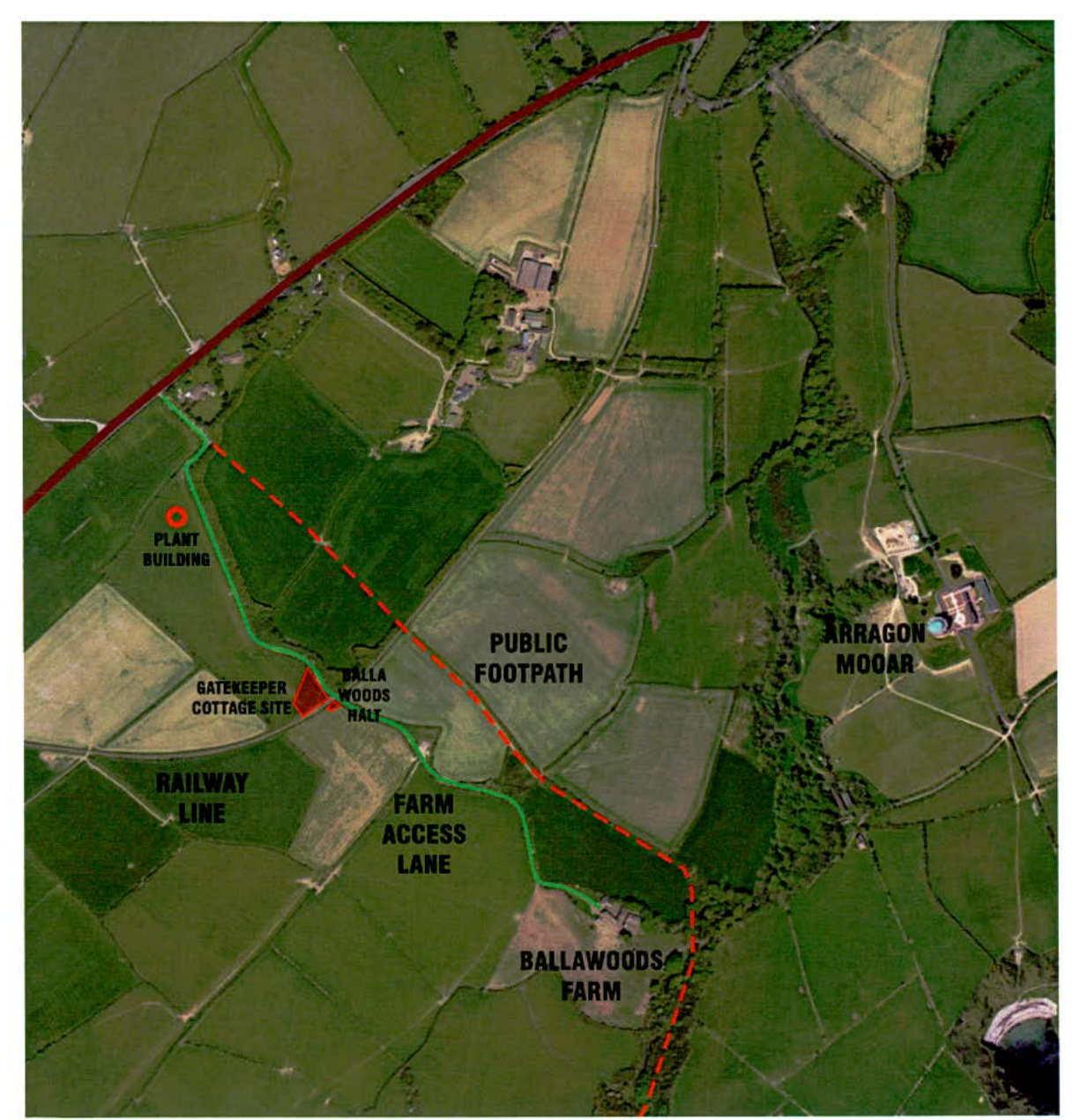
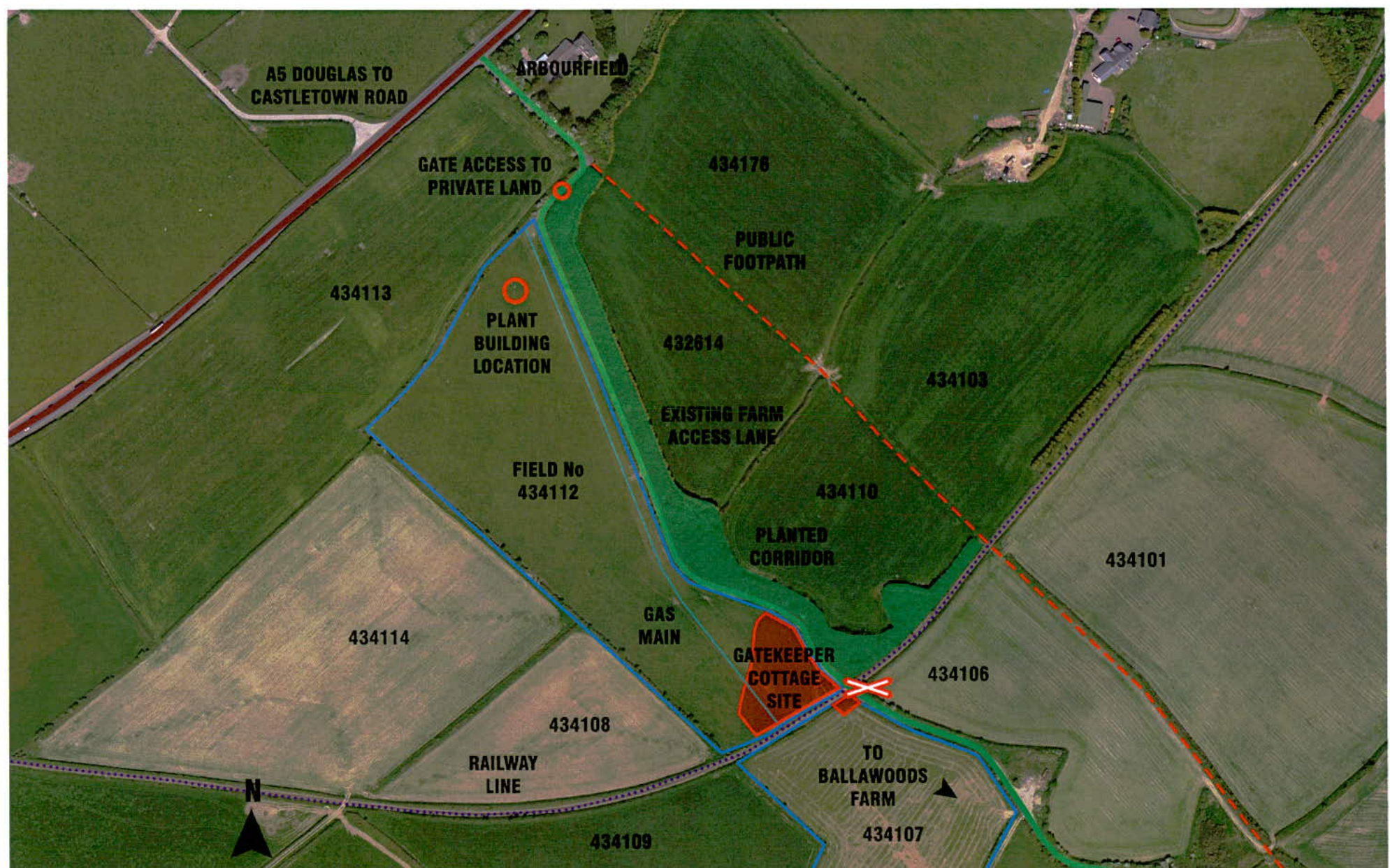
Following, is a statement in support of an application which seeks full, detailed planning approval to construct a Plant & equipment building directly over an existing groundwater bore hole installed to serve the previously approved (PA 17 01076/B) 'Gatekeeper Cottage', Ballawoods Halt railway crossing, Ballasalla.
The proposal seeks to provide a pump/plant room over the borehole head, to supply the approved Gatekeepers Cottage, with its own water supply. The building proposed is to be located to the north of the approved dwelling in the top part of field 434112 indicated adjacent.
The applicant and landowner, Dr John C Taylor OBE of Arragon Mooar has owned the application site for approximately 20 years and has commenced the construction of the Gatekeeper Cottage.
The land in Dr Taylor's ownership amounts to approximately 110 acres and incorporates Arragon Mooar Estate, Ballawoods Farm and Gatekeeper Cottage.
The bore hole was installed approximately 2 years ago and extends to 160m deep in a 60mm bore pipe. Planning permission was not sought for such and due to its direct association with the proposed building, this element is submitted as part of this application as a partial retrospective planning application.
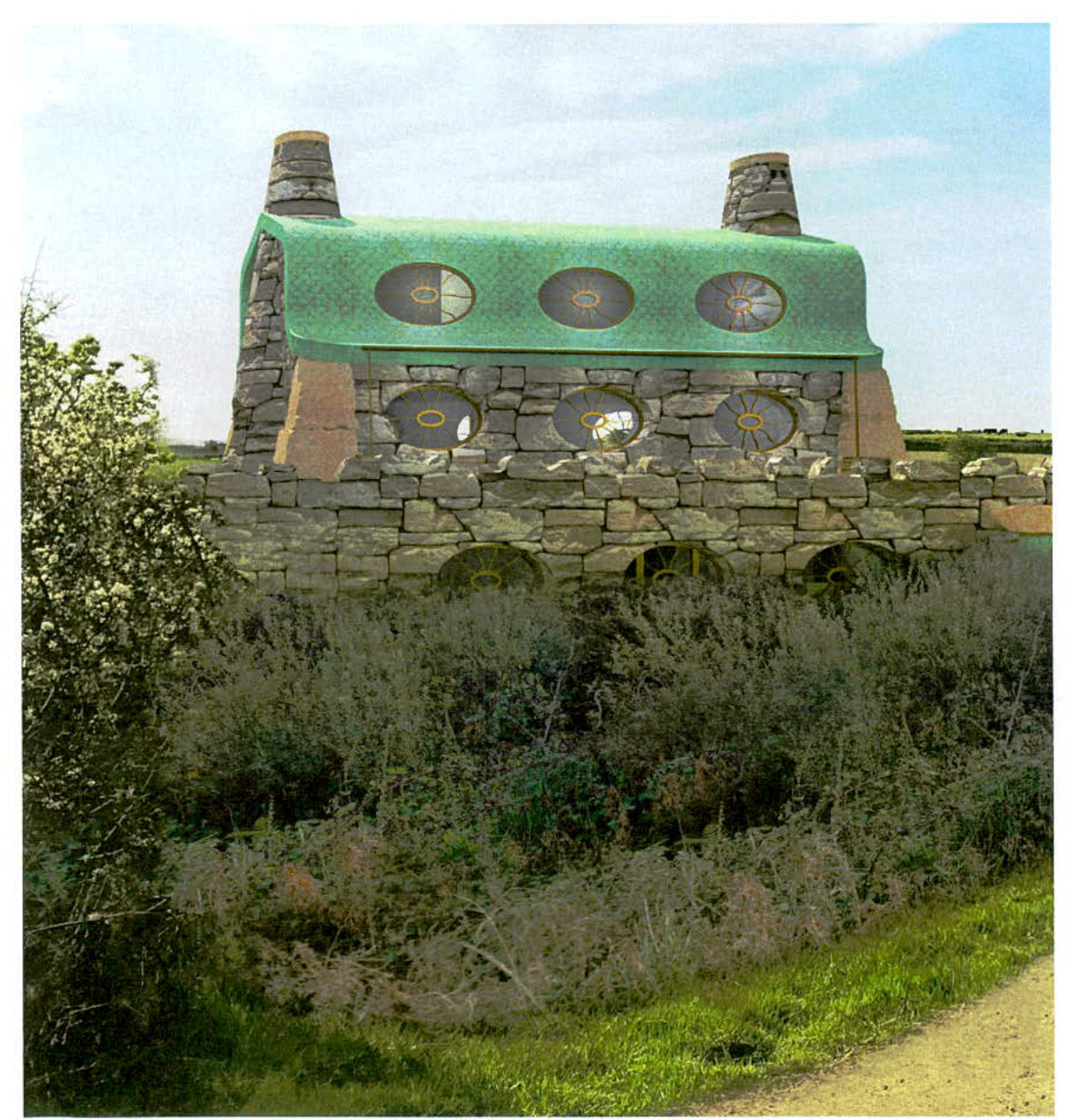
The approved Gatekeepers Cottage will utilise the most up to date sustainable technology to efficiently operate as a house hold without the need or reliance upon direct energy supplies being brought in.
Gatekeepers Cottage's independence from the grid would be further reinforced by its use of the borehole water to not only serve the dwelling with a fresh, clean and reliable water supply but also to effectively irrigate and sustain the important and extensive planting schemes associated with the approved dwelling and its surroundings.
In an agricultural environment such as this, identified by hedge lined fields, a stand alone building could easily appear incongruous within a countryside environment, and therefore any building or structure must be carefully considered and designed so as not to impact detrimentally upon its surroundings.
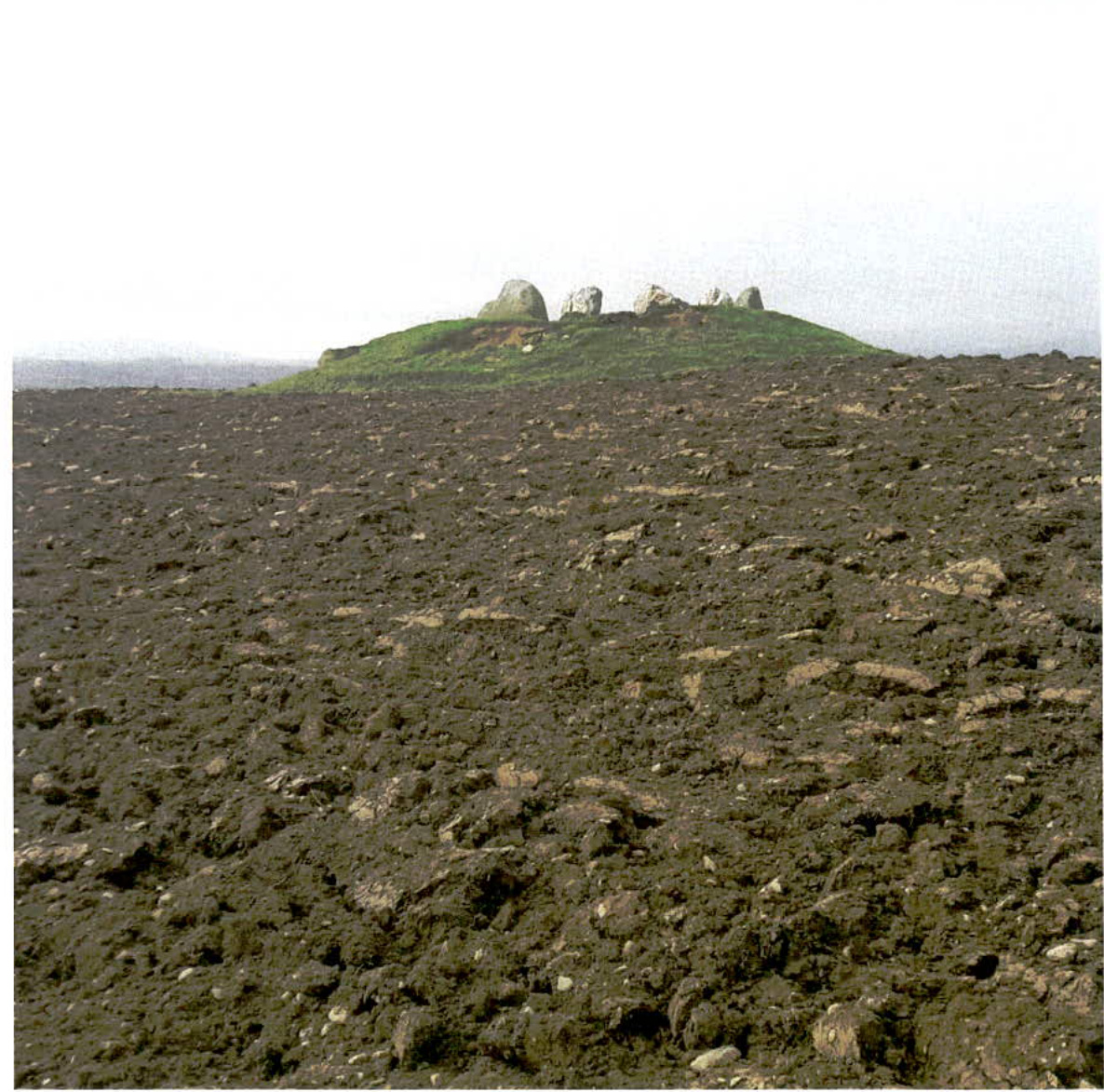
By researching the surrounding area it was decided the best way to allow the structure to sit comfortably in the landscape would be to utilise the appearance of a neolithic megalith burial mound or 'Cairn'.
It is felt that the appearance of a historic element in the countryside would be viewed as just that, something associated with the land by the passage of time. The building would be well screened from the main carriageway hedge and across the adjacent field but would still have a visual impact.
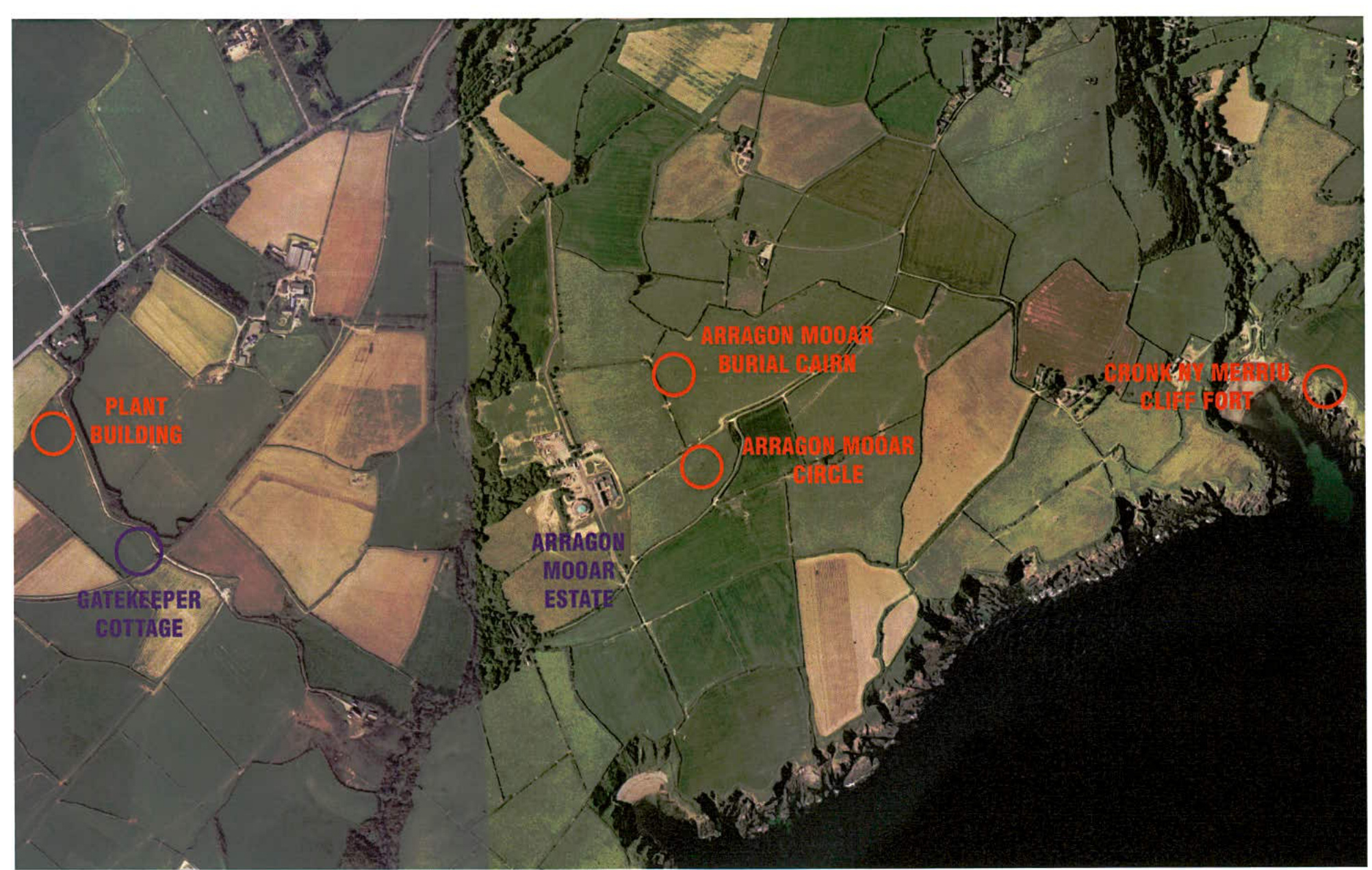
There are several neolithic sites on the Isle of Man, mostly situated in the south of the Island, often within agricultural field boundaries and as indicated there are a number within the immediate vicinity of the proposal. These monuments are characterised by a built up mound of earth, generally located upon higher ground (as in our case towards the top of field 434112 - the higher area topographically). They are surrounded typically by large monolithic stones placed to form a stone circle.
Arragon Mooar Estate, owned by the applicant Dr John C Taylor OBE contains two of these sites, Arragon Mooar burial Cairn and Arragon Mooar stone circle. Cronk Ny Merriu cliff fort is also located nearby at Port Grenaugh.
Left: Arragon Mooar Circle
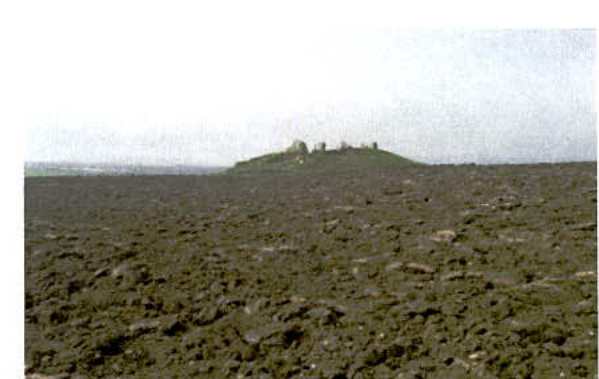
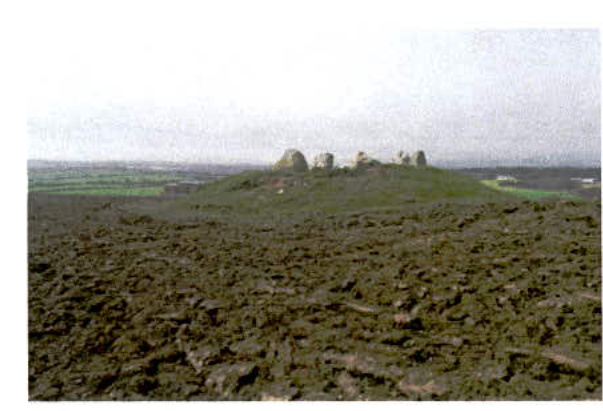
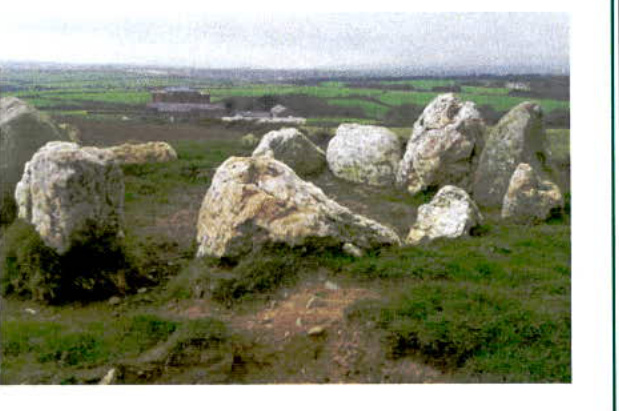
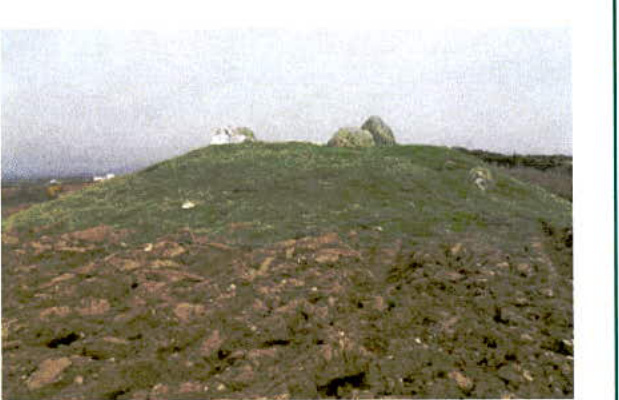
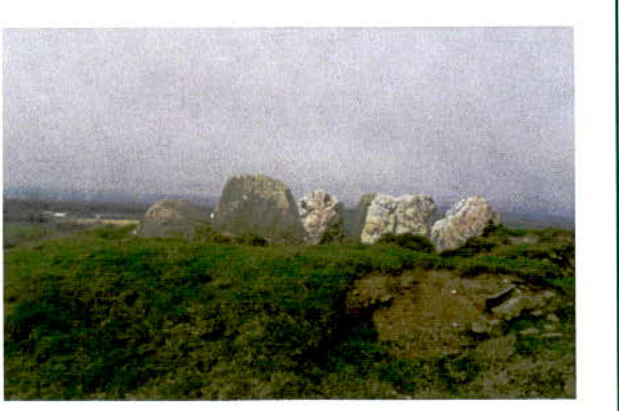
To the east of Arragon Mooar Estate are two neolithic monuments, thought to be from the Bronze age period.
Arragon Mooar Burial Cairn is a small burial mound, formed by a mound of earth with a scattering of quartz boulders.
Arragon Mooar Circle is slightly to the south of the Burial Cairn, affording it a much better position looking out over the Irish Sea. This suggests a more important person may have been buried here.
This larger Cairn, formed again by mounding up earth but here the earth mound is over 1.5 metres higher than the surrounding ground. The circle is approximately 14 metres in diameter with a circle of large quartz monoliths 6 metres across.
The proposed Plant building is designed to these principles, with the top stone circle being between 6-8m across and the mound of earth between 14-20m across.
Left: Images showing Arragon Mooar Circle.
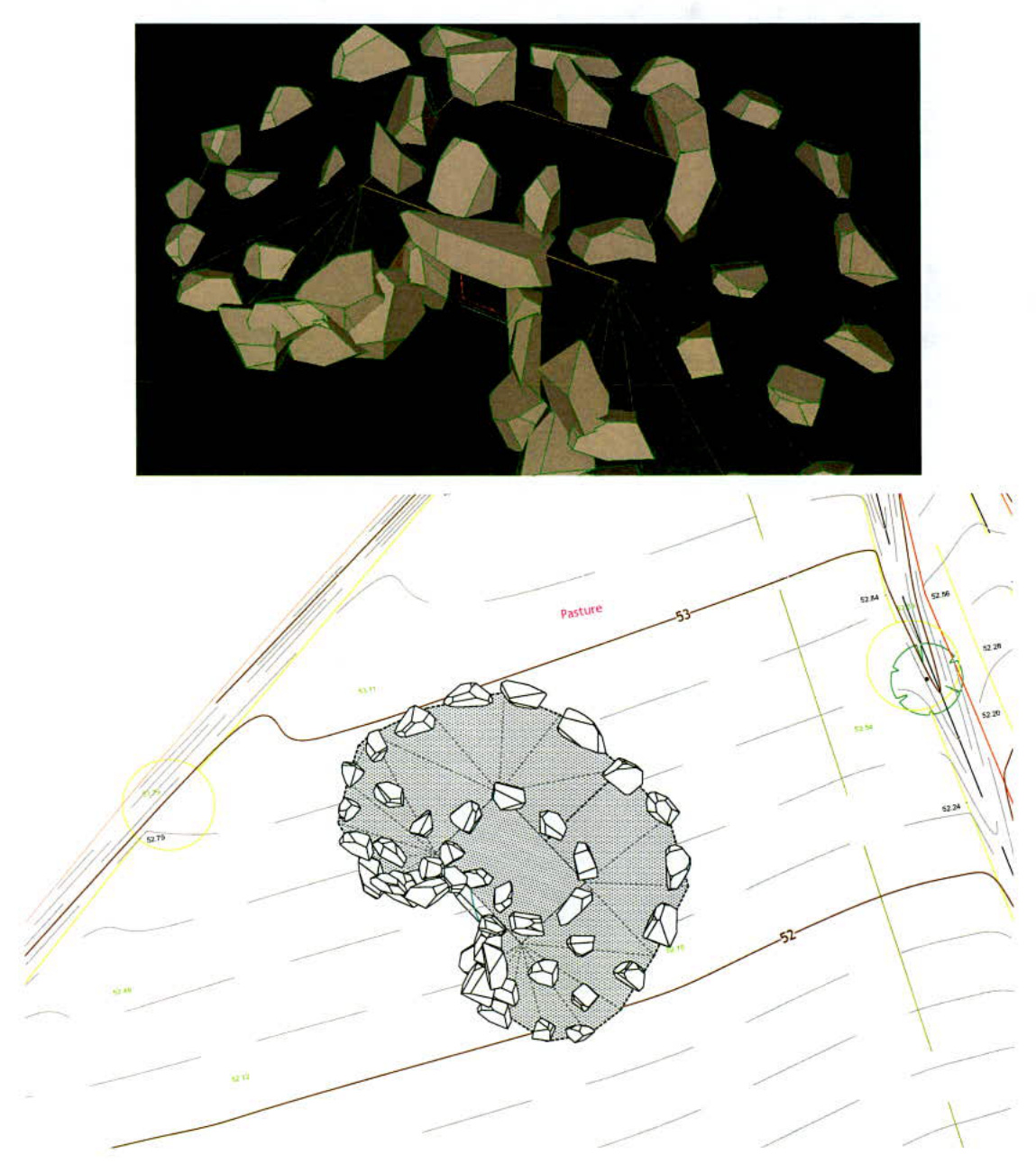
The proposal lends key design elements from the Arragon Mooar Circle; Building to be covered by a large mound of earth, grassed over in a prominent location of the field. A circle of monolithic boulders form a 'crown' on the top of the mound. The stone circle is roughly sized so that of the nearby Cairns as is the overall mound size.
By facing the doorway into the field away from the lane and public highway one field away would mean that the building will look like a Cairn to passers by, not revealing it as a building.
The doorway would be inset, doors painted black with a large lintel monolith set over.
The stone to be used would be Stoney Mountain Granite arranged in such a way to look like a Bronze Age Cairn.
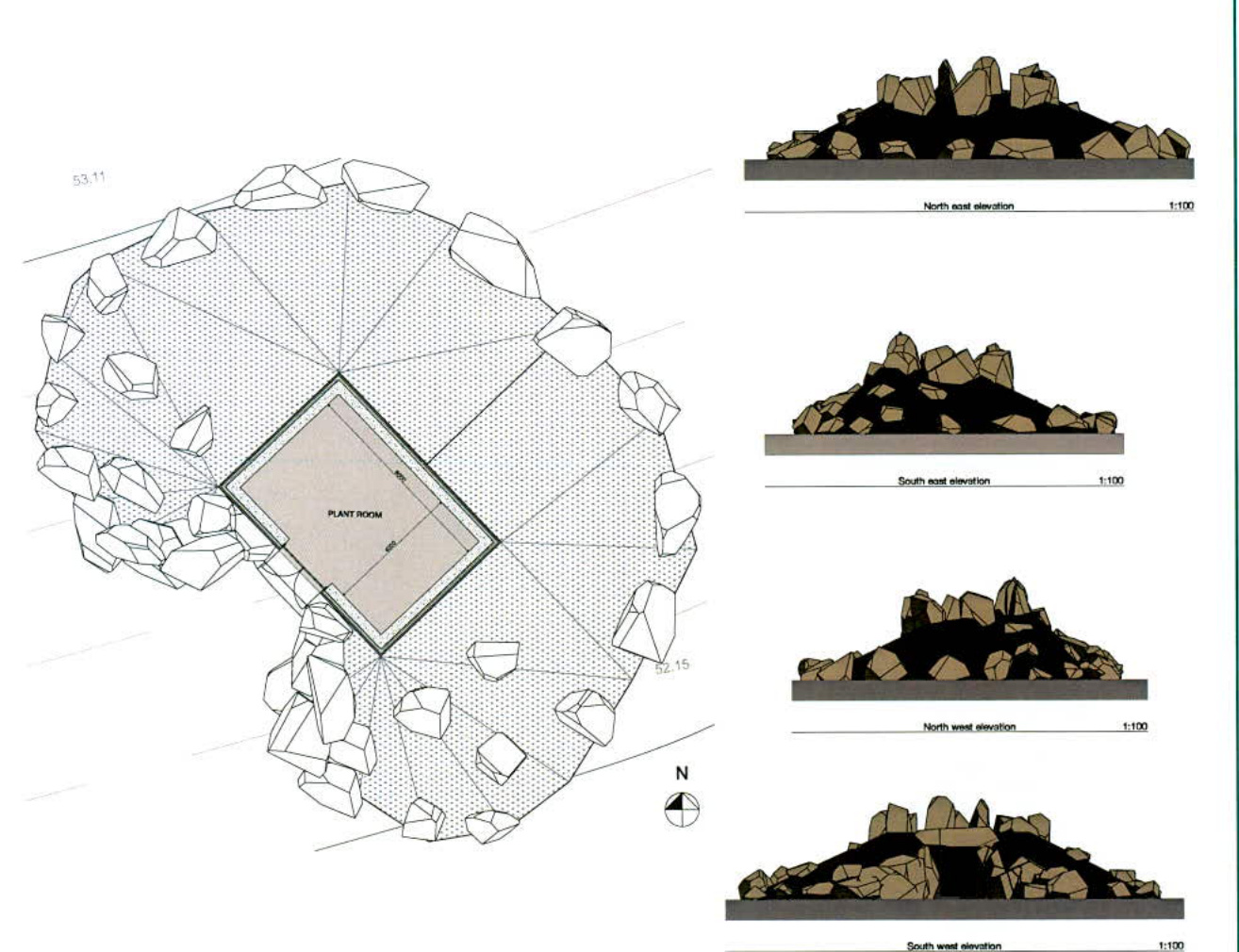
The building itself would be constructed from a cast in situ concrete raft with 300 mm thick walls tanked and insulated externally, then buried over with the existing clay subsoil and topped off with a selected soil suitable for field grass.
The grass around the mound would be left to grow naturally and not be cut or ploughed like the rest of the field. The boulders and monoliths would be sourced from stoney mountain quarry and mounted as a crown to the top, as a defined base and then sporadically in between.
These stones, would be an introduction to the larger monoliths and large stone associated directly with the approved Cottage further down the lane but within view of the Cairn. This, alongside the use of sporadically placed stoney mountain quarry stones and boulders, in the access lane hedges, would suggest the use of naturally occurring stone material.
A water storage tank for the treated water storage would be situated immediately adjacent to the concrete structure below the ground before falling by gravity down to the Cottage irrigating on the way the grassed and planted road edges and hedges.
The building would contain the pump unit to draw the water, a filtration and ultra violet treatment units resulting in fresh consumable water to supply the Cottage and its grounds. Once installed, and after construction is completed no access road will be required to this building.
Copyright in submitted documents remains with their authors. Request removal
