Loading document...
02.2 DESCRIPTION • BACKGROUND + NEED
elevations. The current parapet wall completely obscures the roof from general view.
Bishopscourt is a large property and, as a private home with a rich history, one of the most prestigious on the Isle of Man. It has fallen into disrepair on a number of occasions over its history and whilst in private ownership has undergone redecoration, refurbishment and has been entirely re-roofed using a mix of new and reclaimed slates.
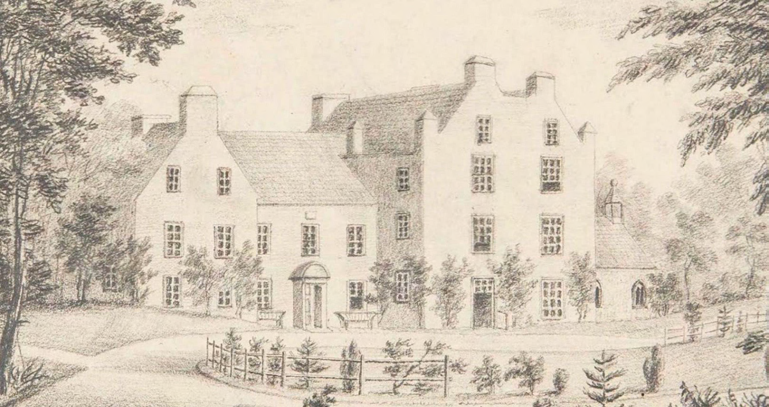
The earliest sketches of Bishopscourt, 1800s copies of Daniel King's 1643-8 drawings also indicate a double-piled roof (13).
02.2.2 HALL ROOF
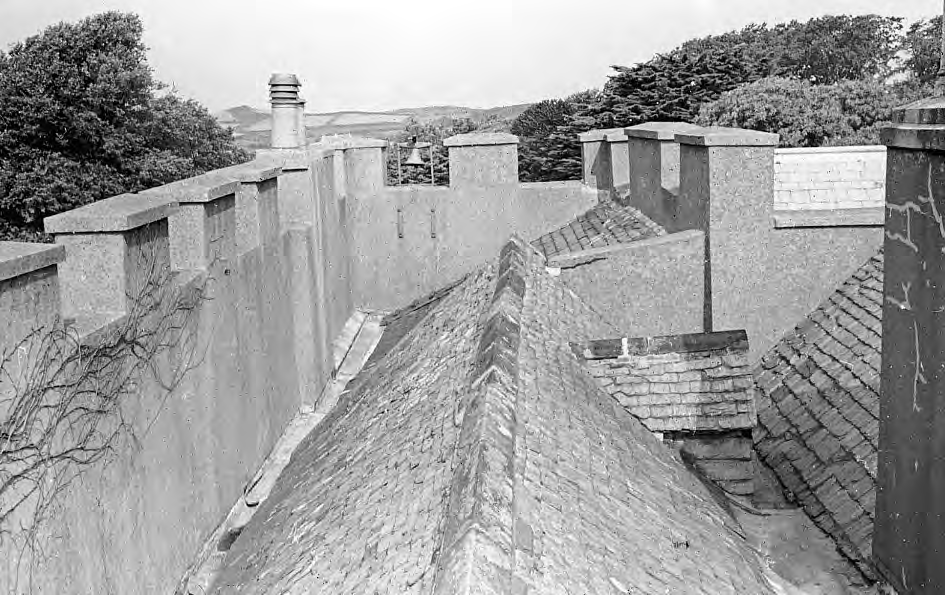
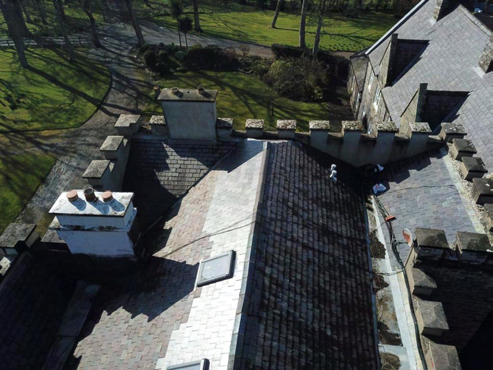
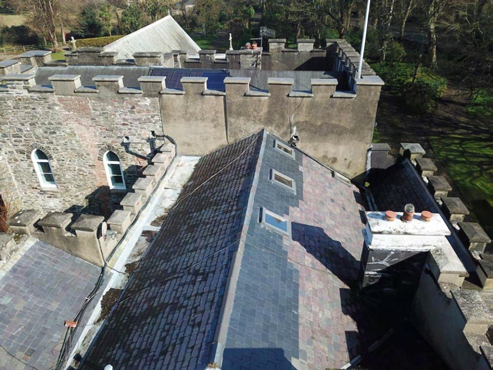
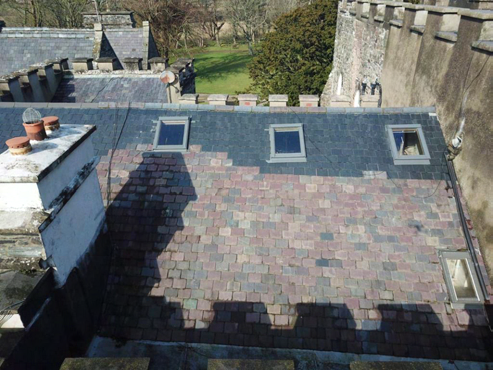
The Hall roof is, similarly, almost completely obscured from view, only the ridge and small areas of slate can be seen between the battlements.
The character and form of the roofs across the different sections of the building varies from one to the next. The Chapel roof is characterised by its Westmoreland Green slates, the steep pitch and the multi-faceted hip over the Chapel's apse. The West Wing is a double-banked roof with a steep pitch and parapets at each end. The Tower and Hall roofs are characterised by a generally more shallow pitch and high crenellated parapet walls.
This roof is a complex form, meeting the perimeter of the floor plan and requirements of the crenellated parapet (08-10). It is reasonable to presume that this roof was significantly replaced following the fire of 1893. The final adjustments to the layout of the external walls in this section of the house (and, therefore, the roof format) seem to date from the nineteenth century, the work of Bishops Murray (1814) and Powys (1858).
A condition survey by Steven Morley Chartered Surveyors has identified that the current roof coverings are at the end of their life and the applicant has made the decision to replace all of the roof coverings along with undertaking any repairs that it becomes apparent are required during these works; levels of thermal performance will be improved where practicable.
The main section of the roof is a double pitch c.29º, there is a small hip to the western end along with small sections of monopitch roof on the sections of the north and south edges where the plan steps out.
A recent bat survey has identified the presence of roosting bats in a number of the roofs; this application addresses only those areas not affected. Negotiations between this project's project manager & DEFA officers continue regarding the other areas. It has been identified that the Tower roof is a relatively recent construction and this is to be replaced with a construction better reflecting the previous, more traditional, construction.
02.3 DESCRIPTION • EXISTING FORM + MATERIALS
Bishopscourt is a Manx stone building with modern traditional timber framed windows and slate roofs. The roofs are pitched and, in the Tower and Hall, concealed behind tall crenellated parapets. The parapet copings are generally modern concrete copings.
Photographs from the 1940s indicate that the entire Tower has previously been rendered (22). Older sketches, drawings and postcards appear to indicate that the Hall may also have been rendered in the past; this is supported by a photograph from the early 20th century (18). The Chapel is, as built, unfinished stonework and it is reasonable to presume the same for the, roughly contemporary, West Wing.
02.2.1 TOWER ROOF
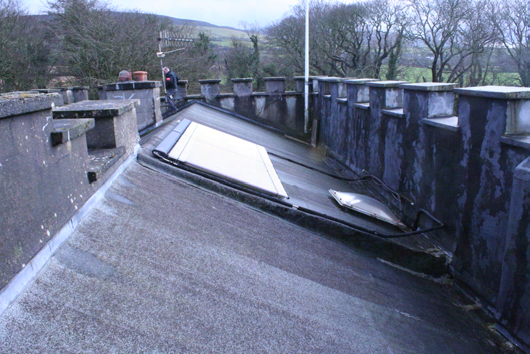
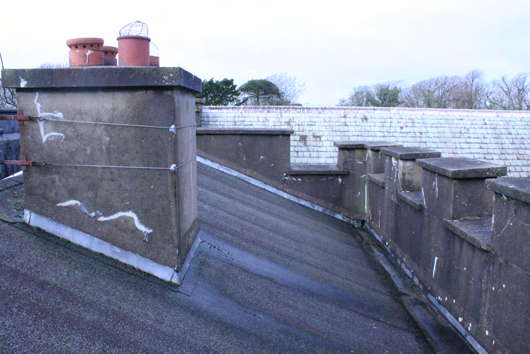
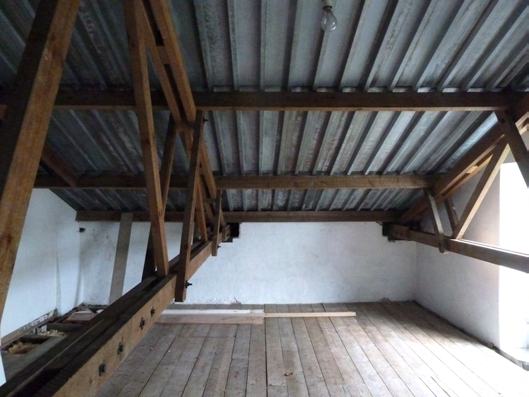
The roof over the tower is a relatively recent replacement. The modern construction is a shallow pitch metal deck on timber trusses with a bituminous felt waterproofing layer (05/ 06/ 07).
Evidence in an iMuseum photograph dating from 1953 confirms that the earlier roof was a double-banked slate roof with a small dormer and central valley gutter (11).
Areas of the Tower, the wall adjoining the Hall, the majority of the crenellations, the inside faces of the parapet walls and the ground floor bay window adjacent to the chapel remain rendered. Similarly, the inside face of the parapet walls and areas of chimney stacks and crenellations remain rendered on the Hall section.
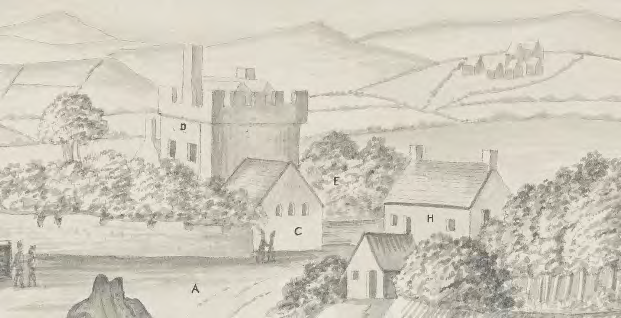
A set of planning application drawings dating from 1957 (14-16) confirms this form, further supported by a sketch from the Crigan sketch book (thought to be a sketch copy of a lithograph dating from 1813) where the Tower and Hall sections can be seen without the crenellated parapet walls, allowing the form of the roof to be more clearly seen (12). Note that the profile of the eaves can still be seen in the stonework on the Tower
The Tower roof structure and covering is relatively modern, as described above; the Hall roof covering is thought to date from the 1980s; an unappealing mixture of new and reclaimed slate.
ISSUE 06/04/2021
©
Planning statement NTS @ A3
a r c h i t e c t s + d e s i g n e r s
Copyright in submitted documents remains with their authors. Request removal
