Loading document...
cx
Castle Mona Hotel, Central Promenade, Douglas Registered Building 82 Douglas Promenades Conservation Area Application for full Planning Approval Application for Registered Building Consent Tevir Developments Ltd • Applicant Horncastle Thomas Ltd • Agent
This application seeks approval to provide a temporary protective rainscreen to the upper floor areas exposed by the previously approved demolition of the NW hotel room and bowling alley wing along with the temporary blocking up of other window and door openings at the lower levels in this location and other ground floor locations.
Current approvals allow for a temporary timber frame screen clad in painted plywood as protection to openings revealed following demolition works.
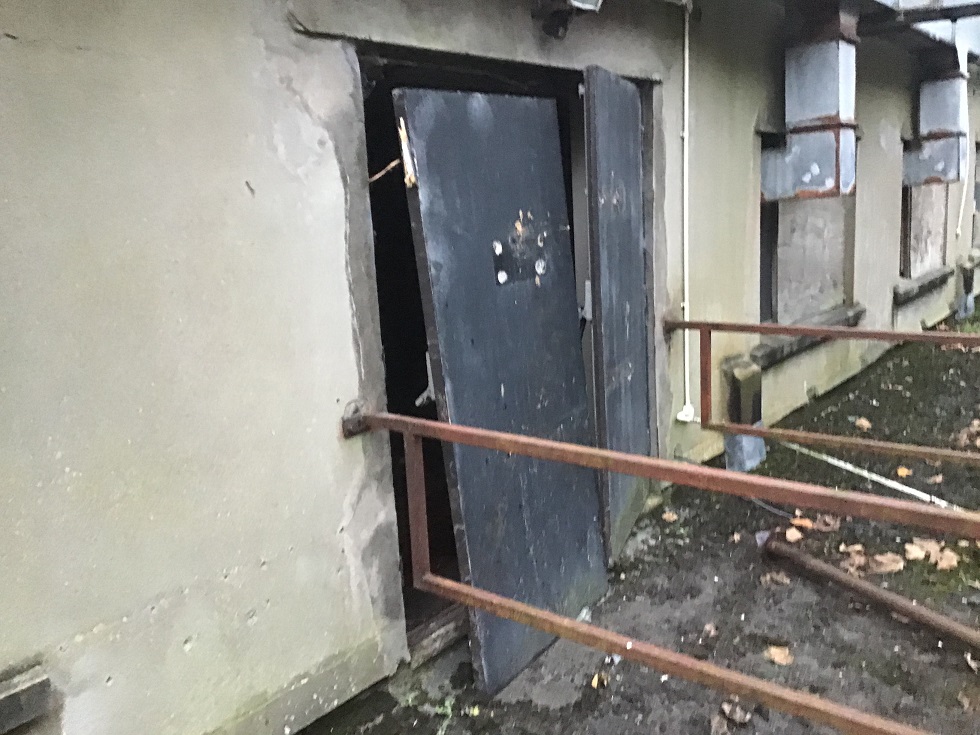
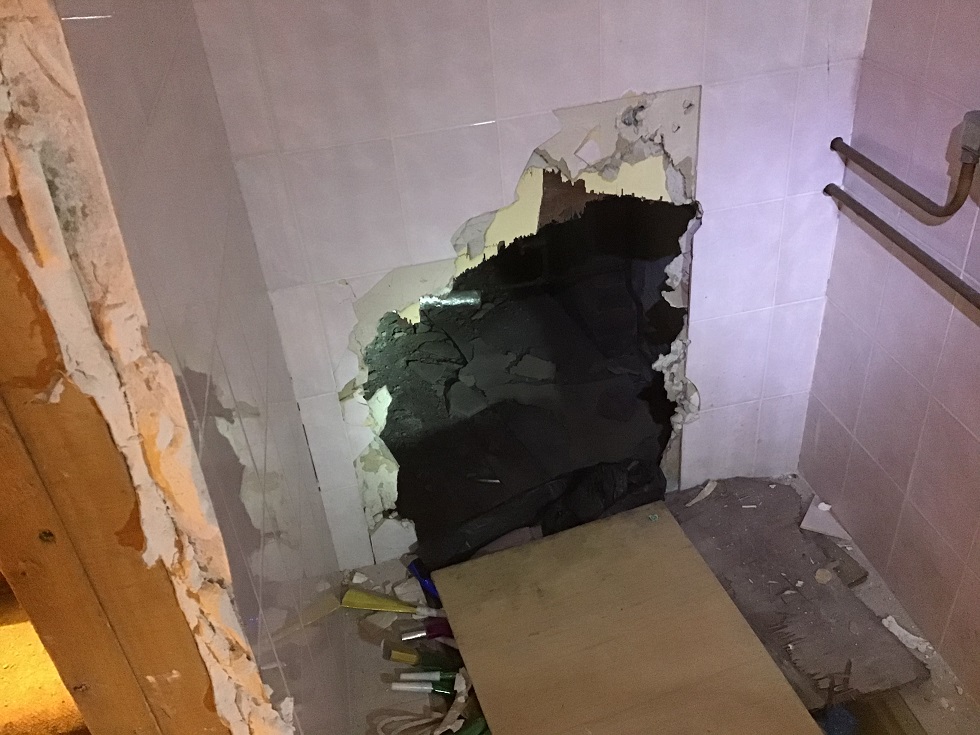
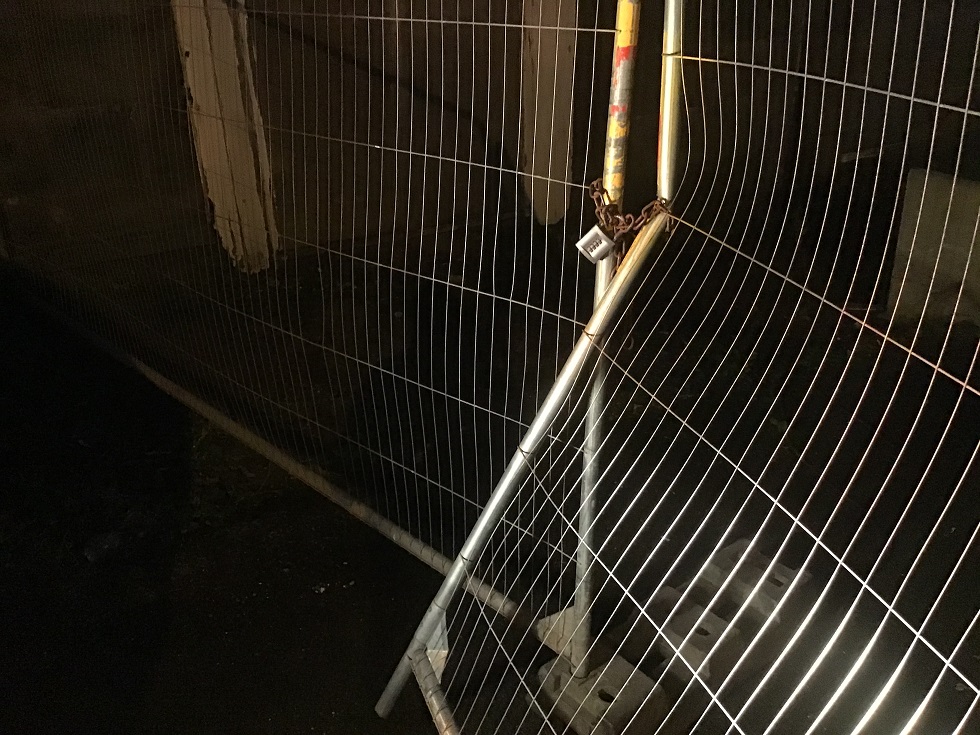
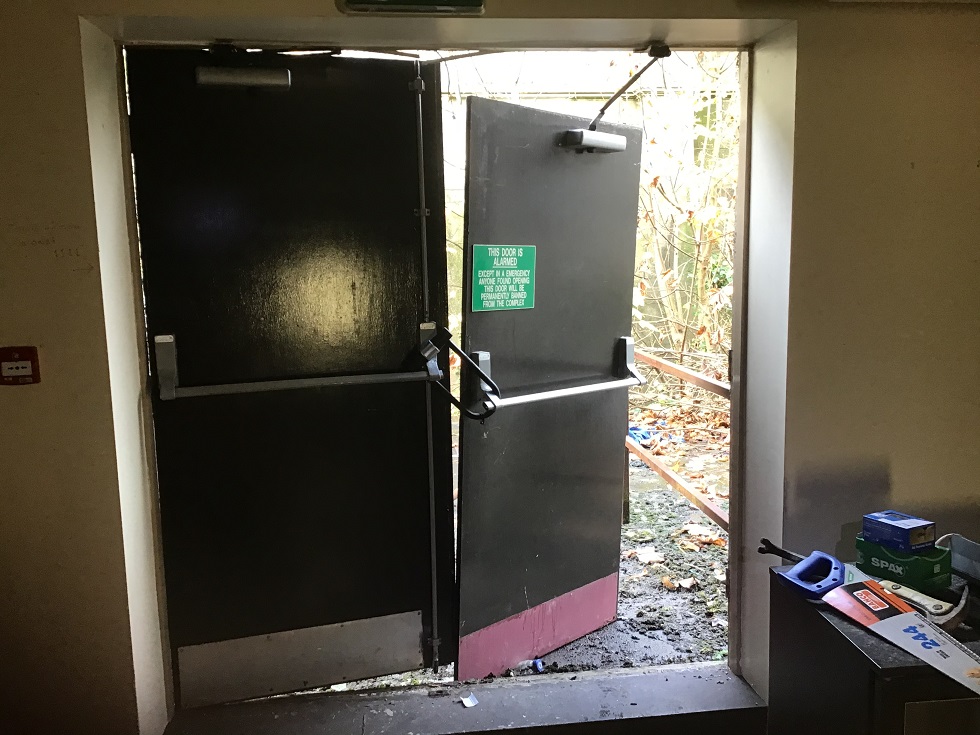
Despite security measures, a recent number of break-ins have occurred with increasing levels of damage caused where entry has been forced (see photographs).
There is evidence of a failed attempt to start a fire by a trespasser in one of the hotel bedrooms; plus a recent accident and injury caused by the partial collapse of a modern timber staircase is a cause for concern in relation to the safety of anyone gaining illegal access to the building.
The lengths that the intruders have gone to to gain access has given cause for the owner to consider more robust solutions to the temporary protective measures that will be taken to the areas of the building exposed by the proposed demolitions, while they give consideration to the development phases of work.
The break-ins occurred prior to the commencement of the demolition of the NE wing; subsequently, the contractor's presence and daily inspections on site have acted as an effective deterrent.
The concern remains that the building will become vulnerable when the initial phases of work are complete and contractors have left site.
The revised proposals are as follows: A Area exposed by demolition of NE wing:
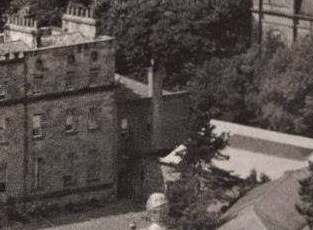
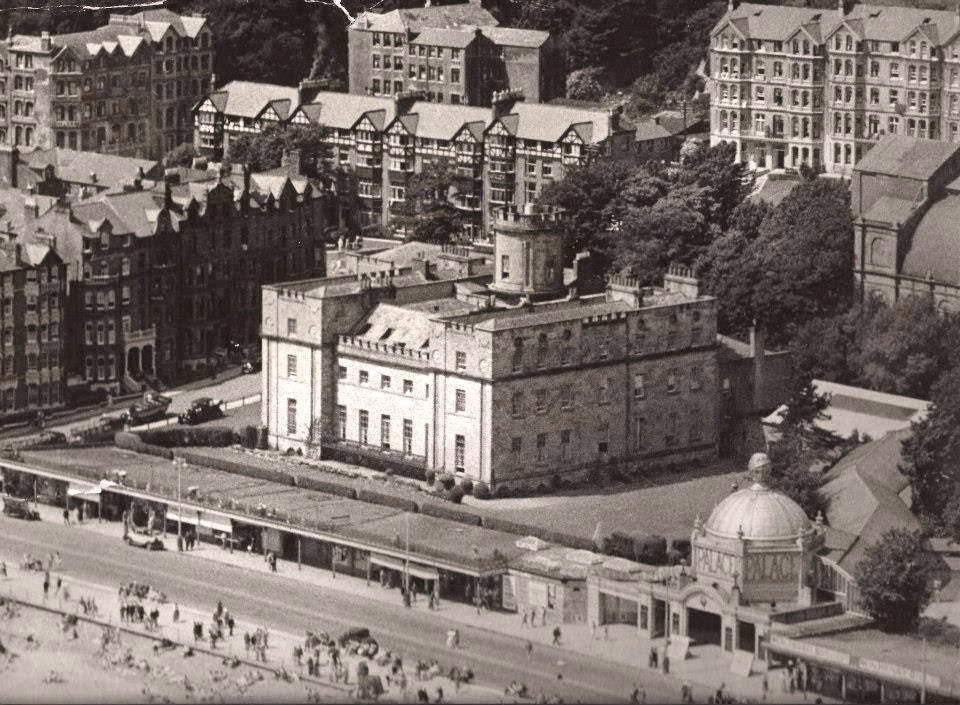
The demolition of the NE wing will expose a three storey masonry wall which, prior to the construction of the dining room and hotel room wing in the 1960s, was an external wall. The latest photograph that we have seen of this wall shows it to form a parapet at the top with a hipped roof behind. For the two stories above, the exposed walls will be internal partition walls of the 1960s construction.
The revised proposal would see the lower masonry section of wall remaining exposed with the openings in the wall independently blocked up. On each of the two storeys above this wall, where the exposed wall is an internal partition, it is intended that the stud partitions will be strengthened and used as the base structure for a painted plywood rainscreen cladding (as in the previous approved proposal).
Lower and upper ground floor doorways exposed by the demolition are currently secured by way of the existing heavy fire doors being screwed closed; lengths of timber have been screwed across the rear of these doors and door frames for further security. The external face of these doors will be covered with painted plywood sheets, fitted into the openings and screwed into the doors and frames.
On the upper floors, where the demolition will expose the 1960s former hotel corridors, the openings will be secured as doorways with robust and secure fire doors. When the site is active within the next phases (internal works and roofing) these doorways can be utilised for construction access and for means of escape from the site. These would remain open when the site is in operation and would be locked and secured to prevent access outside of working hours. When in operation access would be via a temporary scaffold tower.
The upper floor cladding will be simpler to construct than the original approved construction, better using the existing structure whilst providing the same level of weather protection. The cladding would be completely reversible and will be removed at the time of the future redevelopment of the Castle Mona.
There are a number of reasons for proposing to omit the cladding from the lower masonry section of wall.
First of all the existing wall, once exposed, will provide sufficient weather protection to the building.
It is clear from the amount of force that intruders have used in recent months to gain access to the building is significant. The team has concerns that the plywood screen would be a target for damage in and of itself, as well as having the potential to be damaged in search of an access point. Further, the timber cladding and structure could be vulnerable to arson attack, potentially putting the building at risk from significant fire damage.
Note that the lower three levels, lower ground, upper ground and first floor, are not visible from the promenade due to topography and the Castle Mona shops in the foreground.
B Openings exposed by demolition of outriggers in service lane:
The more robust solution to the rear elevation would allow for a leaf of rendered concrete blockwork to the majority of doorway and window openings at ground floor level following demolition of the single storey extensions.
A doorway at the Castle Drive end of the south west wing would become a lockable fire escape door. This would be open when the site was open for works, locked when the site was closed. The rear elevation is screened from view by a wooded slope in close proximity.
20/00586/GB+ 20/00587/CON Alterations and demolition of single storey extension and installation of temporary protective cladding and decking
20/00584/GB+ 20/00585/CON Demolition of bowling alley and north east bedroom/dining wing and installation of temporary protective cladding
18/12/2020 ISSUE
PLANNING
TEVIR Developments Ltd
234_Castle Mona Hotel Douglas
Number Scale
NTS
Planning statement • protective screen
Do not scale from this drawing • All dimensions must be checked on site prior to commencing works. Any discrepancy found between information given on this drawing and that given elsewhere or recorded on site shall be notified immediately to the project architect in writing.
20 Athol Street Douglas ISLE OF MAN IM1 1JA
©
horncastle:thomas
a r c h i t e c t s + d e s i g n e r s
01624 663 383
Copyright in submitted documents remains with their authors. Request removal
