Loading document...
PLANNING DESIGN & ACCESS STATEMENT
Proposal for an Agricultural Workers' Dwelling
ABSTRACT A statement for the proposal of a Passivhaus design for an Agricultural Worker's Dwelling: 'Field 134146' Magher Grianagh Sulby Isle of Man IM7 2ES by
JTM Architecture 9 Ard Reayrt, Ramsey Road, Laxey Isle of Man IM4 7PZ
Page INTRODUCTION ..... 2 SITE APPRAISAL ..... 3 DESIGN PROPOSAL ..... 5 POLICY CONSIDERATIONS \& COMPLIANCE ..... 8 CONCLUSION ..... 12
This document is a Planning \& Access Statement supporting the proposed erection of a 'Passivhaus' designed Agricultural Worker's Dwelling. It should be read in conjunction with the Approved Planning Application 14/01341/A (Approval in principle for erection of an agricultural worker's dwelling) and the Approved Planning Application 15/00940/LAW (Application to make lawful the erection of various sheds and structures to house poultry and run a free-range egg business). The Applicant farms goats for milk and cheese and hens for free-range eggs and as their business develops the livestock requires constant attention to ensure their safety especially during breeding periods.
These Approved Applications form the basis of the Proposed Application for a new Agricultural Worker's Dwelling on the Applicant's site. The Officer's Report will be referenced in this statement to ensure that the scheme complies with the relevant requirements and restrictions that have been set-out in the Approval of Planning Applications 14/01341/A \& 15/00940/LAW and both 'The Isle of Man Strategic Plan 2016' \& Planning Circular 3/91 'Guide to the Design of Residential Development in the Countryside'.
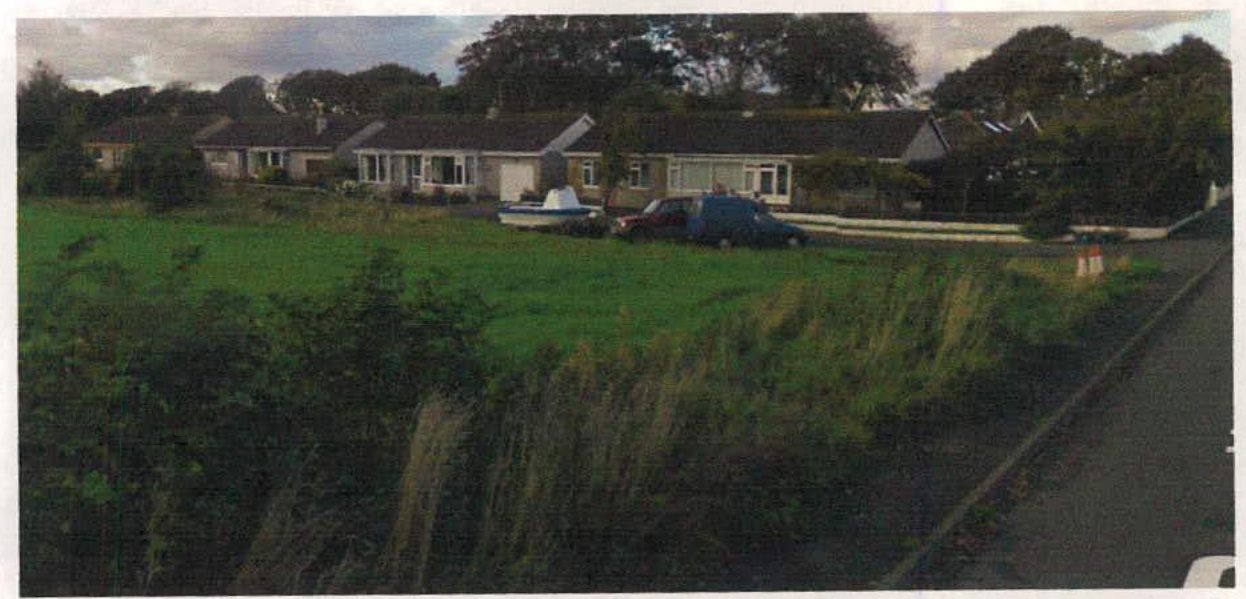
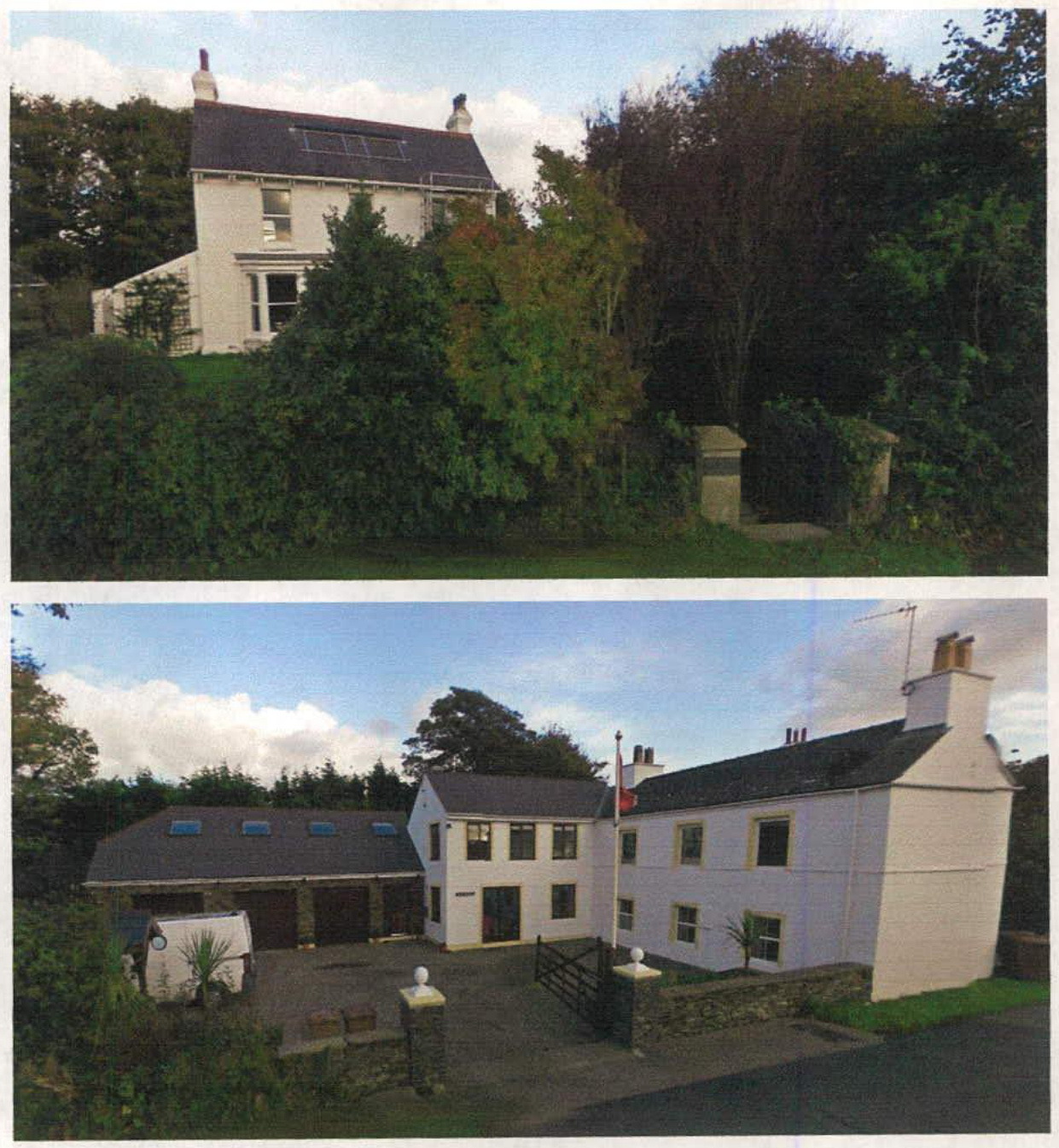
The Applicant wishes to act upon the Approval of Planning Application 14/01341/A, taking the principle allowance for the erection of an Agricultural Worker's Dwelling and developing this into a Proposal for the erection of an Agricultural Dwelling.
The Dwelling is to be constructed to perform as a 'Passivhaus' with standards that work on a self-sufficient system that doesn't rely heavily on the input of local services. Considering the remote location of the site this is a benefit to both the Applicant and the avoidance of disruption along St. Jude's Road.
Using a 'Passivhaus' design will upgrade the standard thermal requirements for all exposed elements of the building (including windows) to ensure that the external envelope performs at a much higher rate and reduces the use of fossil fuels and carbon emissions from heating systems. The use of a heat-recovery ventilation system will recycle hot air produced within the building, whilst the heating itself will be supplied by an air-source heat pump and hot water \& light from the photovoltaic cells on the roof.
The installation of a septic tank, common in rural areas, will ensure the soil system does not require mains outlet whilst storm water can drain into the local watercourse. Further options are that storm water can be harvested for grey water for toilets or flow in to a soakaway.
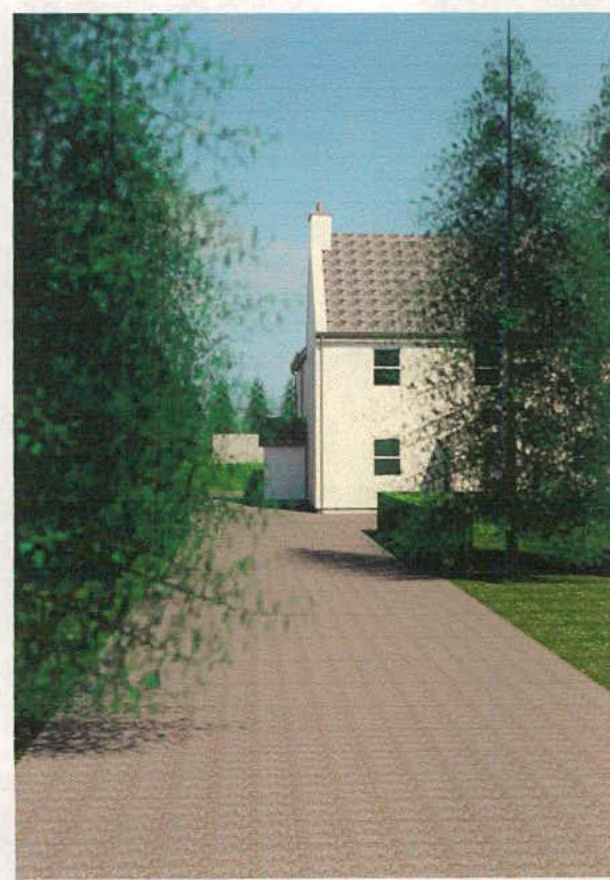
Regarding Planning Circular 3/91 \& the Approved Applications, the design of the new dwelling is traditional in the country house style and has been specifically sited in an area determined in the Approved Planning Application within close proximity of the existing main entrance to the North of the site.
The Proposed dwelling is largely screened from public view by the mature trees and hedges which cloak the site. The number of trees on the boundary of the site ensures that the traditional style of the property is softened by the grassland and trees around it. It should be mentioned that the entrance of the site does have a secondary layer of trees prior to entering the main site and this furthermore obscures the impact of any development on the site in comparison to neighbouring properties.
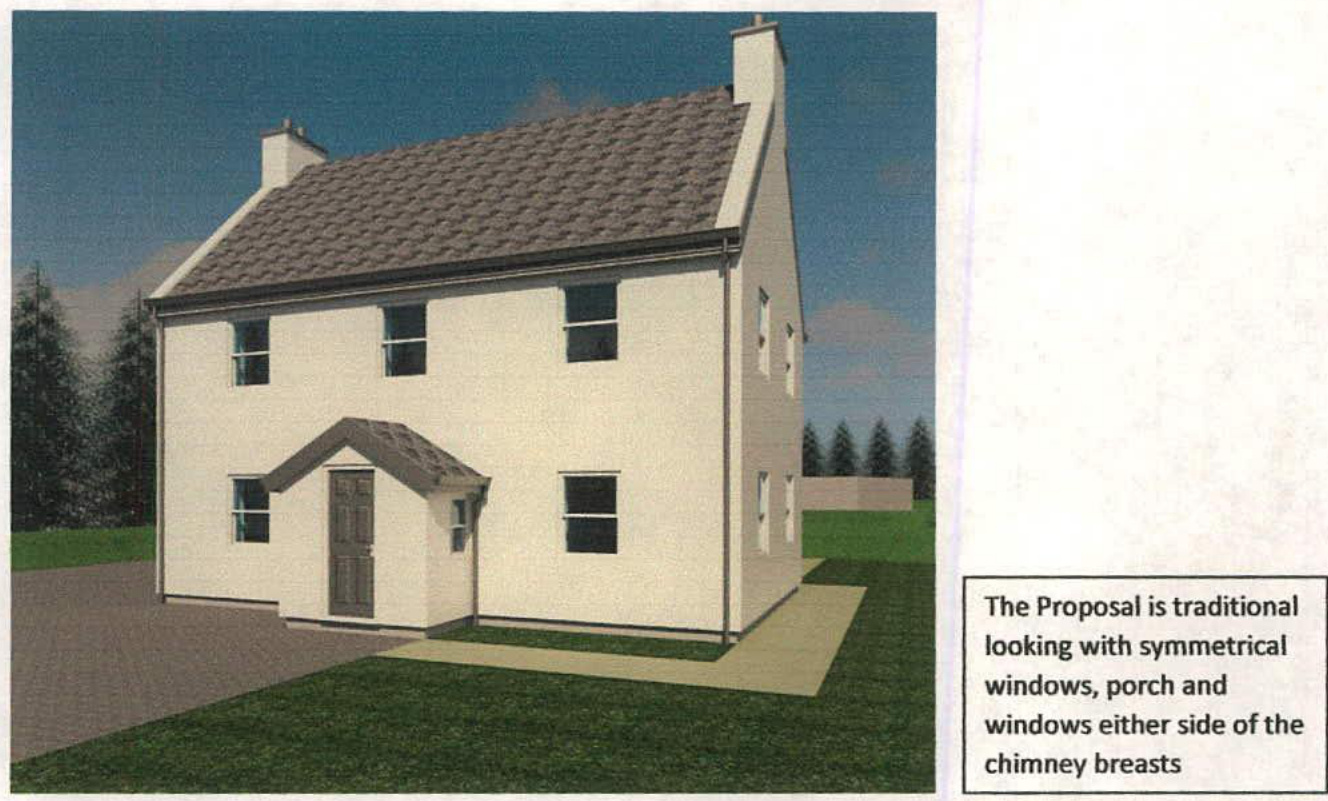
In terms of Proportion and form of the Proposal, the main entrance/front portion of the dwelling is set as a two-storey symmetrical front block with a 45-degree pitched roof and chimney breasts to the gable wall and a central front porch with its own pitched roof. The elevation is made up of 5 no. evenly placed top-opening casement windows in a sliding-sash style and a panelled front door to the porch which also houses a small UPVC casement window in the sliding-sash style.
The rear portion of the dwelling is also two-storey with a side entrance porch to a commercial kitchen to produce products for market. Again, the windows to the North-Facing Elevation are a top-opening casement window in a sliding sash-style to maintain consistency with Planning Circular 3/91 suggested design.
The South-Facing Elevation has panoramic views of the countryside and Snaefell and this area has most glazing in a more modern style to the rear annex. There is a First-Floor balcony with a canopy at roof level to allow passive-solar transmittance in winter and equally important it also shades direct sunlight to prevent the house from over-heating in summer.
The proposal is traditional looking with symmetrical windows, porch and windows either side of the chimney breasts
The material finishes of the building include white render to the external wall, slate roofs and UPVC windows and doors in traditional styles in accordance with Planning Circular 3/91 \& the Approved Applications. These are simple and common materials to the island and specific to traditional farm and country houses, albeit traditionally timber windows would have been used the requirement of 'Passivhaus' design would benefit more from more airtight UPVC casement windows in a sash-style. Windows either side of a chimney breast are common features to traditional country house forms and have also been highlighted in Planning Circular 3/91.
Planning Circular 3/91 also advises that 'Two storey L shaped plans' should be avoided, however in this instance the North-Facing Elevation is situated close to the tree-lined boundary. The view of this elevation will be largely unseen except when parking at the side whilst the addition of the porch articulates the feeling of an expansive wall. Furthermore, as a 'Passivhaus' design, maintaining minimal wall junctions and avoiding exposed air-gaps (extra corners on a 'T-shape' plan or staggered roof heights/dormers) is paramount to ensure that the building's air-tightness is maintained and that the system can work as effectively as it should.
Internally, the Proposal has been designed to allow a family of four ( 2 adults \& 2 children) to live and work on their farm. The Ground Floor has a hall way with a staircase and living room laid out in the traditional style of a family home with the addition of an office and commercial kitchen for accessible use of the family business rooms to the front (office) and side entrances (commercial kitchen) depending on business requirements. To the rear of the Ground Floor is a Utility room and Kitchen/Dining Room which feed out onto a patio and Garden area which is a separate area to the Farm so there is some segregation between work and private life.
On the First Floor, there are typically single bedrooms for the children and a master bedroom for Mr \& Mrs Howland. There is also a bathroom and a study on this floor. The purpose of an en-suite Master Bedroom for Mr \& Mrs Howland is for both privacy and to segregate
washing facilities from the main bathroom due to the nature of farm work. The requirement for The Study would be to ensure that when the children aren't supporting their parents with the farm and the work associated with this then they have an area to concentrate on their school work and homework. The secluded nature of this location does mean that there would be potentially be less opportunity to study after school at a convenient time for Mr \& Mrs Howland thus the inclusion of a study or 'Down-Time' is important for both the parents and the children.
A walk-in wardrobe to the Master bedroom may seem an extravagant addition to the property, however it again acts as an insulated partition to the interior so heating \& ventilation are working in smaller cells rather than distributed and potentially lost in larger areas. This should ensure that waste energy is minimalised.
Ultimately, the Proposed dwelling is required for the Applicants and their family to live and work on the farm that they run as a family business. Currently the Applicant lives in Douglas and must travel to Sulby daily to tend to the land and business. With livestock on the farm it is important that Mr Howland can access the land quickly and tend to any issues or emergencies that may occur. Therefore, it is essential that Mr Howland and his family have accommodation to continue to work and improve their business and have 24 -hour surveillance to ensure that it is a safely maintained and run business.
The design of The Agricultural Worker's Dwelling reflects the requirements of the Approved Applications discussed above and as well as following the 'Guide to the Design of Residential Development in the Countryside'.
The Approved Planning Applications 14/01341/A and 15/00940/LAW have provided clear guidance on the requirements of 'The Isle of Man Strategic Plan 2016' and in conjunction with the Planning Officer's Report these have been highlighted below.
In respect of Application 14/01341/A specific attention is drawn to:
The countryside and its ecology will be protected for its own sake. For the purposes of this policy, the countryside comprises all land which is outside the settlements defined in Appendix 3 at A.3.6 or which is not designated for future development on an Area Plan. Development which would adversely affect the countryside will not be permitted unless there is an over-riding national need in land use planning terms which outweighs the requirement to protect these areas and for which there is no reasonable and acceptable alternative.
In his Report, The Planning Officer states that the 'The application site is not within an area recognised for development, under the Isle of Man Development Plan Order 1982. The site is not within a Conservation Area, nor within an area zoned as High Landscape or Coastal Value and Scenic Significance.' It is important to understand that although this is not an area of high value or significance any proposal is still party to the overriding factors placed in Environment Policy 1. The Proposal itself has little impact on the existing trees and watercourse around the site barring its position on the landscape which is currently grassland. In this instance the countryside \& its ecology are largely untouched.
Where the Proposal stands is to be a dwelling using 'Passivhaus' standards with a predominantly self-sufficient system of heating and ventilation as well as a natural source of heating water using solar energy. Waste is contained in a manageable septic tank, and storm water contained naturally. Electricity and water supplies are local to the main road and to the Dwelling's position on the site.
The purpose of the new Agricultural Worker's Dwelling is to run and maintain a business on the land owned by the Applicant. Approved Application 15/00940/LAW established the running of the business on the site and having the landowner in close proximity to their work is an important part of running, maintaining and developing this business as well as ensuring that the site and its ecology are looked after daily. The overriding national need is to help and support business owners who use agricultural land for agricultural purposes and encourage the production of Manx produce. The presence of livestock needs constant attention and creating a 'Passivhaus' that adheres to Planning Circular 3/91 certainly reduces major impact on the environment for an Agricultural Worker's business needs.
Where the Department is satisfied that there is agricultural or horticultural need for a new building (including a dwelling), sufficient to outweigh the general policy against development in the countryside, and that the impact of this development including buildings, accesses, servicing etc. is acceptable, such development must be sited as close as is practically possible to existing building groups and be appropriate in terms of scale, materials, colour, siting and form to ensure that all new developments are sympathetic to the landscape and built environment of which they will form a part. Only in exceptional circumstances will buildings be permitted in exposed or isolated areas or close to public highways and in all such cases will be subject to appropriate landscaping. The nature and materials of construction must also be appropriate to the purposes for which it is intended.
Where new agricultural buildings are proposed next to or close to existing residential properties, care must be taken to ensure that there is no unacceptable adverse impact through any activity, although it must be borne in mind that many farming activities require buildings which are best sited, in landscape terms, close to existing building groups in the rural landscape.
This siting of the Proposal is close to the main North entrance and within proximity of Kafue Cottage, across St. Jude's Road and not too distant from clusters of other properties. As previously mentioned the design style of the Dwelling utilises Planning Circular 3/91 to create a Country House form, but ultimately the design is softened by the landscape around the Applicant's land borders which masks its isolated position amongst the sheds and structures Approved under Application 15/00940/LAW in a working farm layout. The plot for the construction of the Agricultural Worker's Dwelling has been determined by the Planning Officer in its most viable position for access, services, surveillance and in an area that doesn't interfere with the working of the farm.
Development will not be permitted outside of those areas which are zoned for development on the appropriate Area Plan with the exception of: (a) essential housing for agricultural workers who have to live close to their place of work; (Housing Policies 7, 8, 9 and 10);
The Applicant's Approval of Application 15/00940/LAW has established a business for the land they own and the manning of this land is essential to maintain the upkeep of this business as the main financial income of the family. The land houses livestock and it has been established in principle that a dwelling is essential for the owners to live close to their land and business. Their current residence in Douglas is insufficient to wholly maintain constant work on the land, whilst the isolated position of the farm means that purchasing a property close to the farm still brings with it the same issues of travelling to and from the livestock that essentially require full time attention.
In relation to further policies within the 'The Isle of Man Strategic Plan 2016' there are a number of Paragraph's mentioned in the Planning Officer's Report which have been highlighted and addressed below:
(a) what living accommodation has been built on, or in association with the farm holding in the past, and how it is now occupied; and (b) who will occupy the proposed dwelling, and what role they will play in the operation of the farm; in some circumstances, there will be a legitimate need for a dwelling for a retiring farmer who proposes to vacate the farmhouse but to continue to assist on the farm.
(a) No previous living accommodation has been Approved on the land, however the establishment of a larger business from a smaller 'Stall' type holding has given rise to a flourishing business which requires full time attention and work to maintain and develop its success. Currently the Family live off-site in Douglas so the construction of a 'Passivhaus' Design will not only support the business on-site, but create a low impact development surrounded by soft landscaping in an integrated scheme (b) The living accommodation will house the immediate Howland Family and a section of their working business. The Proposal houses a simple living/dining/kitchen arrangement for 4 people as well as 3 bedrooms and a study/homework room for the family and a commercial kitchen and office for the business. Mr \& Mrs Howland will
take responsibility of the running of the business and their children will be able to support them, both now and in the future. The aim is to maintain and develop the success of the business as a Manx family selling Manx produce
New agricultural dwellings will only be permitted in exceptional circumstances where real agricultural need is demonstrated.
Approved Planning Applications 14/01341/A and 15/00940/LAW have identified the response to this policy, however again, it is paramount to the agricultural needs of this business that the Applicants' can live and work on this land effectively and efficiently which they currently cannot do whilst accommodation is not available.
(a) the previous or proposed severance of land and buildings; (b) the agricultural justification for sub-division of a farm; (c) the long-term viability of new or unproven agricultural enterprises such as small-holdings, market gardens, or horticulture; (d) the extent to which the applicant's employment in agriculture is only part-time; and (e) in the case of a retiring farmer, whether the proposal would result in vacation of an existing farm dwelling for agricultural use, and whether the applicant would continue to assist in the operation of the farm.
(a) The business has developed from a very small holding into a larger business so the need for accommodation is party to maintaining a successful poultry \& free-range egg business. The land has developed from grassland to Approved sheds and structures into a larger business which requires constant attention (b) The business is larger and the Applicant lives in Douglas, which is detrimental to the overseeing of the business which requires 24 -hour attention (c) The business has grown to a larger operation through several years' hard work and perseverance, therefore the business management has had to change to a higher professional standard. The produce is a popular product in a proven market and its continued success revolves around its management at local level (d) This is a full-time occupation for Mr \& Mrs Howland and their livelihood for their family (e) The proposal is for a young family furthering their career in the agricultural business and utilizing their land as opposed to leaving it in a state of disrepair or neglect
Where permission is granted for an agricultural dwelling, a condition will be attached restricting the occupation to a person engaged or last engaged solely in agriculture; or a widow or widower of such a person, or any resident dependants.
The response to this Policy has been established by the proposed occupiers of the land. 8.9.5 If it is not possible for the farm worker to live in the nearest village, the siting of the proposed dwelling should be selected having regard to the various landscape policies in Chapter 7. In particular, the dwelling should self-evidently form part of the farm group.
Response:
As previously mentioned the farm holds livestock and the poultry does need close care and attention to maintain the main produce of the business. Living in the nearest village poses similar problems to the Applicant currently living in Douglas where being off-site does not ensure the 24 -hour care that the business requires at this stage or at any stage in the future.
Housing Policy 9: Where permission is granted for an agricultural dwelling, the dwelling must be sited such that; (a) it is within or immediately adjoining the main group of farm buildings or a group of farm buildings associated with that farm, (b) it is well set back from any public highway, and (c) it is approached via the existing farm access.
(a) The Proposal site is close to the various sheds and structures Approved in Planning Application 15/00940/LAW in a site determined by the Planning Officer in Planning Application 14/01341/A (b) The perimeter trees obscure the location of the site which are set back from the highway enough to minimise any impact on views but close enough to take advantage of current services (c) The site is approached via existing farm access
Housing Policy 10: Where permission is granted for an agricultural dwelling, the dwelling should normally be designed in accordance with policies 1-7 of present Planning Circular 3/91 which will be revised and issued as a Planning Policy Statement.
Planning Circular 3/91 has been referenced throughout this document as a design guide to the Proposed Agricultural Worker's Dwelling.
The Applicant has created a developing farm business which now needs further management on-site to maintain the growth that they have created. This needs to be done locally and on site rather than commuting to and from Douglas. The Applicant has followed the Planning process to establish their business and achieve Approval in Principle for a dwelling. Thus, the next stage of this development is to apply for Full Planning Approval for a traditional style residential property to work, live \& fully focus on the land as a business to support their own livelihood.
The Isle of Man Government's document 'Policy on Sustainable Development and Mitigating Climate Challenges', is a recent step in the right direction for the Isle of Man. By adopting this approach early the Proposal is future-proofing itself against new policy in years to come and most importantly is becoming a virtually self-sufficient Farm House, the first 'Passivhaus' Farm House on the Island, and one from which others can follow as an example.
Utilising an economically and environmentally sound option for countryside living and adopting a traditional form common to Manx Countryside Design does compare historically to the establishment of what Manx countryside residents created over one hundred years ago and the Applicant's development of a business with poultry, free-range hens/eggs, goats and cheese should be encouraged to promote Manx foods, but this needs to be managed correctly and closely.
Copyright in submitted documents remains with their authors. Request removal
