Loading document...
Sartfell Education & Tourism Limited has been set up by the owner of the property - Peter Lillywhite- to manage the property known as Sartfell for the purposes of education and tourism.
The first step is to repair the land and its ecology, as well as the Cottage, which is of historical and heritage value. The second step is to provide facilities to enable visitors to learn about and enjoy the natural history and human heritage value of this site in particular and the Isle of Man generally.
The target visitors include schoolchildren, academics and eco-tourists, as well as general tourists who visit the Isle of Man for varied reasons, including to watch the TT races. The third and on-going challenge is to manage the property in an energy-efficient and sustainable manner.
In order to satisfy these objectives and ensure they are aligned with the Manx Government objectives and local cultural imperatives and sensitivities, the owner managers of the site – Peter Lillywhite and Carole Melaugh – have consulted widely with relevant organisations and community leaders, as well as visiting key sites of Manx heritage.
These consultations and visits include:
The vision for this project is to take this former agricultural small holding and return it back to its original wildlife state for the benefit of tourism and to be an exemplary development for the MANX BIODIVERSITY STRATEGY.
The applicants - Peter Lillywhite & Carole Melaugh have been working with the MANX WILDLIFE TRUST since they bought the property in January 2013 and will continue to use them as their Manx ecological consultants. Open to local visitors, tourists, school children and working along side the Wildlife trust this site will become a destination to observe close up and learn about MANX natural history, geology, history and culture.
Set within this location with its meadows, acid bugs, sensitive ECO dwelling and restored historic MANX cottage all tourists, students and school children will be able to discover and learn how people can consist with wildlife and restore damaged wildlife areas, whilst being energy efficient and sensitive to 21st century challenges.
In summary this location will become a destination for eco-tourism and become an exemplary project of how to repair damaged sites on the island, transforming unsustainable man made environments into native wildlife reserves. Architecture and nature will work in harmony.
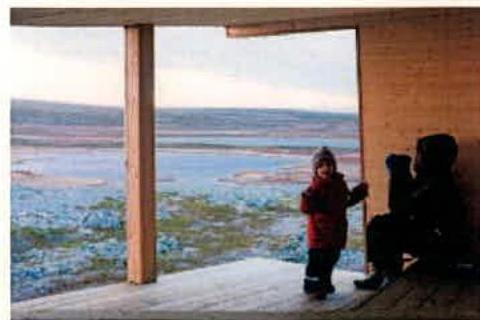
Working closely with the MANX wildlife trust the ambition for this site is to develop a centre for visitors to observe wildlife and provide overnight accommodation. To pursue the values and ideals set out in the draft document (Managing our natural wealth to 2020 THE ISLE OF MAN'S FIRST BIODIVERSITY STRATEGY 2013) to do with restoring, preserving and repairing the countryside for visitors all year round.
Both the historic and contemporary architecture will also form part of the attraction to this site. This cottage will be restored to its original form and visitors can witness this rural building at first hand and be able to spend the night. It would also be attractive to visitors to the world famous Isle of Man races, especially the TT. To counter the cottage's visual presence on the landscape will be the new dwelling, which will highlight latest sustainable building technologies whilst at the same offering a restored wildlife setting to improve the sites biodiversity.
This centre will link up with other wildlife centres within the Isle of Man and internationally increasing awareness of the MANX wildlife and promoting further visitors to the island. It may well also be of interest to academics who appreciate the remarkable human, political and natural history of the Island.
This site will become a ground-breaking approach to rural development and the promotion of biodiversity to the benefit of tourism and the Isle of Man. In summary, we are developing a strategy to tap these main markets:
The protection and restoration of the biodiversity on this site is central to the Isle of Man's 21st century's strategic plans. This site will be a focused demonstration of this policy, however, it will also provide a direct benefit to local people, schools and tourists.
Management and ongoing development of the site will provide employment. Where possible local trades and craftsmen will be used. In keeping with the philosophy of the environmental ambition for this project materials will be sourced from local suppliers and manufactures.
Providing a new facility on the island will link to other ecology sites across the world and increase awareness of the Isle of Man encouraging further visitors and investors.
This project gathers together many aspects, which as a whole has the potential of providing a sustainable economic benefit. For clarity we list these below:
The applicants have been working closely with the Manx Wildlife Trust (in particular Andere Dubbeldam) to develop the projects place within the wider Manx Biodiversity Strategy (draft - 'Managing our Natural Wealth to 2020 - The Isle of Man's First Biodiversity Strategy'). The project aspires to become one of the key sites within the Isle of Man for the conservation and development of biodiversity.
From the strategy document, some of the key relevant points that will be integrated are below:
Along with a substantial planting strategy the sites landscape will also be repaired - repairing the sterile land of the menage, clearing the neglected drainage ditches and removing the non-native plants that have been allowed to take over through the sites previous neglect.
The applicants also plan to host brehives, bird bones, and hopefully bat roosts (this awaits further consultation with the Manx Bat Group). Sartfell is particularly replete with birds including nesting Curlews, Peregrine falcons, Kestrels, Ravens, Hooded Crows, Rooks, Jackdaws, Robins, Siskins, Blue Tits, Coal Tits, Great Tits, Goldfinches, Chaffinches, Dunnocks, House Sparrows, Stonechats, Blackbirds, nesting Swallows, etc. These wildlife will be further be encouraged by the sites restoration.
A further plan to put in ponds as well as a native plant regeneration plan will be put in place with the approval and assistance of the ecological consultant, Andere Dubbeldam of the Manx Wildlife Trust. This will be very important to encouraging amphibians, reptiles, and a host of aquatic plants and animals to add to the fish and other aquatic life in the river that runs through the property
The Sartfell Education & Tourism Ltd was set up by Peter Lillywhite & Carole Melaugh to deliver this project:
Biological scientist – Undergraduate at Downing College Cambridge 1972-1975 reading Natural Science, specialising in Zoology; PhD Student at the Australian National University (1975-1978); Post-Doctoral student at St John's College, Cambridge (1978-1979), whilst also holding the Rank Fellowship in optoelectronics; Research Fellow of Girton College (1979-1980), Cambridge; University Lecturer at Sheffield University in Experimental Zoology 1980-1982; Visiting Fellow at the Australian National University 1981.
Subsequently a Management Consultant, running a successful global consultancy in the UK, Australia, Asia Pacific and Scandinavia, including periods as a partner in Andersen Consulting and Managing Principal IBM Asia Pacific.
Lifetime member of RSPB; Manx Wildlife Trust member; Landmark Trust Member. Lifelong supporter of preservation and conservation of wild life.
Peter's management consultancy and Carole's education background will support the centre and keep it viable financially. In accordance with biodiversity strategy we wish to expand tourist interests beyond the TT races, with a visitor centre which will increase knowledge and understanding of acid bog land and conservation of natural environment, repairing the land to its former status.
Carole is committed to conservation and improving the natural history of the Isle of Man. Along with Peter, Carole is a member of the Manx Wildlife Trust and Manx Heritage Trust in the Isle of Man. Since moving to Sartfell Cottage both Peter and Carole have encouraged a dialogue with Andere Dumbeldam and we have sown their first lot of natural seed, to encourage a meadow in the paddocks laid bare by donkeys, and have commenced removal of excess soil nitrogen to repair the native acid soil and attract back lost natural history. However, the 7.5 acre property is replete with wildlife including orchids, aspen trees, a denuded, but fairly complete set of native plants, birds and animals.
Carole's background is in medicine and education. Carole has a solid experience as a Nurse, qualifying as a State Registered Nurse specialising in Accident and Emergency medicine. After raising a family, Carole went into Nursery care, qualifying as a Nursery carer with training in Learning through Play. Carole's most recent experience is also in Education, promoting pupil progress through infant, junior and senior school within the school environment. Carole is an experienced diver, taking part in projects to support sea life and monitoring crustaceans at popular diving sites in England.
Partnering Peter has allowed Carole to expand her interests in ornithology and wild flower gardening. Carole's plan is to start keeping bees, so that the meadow currently being laid down can be utilised as a food source and to encourage insects to provide a food source for the very varied bird life appearing on the property. The Isle of Man is a globally important bee repository, due to it's ecological isolation that has kept the native bees disease-free.
Peter and Carole are currently keeping (an impressive) record of birds that have visited the site and will use this data to plan the surrounding area to maximise the area to encourage visiting birds. They would like this to include some linked ponds to attract water birds and other native aquatic wildlife. This has been discussed with the Manx Wildlife Trust who have approved the idea in principle.
Our practice has a research based approach that forms the seed for every design. Its purpose is to look into the soul of a place or building and to establish an intimate understanding. The working process is an artistic endeavour that is focused on producing architecture that engages, excites and inspires.
Prior to becoming architects we worked in crafts and product design fields so we take great care to understand how things are made to realise our architecture.
The ambition is to extend the local narrative to produce meaningful spaces and buildings that have an intrinsic relationship with their surroundings and create a sense of belonging.
In many ways modern life has eroded what was a symbiotic relationship between humans and the earth. We want to address this disconnection through our work and explore the ways in which architecture can engage with the environment and leave a sustainable legacy.
We have been successfully employing this approach on various sites across the UK and around the world. Such as:
Great Fen Visitor's Centre:
Observing the sheds and other agricultural buildings in this flat, open landscape we realised that a building doesn't have to be big or high to make an impact. The building's mass has been influenced by this with its horizontal form hovering above the ground.
The buildings structure & skin create a semi permeable lattice roof that draws on the delicate form of the common Crane's wings. The roof is a protective shell that defines a series of spaces which provide different spatial experiences, allowing the landscape to be enjoyed in a number of different ways such as via the glazed cafe or the third floor observation decks. The roof also becomes an environment for cohabitation and appropriation, encouraging a symbiotic relationship between the building and the local environment.
Beneath the roof inhabited 'nests' provide accommodation. The nests include the cafe, toilets, meeting spaces, ancillary spaces and storage. Only the nests are serviced and heated in order to minimise the environmental impact of the building and the servicing requirements.
Maintaining and preserving this environment is paramount so we needed to create a building that provided a sustainable, low impact, architectural legacy.
Our design was shortlisted for the RIBA Great Fen open competition in early 2012.
We are a multidisciplinary company with backgrounds in engineering, architecture and environmental science, working as consultants for individual buildings, large developments and masterplans. Our diverse backgrounds and in-depth technical knowledge position us to provide exceptional solutions design teams and clients, working as lead consultants, engineers or sustainability champions overseeing the client's project goals.
We pride ourselves in using a soft yet technical approach that measures and quantifies the benefits of our proposals, and communicating our strategies to project teams in a clear and accessible manner.
We strive to be in tune with our clients' needs and sustainability ambitions and to carry out detailed analysis of a range of options to meet their project goals.
Our aim is to engage with design teams and clients at an early stage to develop buildings that respond to their local environments. In particular we advise on passive design measures to minimise the carbon impact of new buildings as well as ensuring sensitive environments are appropriately addressed.
Some example projects we have worked on include:
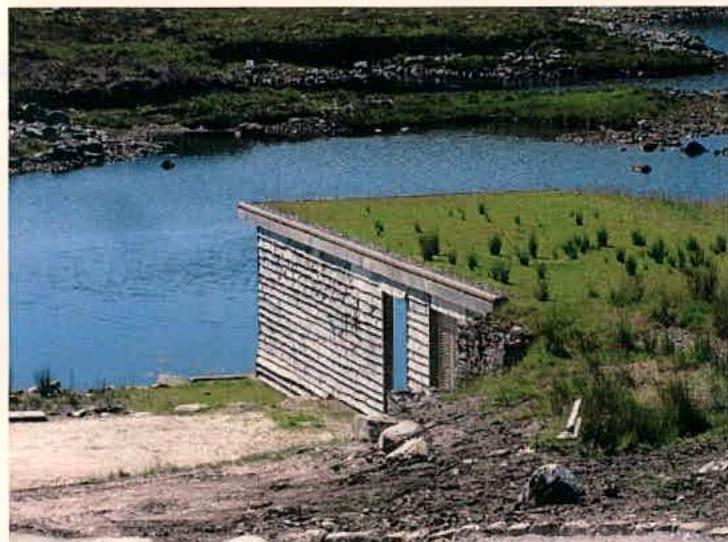
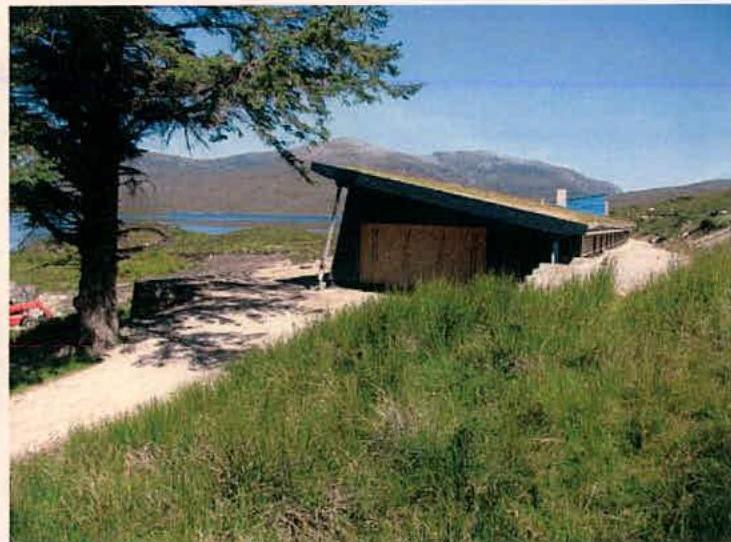
Fishing Lodge - Fiag, Scotland
Fiag Lodge in Scotland, is a fishing lodge set into the Scottish hillside moors with a blanket of earth and local vegetation covering the lodge and associated boathouse. This feature provides an additional layer of warmth to the building whilst integrating the lodge sympathetically in the location. The completed project has a hydroelectric turbine, is earth-coupled, solar shaded in summer and uses low-embodied energy materials.
Lilymere House - Lake District, England
Lilymere House is a zero carbon home set in 1500 acres of estate nest to the Lilymere lake. The site is composed of plantation woodland, moorland, tenant farmland and a 36 acre lake. The home has been partially sunken and is designed to passively respond to the environment. The development utilises a ground source heat pump and a biomass wood chip boiler for heat whilst generating electricity through photovoltaic solar panels. As part of the development a large area of semi-improved grassland will be transformed into a wildflower meadow.
Conisbee have wide ranging experience of architectural and green projects that is relevant to the scheme for Sartfell Cottage. There are a number of projects which have similar architectural and green aspirations and demonstrate that we have the right blend of skills to make the project a success. For example:
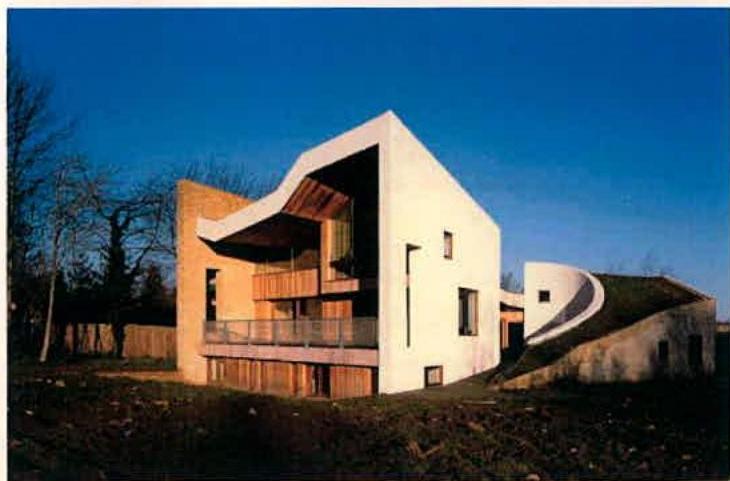
Wing House is a bespoke, new-build, modern house with associated landscape works for a private client. The internal house layout, of around 340 sq m, is designed to be flexible and adaptable allowing for the changing lifestyle of a growing family and reducing the need for further extensions in the future. As structural engineer, we made innovative use of Stepoc reinforced blockwork structural walls to provide an economic way of forming the double-height open spaces, and dispensing with the need for a steel frame.
A large solid dry stone wall acts as a thermal buffer facing north west and using the local iron stone. This is countered by large glazed walls and roof overhangs to the south and south-east aspects which provide solar gain in winter and good natural light and ventilation. The courtyard offers dual aspect to principle living spaces and good cross ventilation.
Proposed Team:
Tom Beaven - Director BEng (Hons) CEng MIStructE
With his specialist knowledge of the education, health and residential sectors, Tom has contributed to a wide range of new-build and refurbishment projects. Tom has worked on numerous projects with difficult site constraints including tunnels, railways, and sewers and is experienced in leading clients through the sometimes complex approval processes of the various statutory bodies.
His residential sector experience ranges from the design of architecturally bespoke one-off houses, conversions, extensions (including basements) and alterations to existing buildings, through to developer and contractor-led multistorey apartment schemes for private and public clients.
BEng (Hons) CEng MICE MIStructE
Allan's experience spans many key sectors including residential, commercial, arts and culture and education.
Allan has longstanding working relationships with a number of high-profile / design-led architectural practices. He collaborates closely with them to fully realise the architectural intent of their projects. His prizewinning projects include the Laban Dance Centre with architect Herzog and De Meuron which won the Stirling Prize in 2003 and St Marylebone School Performing Arts Faculty which won a RIBA National award 2008, and Concrete Society best building award 2008. Lowther Children's Centre also won a RIBA award in 2010 and the Artist's House; a private residential scheme, won the Stephen Lawrence prize in 2010.
Primary contact: Andree Dumbeldam
As the island's leading nature conservation charity, we work hard to protection of our island's precious, unique environment, both on the land and in the seas that surround us.
We aim to inform and educate individuals, families, companies, landowners, politicians and government departments about the importance of our wildlife and natural habitats, and the urgent need to cherish and protect them.
We promote the protection of our flora too. From wildflowers to ancient woodlands, we study them and, through our own nursery, work to ensure species continue to thrive throughout the island.
We organise talks, walks and informative, fun events which are all open to members and non-members alike.
Our education team provides environmental education to schools and raises awareness of the island's natural environment to through local community-based events.
{{image:572921}} {{image:572924}}
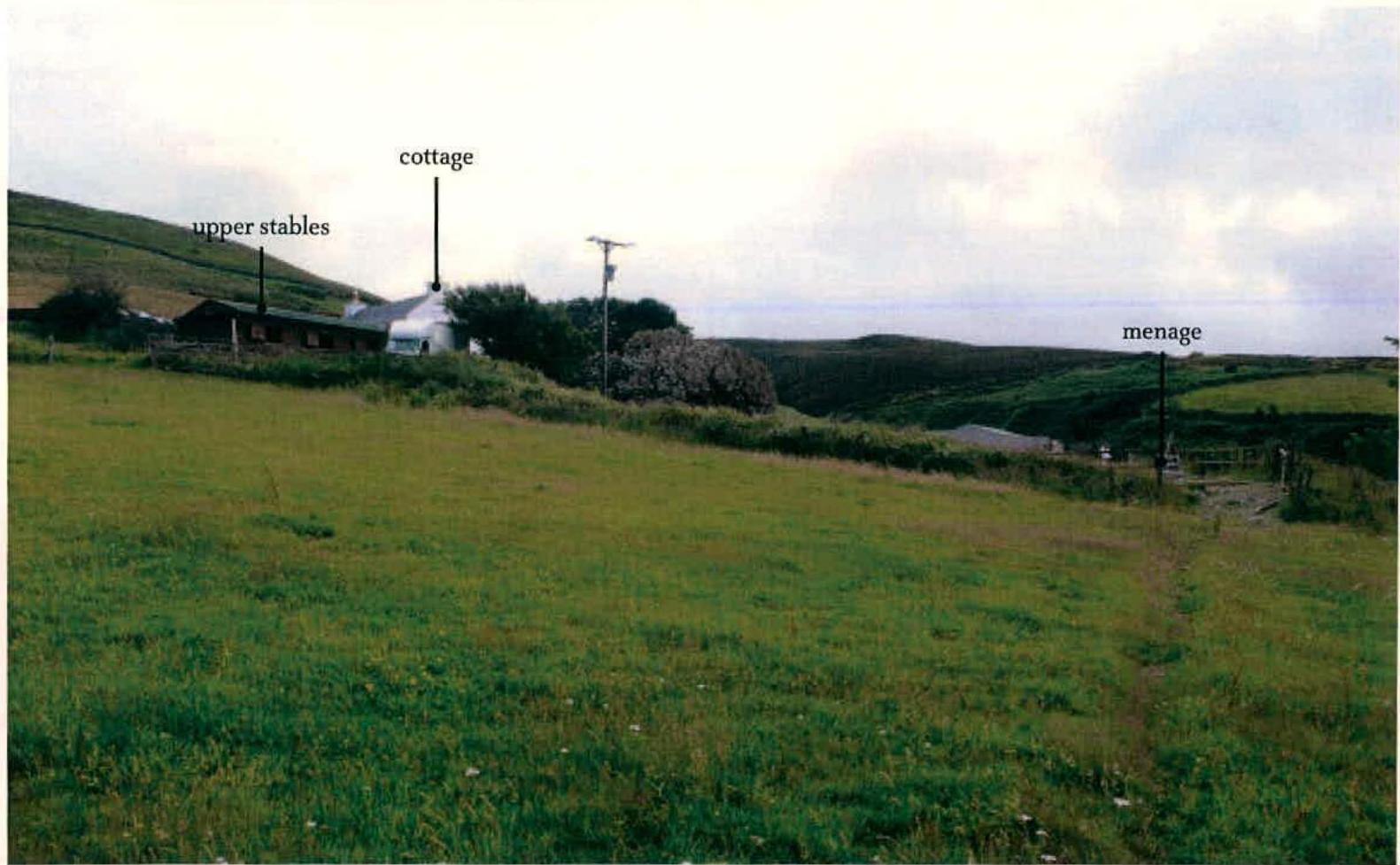
Approval is sought for the construction of a Visitor Centre on land previously used as a menage.
The proposal looks to build a highly insulated, prefabricated timber frame structure, clad in black corrugated sheet. The structure will contain a small classroom/exhibition space with a library, small shop, kitchenette, composting toilet and store. It will provide a shelter for visiting tourists and school children and allow the owners to host exhibitions and teaching on the sites wildlife and broader ecology. The structure will also provide a sheltered roof deck for birdwatching and dark sky observing accessed from the ground level above the menage.
A stone gabion wall will form the retaining structure behind the building. The ground surrounding the structure will be relandscaped and sculpted to enclose the structure. The remaining sterile menage ground will be similarly relandscaped (to later incorporate the ground source heat pump pipework) and repaired to its natural state.
The building will embrace the environmental sustainability ethos of the nature reserve - using the bore hole water and wind turbine electricity from the site and incorporating a biomass burner to heat the space when occupied. The building is intended to be used by schoolchildren as well as adults and will be designed suitably and also to be accessible for people with disabilities.
{{image:572927}} {{image:572928}}
Copyright in submitted documents remains with their authors. Request removal
