Loading document...
STATEMENT TO ACCOMPANY AN APPLICATION FOR REGISTERED BUILDING CONSENT IN RESPECT OF PROPOSED ALTERATIONS TO EXTERNAL FOOTWAY AT CASTLEMONA COLONNADE, CENTRAL PROMENADE, DOUGLAS, ISLE OF MAN
1.0 Introduction 2.0 The Application Site 3.0 An Assessment of Significance 4.0 Assessment of the Proposals 5.0 Sources
Appendix I Photographs
DOC. NO. 1501-005 REV. - 28.05.15 DATE 28.05.15 DETAILS APPLICATION FOR REGISTERED BUILDING CONSENT
1.1 The following statement has been prepared in support of an Application for Registered Building Consent for alterations to the footway at Castlemona Colonnade, Douglas.
1.2 Castlemona Colonnade is part of Registered Building No. 82 in the Protected Buildings Register, which includes the Castle Mona Hotel. The Register entry defines the Registered Building as including the area defined on the map accompanying the entry, “including the balcony railings but excluding the promenade shops”. It is therefore considered that the entire Colonnade, with the exception of the shop units themselves, but including the footway, is registered and that Registered Building Consent is required for alterations to the footway.
2.1 Castlemona Colonnade is located on Central Promenade in Douglas, to the south east of the Castle Mona Hotel. The site is bounded to the north east by the Palace Hotel and Casino and to the south west by Castle Drive, the other side of which is a Victorian terrace containing hotels and guest houses, including the Imperial Hotel.
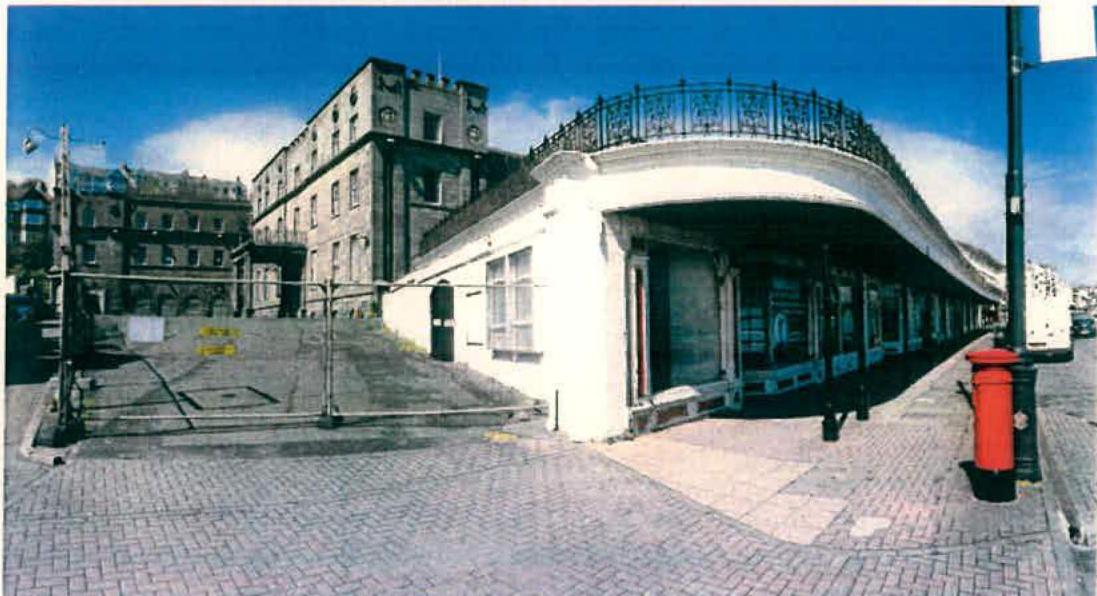
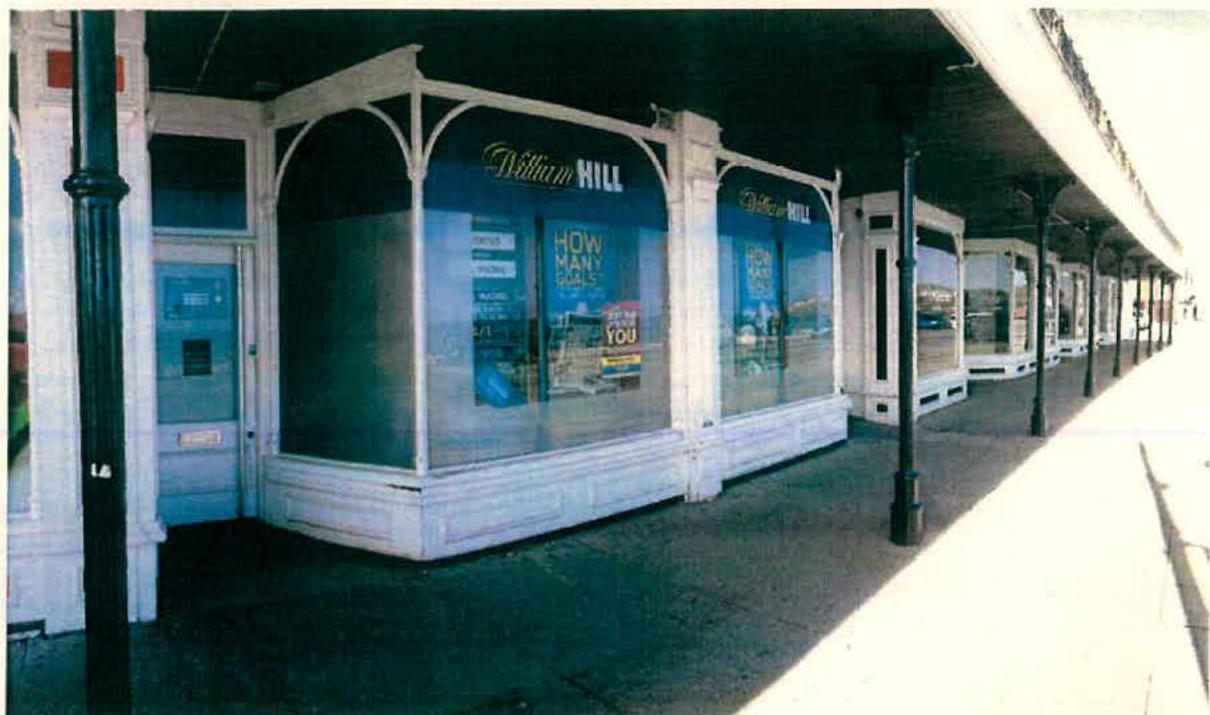
2.2 The Colonnade consists of a projecting canopy, supported by traditional ornate cast iron columns, beneath which sit shop units with timber shop fronts. The shop fronts have panelled stall risers and pilasters, slender colonnettes and large display windows. The canopy has a deep fascia topped with a cornice molding, above which sit ornate cast iron railings. The pavement below the canopy consists of concrete slabs extending from under the Colonnade to the road on Central Promenade.
2.3 The Colonnade sits in a varied streetscape, with five storey Victorian era buildings to the south west and the modern Palace Hotel and Casino to the north east. It sharply reduces in scale compared to the Victorian buildings opposite, and the Castle Mona Hotel can be seen in the background from the Promenade.
3.1 The Castlemona Colonnade is built on land that was once part of the Castle Mona estate. The estate included the main house, now known as the Castle Mona Hotel, which was completed in 1804. The house was designed by George Steuart for the fourth Duke of Athol, and is the best known surviving example of his work on the Isle of Man. The estate originally comprised extensive landscaped gardens which extended down to a wall with bastions above the Promenade. The Castle Mona was operated as a hotel during various periods from 1832, before being closed in 2006. The estate was purchased by the Manx Syndicate in 1888 and divided into plots which were sold off to be developed individually.
3.2 The Castlemona Colonnade was once part of a wider complex comprising two colonnades flanking the entrance to the Palace Ballroom (demolished in 1965). The Castlemona Colonnade is thought to have been built c. 1898. Subsequent plans dated 1908, filed with Douglas Borough Surveyors by G. & W.R. Kay Architects on behalf of the Palace & Derby Castle Co., show a similar colonnade to the north of the Ballroom entrance. G. & W.R. Kay Architects consisted of George Kay, architect for the Palace Opera House (1913) and his brother Walter, a civil engineer. It is not known for certain whether or not they also designed the Castlemona Colonnade.
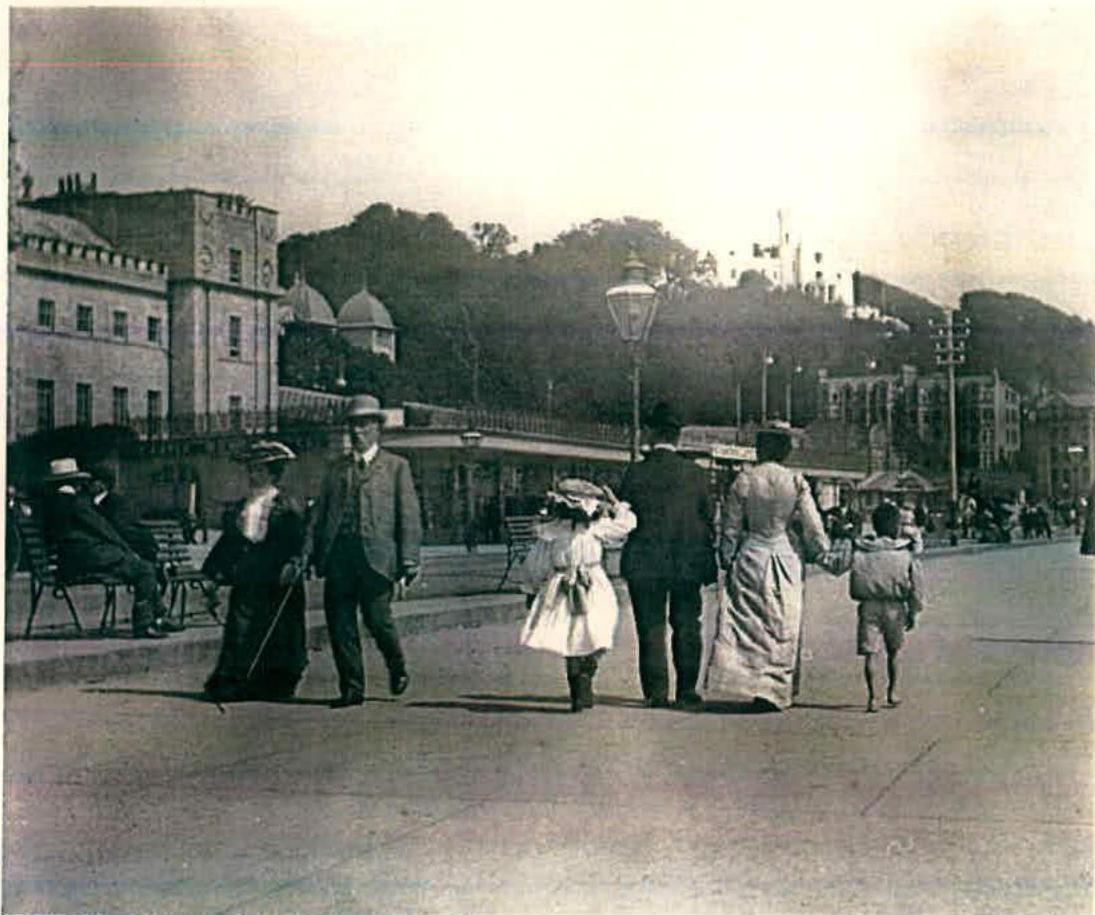
3.3 The Castlemona Colonnade is an attractive surviving example of a seaside colonnade and the architectural features are considered to be typical of the period. The building would have been an important feature of Central Promenade when the Isle of Man was a busy holiday destination. The photograph 01 in Appendix I shows the Colonnade in 1904, with the Palace Ballroom in the background next to the Castle Mona Hotel. The shops would have been visited by promenading holiday makers, and were part of the seaside features of the area, which included the guest houses along the Promenade, the Castle Mona Hotel and the Palace Ballroom. The building is a surviving piece from an important period during the Island's past and is therefore considered to be significant from a social and historical perspective.
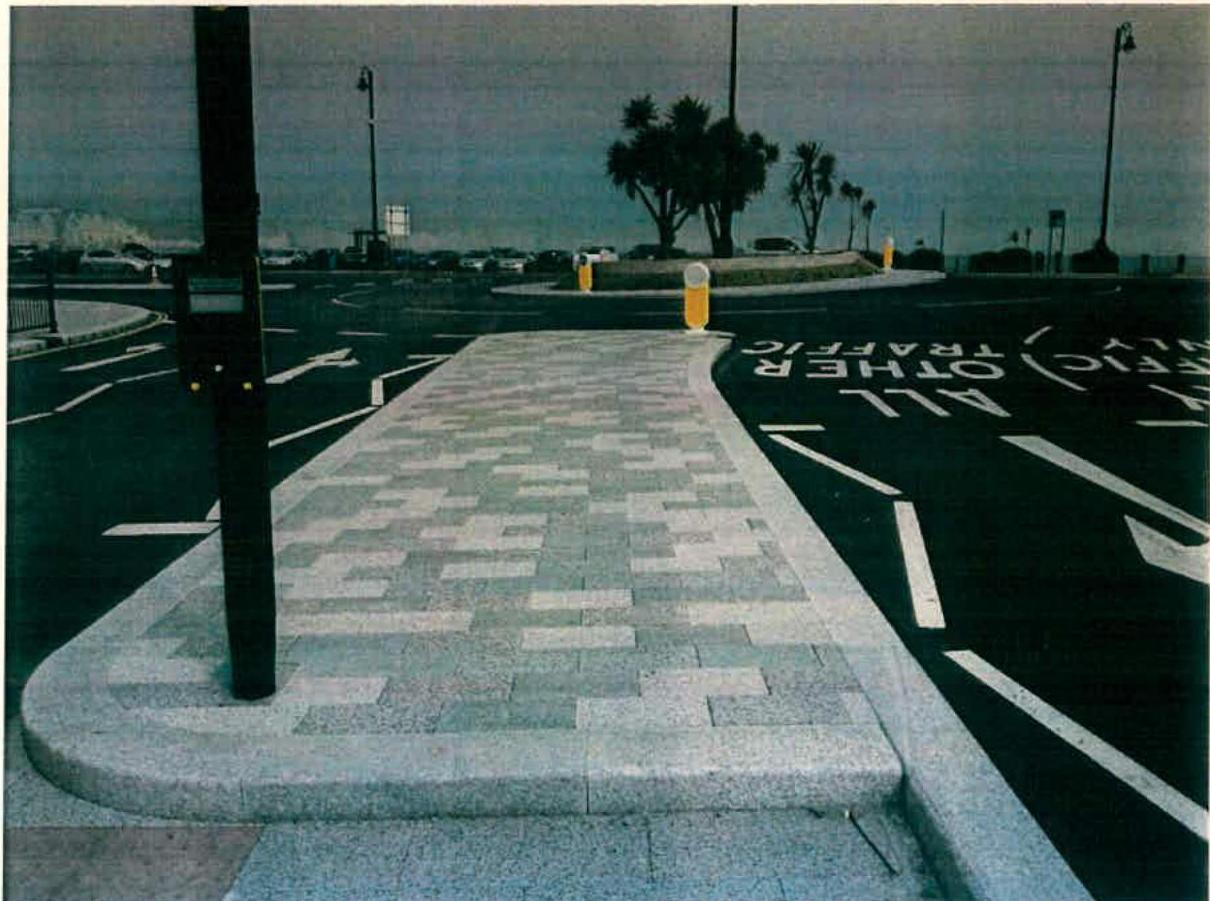
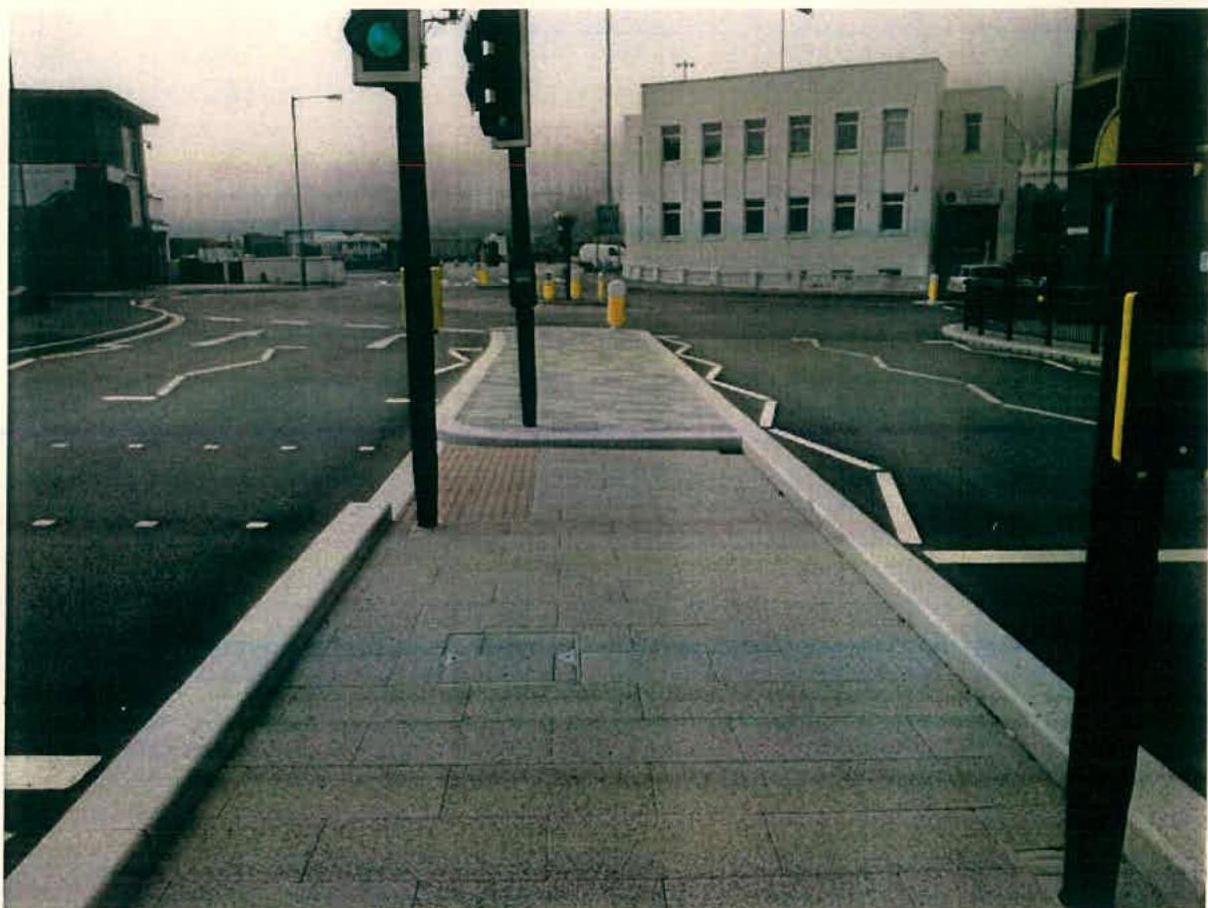
4.1 The proposed alterations to the pavement are part of the overall refurbishment of the Douglas Promenades, Planning Approval for which is to be sought under a separate application. It is proposed to the replace the existing concrete footway along Central Promenade, including where it passes under the Colonnade, with new Kellen paving, comprising concrete pavers with a natural stone aggregate top layer. Photographs 04 and 05 in Appendix I show examples of the proposed finish. It is not proposed to alter any other part of the Colonnade or change the level of the footway. The effect of the footway alterations will be to integrate the Colonnade into the refurbished Promenade, while the change of surface under the Colonnade will provide a more attractive surface in front of the shops. The existing paving is not considered to be of any architectural or historic significance.
Appendix I Photographs
01 The Castlemona Colonnade c. 1904; the Castle Mona Hotel and Palace Ballroom can be seen to the left (Manx National Heritage Photograph Archive)
02 Castlemona Colonnade viewed from the south with the Castle Mona behind.
03 Colonnade showing existing concrete footway
04 Kellen paving (Victoria Street, Douglas)
05 Kellen paving (near the Sea Terminal, Douglas)
Copyright in submitted documents remains with their authors. Request removal
