Loading document...
STATEMENT TO ACCOMPANY AN APPLICATION FOR REGISTERED BUILDING CONSENT IN RESPECT OF PROPOSED ALTERATIONS TO EXTERNAL FOOTWAY AT THE GAIETY THEATRE, HARRIS PROMENADE, DOUGLAS, ISLE OF MAN
1.0 Introduction 2.0 The Application Site 3.0 An Assessment of Significance 4.0 Assessment of the Proposals 5.0 Sources
Appendix I Photographs
DOC. NO. 1501-006 REV. - 28.05.15 DATE 28.05.15 DETAILS APPLICATION FOR REGISTERED BUILDING CONSENT
1.1 The following statement has been prepared in support of an Application for Registered Building Consent for alterations to the footway at the Gaiety Theatre, Douglas.
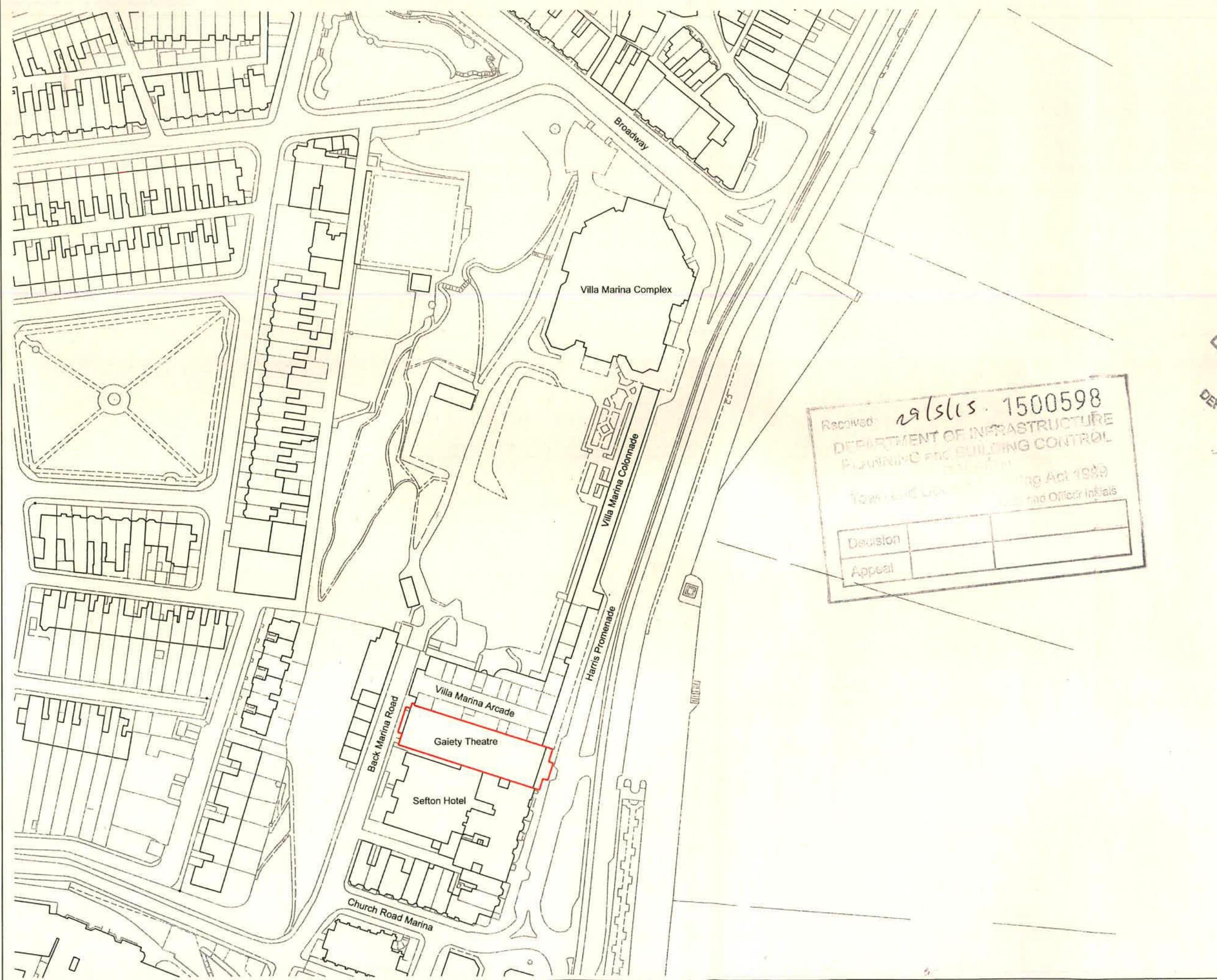
1.2 The Gaiety Theatre was added to the Protected Buildings Register in 2002 (Registered Building No. 200). The red line on drawings 1501-001 & 002 defines the curtilage of the Registered Building as per the map attached to the Register entry.
1.3 It is proposed to extend and alter the footway in front of the Theatre, including the area under the front canopy, as part of a scheme of overall improvements to the Douglas Promenades, details of which will be submitted under a separate Application for Planning Approval. Registered Building Consent is required for the alterations to the area under the canopy, which is within the cartilage of the Registered Building.
2.1 The Gaiety Theatre is located on Harris Promenade in Douglas. The Sefton Hotel is to the south and the Villa Marina Arcade and Colonnade are to the north.
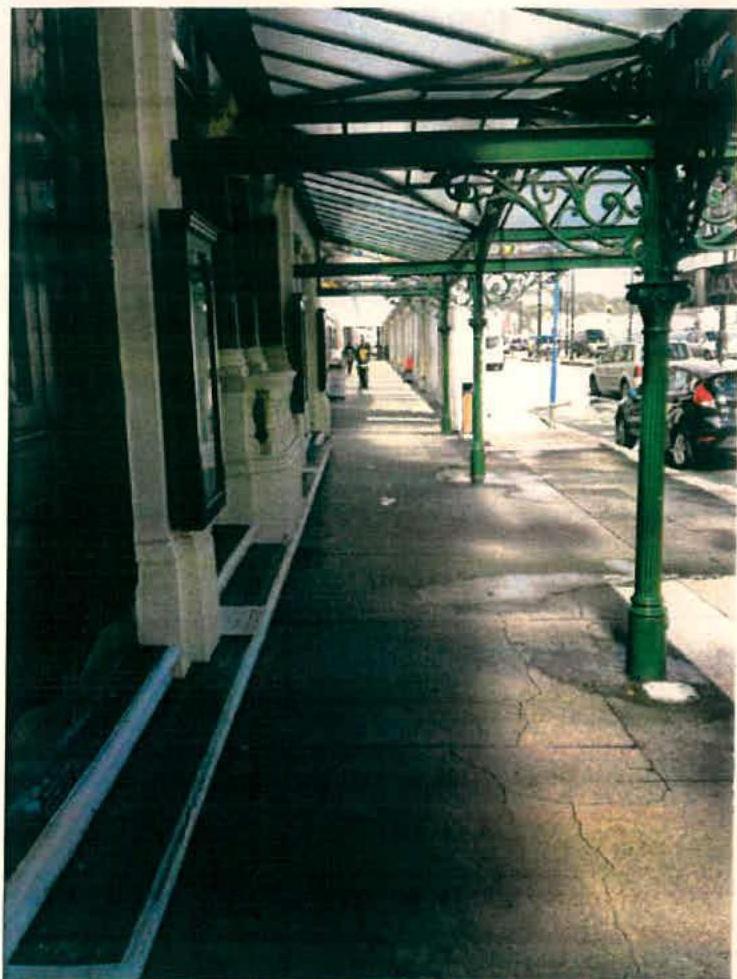
2.2 The facade of the building comprises a main facade behind which the vaulted roof of the auditorium is set back. The main facade comprises a central bay between two side wings. The entrance doors to the main foyer sit in the central bay, within tall arched openings below the distinctive balustraded loggia. Four steps lead from street level to each entrance door, separated by an ornamental balustrade. On either side are two side wings, each containing two sets of doors one step above street level. One of the most impressive features of the facade is the ornamental canopy, comprising a cast iron frame with stained glass infill. The canopy is supported by four iron columns, terminating in large lanterns, with a central piece cantilevering out towards the promenade at a right angle to the facade. The canopy creates a grand and generously proportioned sheltered area for patrons, which is continued under the Villa Marina Colonnade. The surface finish of the footway under the canopy is concrete.
2.3 The Gaiety is a central feature of Harris Promenade, forming part of a continuous and distinctive facade comprising the Sefton Hotel to the left and the Villa Marina Arcade and Colonnade to the right, and terminating in the Villa Marina at Broadway.
3.1 The Gaiety Theatre was designed by Frank Matcham, who was at one time the most fashionable and sought after theatre architect in Britain. He designed over 150 theatres and music halls, including the London Coliseum and Victoria Palace.
3.2 The Gaiety was completed in 1899 and opened in 1900, as a grander replacement for the Pavilion Theatre which stood on the same site. It enjoyed its most successful period until 1914, after which followed a period of decline, when declining commercial viability resulted in increasingly less money being spent on its upkeep and maintenance. It reached its worst state of neglect during the 1960s, and was scheduled for demolition in 1968. The Isle of Man Government purchased the building in 1971, and various renovations commenced from 1976 onwards. A major restoration was launched in 1990, which included works to the exterior. In 1993 the facade restoration was completed, including the entrance canopy which was fully restored together with the stained glass panels in the arches over entrance doors.
3.3 The Gaiety Theatre is of architectural significance, as a surviving example of Matcham’s work, and as one of the finest theatres in the British Isles. It was described by the poet John Betjeman as the finest theatre outside London. Its significance is heightened by the fact that by 1982, 85% of the theatres and music halls completed before World War I had been lost, including 20 of Matcham’s in London alone. The theatre is also a recognised and important part of the streetscape of Harris Promenade, from the Sefton Hotel to the Villa Marina. The canopy is an important feature, which changed the nature of the public space in front of the Theatre. This is especially clear when comparing the current facade to that of the old Pavilion Theatre (see photo 01 in Appendix I).
3.4 The Theatre is also of social and historical significance as an important surviving building from the era of grand theatres and music halls during the late 19th and early 20th century, during which time the Isle of Man was also a busy holiday destination.
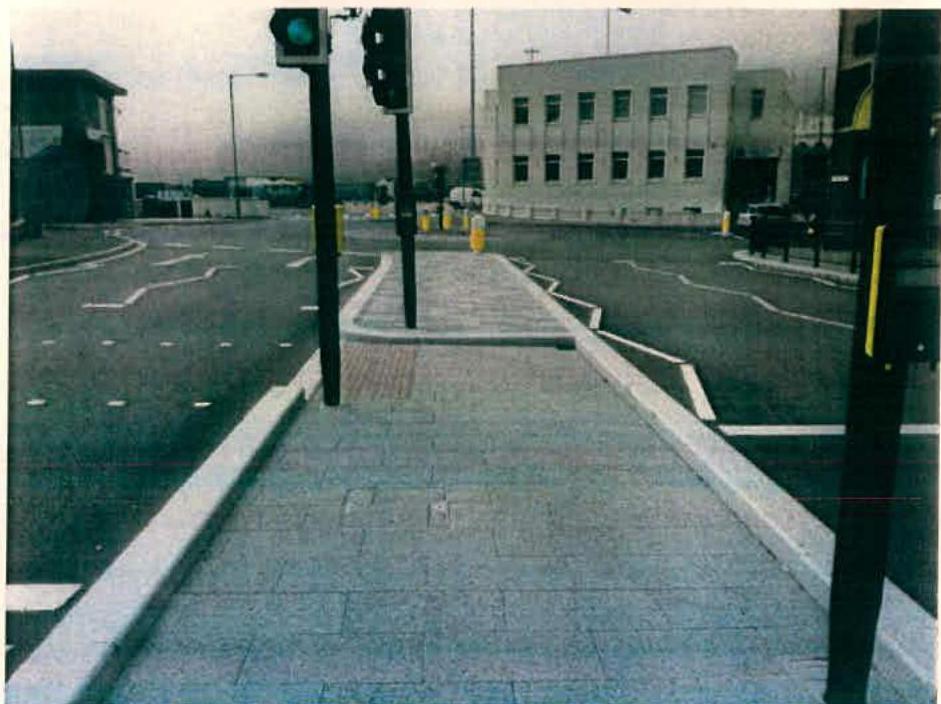
4.1 The proposed alterations to the external footway are part of the overall refurbishment of the Douglas Promenades, Planning Approval for which is to be sought under a separate application. As part of the overall scheme, the paved area in front of the Sefton Hotel and Gaiety Theatre is to be extended to encompass the existing island in the middle of Harris Promenade. An area of single colour grey Kellen paving is to extend from the facade of the Gaiety, across the extended pavement, to the road. Kellen paving comprises concrete pavers with a natural stone aggregate top layer. Photo 04 in Appendix I shows an example of the proposed paving.
4.2 There are two options for the area in front of the Theatre. The first option is for the existing concrete pavement to be replaced without altering the levels of the pavement. The second option is for the pavement to be raised to the height of the steps in front of the side doors on the far left and right hand sides, as illustrated in drawing 1501-002. Apart from this small change in level, it is not proposed to alter any part of the facade or canopy columns.
4.3 The effect of the footway alterations will be to integrate the Gaiety into the refurbished Promenade, while improving the important public space covered by the canopy. The existing concrete hard standing in front of the Theatre is not considered to be of any architectural or historic significance.
Protected Buildings Register Douglas Borough Council Building Control Archive Manx National Heritage iMuseum Collections Tutt, Patricia (2013) “An Introduction to the Architecture of the Isle of Man”, Ramsey: Lily Publications MacMillan, Roy (2000) “A Full Circle: 100 Years of the Gaiety Theatre and Opera House, Douglas, Isle of Man”, Douglas: Keith Uren Publishing
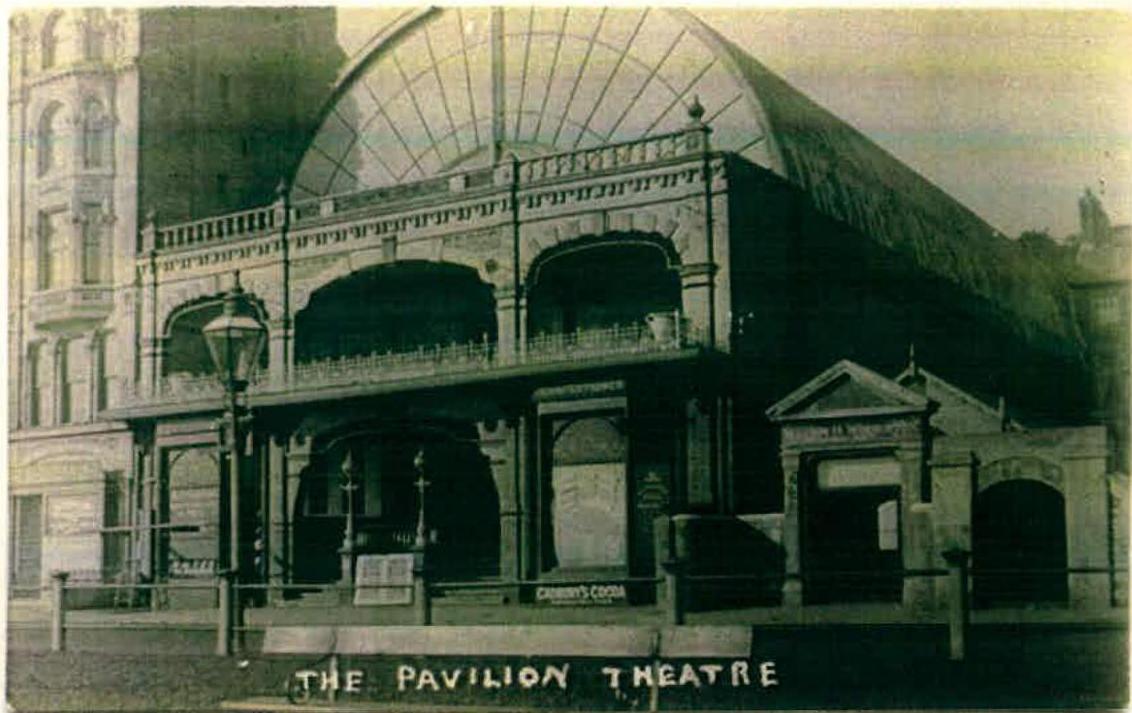
01 The Pavillion Theatre (Manx National Heritage Photograph Archive)
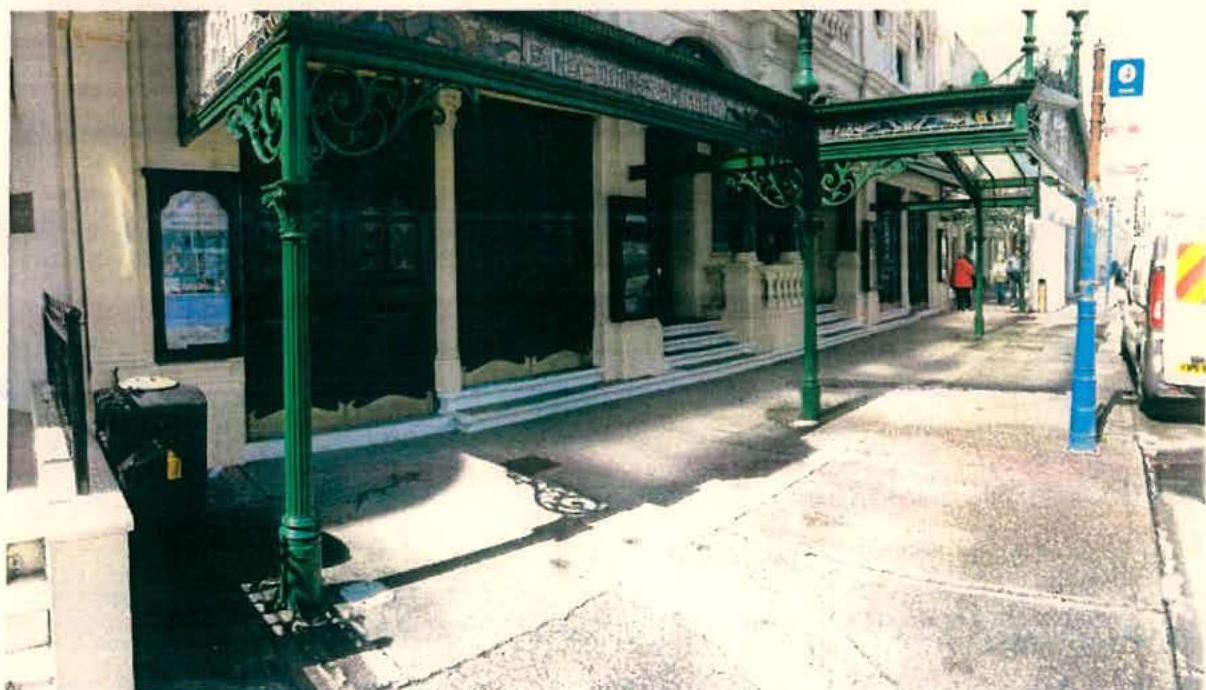
02 The Gaiety Theatre facade and canopy, with the Villa Marina Colonnade in the background
03 The covered public space in front of the Gaiety is continued under the Villa Marina Colonnade beyond.
04 Single colour grey Kellen paving (foreground)
The copyright of this drawing is held by the Architect and the drawing may not be reproduced without permission. Figured dimensions are to be used in preliminary to market dimensions. All relevant dimensions and editing will not be checked for site prior to construction or fabrication. Any discrepancies on this drawing or however, the end any other relevant drawings are to be reported to the Architect.
RECEIVED ON 29 MAY 2015 DEPARTMENT OF INFRASTRUCTURE FEDERAL BANKING
ORIGINAL FEDERAL
| DELIVERY | |
| PURCHASING |
| REV. DATE | DETAILS |
| MODUS ARCHITECTS | |
| Business Owner | F10200 001-012 |
| Address | F10200 001-011 |
| Call Number | [email protected] |
| Site Address | www.f10200.com |
| Bill Code | |
| project: External Footway Alterations Gaiety Theatre Harris Promenade Douglas | |
| client: Isle of Man Government Department of Infrastructure | |
| drawing title: Site Location Plan | |
| drawing scale: 1:1500 | original size: A3 |
| drawing number: 1501-001 | variation: - |
Copyright in submitted documents remains with their authors. Request removal
