Loading document...
TRULY MANX DRINKS MADE WITH MANX-GROWN FRUIT
FACEBOOK INSTAGRAM TWITTER @AppleOrphanage
Planning and Building Control Directorate Department of Environment Food and Agriculture First Floor Murray House Mount Havelock Douglas Isle of Man IM1 2SF
7th JULY, 2020
Hello Planning people!
Please find enclosed Apple Orphanage's second planning application for Field 310346, in the parish of German. We've been consulting about this application with Lucy Kinrade.
As explained to Lucy, we need to progress with this urgently and would like to start work in August.
There are references made to our first planning application (made on the 25th June) within this current application. This original planning application will be referred to as "Application A".
We have enclosed a cheque for $£ 300$. Many thanks and we look forward to hearing from you!
All the best,
Please note that this is our second of three planning applications pertaining to development in Apple Orphanage's Orchard field (310346). The first application 20/00661/B (referred to as Application A) proposed infrastructure improvements for the Orchard's entrance and trackway. This, second, application is for the erection of a temporary agricultural building, and the third will cover all signage proposed throughout the Orchard.
Apple Orphanage handmakes delicious drinks with Manx-grown fruit! We are a small agricultural business with community at the heart of our operation.
We're passionate about using seasonal, locally grown crops and natural ingredients. We source fruits, grown and harvested in the Isle of Man, via our Fruit Exchange - trading your crops for juice.
This planning application relates to Field 310346, German,
IM5 2AQ. We have an urgent need to erect a temporary agricultural building ( 12.2 m by 12.8 m footprint) in this location with external finishes that fit the contemporary agricultural vernacular and minimise disruption to the natural environment. This building, and Application A's infrastructure is essential to facilitate safe and efficient business operations and enable the continued trade of Apple Orphanage Co Ltd.
The application is personal to Apple Orphanage and unique to our business needs. The building proposed is temporary (explained below) and we are open to accepting a condition that the building be removed after a certain period. We hope to discuss these terms in more detail with you, and anticipate having the knowledge, understanding and funding to apply for a permanent solution in 3-5 years.
The urgency of these infrastructure changes has been exacerbated by the Covid-19 pandemic. However, we have been developing, researching and consulting about long term plans since 2013, so the proposal is fully considered.
Apple Orphanage was set up in 2009 and started production in 2010.
Apple Orphanage was co-founded by redacted and redacted with the intention to encourage, promote and utilise local produce and under utilised Manx agricultural/horticultural resources. We are a
truly local business: we have consistently handcrafted delicious natural drinks, using Manx grown ingredients, processing all the fruit/vegetables/flowers on Island. All of our drinks are bottled, packaged and distributed on the Isle of Man by Manx workers. We are the largest beverage bottling operation on the Island; currently producing around 100,000 bottles per year.
The unique concept of Apple Orphanage is our Fruit Exchange; a network of Manx fruit growers who harvest their fruit in return for a fair share of the bottled produce. We have also been working with both DED and DEFA to develop a sustainable Manx commercial fruit growing industry.
We are now an established, proven and well known small agricultural business, showing consistent year on year growth. Since beginning operations in Autumn 2010 we have had a phenomenal uptake in interest, both in our Fruit Exchange (the quantity of fruit collected) and in the products themselves. Our growth has been dramatic, pressing over 40 tonnes of apples in 2019 (as well as also utilising a plethora of other Manx fruit, foraged plants and flowers) and supplying 50 outlets across the Island with a range of soft and alcoholic drinks.
Year on year demand for our products has grown exponentially; but we have struggled to increase our production at the rate required given the physical and infrastructure limitations of our current site (further explained in "Current site").
In 2017 we won the accolade of "Britain's Favourite Drinks Producer" courtesy of a public vote, run by Landlove Magazine. We have appeared on many UK and European produced television programmes, blogs and books, advertising and championing the Isle of Man's wonderful produce, epic landscape and potential for self sufficiency.
We have worked closely with DEFA and other Manx food and drink producers over the last decade, and are committed to remaining a staple of the Manx food industry, offering products and services that are not just local, but high quality, environmentally responsible and rooted in our community. We play an important part in DEFA's Isle of Man Food and Drink development strategy: "Our ambition for the Isle of Man food sector in 2025 is to have flourishing businesses reliably supplying locally-produced staple and artisanal products, profitably exporting and contributing to a local food culture celebrated and valued by residents, visitors, retailers and the hospitality sector."
FOOD MATTERS; A development strategy to grow the economic contribution of Isle of Man Food and Drink from 2015 to 2025, DEFA.
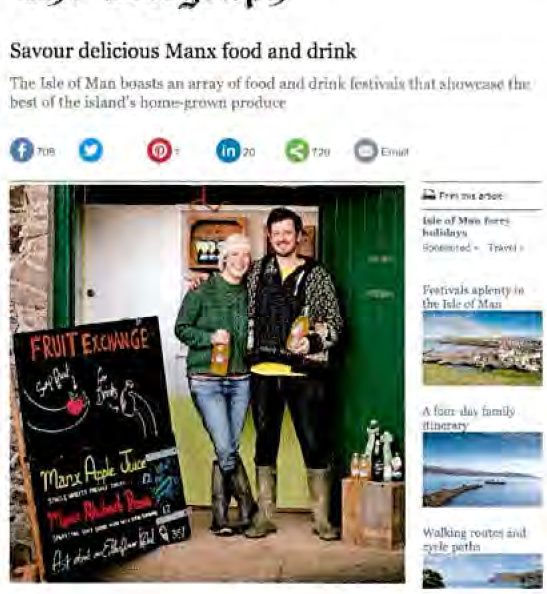
Since 2010, we have seen enormous growth in both demand for products and participants using our Fruit Exchange. An increasingly limiting external factor to our growth is the inadequacy of our existing site and its constraints on efficient/sustainable business development (further explained in "Current site"). We need to change this to grow.
To address these limitations, we initiated a programme of continual market research, critical efficiency studies, assessments of best practices, and the evaluation and implementation of cost-effective mechanisation. We visited a number of Manx, UK and European producers and manufacturers to get a working knowledge of larger scale production. We are now confident that with development and investment in key areas, utilising and developing land in our adjacent Orchard field, we can increase production and expand the business to meet increasing demand and achieve sustainable growth.
We have a business plan in place which will create a number of new positions including permanent full time, permanent part time and seasonal roles. Since becoming registered employers in 2018, jobs at Apple Orphanage have been of a favourable quality. We provide good job satisfaction, living wages to all employees and a friendly working environment focussed on health and well-being. We rely upon our workers to uphold the quality of our products, champion our brand and preserve our reputation. As such, our workers are our greatest asset.
The creation of new jobs at Apple Orphanage, in line with our business plan, is entirely reliant upon proceeding with this proposed phased implementation of developments in our Orchard field.
Proceeding with these proposed developments will increase our local spending, not only on employment but on other Manx commercial growers. This will secure a scalable supply of Manx grown produce benefiting not just us but the whole Island as well. We have a number of interested parties but we must secure a new facility and improved infrastructure before we can enter into commercial contracts. Further commercial growing on the Island would allow substantial scalability, new product development and help support economically viable agricultural diversification.
Erection of a temporary building is the crucial second step in the phased implementation of our development if we are to be the truly sustainable, local agricultural business we founded.
One fundamental element ripe for growth is our Fruit Exchange. We currently acquire 95% of all of our crops through the Fruit Exchange, which has a growing number of participants year on year. This is an aspect of the business that highlights Manx community spirit, minimising waste and local produce. There is still a high percentage of the Island unaware of this service, yet we
cannot feasibly grow the Fruit Exchange on our current site due to the restrictions on space (further explained in "Current site").
We need to pursue the developments detailed (see Development implementation): without them we will not be able to maintain and expand upon the level of production required to ensure Apple Orphanage becomes economically sustainable and benefits the Island's economy. The difficulties Covid-19 has imposed upon us makes achieving business sustainability even more challenging, but the proposed building will consolidate our ability to survive and develop.
Our current facility is located at The Lynague, German, IM5 2AQ. East (sea) side of the A4, midway between Peel and Kirk Michael. Apple Orphanage holds a short-term tenancy of its current premises and there is no prospect of the site coming under our ownership. The site is made up of a traditional stone agricultural barn, small outdoor area adjacent to the barn, shared hardstanding opposite the barn and shared road access. The hardstanding area and road access are shared with 2 private dwellings and the incompatible agricultural activities of Lynague farm.
The Lynague is a working farm, which poses many obstacles in terms of efficiently/safely
managing customers, staff and the high level of hygiene required for production. We cannot control when or where there may be farm animals or machinery surrounding our facility, which makes the safe management of foot and vehicle traffic impossible. Maintaining the organic year on year growth of the Fruit Exchange at the current site is not possible.
The current site is deemed wholly unsuitable for renovation, extension or new development:
The traditional stone barn we rent is extremely space restrictive. We have already grown to the
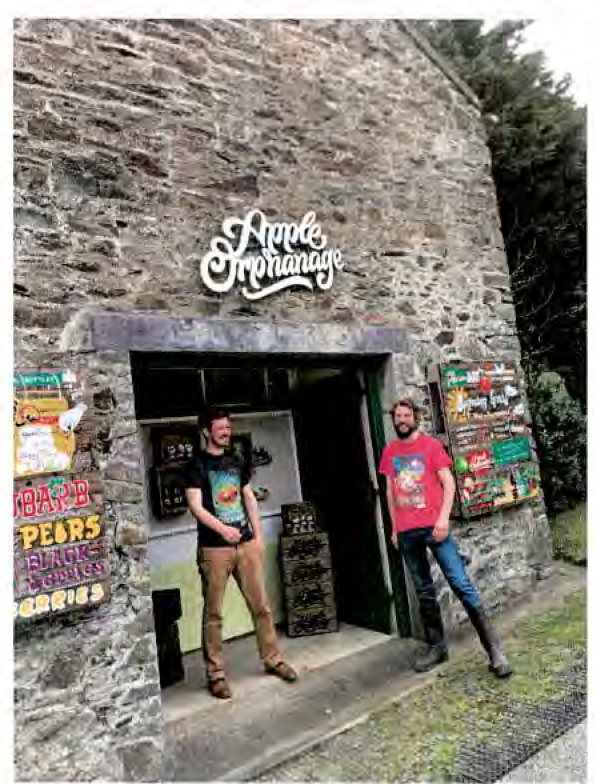
extent that we needed to rent additional external storage facilities on a separate site. We have found this external storage to be extremely taxing; time inefficient, uneconomic and environmentally unsound (given the additional vehicle emissions). The existing issues we have with these premises include:
To meet the continually growing demand for our drinks a solution must be found to the above issues - our current long term "Master plan" is consolidating full business operations into the Orchard in a bespoke agricultural shed. We are not ready to undertake, nor fund, this final phase of development but continue to consult with Planning and Highways about the scheme. We fully understand that the approval of our current application would in no way secure any future development proposal, but want to be open and forthright about our intent.
Due to the layout of the current site, the extremely confined space and topography, there is no designated area to manage deliveries of produce or goods. This means that the area of the single track way directly outside the stone barn is multipurpose (functioning as delivery/drop-off zone, customer engagement, vehicle turning, vehicular access to a dwelling, farm machinery/activities and public footpath); we do not feel this is appropriate or safe.
This site precludes deliveries from local hauliers, who largely refuse to use the trackway given its size. In addition, there is no level, smooth drop off space required for the delivery of heavy palletised goods, nor any suitable on site storage. We need these on a regular (weekly) basis in peak production times. It is essential that we are able to take delivery of and store such goods on site; without this we cannot feasibly operate in an efficient enough manner to viably sustain Apple Orphanage.
Apple Orphanage is a well established business involved in the community, receiving regular media coverage - with this comes an increased level of customer expectation. This includes easy, predictable, and safe access to our facilities and services. Having spoken with our regular customers over the last few years and more recently having conducted a survey, it is clear that our customers are not satisfied with our current offering.
Our Fruit Exchange is not just the simple delivery of produce, but an opportunity to converse with and educate our customers. This added value helps to promote a connection to Manx farming and food production; educating about our processes and the industry, promoting and detailing sustainable and organic domestic horticultural practices that customers can practice at home. This is a valuable part of the customer experience and one which people engage in and enjoy as part of their visit. However it is also one that we increasingly struggle to facilitate with the
restrictions at our current site. As a community driven business it is extremely important to us that we listen to our customer base and provide not only the minimum required level of customer safety and accessibility, but a positive, enjoyable experience. We need to rectify our infrastructure to solve these safety and accessibility problems. Without bringing Apple Orphanage's service infrastructure in line with (if not exceeding) customer expectations, we jeopardise the core of our business, from which $95 \%$ of our produce is sourced.
The site, field 310346, is an apple orchard roughly 5 acres in size. The Ballabooie Road runs along the North side of the field and the A4 along the West side. Field 310346 is within an Area of High Landscape or Coastal Value and Scenic Significance identified on the Development Order 1982. There is currently a single highway access from the A4 in the South West corner. The field is, topographically, relatively flat, having a fairly uniform slope of $6.5 \%$. The field has been significantly improved by Apple Orphanage over the last 9 years; works include extensive drainage improvements, erection of artificial windbreak and planting of living windbreak
In 2011 field 310346 was secured (directly across the A4 road from our current facility) by Apple Orphanage to create an orchard. The main reason for this undertaking was to enable future growth by providing an additional and secure source of fruit.
After an extensive research regime which included building strong relationships with large orchard growers in the UK we have gained a wealth of specialist knowledge and data. A low intensity management system has been selected, which minimises large machinery and the use of pesticides/fertilisers, while providing a safe haven for bees and other native wildlife, particularly pollinators and natural pest control. We collected and analysed a year's weather data for the site before planting; which led to the selection of semi-dwarfing M26 and more vigorous M116 rootstocks; optimally suited to these conditions, their cropping potential establishes an economically viable orchard by time of maturity.
Substantial agricultural works have been undertaken to transform the field with more than 2000 Manx and British heritage apple trees and over 10,000 living windbreak trees already planted. Extensive field drainage works (over 300 m ditching) and solid improvements have dramatically improved the once waterlogged and disused field into a relatively sound agricultural space.
We have grown, trialled and documented over 150 apple cultivars and grafted over 3,000 apple trees on the Island.
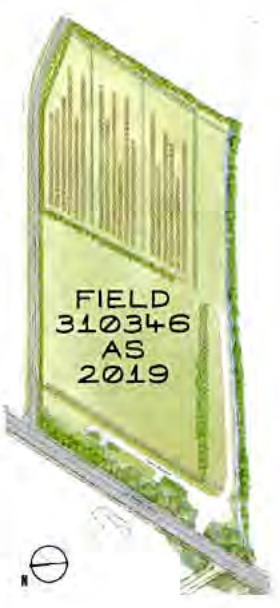
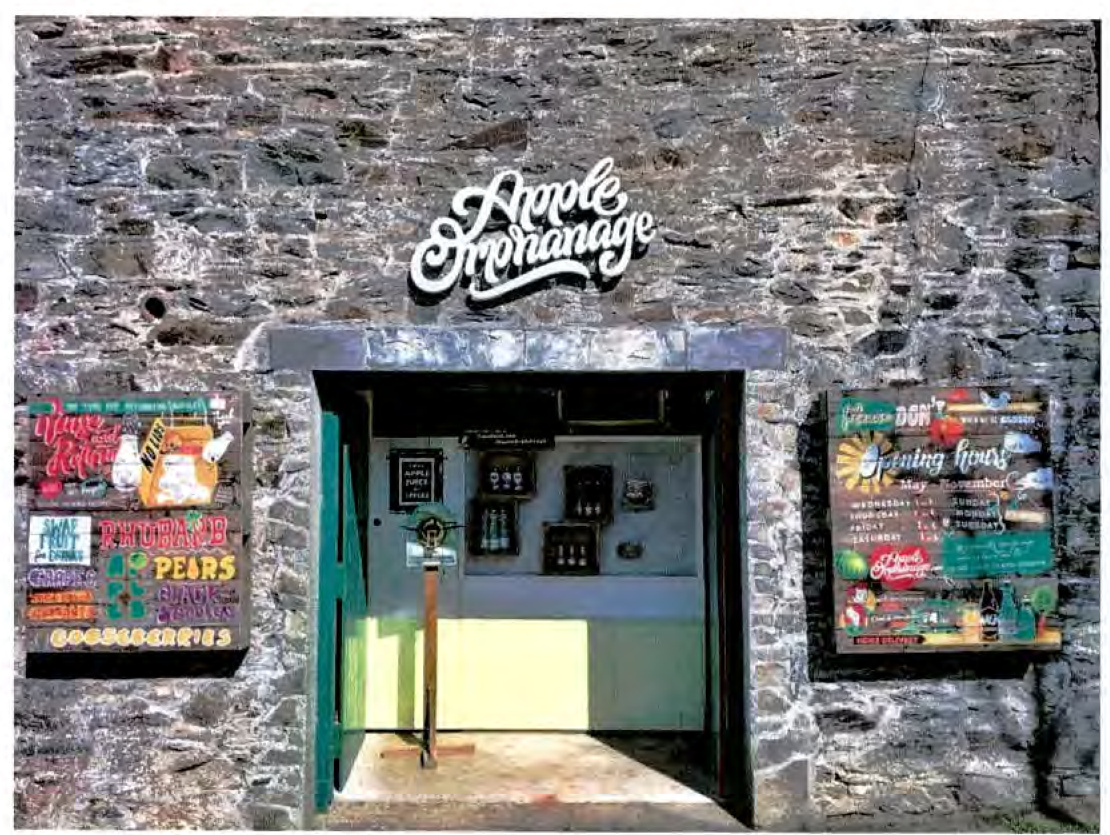
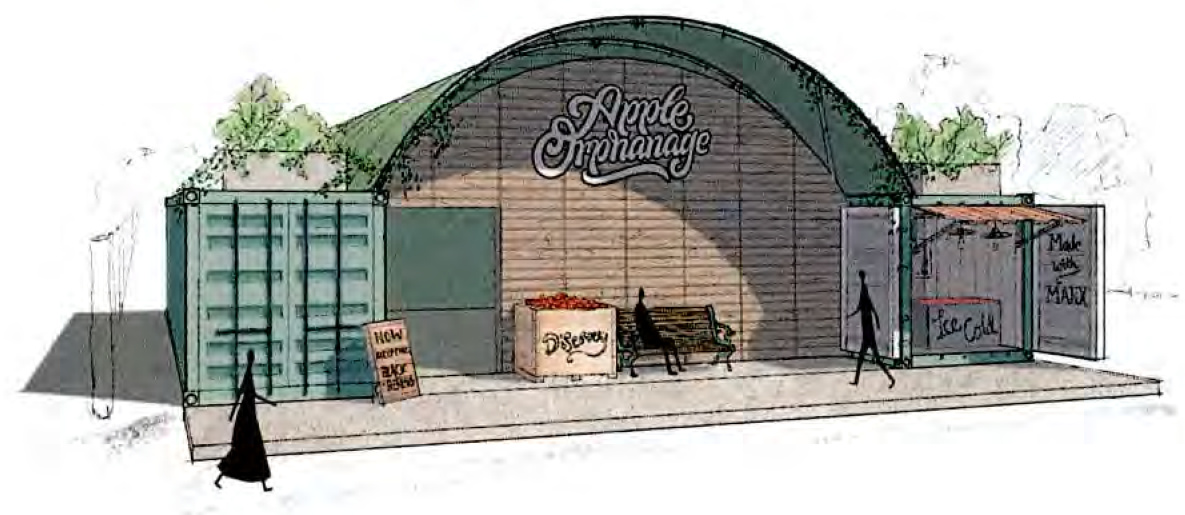
See attached plans, drawings and elevations. The following proposed developments in our Orchard, field 310346, represent solutions to our "Development Objectives":
Erection of a temporary building with external finishes that fit the contemporary agricultural vernacular:
As detailed earlier, many of our typical business operations are extremely difficult at our current site. Due to business growth some processes have become unsafe and others are simply no longer possible, at the scale demanded, with our current infrastructure.
Our eventual "Master Plan" sees the relocation of all Apple Orphanage's operations into our Orchard, and the replacement of this temporary building with a larger all-encompassing
processing facility that will allow space and efficiency required for our final stage of expansion and growth. This is crucial for the continued success of our business.
Additional issues that have arisen due to the Covid-19 pandemic have brought forward the necessary timeframe for this development, and so we now find ourselves needing to move forwards as soon as possible. Covid-19 has struck the Island at a particularly crippling time for the food service industry. The majority of our sales ( $70 \%$ of turnover) are made APR-SEP. The severe loss of earnings in a seasonally critical period for 2020 and the loss of 3 months production further compounds the effects of Covid-19.
Assuming a full social and economic recovery can be made, we will not be able to weather the extreme cashflow strain and clear deficit caused by Covid-19 at our current level of efficiency. This application will bridge the gap between current unsustainable operations and our final phase of developments, allowing for fast, cost effective increase in production efficiency, while helping to fund our "Master Plan".
Managing the current volume of customer fruit drop offs is inefficient, unsafe and has resulted in lowered customer satisfaction. Growing the Fruit Exchange (our customer base, raw materials and therefore overall production) on this site is not possible given the restrictions imposed on this site. Such growth is both essential (for the success of the business) and inevitable (we have seen growth every year for the last 10 years).
To run the Fruit Exchange well, an area dedicated to customer interaction is needed. We currently cater for this need with our "shop": a small frontage of our processing barn that displays a limited number of our products. The main purpose of this area is to facilitate the exchange of drinks, but many customers opt to purchase a few extra bottles while they are visiting. The negligible floor space provides customers with minimal protection from the weather and passing vehicles on the adjacent trackway, which is neither particularly safe nor enjoyable.
We need to provide additional, safe and reliable, space for this growing customer base and our business operations. The Fruit Exchange must also be located as close as possible to our processing facility, to ensure maximum efficiency in labour costs and time allocated to the manufacture of drinks. This is also true of materials we buy from off-Island, which are palletised and delivered on commercial haulage vehicles. Regular (weekly) deliveries of these goods is necessary in peak production times (September to December), and will become necessary year round as we increase production.
The temporary building will function in 3 major ways:
Separating any of these elements from the site would be wholly inappropriate and not sustainable for our unique operation. As detailed in "Current Site" we have trialled renting storage off-site (3 x 20ft shipping containers) and the additional inefficiencies created are hugely detrimental to the
sustainability of our operation. The long term viability of Apple Orphanage relies upon efficient processing and operations. However, as mentioned, we have no possibility to improve the infrastructure at our current site.
Further separating the operation of the Fruit Exchange to an alternative site outside of our Orchard is logistically impractical. The closest industrial storage available is located in Peel, however the journeys required to transport fruit and bottles to and from Apple Orphanage daily render this a costly and inefficient option. In 2019 we accepted over 40 tonnes of apples from customers visiting the Fruit Exchange; transporting the volume of fruit needed daily for pressing (approximately 3 tonnes), is simply not reasonable. When
coupled with the high costs of renting industrial space, this option becomes economically unfeasible. Moreover, not being able to quickly and easily check on the quality of stored fruit daily, would increase the proportion of fruit becoming spoiled and unfit for pressing.
Storing fruit in our Orchard has several further benefits. Most pertinent of which is the cost effective harvesting and storage of fruit from our own Orchard. Consolidation of these processes on the same site significantly improves our efficiency and minimises handling of fruit which is beneficial for the quality and freshness of harvested produce. Being able to compost waste generated through the decomposition of any spoilt fruit, which is an accepted part of storing fruit for later processing, is also desirable for maintaining an holistic, low impact orchard ecosystem. As such, it is an essential part of our agricultural operation as our Orchard matures.
The need to find a fast solution to our growing operational needs is essential. We will not be able to recover from the significant loss of revenue associated with Covid-19 at our current level of efficiency.
Our "Master Plan" is to relocate ALL of Apple Orphanage's facilities and processes (from harvest to finished product storage) into our Orchard field (which when at full maturity will yield over 20 tonnes of fruit).
We have neither the time nor the funding to undertake the building of a permanent facility at this time, but continue to liaise with the Planning department and DEFA about its design and implementation. It is, however, of the utmost importance that we implement an interim solution as soon as possible.
Our solution is to promptly relocate the following aspects of our business into our Orchard field:
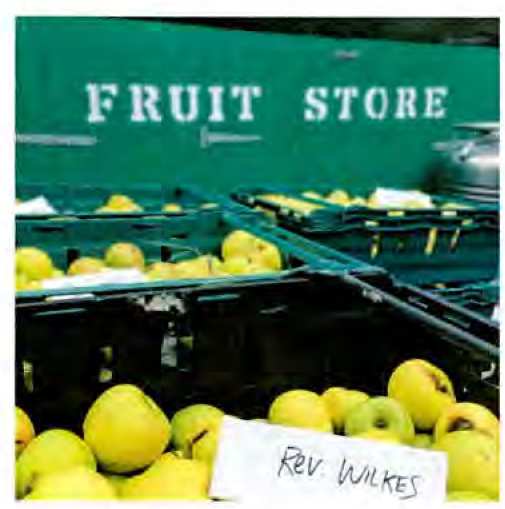
By moving all customer and vehicle traffic into the Orchard (across the road from our processing facility) our current facility is free to run processing only; thereby increasing processing space currently dedicated to the Fruit Exchange and improving efficiency.
The style of building proposed is the quickest, most cost-effective solution that provides the amount of space required. Construction takes only 3 days, and does not require traditional foundations meaning it costs a fraction of a more standard agricultural shed of the same size. A commonly used, British manufactured kit building, the turnaround is fast. The simple but functional design will provide enough additional operational space for approximately the next 3-5 years, at which point it will be necessary to further upgrade our facility (hopefully implementing our final "Master Plan", pending future approval).
After extensive research, we think this practical solution to our urgent need provides the best balance of cost effective implementation, speed and appropriateness for our intended agricultural use.
Although the Fruit Exchange is seasonal (running from start of May to end of November), our production is year round and therefore a solution to our storage needs must also be accessible year round. Moreover the sympathetic fit and finish we are aiming for (timber pallet frontage, integrated living greenery) negates the possibility of quick and easy seasonal dismantling despite its fast construction.
While this temporary building helps us in the interim, it cannot become the permanent facility that we need in the future. It is undersized for total operational consolidation, will not have connected services, only minimal concrete pier foundations, and would be wholly inappropriate for hygienic food production.
The design of our intended permanent building is still under consideration, and will need to be tailored to the feasible space within the Orchard. We will get a better understanding of how operations can work in the Orchard if our applications for trackway improvement and temporary building are approved. Operating in the space a couple of years prior to our final "Master Plan" application will be invaluable in finalising the permanent building's design. This time will also allow us to secure the necessary funding to undertake the eventual, more costly project.
Although temporary, we have taken a lot of care to sensitively appropriate this practical kit building for our Orchard location considering Apple Oprhanage's agricultural roots; creating a visually appropriate, contemporary design that balances geometric, industrial materials with the
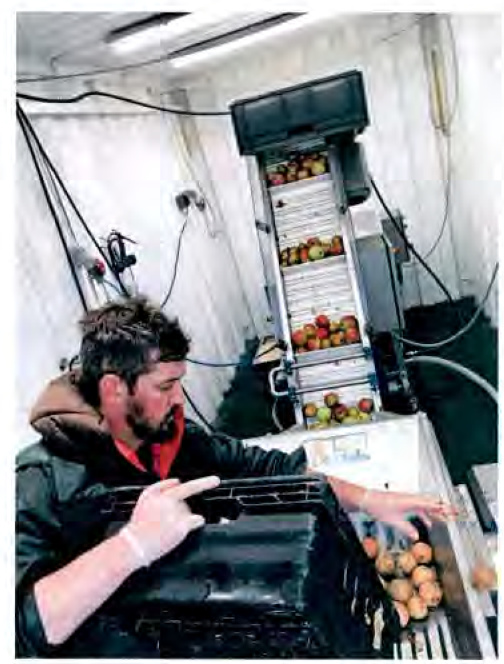
surrounding organic landscape. The result is a unique design that honestly reflects the functional nature of modern agriculture and how this can sit harmoniously within a rural context.
The design and softening of the building's aesthetic has been developed using the same design ethos used throughout Apple Orphanage's brand. Traditional in nature with a contemporary edge, honest and transparent in process/materials and always with a focus on low environmental impact.
Corrugated metal is part of the agricultural vernacular and our choice of green paint helps appropriately blend the metal with an array of similarly coloured foliage and artificial windbreak fencing. The timer frontage helps to soften the more industrial steel; the creeping ivy and a selection of plants on top of the structure integrates the whole building sensitively into the natural surrounding landscape.
We generate wooden pallets as a byproduct of our business processes; these will become the timber frontage of the structure, reducing waste in the reuse of these materials. Timber is similarly an accepted part of the agricultural vernacular, and the recycled, debarked pallets sit well with surrounding trees and fence posts.
The PVC canopy connecting the corrugated metal is also in a shade of green to help blend with the landscape and is partially transparent; blending with the landscape behind and allowing light into the covered area beneath. This removes the need for artificial lighting in approximating $67 \%$ of the building's floor space. Appropriate to the agricultural and horticultural sectors, PVC canopies are a common material for larger scale growing tunnels and animal shelters.
Primarily providing necessary space for fruit and goods storage, the covered canopy area also opens up for us the possibility of offering tours and workshops in the Orchard around topics of horticulture and sustainability; something that we have long had interest in but lacked the facilities to offer. Diversity of offering in a difficult industry such as food and drink (with a limited Island market) further improves our long term sustainability.
The exact location of the building makes best use of the varying quality of the soil in the Orchard. The area with richer and deeper topsoil is dedicated to apple tree growing, while the section along the side of the field that is of poorer quality, has been left for Orchard infrastructure (namely the trackway and building). This mid way positioning in the field also allows easy harvesting and storage of apples from both the top and bottom sections of the Orchard.
We have grown beyond the space of our current site and cannot cater safely or efficiently for our current volume of customers or our hauliers, whose presence becomes more regular as we grow. The proposed fruit storage area replaces our undersized current $24 \mathrm{~m}^{2}$ with a more appropriate $56 \mathrm{~m}^{2}$. The proposed ancillary "shop" space replaces our undersized current $2 \mathrm{~m}^{2}$ with a more
appropriate $6 \mathrm{~m}^{2}$. Although not vast (as this is not a large part of our operation), it is a considerable improvement; providing a safe, covered area for customers, away from the traffic flow, with welcoming visual merchandising displaying our product range, counter top for transactions, (solar powered) fridge for cold drinks and ample product storage.
The "shop" provides a focal point for our Fruit Exchange and helps nurture a positive customer experience, which is expected of a growing, community-orientated business. The shop aesthetic is carefully considered and fits well into the environment, reminiscent of vintage market stalls selling handcrafted, rural produce. Having such a unique offering may also have a positive influence on the international reputation of the Isle of Man as a centre for excellent food and drink; every year we host journalists from across the globe who have sought out interesting Manx experiences and produce to write about, and are always keen to see our hub of operations.
Closer to home, there is a growing focus on locally sourced food and drink on the Island and we believe this proposal will help to contribute to this growth. Customer expectations are high and exposure to exciting food producers elsewhere in the British Isles raises the bar for our small Island. We are keen to not only offer something good by local standards, but that will stand up in the wider food and drink industry. As we grow, exporting products becomes more possible and so quality and brand image are increasingly important.
It is important to note that the intent of this building is not to generate any additional traffic. Our existing customers are simply being redirected across the A4 from our current site:
In 2019 we had approximately 250 people contribute to the Fruit Exchange, visiting us an average of 4 times throughout the season. Of these approximately 1000 visits, $60 \%$ occur in the months of October and November. Our busiest days in 2019 saw approximately 50 people visit. Over the last 3 years the Fruit Exchange customer base has seen an approximate annual growth of $15 \%$.
Application $A$ details the vehicular infrastructure in summary:
The current peak traffic generated by Apple Orphanage at Lynague farm is estimated as:
The proposed entrance and trackway dimensions have been designed using best practices outlined in the Manx Manual for Road and swept path analysis published by the New Zealand Transport Authority. The largest anticipated commercial vehicles have been confirmed to be 12 tonne curtain sided lorry ( 10 m in length) by our local haulage partner (Transmann). The swept path analysis used is for a similar but longer ( 11 m ) rigid vehicle to give greater allowance for error.
Currently, we are open to the public May - November (inclusive): Wed-Sat, 1-6 pm. However after extensive research, consultation with growers and a comprehensive customer survey we intend to optimise our hours to May - November (inclusive): Sun-Mon, 10-5 pm. These new hours better support weekend harvesting for our customers.
In addition to facilitating a safe, defined area for fruit drop offs and customer engagement outside the traffic flow the temporary building will be utilised for: fruit storage, finished product storage, ancillary goods storage, ancillary goods receipt (e.g. bottles, boxes).
These regular, year-round, business operations happen throughout the working week. These operations are quiet (no heavy machinery involved) and do not generate additional traffic (a building in the Orchard will actually reduce Apple Orphanage's road usage because external storage, a lengthy journey made daily, will be replaced by the storage provided by the new building).
The temporary structure does not create additional staffing needs but supports the efficient consolidation of business operations and potential expansion. During 2018 production grew 53\% and 3 full-time staff were hired. Year on year growth has been stable but Covid-19 has made this somewhat unpredictable. We intend to continue expanding our workforce in line with our projected growth.
Our current workforce is: September - November: 3 Full time / 2 Part time December - March: 3 Full time April - August: 3 Full time / 1 Part time
Considering environmental design we have endeavoured to maximise the possibilities for the building to harness sustainable energy: rain water will be harvested from the canopy's gutters, and siphoned into IBCs behind the building for tree watering. Solar panels will line the Southern facing roof, which will power lighting and refrigeration in product storage areas and shop front.
Timber used for the building frontage will be reused, debarked pallets collected from bottle deliveries. As these pallets transport food grade items they are of a higher quality than many pallets and are chemical free.
The location of the building renders it difficult to see from public positions, especially as our living windbreak trees mature. It will not be visible from the A4, but will be in part visible from the lower section of the Ballabooie Road. The canopy may also be seen from the private agricultural fields above the Orchard until such time that our shelter belt trees (currently 4.5-5m) grow beyond the height of the peak ( 5.5 m ). Although part of the building may be seen from these vantage points, the sympathetic colouration will blend well with the surrounding foliage, and no views outside of our Orchard will be obscured.
The presence of this temporary building no doubt affects the current landscape, however we think the refreshing design of the building and carefully considered materials will not be unduly harmful to the general area. The agricultural land on which we have begun to plant up our Orchard (previously neglected, unused and of poor quality) will certainly be improved by the continuation of our long term project and commitment to this area. (See "Relation to Planning Strategy" for further details on the environmental impact of development in our Orchard).
Our proposal provides increased opportunity for wildlife in a grassland landscape, through significant complementary tree planting (see "Impact on Trees"). To best harness the additional natural shelter and wildlife habitats we will be providing, we intend to introduce a number of bird boxes, bird feeders, bat boxes and bug hotels into the Orchard.
Appropriate local experts, and societies, will be consulted prior to introduction of these wildlife havens to ensure optimal spacing and location, and to ensure any territorial species do not compete with one another. We have provisionally planned (using recommendations publicly available from the National Wildlife Federation, Bat Conservation Trust and Royal Horticultural Society) approximately one large bat box per acre, no more than 3 bird feeders per acre (to prevent stress and spread of disease), small bug hotels in sunny unobscured areas, and cultivating sheltered areas with nectar rich flowers for butterflies (who also thrive off fallen, decomposing fruit).
This application's proposed development works do not necessitate the removal of any trees covered under the Tree Preservation Act 1993.
If we are able to continue with our plan to relocate some business operations into our Orchard, we will further plant up the area, improving the overall atmosphere and biodiversity of the landscape. Our completed "functional" first phase of tree planting in the Orchard concentrated on providing natural shelter (willows, alders, poplar, hazel, ash), the "exciting" second phase, to follow improvements in Orchard infrastructure including erection of temporary building, will complement the existing shelter belt providing biodiverse animal and pollinator habitats.
This will comprise a minimum of 500 native trees such as elder, silver birch, bird cherry, alder, beech, aspen and blackthorn, which will vastly increase the integration of the building into the surrounding environment. We are also open to discussions with DEFA's arboriculturalists on how best to soften the building's appearance with additional tree planting.
A further 500 apple trees (currently in the nursery bed) would also be planted in the lower half of the Orchard.
No flood risk assessment is required as the Orchard site (field 310346) is not designated a high flood risk zone by any of the latest flood maps published by Manx Utilities.
Consultation with both Manx Utility Authority's Land Drainage Engineers and DEFA Fisheries is underway. Previous comments received when exploring a similar scheme in 2014 stated "The Fisheries Officers agree that we've no issues as regards the proposed development other than the obvious one of the construction being conducted in such a way as to avoid pollution of the watercourse." We believe the current application will not impact the watercourse.
Only a minimal amount of soil will need to be moved in order to situate the temporary building at an appropriate level. All soil removed from the field will be redistributed on the same land to make good any anomalies in ground level.
Aim: To protect and develop the Island's national identity and ensure that its interests are vigorously promoted, recognised and defended internationally.
Foodies panel (IsleExpo, 2016), Towards a social enterprise using surplus fruit (Leeds orchards live, 2017).
Aim: To pursue manageable and sustainable growth based on a diversified economy.
Aim: To protect and improve the quality of the environment.
Development should make the best use of resources by: (b) ensuring efficient use of sites, taking into account the needs for access, landscaping, open space(1) and amenity standards
New development should, where possible, be located close to existing public transport facilities and routes, including pedestrian, cycle and rail routes.
Development will not be permitted outside of those areas which are zoned for development on the appropriate Area Plan with the exception of: f) Building and engineering operations which are essential for the conduct of agriculture or forestry
b) To contribute towards reducing energy consumption by encouraging more efficient use of energy through conservation, recycling, and waste reduction d) To support energy generation from renewable resources
New development, including individual buildings, should be designed so as to make a positive contribution to the environment of the Island. In appropriate cases the Department will require planning applications to be supported by a Design Statement which will be required to take account of the Strategic Aim and Policies.
To safeguard and provide for the needs of existing and new location- dependant businesses
The growth of employment opportunities throughout the Island will be encouraged provided that development proposals accord with the policies of this Plan.
b) To protect, maintain, and enhance the built and natural environment (including biodiversity) c) To encourage high quality development throughout the Island
Landscape or Coastal Value and Scenic Significance (AHLV's) as shown on the 1982 Development Plan and subsequent Local and Area Plans will be used as a basis for development control until such time as it is superseded by a landscape classification which will introduce different categories of landscape and policies and guidance for control therein. Within these areas the protection of the character of the landscape will be the most important consideration unless it can be shown that: (a) the development would not harm the character and quality of the landscape; or (b) the location for the development is essential.
Where the Department is satisfied that there is agricultural or horticultural need for a new building (including a dwelling), sufficient to outweigh the general policy against development in the countryside, and that the impact of this development including buildings, accesses, servicing etc. is acceptable, such development must be sited as close is as practically possible to existing building groups and be appropriate in terms of scale, materials colour, siting and form to ensure that all new developments are sympathetic to the landscape and built environment of which they will form a part.
Only in exceptional circumstances will buildings be permitted in exposed or isolated areas or close to public highways and in all such cases will be subject to appropriate landscaping. The nature and materials of construction must also be appropriate to the purposes for which it is intended.
Development proposals should incorporate methods from water conservation and management measures to conserve the Island's water resources.
Development which is in accordance with the land-use zoning and proposals in the appropriate Area Plan and with other policies of this Strategic Plan will normally be permitted, provided that the development:
b) Respects the site \& surroundings in terms of siting, layout, scale, form, design and landscaping of buildings and the spaces around them
c) Does not affect adversely the character of the surrounding landscape or townscape
d) Does not affect adversely the protected wildlife or locally important habitats on the site or adjacent land, including water courses
e) Does not affect adversely public views of the sea
f) Incorporates where possible existing topography and landscape features, particularly trees and sod banks
g) Does not affect adversely the amenity of local residents or the character of the locality
l) Is not on contaminated land or subject to unreasonable risk of erosion or flooding
m) Takes account of community and personal safety and security in the design of buildings and the spaces around them
n) Is designed having due regard to best practice in reducing energy consumption
Copyright in submitted documents remains with their authors. Request removal
