Loading document...
2000455
Highway Services Department of Infrastructure
1.0 General 1.1 Background
2.0 General 2.1 Objective
3.0 General 3.1 Strategic Objectives 3.2 General Policy 2 3.3 Environmental Policy 35 3.4 Environmental Policy 43 3.5 Conclusion
4.0 The Manual for Manx Roads
5.0 General 5.1 Low-Speed Streetscape 5.2 Materials and Finishes 5.3 Visually Impaired 5.4 Rain Gardens 5.5 Consultation
6.0 General
Appendix A Location Plan Appendix B Photographs Appendix C Drawings
The purpose of this document is to explain the development of the proposed improvement scheme for Michael Street, Peel.
Its aim is to demonstrate why an improvement scheme is necessary and show how the proposed scheme will provide the necessary environmental catalyst to enhance and regenerate the town centre.
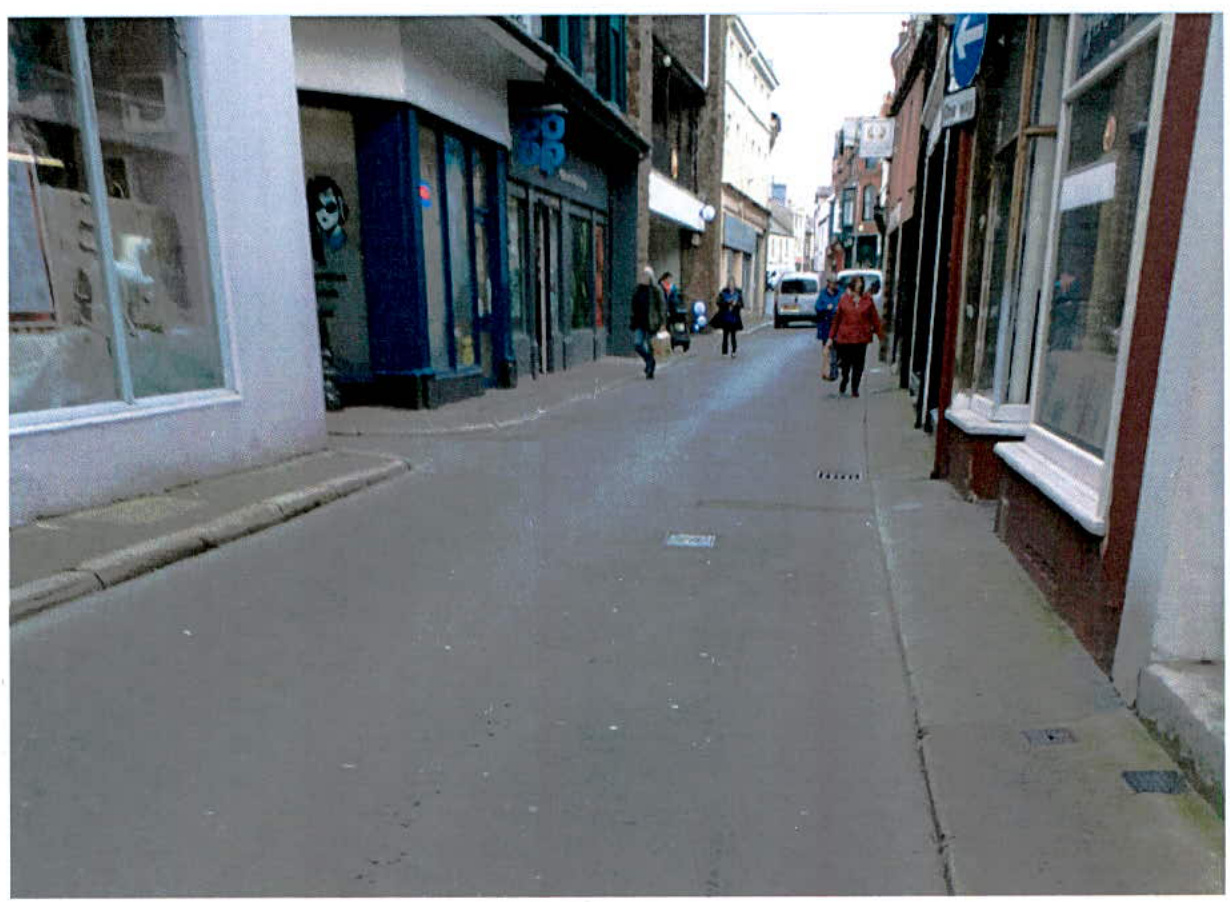
Michael Street, Peel, runs from the Douglas Road through to Atholl Place. It is the main shopping area/street for Peel, and a large proportion of the business of Peel is conducted in Michael Street or on Atholl Place. The street is lined on both sides with shops retailing various goods, pharmacies, opticians, estate agents, cafes, restaurants, and charity shops. There is accommodation above most of the shops and businesses, and there are a few houses which front directly onto the street.
In aspect the street runs in an almost direct east/west direction and as a consequence of this does not receive much direct sunlight. The buildings lining the street are of a variety of styles and architectural feature. The street is quite narrow, ranging from 4.3 to 6.3 metres wide. There are footways up each side of the street, but these are so quite narrow that pedestrians cannot pass on them and have to step onto the carriageway.
For vehicles the street is one way in an easterly direction. The street is closed to vehicles from 11 o'clock in the morning until 4.30 in the afternoon.
There are streetlights present but the contrast between Michael Street and the regenerated area of the Market Place is quite stark.
It is widely accepted that Michael Street has reached the end of its useful life both operationally and aesthetically. Pedestrian facilities are not fit for purpose and it is becoming increasingly more difficult to defend the practice of pedestrians walking in the carriageway due to the narrowness of the footways.
The overriding objective of the scheme is to enhance Michael Street and Atholl Place as a place to go to visit, not simply to pass through.
It is important to create the correct sense of place. At the moment pedestrian facilities are barely adequate when the street is open to vehicles, and could be much improved. Parking in the street is an issue, with parked vehicles doing little to enhance the visual appearance. Whilst it would be ideal to completely remove vehicles from this area, in reality that is unlikely to happen as there is still a requirement for deliveries for the various businesses. Steps should also be taken to ensure that the streetscape does not have vehicles as the primary users, and that a sense of shared space between pedestrians, cyclists and vehicles is achieved.
This section aims to frame the redevelopment proposals in terms of local planning policy and also the wider policy and guidance, illustrating how the proposals align with and help deliver the key objectives of the 2016 Strategic Plan.
The objectives by which this Strategic Aim can be fulfilled are grouped by subject; Resources, Environment, Economy, Transport and Communication, and Social. These provide a framework for the formulation and evaluation of land-use policies and standards. The objectives support making the optimum use of existing and planned infrastructure and services, protect, maintain and enhance the built environment, high quality development throughout the Island protect the individual character and identity of settlements and promote urban regeneration.
In terms of the economy, the viability, vitality and diversity of the economy should be maintained and improved by enabling improved employment opportunities, while there is a need to safeguard and provide for the needs of existing and new location-dependent businesses. Improved access to buildings, spaces and services for less able people is critical, while the promotion of community safety and security within regeneration and refurbishment schemes is encouraged by the adoption of the principles of "Designing Out Crime".
The proposals meet the relevant strategic objectives by enhancing the built environment to bring benefit to sustainable forms of transport and less able section of the community. The improvements protect the individual character of the town centre and support its location dependent businesses.
This policy normally permits development which is in accordance with landuse zoning and proposals set out in the appropriate Area Plan subject to certain criteria being met. Amongst other things, these criteria seek to protect the character of the townscape; to ensure appropriate design; to ensure that developments on adjoining land are not prejudiced; to ensure road safety for pedestrians and other road users and to take account of community and public safety.
The proposals meet the relevant objectives of GP2 by enhancing one of the key public spaces within Peel, supporting existing and future adjacent uses and establishing a much improved environment for pedestrians and other users.
This policy is relevant as the proposals lie within the Peel Conservation Area. EP35 states that: Within Conservation Areas the Department will permit only development which would preserve or enhance the character or appearance of the area and will ensure that the special features contributing to the character and quality are protected against inappropriate development.
Sympathetic use of a higher quality material will greatly enhance the appearance and character of the town centre. Furthermore, the innovative design will allow some road signage to be removed, adding to the open feel of the area by clearing away clutter.
This policy relates to Urban Regeneration and establishes support for proposals which seek to regenerate run-down urban areas. While Michael Street has a number of significant strengths such as the sweep of Victorian properties, the quality and condition of some of the public realm is judged to be in a poor condition which serves to detract from the overall quality of the town centre.
The proposals will deliver a significant improvement to the area and can be expected to be a catalyst to regeneration and drive economic growth.
It is considered that the design of the redevelopment proposals meet with the relevant planning policies and guidance.
The proposals will support adjoining buildings and land uses, enhance the character and appearance of the town centre, improve road safety for pedestrians and other road users and will benefit the community as a whole. In addition, there would be economic benefits due to both the improved appearance and the resulting easier and safer usage of the streetscape.
The MfMR provides guidance to developers, their consultants and design engineers, local authorities, and the public on the ways in which new development can contribute towards the provision of an accessible, safe and sustainable transport network within the Island. It also sets out the framework of advice and standards applied by the Department of Infrastructure for alterations and additions to the highway network.
A key recommendation of the Manual is that "increased consideration should be given to the 'place' function of streets. This function is essentially what distinguishes a street from a road, where the main purpose is to facilitate movement. Streets have five principal functions in all. In addition to those of place and movement, streets need to allow for access, they often need to provide room for parking, and they must accommodate drainage, utilities, and street lighting."
It suggests: "The underlying theme when designing streets... is catering for movement. The movement framework is important for a number of reasons. It can affect how much people walk or cycle, the level of public transport use, the sustainability of the community and its environment, and quality of life."
On creating quality spaces, it suggests: "Good design is fundamental to achieving high-quality, attractive places that are socially, economically and environmentally sustainable. Places often fail because of poor relationships between dwellings and streets. It is, therefore, important to ensure a high level of co-operation among the disciplines involved in various elements of design."
On recognising the needs of users, the Manual suggests: "Of crucial importance is the need to provide for everyone regardless of age or ability the concept of inclusive design."
"Of particular importance to pedestrians is the ease with which they can cross a street, and route continuity. Designers should aim to keep pedestrian paths as straight as possible to minimise diversion from desire lines. Low traffic speeds, together with wide and unobstructed routes whose alignments minimise the need to change level, also serve to enhance the environment for pedestrians."
The proposed layout has been developed in accordance with the overarching design principles in that the scheme must:
Conventional design approaches in the Isle of Man have largely been based on segregating traffic and people from each other in order to create a structured street network that separates different modes of travel. However, segregated design solutions (particularly where the car is dominant) have tended to fail in town centre locations such as Michael Street where pedestrians have been marginalised along the street edges so that greater space can be provided within the street reserve to facilitate vehicle movement.
Low-speed Streetscape designs create can successfully balance the functional needs of different users, enhance the sense of place and manage vehicle movement in a manner that does not rely on extensive regulatory controls and physically intrusive measures of enforcement.
The proposed layout for Michael Street aims to successfully combine its role as an integral part of the civic space and public realm of Peel with its function within the road network.
The introduction of high quality natural stone materials will play a significant role in informing drivers that they are entering a street where the car is no longer dominant. The use of paving with no kerb up-stand is one of the clearest ways of reinforcing a low-speed streetscape and of signalling to all users that the carriageway is to be shared.
Shared surface low-speed streetscapes can be very intimidating for impaired users. Visually-impaired users in particular usually rely on kerb lines to navigate streets. To assist navigation and movement through Michael Street tactile strips of a contrasting colour will be introduced on both sides of the street.
Traditionally surface water run-off in urban areas has been flushed down pipes into underground carrier systems and discharged into water courses. But as recent heavy flooding has shown, these systems can no longer cope with the volumes generated during rainfall.
The use of rain gardens to intercept surface water run-off in Athol Place will provide a more Sustainable Drainage System. They will also create new habitats for wildlife and visually enhance the town centre through the creation of green spaces.
An initial presentation of the proposed scheme was given to Peel Commissioners on Friday 31st January 2020 and the board considered the developed layout at a meeting held on Thursday 16th April 2020.
No formal consultation has been undertaken with businesses or members of the public due to social distancing restrictions imposed as a result of the current Covid-19 outbreak.
Meetings were also held with key stakeholders:
The Statement of Case has explained the development of the proposed improvement scheme for Michael Street, Peel.
The redevelopment proposals provide an opportunity to inject a new lease of life into the town centre. The proposals represent a means to combine safer pedestrian movements with the creation of a distinctive and memorable area of public space.
Through good design the proposals will introduce a modern contemporary streetscape that relies less on regulation and control and more on equilibrium to allow the multiple purposes of the public realm to co-exist.
It is considered that the design of the proposed scheme satisfies the relevant planning policies, design guides and best practice guidance. The layout will enhance the character and appearance of Michael Street and strengthen pedestrian links within the town centre environment.
In addition there would be economic benefits due to both the improved appearance and the resulting easier and safer usage of the streetscape.
It is vital to raise the profile of the islands towns and villages after years of decline and deterioration. The proposals will play a critical role in regenerating this unique and distinctive town centre.
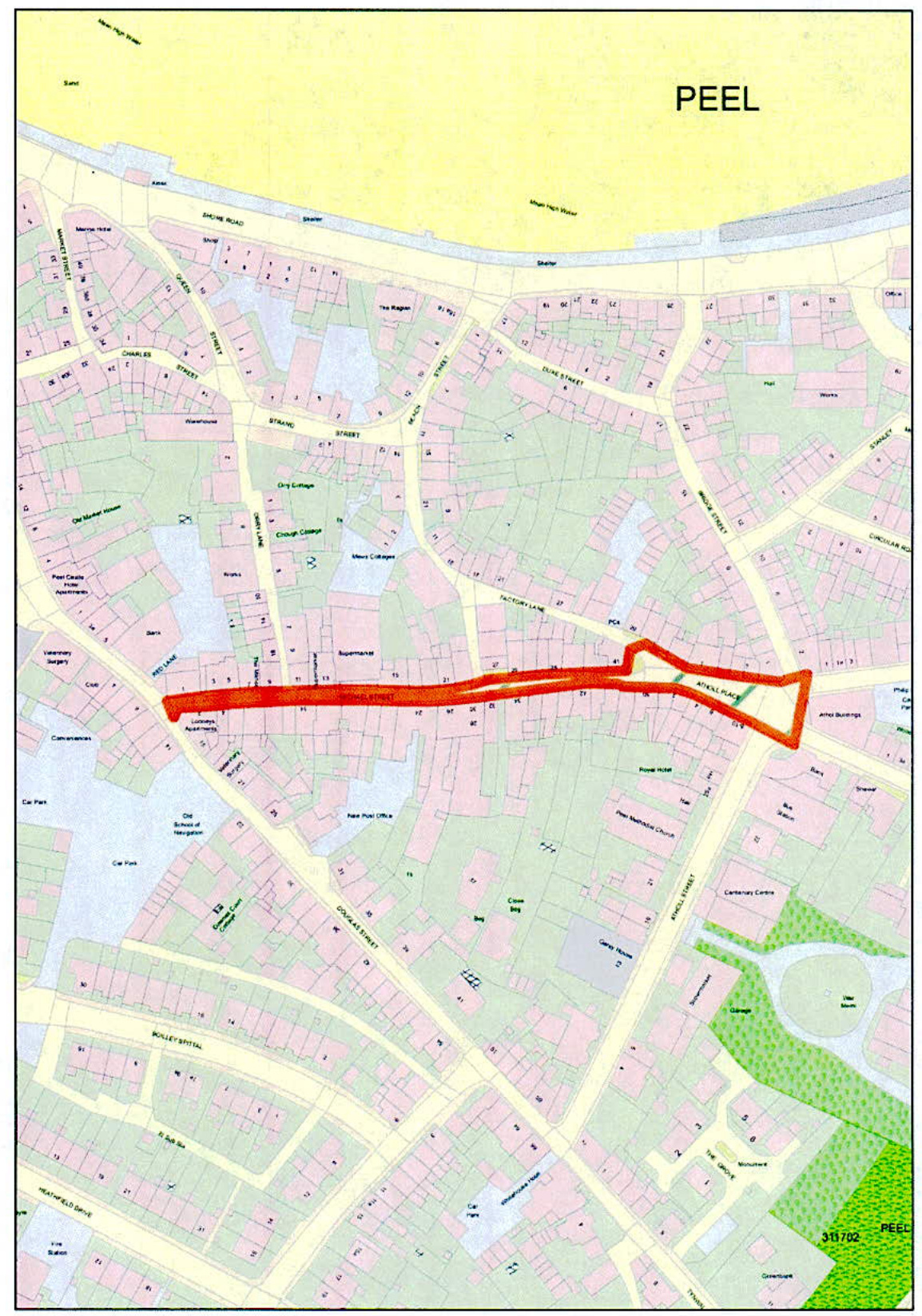
Not to Scale
Copyright in submitted documents remains with their authors. Request removal
